Kevin Warsh’s Moment: Navigating Inflation, Independence, and a ‘Triple Mandate’ in the Federal Reserve Chair Confirmation
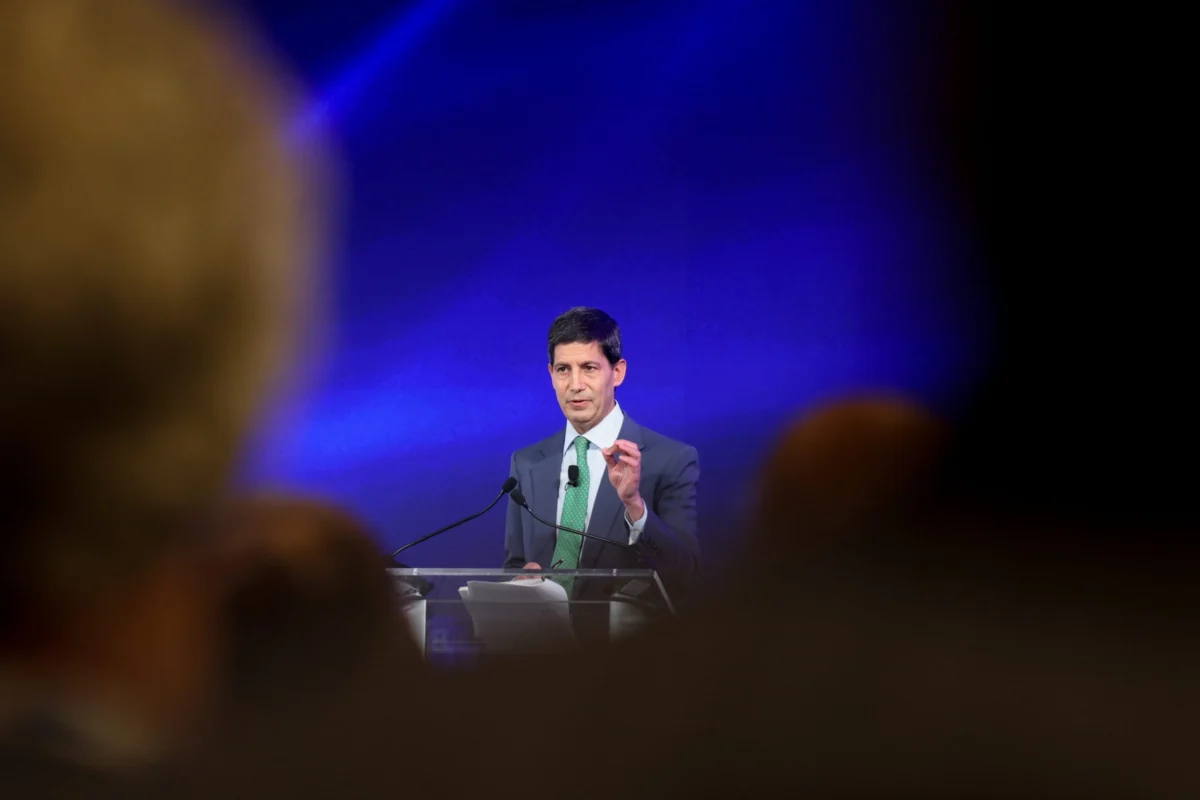
At 10 a.m. tomorrow morning, Kevin Warsh’s public campaign to lead the Federal Reserve begins. So far, markets, policymakers, and economists have only been able to speculate as to Warsh’s outlook and approach. But this week, for the first time since President Trump confirmed his nomination, his ideas will be laid out in the open for the Senate Banking Committee to pick through, marking a pivotal moment for the nation’s economic future and the independence of its central bank.
The Confirmation Gauntlet: A Test of Vision and Independence
The confirmation hearing before the powerful Senate Banking Committee is far more than a formality; it is a rigorous interrogation designed to vet the nominee’s qualifications, philosophy, and temperament for one of the most consequential roles in global finance. The individual selected to chair the Federal Reserve wields immense influence over monetary policy, impacting everything from interest rates and inflation to employment levels and financial stability. This hearing will be Warsh’s opportunity to articulate his vision for navigating a complex economic landscape characterized by persistent inflation, geopolitical uncertainties, and a fiercely independent central bank.
Chief among the concerns for senators will be what—if anything—Warsh has promised the White House. Amid heightened concerns over the independence of the central bank, a notion Warsh has repeatedly stated he believes is of the utmost importance, officials will be keen to understand how the would-be chairman will balance his reportedly dovish rate sympathies with today’s inflationary economic outlook. This scrutiny is amplified by President Trump’s past criticisms of current Fed Chair Jerome Powell, whose rate hikes during his previous tenure drew public ire from the Oval Office. Trump has made it clear that only an individual willing to lower rates faster than current Chair Jerome Powell would secure his support, setting a challenging political backdrop for Warsh’s testimony.
The Federal Reserve’s Mandates: Beyond the Dual Focus
The Federal Reserve operates under a congressionally mandated framework, historically understood as a "dual mandate": to achieve maximum employment and stable prices (low and stable inflation). However, a growing chorus of economists and some Fed officials, including Warsh himself, advocate for a broader interpretation, sometimes referring to a "triple mandate" that includes moderate long-term interest rates and financial stability. This expanded view could offer Warsh a nuanced pathway to justify a dovish stance on the base rate without appearing to disregard the Fed’s traditional priorities in favor of appeasing the White House.
Currently, data is stacking up against a straightforward argument for lowering rates. Inflation, as measured by the latest consumer price index (CPI) reports, has been increasing, primarily as a result of supply strains on oil and gas, as well as broader geopolitical tensions impacting global supply chains. Inflation now sits above 3%, well ahead of the Fed’s mandated target of 2%. For instance, the CPI report released last month indicated an annual inflation rate of 3.2%, with core inflation (excluding volatile food and energy prices) also remaining sticky above 3%. These figures present a direct challenge to any immediate inclination toward rate cuts, as the primary tool for combating inflation is typically to raise interest rates, thereby cooling economic demand.
Warsh’s Potential Justifications for a Dovish Stance
How might Warsh reconcile a desire for lower rates with the current inflationary environment and the imperative of Fed independence? His arguments are likely to be multifaceted, drawing on a more expansive view of the Fed’s responsibilities and a nuanced interpretation of current economic signals.
1. The "Triple Mandate" and Long-Term Rates:
One potential argument is to "zoom out" and consider economic conditions in their totality, emphasizing the Fed’s less-discussed mandate of maintaining moderate long-term interest rates and fostering financial stability. While the Federal Open Market Committee (FOMC) directly sets the short-term federal funds rate, which theoretically informs broader borrowing costs, the reality is more complex.
In theory, lowering the short-term interest rate is meant to stoke economic activity by making loans cheaper for business investment, consumer spending, and mortgages. However, in practice, the short-term rate has become somewhat unhitched from the interest rates offered in the real economy, particularly for long-term borrowing. As observed by major financial institutions like Morgan Stanley in October, despite a cutting cycle, "the spread between mortgage rates outstanding and new mortgage rates is over 2%, the highest in 40 years, indicating that more cuts may be necessary to spur housing activity." This significant disconnect means that even with some short-term rate reductions, the real-world cost of borrowing for critical sectors like housing remains elevated, acting as a de facto tightening of financial conditions.
Longer-term yields (and thus, rates), by contrast, are relatively elevated in 2026. These rates are primarily set by markets, reflecting investors’ expectations on future inflation, economic growth, and the supply of government debt. Recently, both 10-year and 30-year Treasury yields have moved higher, representing a quiet but significant tightening of financial conditions across mortgages, corporate borrowing, and equity valuations, even if they have not yet surpassed historical peaks from decades past.
If Warsh were to argue that tightening on the long end of the curve could be offset by reductions on the shorter end, he could cite recent examples. This tightening has become more pronounced in recent months following geopolitical events, such as the U.S. and Israel’s attacks on Iran. The 10-year Treasury yield, for instance, was sitting at around 4% in early February and spiked to 4.44% by the end of March. The 30-year Treasury yield has been similarly elevated, rising from 4.63% in early February to approximately 4.9% at the time of writing. These increases are not merely academic; they translate directly into higher costs for long-term loans, making homeownership less accessible, corporate expansion more expensive, and government debt servicing more costly.
Given that these longer-dated rates feed directly into the real economy, a dovish central banker like Warsh might advocate for a cut to the base rate—not primarily to stimulate demand outright in an inflationary environment, but rather to prevent an unintended and potentially damaging squeeze driven by the bond market itself. This approach acknowledges that cuts at the short end cannot fully counteract tightening further along the curve, but they can provide some much-needed counterweight to preserve overall financial stability and moderate borrowing costs.
Neatly, this argument also ties in with the Fed’s oft-forgotten third aspect of its mandate. FOMC member Stephen Miran, during his confirmation with the Senate Banking Committee last year, recalled the Federal Reserve Act of the 1970s: “Congress wisely tasked the Fed with pursuing price stability, maximum employment, and moderate long-term interest rates.” If market-driven rises at the long end tighten conditions, that presents a policy problem in itself, providing a legitimate argument for cuts on the short-end to offset any squeeze and keep borrowing costs broadly stable, without necessarily compromising the inflation fight.
2. The Balance Sheet Argument: Quantitative Tightening as a Counterweight
A further economic exercise in mental acrobatics comes from Warsh’s outlook on the Federal Reserve’s balance sheet. Warsh is known to favor reducing the balance sheet, which currently stands at a substantial $6.7 trillion. This preference conveniently delivers another neat argument for rate cuts without raising alarm bells over questions of Fed independence or appearing oblivious to inflation.
The Fed’s balance sheet swelled dramatically during and after the 2008 financial crisis and again during the COVID-19 pandemic, as the central bank engaged in quantitative easing (QE)—buying vast quantities of Treasury bonds and mortgage-backed securities to inject liquidity into the financial system and lower long-term interest rates. Since then, the Fed has been engaged in "quantitative tightening" (QT), allowing these assets to mature off its balance sheet without reinvesting the proceeds, thereby reducing the overall size of its holdings.
As Professor Yiming Ma, of Columbia University’s Business School, explained in a conversation with Fortune in February: “People often think: ‘Oh, economic conditions, inflation expectations, and unemployment are determining interest rates,’ and the size of the balance sheet is like, whatever. But in practice, hiking interest rates is [economic] tightening, and reducing the size of the central bank’s balance sheet is also a form of tightening [because it also raises rates]. And it’s hard to estimate the extent of that interaction, but you can think broadly that if the size of the Fed’s balance sheet is smaller, there is less liquidity in the system, and that is going to reduce inflationary pressure. So in a way, one can afford a lower interest rate with a smaller balance sheet.”
This perspective suggests that the sheer volume of assets on the Fed’s balance sheet has its own stimulative or tightening effect, independent of the federal funds rate. By actively shrinking the balance sheet—a process that removes liquidity from the financial system and can put upward pressure on longer-term rates—Warsh could argue that the Fed is already implementing a significant form of monetary tightening. This structural tightening through balance sheet reduction could then create room for a lower policy rate without necessarily overstimulating the economy or exacerbating inflation. This approach provides a strategic way to meet the White House’s desire for lower rates while still demonstrating a commitment to overall financial prudence and inflation control.
Broader Economic Landscape and Challenges
The context for Warsh’s potential leadership is undeniably complex. The global economy is grappling with the lingering effects of supply chain disruptions, elevated energy prices influenced by geopolitical conflicts (such as the ongoing war in Ukraine and tensions in the Middle East), and shifts in global trade dynamics. Domestically, while the labor market has shown remarkable resilience, wage growth has been a point of contention, contributing to inflationary pressures in the services sector. Consumer spending, though robust, faces headwinds from higher borrowing costs for credit cards and personal loans.
The housing market, in particular, presents a conundrum. Despite the Fed’s previous rate hikes, housing supply remains tight, and demand, though somewhat dampened by high mortgage rates, persists. A potential Fed Chair would need to carefully weigh the impact of monetary policy on housing affordability, a critical component of household wealth and economic stability.
Historical Precedents and Future Implications
Warsh’s potential nomination echoes past moments when presidential administrations sought to exert influence over the Federal Reserve. Historically, presidents have often preferred lower interest rates to stimulate economic growth, especially during election cycles. However, the Fed’s institutional independence, cultivated over decades, is widely regarded as essential for maintaining credibility and making difficult, politically unpopular decisions necessary for long-term economic health. Figures like Paul Volcker, who dramatically raised rates in the early 1980s to break the back of runaway inflation despite immense political pressure, serve as powerful reminders of this independence.
Should Warsh be confirmed, his tenure would extend beyond the current administration, offering a unique opportunity to shape the Fed’s long-term strategy. His dovish leanings, coupled with his focus on the balance sheet and the "triple mandate," could signal a shift in monetary policy orthodoxy. This could have significant implications for how the Fed approaches future economic cycles, potentially leading to more flexible responses to inflation and economic slowdowns. Markets would closely scrutinize his initial decisions, looking for signs of how he balances the various pressures and mandates. His approach could influence global central banking trends, especially if he successfully demonstrates an alternative pathway to managing inflation and growth.
This potential stance isn’t an argument that can be brought into play immediately, despite pressure from the White House to cut rates sooner rather than later. The current inflation figures demand a cautious approach. But Warsh’s tenure at the Fed would, if confirmed, last beyond the current administration: His dovish leanings may go beyond the current outlook, remaining a feature of the next Fed era and shaping its policy framework for years to come. The Senate Banking Committee’s hearing tomorrow will therefore not just be about one man’s qualifications, but about the very future direction and independence of the world’s most powerful central bank.

Related Posts
The United States Grapples with Soaring Energy Demand Fueled by AI Data Centers Amidst Growing Public and Political Backlash
Matthew McConaughey Leads the Charge: Protecting Human Likeness in the Age of AI