The Erosion of Public Trust: How Anti-AI Sentiment is Shaping the Future of Technology
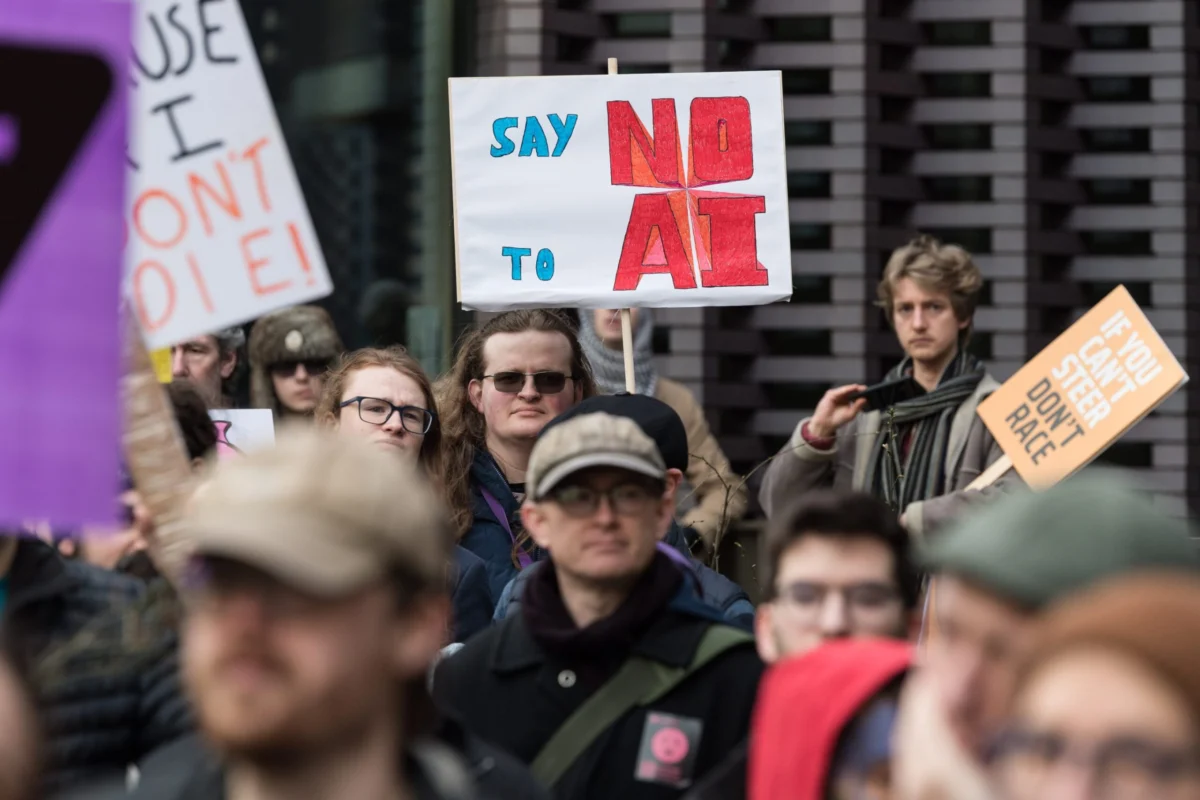
Recent security incidents involving Sam Altman, the highly visible CEO of OpenAI, have starkly underscored a deepening chasm between the ambitions of the artificial intelligence industry and an increasingly wary public. On a recent Sunday, two additional arrests were made following reports of a firearm being discharged near Altman’s property, an event whose specific targeting, if any, remains under investigation. This incident follows a previous attack on Altman’s home, for which an individual was apprehended carrying a manifesto that ominously warned of humanity’s "extinction" at the hands of AI. While some online commentators have quickly attributed these acts to "AI doomers"—a segment of the population convinced of AI’s existential threat to society—the broader truth reveals a more nuanced and pervasive anti-AI sentiment that has been quietly, yet steadily, building for years across diverse segments of the population. This growing skepticism is rooted in a confluence of concerns ranging from environmental impacts and job displacement to psychological harm and the specter of autonomous warfare, creating a challenging landscape for an industry often perceived as racing ahead without sufficient public consent or understanding.
A Broadening Spectrum of Concerns
The narrative around AI has long been shaped by its potential for both unprecedented progress and profound peril. While the industry champions breakthroughs in drug discovery, climate modeling, and disease diagnosis, the public’s perception is increasingly colored by less optimistic prospects. Environmental impacts represent a significant point of contention. The sheer computational power required for AI development and operation necessitates vast data centers, which are voracious consumers of electricity and water. Communities globally are voicing concerns over the strain on local energy grids, the potential for rising electricity bills, and the substantial quantities of water needed for cooling, not to mention the dust and light pollution associated with construction. Between April and June 2025 alone, 20 proposed data center projects, collectively valued at an astonishing $98 billion, faced either blockage or significant delays due to fierce local resistance. Although some initial estimates of AI data center water consumption may have been overstated, the perception of AI as a major environmental burden has firmly taken root in the public imagination, reinforced by instances where data centers have demonstrably impacted local water supplies and the intensive water demands throughout the entire lifecycle of AI chip production. This public outcry has even begun to influence legislative agendas, with New York State recently proposing a three-year moratorium on new data center permits, signaling a growing political responsiveness to these environmental concerns.
Another profound worry revolves around the automation of jobs, particularly entry-level positions. The rhetoric from tech executives, who have frequently cited AI as a justification for headcount reductions, has solidified a public narrative that views AI as a direct threat to employment security. This concern is particularly acute among younger generations already navigating a tough job market. While the exact extent to which AI is responsible for current labor market challenges for recent graduates remains a subject of debate—some economists suggest it may serve as a convenient excuse for layoffs amidst broader economic headwinds—the public perception has largely embraced the idea that AI is a significant contributing factor.
Beyond economic and environmental anxieties, the potential for psychological harm linked to AI technology has emerged as a serious concern, already sparking a wave of lawsuits. These legal challenges attribute multiple deaths, including those of teenagers, to the detrimental influence of AI-powered platforms or content. The issues range from algorithmic amplification of harmful content, the spread of misinformation, the psychological toll of deepfakes, and the insidious potential for addiction and over-reliance on AI tools, especially among individuals who grew up alongside the rise of social media. The pervasive nature of AI, coupled with its often opaque operational mechanisms, raises profound ethical questions about its impact on mental well-being and societal cohesion.
Furthermore, the integration of AI into warfare scenarios, from autonomous weapons systems to advanced surveillance, elicits significant moral and ethical dilemmas. The prospect of machines making life-or-death decisions without human intervention, or the potential for AI to escalate conflicts, fuels a deep-seated apprehension about the technology’s ultimate trajectory and control.
The Self-Fulfilling Prophecy of AI Marketing
Paradoxically, a significant portion of this burgeoning public fear appears to be a messaging problem, one often exacerbated by the very AI labs seeking to develop and deploy the technology. For years, leading tech executives and researchers have engaged in a discourse that consistently highlights AI’s dangerous potential. Warnings have ranged from its capacity to facilitate sophisticated cyberattacks and enable the creation of bioweapons, to almost certainly leading to mass unemployment, and, in the most extreme scenarios, posing an existential threat to humanity itself.
Just last week, Anthropic, a prominent AI research company, launched its "Mythos" model, which it controversially declared "too dangerous to be in public hands." While the company suggested this fear might be justified given the model’s capabilities in detecting severe software vulnerabilities, this strategy inadvertently reinforces the public’s anxieties. It illustrates a peculiar marketing dynamic: it is challenging to recall another consumer product whose creators have so consistently cautioned the public that it might, in fact, lead to the destruction of civilization. This strategy, while perhaps designed to convey the gravity of their work and attract top talent or regulatory attention, has inadvertently primed the public to view AI with suspicion and fear. The public, it seems, has been listening intently to these grave warnings.
Quantifying Public Distrust: Low Poll Numbers and Generational Divides
The impact of these widespread concerns and the industry’s own messaging is starkly reflected in recent public opinion polls. A March NBC News poll painted a grim picture, revealing that only 26% of voters hold positive views of AI, while a significantly larger 46% express negative sentiments. To put this in perspective, only the Democratic Party and Iran registered lower popularity ratings in the same survey, indicating a profound and widespread aversion to AI among the American electorate.
This anti-AI sentiment is particularly pronounced among the younger generation, Gen Z, who are disproportionately affected by a challenging job market. A Gallup poll published recently underscored this generational divide, showing a dramatic collapse in Gen Z excitement about AI, plummeting from 36% to a mere 22% in a single year. Concurrently, anger towards AI within this demographic surged from 22% to 31%. Gallup attributed this significant shift primarily to fears that AI technology is actively eliminating entry-level jobs, directly impacting their career prospects and economic stability. This demographic’s rapid shift in perception signals a critical challenge for the AI industry, as these are the future workforce and consumer base.
Sam Altman: The Visible Face of a Contentious Industry
Sam Altman, as the charismatic and outspoken CEO of OpenAI, has arguably become the most visible public face of the AI industry. His prominence, coupled with OpenAI’s groundbreaking release of ChatGPT, means that for many outside major tech hubs, his company is synonymous with AI. This visibility, however, comes with a considerable price. The recent incidents targeting Altman and his property are not isolated; in November, OpenAI employees in San Francisco were instructed to shelter in place after a man threatened attacks on staff at their offices. These incidents highlight the tangible and alarming consequences of an escalating public backlash against the industry and its leaders.
Industry Insiders Acknowledge an Image Crisis
Even within the tightly-knit world of AI labs, there’s a growing acknowledgment of a significant public relations challenge. A pseudonymous post on X by "Roon," widely believed to be OpenAI researcher Tarun Gogineni, captured this internal introspection earlier in the week: "The ai labs, in competing with each other, are burning huge amounts of the commons on public trust in ai to win minor points against the others. their lobbyists, pr machines, lawsuits. it’s the very opposite of what marxist class struggle analysis would tell you." This statement suggests a recognition that intense corporate competition and aggressive lobbying tactics may be inadvertently eroding the collective public trust in AI, rather than building a unified, positive vision.
While AI labs have largely succeeded in making AI feel ubiquitous, they have struggled to effectively communicate its tangible, worthwhile benefits to everyday people. Most individuals grasp that AI can expedite email writing or optimize certain workflows, but far fewer are aware of its profound applications in accelerating drug discovery (though it’s important to note no AI-created drug has yet reached the market, dozens are in the pipeline), modeling complex climate change scenarios, or aiding in the diagnosis of rare diseases. This significant "perception gap" between the industry’s vision of transformative innovation and the public’s understanding of its immediate, beneficial impact continues to widen, fostering distrust and hindering broader acceptance.
Evolving Industry Dynamics and Responses
In response to both internal pressures and external scrutiny, the AI industry is witnessing significant shifts in its operational and strategic approaches. OpenAI itself has recently launched GPT-5.4-Cyber, a specialized cybersecurity model designed for autonomous identification of software vulnerabilities. This model, released to a select group of vetted customers through a trusted access program, follows Anthropic’s announcement of its powerful Mythos model, which it claims has already detected thousands of severe, decades-old vulnerabilities across major operating systems and web browsers. These developments underscore the industry’s dual efforts: to advance AI capabilities while simultaneously addressing critical security concerns, often by using AI itself to combat AI-powered threats.
Anthropic is also adapting its business model, notably shifting its enterprise Claude pricing to a hybrid usage-based billing structure, moving away from flat-rate models. This change, prompted by surging demand for its agentic workplace tools, reflects the escalating inference costs associated with high-volume AI usage. Such moves, mirroring those of other tech giants, highlight the economic realities and scaling challenges faced by AI providers, where balancing access with profitability is a constant negotiation. Anthropic’s annualized revenue reportedly hit $30 billion as of early April, indicating substantial commercial success despite the public perception challenges.
Adding another layer to the complex interplay between AI and public discourse, a new Thiel-backed startup named Objection has emerged, aiming to use AI to fact-check published journalism for a $2,000 fee per challenge. Founded by Aron D’Souza, known for his involvement in the Gawker lawsuit, Objection’s platform scores reporting via an "Honor Index" built from evidence weighed by multiple large language models. Critically, anonymous sources rank low in its evidence hierarchy, a feature critics contend could chillingly impact whistleblowing and investigative journalism. This venture immediately sparked debate, illustrating the contentious nature of AI’s application in domains as sensitive as truth and information dissemination.
The Road Ahead: Bridging the Perception Gap
The incidents involving Sam Altman and the broader landscape of public opinion polls reveal a critical juncture for the artificial intelligence industry. The prevailing narrative, fueled by both genuine concerns and the industry’s own alarming rhetoric, has created a significant "perception gap" that threatens to impede AI’s potential societal benefits. Unless AI developers and leaders can effectively articulate and demonstrate the positive, tangible value of their innovations to everyday people, beyond abstract promises of future breakthroughs, the gap between what the industry believes it is building and what the public perceives it is getting will continue to widen.
This challenge necessitates a concerted effort to foster greater transparency, address legitimate concerns about ethics, safety, environmental impact, and job displacement, and shift the public discourse towards a more balanced understanding of AI’s multifaceted role in society. The future of AI adoption, regulation, and its ultimate integration into human life hinges on the industry’s ability to rebuild trust and effectively communicate a compelling, beneficial vision that resonates with a wary global populace. Until then, the shadow of public distrust will continue to loom large over the rapidly evolving landscape of artificial intelligence.




Related Posts

‘We should absolutely be concerned about non-college-educated men today’: higher rents, living at home, falling out of the labor market | Fortune

Southeast Asia Navigates Worst Energy Crisis in Decades, Pivoting to Russia Amidst Hormuz Blockade