Matthew McConaughey Leads the Charge: Protecting Human Likeness in the Age of AI
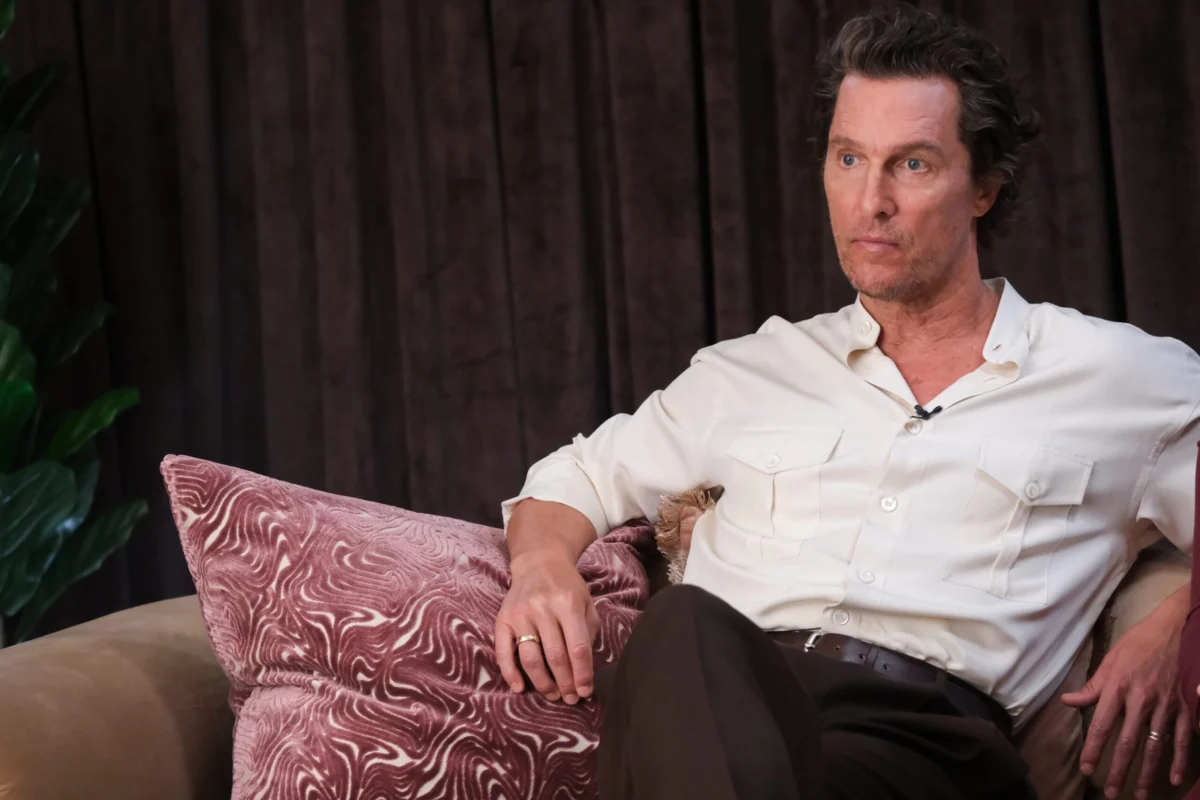
Matthew McConaughey, an actor whose career has been synonymous with a certain laid-back confidence epitomized by his iconic "Alright, alright, alright," has recently adopted a markedly more serious tone when discussing the encroaching influence of artificial intelligence on the entertainment industry. This shift from breezy charm to grave concern became unequivocally clear during a recent CNN town hall event, where a University of Texas student’s seemingly innocuous question about AI replacing actors elicited a stark and immediate response from the Oscar-winning star. McConaughey’s face grew grave, his gaze fixed on the camera as he declared, "It’s not coming. It’s here." This blunt assessment, made in conversation alongside fellow actor Timothée Chalamet, underscored a profound recognition of the current reality and the urgent need for proactive measures in an industry grappling with unprecedented technological disruption. His subsequent advice to creators was unequivocal: "Don’t deny it. It’s not enough to sit on the sidelines and make the moral plea that this is wrong. That’s not going to last." Instead, he urged, "Own yourself. Your voice, your likeness, whatever you’ve got—own yourself. So when it comes—not if it comes—no one can steal you." This philosophy is not merely theoretical for McConaughey; he has already taken concrete steps to fortify his intellectual property against potential misuse by AI technologies, a move that highlights the escalating anxieties and adaptive strategies emerging from Hollywood in response to the rapid advancement of artificial intelligence.
The Accelerating AI Revolution in Entertainment
The entertainment industry finds itself at a pivotal juncture, where the lines between human creativity and algorithmic generation are increasingly blurring. For years, AI and sophisticated visual effects have been integral to filmmaking, from CGI marvels to digital enhancements. However, recent breakthroughs in generative AI have introduced a new paradigm, enabling the creation of hyper-realistic digital replicas of actors, their voices, and even their performances, with startling efficiency and diminishing cost. This technological leap has propelled what was once science fiction into immediate reality, profoundly impacting production workflows, creative processes, and, most critically, the very concept of individual artistic ownership.
The genesis of this current wave of concern can be traced back to the rapid proliferation of advanced deepfake technology and sophisticated voice synthesis models in the late 2010s and early 2020s. Initially confined to niche internet communities, these tools quickly became accessible, demonstrating the capacity to create convincing, albeit often malicious, simulations of public figures. For Hollywood, an industry built on the unique talents and recognizable personas of its stars, the implications were immediate and alarming. Studios began experimenting with de-aging actors for flashbacks or entire films, as seen with Harrison Ford in "Indiana Jones and the Dial of Destiny" or Robert De Niro in "The Irishman." Beyond cosmetic alterations, the potential for creating fully synthetic performances or using digital doubles of actors for perpetual use, even after their death, sparked intense debate.
The cost-effectiveness and speed of AI-driven content generation are powerful lures for studios. A digital replica of an actor could theoretically perform scenes endlessly, in multiple languages, without requiring the physical presence, time constraints, or compensation demands of a human performer. This economic incentive, coupled with the creative possibilities of AI to generate scripts, music, and visual effects, has created an undeniable momentum towards greater AI integration across the industry. Yet, this progress comes hand-in-hand with profound ethical and legal dilemmas, prompting figures like McConaughey to take decisive action.
McConaughey’s Proactive Defense: Trademarking His Persona
McConaughey’s proactive approach to safeguarding his identity is a direct response to this evolving threat. As first reported by The Wall Street Journal, the actor has undertaken a comprehensive strategy to secure a series of trademarks encompassing his image, distinctive vocal patterns, and signature expressions, most notably his famous "alright, alright, alright." This legal maneuver is designed to establish a robust perimeter around his voice and likeness, making it significantly harder for AI companies, content creators, or malicious actors to simulate or appropriate his persona without explicit permission.
The actor articulated his rationale clearly: "My team and I want to know that when my voice or likeness is ever used, it’s because I approved and signed off on it." This statement highlights the core issue of consent and control. In an age where digital replicas can be created with increasing ease, the power to decide when, where, and how one’s identity is utilized becomes paramount. By securing these trademarks, McConaughey is essentially asserting a legal claim over his digital self, aiming to transform unauthorized AI usage from a vague ethical transgression into a clear legal infringement.
This strategy is particularly insightful given the current ambiguities in intellectual property law concerning AI-generated content. While traditional copyright law protects creative works, and publicity rights laws exist to protect individuals from commercial exploitation of their likeness, the application of these frameworks to AI-generated simulations is still being tested in courts. By preemptively trademarking his unique identifiers, McConaughey is attempting to create a clearer legal pathway for recourse should his digital persona be exploited without his authorization. This action serves as a practical demonstration of his advice to "own yourself," transforming a philosophical stance into a tangible legal defense.
Broader Industry Landscape: Reactions, Regulations, and Rights
McConaughey’s concerns and actions are far from isolated; they resonate deeply within the broader entertainment community, which has been wrestling with the implications of AI for several years. The issue came to a head during the historic 2023 SAG-AFTRA (Screen Actors Guild – American Federation of Television and Radio Artists) and WGA (Writers Guild of America) strikes, where the regulation of AI was a central and fiercely contested point of negotiation.
The SAG-AFTRA Strikes and AI:
The 2023 actors’ strike, which lasted for 118 days, highlighted the profound anxieties actors harbored regarding AI. A key demand from SAG-AFTRA was the establishment of clear guardrails for the use of AI, particularly concerning digital replicas. The union sought explicit consent from actors for the creation and use of their digital likenesses, fair compensation for such usage, and guarantees that AI would not be used to replace human performers. While a deal was eventually reached that included some protections, such as requiring consent for digital replicas and establishing minimum payments for their use, many actors still feel the existing frameworks are insufficient to address the rapid pace of AI development. The union’s negotiating committee described the AI clause as "groundbreaking," yet the ongoing debate suggests a long road ahead in fully securing actors’ rights in this new landscape.
Other Celebrities and Companies Adapting:
McConaughey is not alone in recognizing the economic value of a controlled digital likeness. TikTok star Khaby Lame, known for his silent comedy skits, reportedly secured a deal potentially worth nearly a billion dollars to protect his likeness and create an AI avatar for various digital applications. This indicates a burgeoning market for managed digital identities, where celebrities can license their personas for specific, approved uses, thereby maintaining control and generating revenue.
Technology platforms are also attempting to address the issue. YouTube, for example, has announced initiatives to roll out likeness-detection tools aimed at helping creators identify and combat deepfakes and unauthorized AI-generated content. These tools represent an acknowledgment from tech giants that the problem is significant and requires technological solutions in addition to legal ones. However, as McConaughey points out, the legal frameworks remain "murky and difficult to parse," especially when AI-generated content isn’t explicitly selling something, blurring the lines between parody, artistic expression, and unauthorized appropriation.
The Murky Legal Landscape:
The current legal environment in the United States and globally is struggling to keep pace with AI’s rapid advancements. Existing intellectual property laws, such as copyright and trademark, were not designed with generative AI in mind. Key challenges include:
- Authorship and Ownership: Who owns the copyright to content generated by an AI? The AI developer? The user who prompts it? Or is it uncopyrightable?
- Fair Use vs. Infringement: When an AI "learns" from copyrighted material, is it fair use, or does it constitute infringement?
- Right of Publicity: This right protects individuals from unauthorized commercial use of their name, likeness, or persona. However, applying it to AI-generated simulations requires courts to determine the commercial nature and intent behind the AI’s output.
- Deepfakes and Misinformation: Beyond commercial exploitation, deepfakes pose serious threats of misinformation, defamation, and identity theft, prompting calls for new legislation specifically targeting malicious AI content.
These complexities mean that artists cannot solely rely on "moral outrage or future legislation alone," as McConaughey rightly observes. Proactive individual measures, like trademarking, become essential self-defense in this regulatory vacuum.
Economic, Creative, and Ethical Implications
The rise of AI in entertainment carries profound implications across economic, creative, and ethical dimensions, shaping the future of work, artistry, and societal trust.
Economic Disruptions and Opportunities:
The most immediate economic fear is job displacement. Actors, voice artists, writers, and even crew members worry that AI could automate significant portions of their work, leading to fewer human opportunities. If a studio can license an actor’s digital replica for a fraction of their usual fee and use it repeatedly without further payment, the economic model of talent compensation could collapse. The global creative economy, valued at trillions, could see a significant shift in how value is created and distributed.
However, AI also presents new economic opportunities. For independent creators, AI tools can democratize content creation, allowing individuals to produce high-quality visuals, audio, and even scripts that were once prohibitively expensive. This could foster a new wave of digital artists and entrepreneurs. For established figures like McConaughey and Lame, proactively managing their digital likenesses can open new revenue streams through carefully controlled licensing agreements for AI-driven projects, transforming a potential threat into a controlled asset.
Creative Evolution and Authenticity:
From a creative standpoint, AI offers unprecedented tools for storytelling, world-building, and performance. Directors could have infinite takes from a digital actor, experiment with different looks and voices, and even revive deceased legends. This expansion of creative possibility is exciting for many.
Yet, it raises fundamental questions about authenticity. What defines a "performance" when it’s generated by an algorithm? Does a film featuring entirely AI-generated characters and voices still possess the human touch that connects with audiences on an emotional level? The value of raw, human performance, with its inherent imperfections and unique nuances, could paradoxically increase as AI becomes more prevalent, becoming a premium offering in a sea of synthetic content. The challenge for artists will be to leverage AI as a tool to enhance their creativity, rather than allowing it to dilute their unique contributions.
Ethical Minefields:
The ethical considerations are perhaps the most complex. Beyond commercial exploitation, the ability to create convincing deepfakes poses serious risks to individuals’ reputations, privacy, and public discourse. Misinformation campaigns fueled by AI-generated videos and audio could destabilize political processes, erode trust in media, and inflict irreparable harm on individuals. The ethical imperative to develop AI responsibly, with built-in safeguards against misuse, is becoming increasingly urgent.
Questions of consent are central. Should an actor’s likeness be used by AI without their explicit, informed permission? What about their estate after they pass away? These are not hypothetical scenarios but active discussions shaping legal and ethical guidelines globally.
Timothée Chalamet’s Nuanced Perspective
Adding another layer to the discussion, Timothée Chalamet offered a more abstract, yet equally insightful, perspective during the CNN town hall. He characterized the challenge of AI integration as a "dual responsibility" shared between established stars and the younger generation of artists. Chalamet emphasized that those currently holding power within the industry have a crucial role to play in ensuring that the door remains open for human performers, advocating for policies and practices that protect the integrity of human artistry.
At the same time, Chalamet expressed a hopeful vision for the future, acknowledging the potential of AI to empower burgeoning talent. "The dreamer in me wants to enable a 19-year-old to produce something they couldn’t otherwise," he stated. This highlights the double-edged sword of AI: while it poses threats to existing structures and jobs, it also democratizes access to sophisticated creative tools, potentially fostering innovation among those with limited resources. His perspective suggests that the younger generation will ultimately be instrumental in shaping how AI is ethically and creatively integrated into the arts, navigating the balance between technological advancement and the preservation of human craft. This "fiercely protective of actors and artisans" stance, coupled with an open mind towards innovation, encapsulates the complex tightrope walk facing the creative community.
The Future Landscape: Predictions and Challenges Ahead
McConaughey is not just reacting to the present; he is also keenly anticipating the future. His speculation that, within five or ten years, awards shows might feature a "Best AI Actor" category underscores his belief in the pervasive and transformative nature of this technology. Such a development would not only normalize AI as a creative force but also fundamentally alter how artistic merit is perceived and celebrated. It would force a clear delineation between human and synthetic performances, prompting a re-evaluation of what constitutes acting itself.
The ongoing evolution of AI in entertainment presents several critical challenges:
- Legislative Lag: Governments worldwide are struggling to enact comprehensive legislation that addresses the complexities of AI, from intellectual property rights to ethical guidelines for deepfakes. The absence of clear legal frameworks creates a wild west scenario where individuals and companies must navigate uncharted territory.
- Technological Acceleration: The pace of AI development continues to outstrip regulatory efforts. New capabilities emerge constantly, often before existing concerns can be adequately addressed, creating a perpetual game of catch-up.
- Defining Human vs. AI: As AI becomes more sophisticated, distinguishing between human-generated and AI-generated content will become increasingly difficult for audiences, raising questions about transparency and authenticity.
- Preserving Human Creativity: The ultimate challenge will be to integrate AI in a way that augments human creativity rather than diminishes it. This requires a conscious effort from artists, technologists, and policymakers to ensure that AI serves as a tool for expression, not a replacement for the human spirit.
McConaughey’s decision to trademark his likeness is a significant statement in this unfolding drama. It serves as a stark reminder that in an age of rapidly advancing artificial intelligence, personal agency and control over one’s digital identity are becoming invaluable assets. His message is clear: artists cannot afford to be passive. They must actively "own themselves" to secure their future in an industry poised for profound, AI-driven transformation, ensuring that when the inevitable digital tide comes, they are not swept away, but rather empowered to dictate its flow. The conversation initiated by McConaughey and Chalamet reflects a broader industry grappling with its future, balancing the allure of technological innovation with the imperative to protect human artistry and individual rights in an increasingly digital world.



Related Posts
‘We should absolutely be concerned about non-college-educated men today’: higher rents, living at home, falling out of the labor market | Fortune

Southeast Asia Navigates Worst Energy Crisis in Decades, Pivoting to Russia Amidst Hormuz Blockade