Panama Canal Faces Unprecedented Congestion as Iran War Triggers Record $4 Million Auction Bid for Expedited Transit
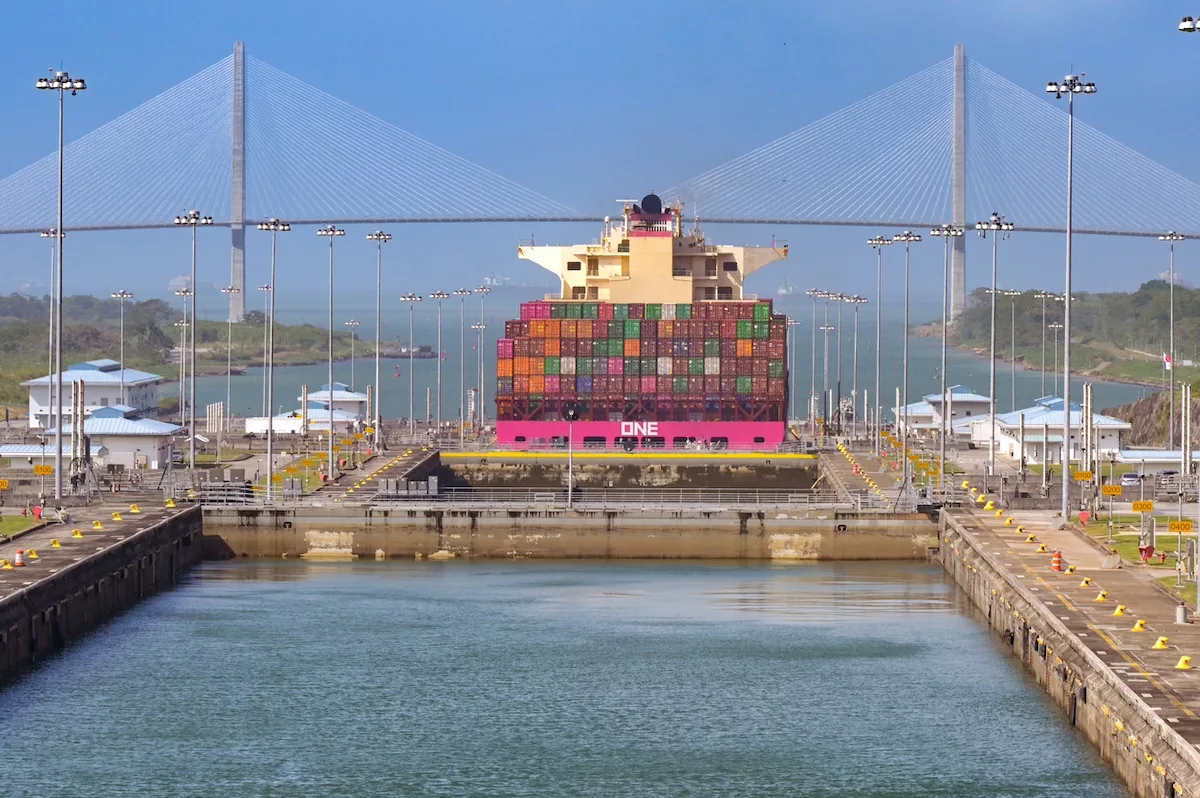
The vital Panama Canal, a linchpin of global maritime trade, is currently grappling with severe congestion, leading to delays of approximately three-and-a-half days for tankers and cargo ships awaiting passage. This significant bottleneck has been exacerbated by the ripple effects of the escalating regional conflict linked to Iran, which has reportedly caused a near-shutdown of the strategically crucial Strait of Hormuz. The resulting scramble for alternative energy and chemical supplies from the Americas to Asian markets has driven a surge in traffic through the 50-mile (82-kilometer) waterway, prompting one vessel to make an extraordinary payment of $4 million in an auction to secure an immediate transit slot.
This current state of congestion marks the most severe disruption since the historic 2023-2024 drought, which dramatically curtailed daily vessel passages through the canal due to critically low water levels in Gatun Lake. The confluence of a previously strained system and a sudden, geopolitically driven surge in demand has created an acute operational challenge for one of the world’s most indispensable maritime chokepoints.
The Geopolitical Catalyst: Strait of Hormuz and Global Supply Chain Rerouting
The primary driver behind this recent surge in Panama Canal traffic is directly linked to the broader regional instability often referred to as the "Iran conflict" or "Iran war" in the context of global shipping. While the exact nature and scale of the conflict’s impact on all regional chokepoints can vary, the provided information highlights a critical development: the near-shutdown of the Strait of Hormuz. This narrow strait, connecting the Persian Gulf to the Arabian Sea, is arguably the world’s most important oil transit chokepoint, with approximately one-fifth of the world’s total oil consumption and a substantial portion of liquefied natural gas (LNG) and other chemical shipments passing through it daily.
A "near-shutdown" of the Strait of Hormuz would effectively strangle the flow of oil, natural gas, fertilizers, and chemical shipments from major Persian Gulf nations. Countries, particularly those in Asia that are heavily reliant on these supplies, are now being forced to seek alternative sources. This reorientation of global supply chains has significantly boosted demand for commodities from the Americas, particularly the United States, which has emerged as a major exporter of liquefied petroleum gas (LPG), natural gas, and various chemicals. For these American-sourced supplies to reach Asian markets efficiently, the Panama Canal becomes the indispensable conduit, bypassing the perilous or inaccessible routes originating from the Persian Gulf. This fundamental shift in trade patterns is directly responsible for the sudden and intense pressure on the canal’s capacity.
The Auction System: A Premium on Urgency and Expedited Passage
The Panama Canal operates a sophisticated reservation system to manage its traffic, allowing vessels to book transit slots in advance. However, for ships without reservations or those facing unexpected delays, an auction system provides an opportunity to secure an earlier passage. This system, which has been in place for years, allows shipping companies to bid for available transit slots, with the highest bidder gaining priority. The recent record-breaking bid underscores the extreme urgency and commercial pressures facing global logistics in the current environment.
In recent days, a tanker carrying liquefied petroleum gas (LPG) agreed to pay an astonishing $4 million in a canal auction to expedite its passage. This figure represents a dramatic escalation from previous periods. As recently as early March, during the initial weeks of the Iran conflict, similar "cut-in-line" fees for some vessels were less than $1 million. The quadrupling of this auction premium within a short span highlights the rapidly increasing value placed on speed and reliability in a volatile market.
It is crucial to note that this auction fee is levied in addition to the standard transit cost for sailing through the canal. Depending on the vessel’s size, its cargo type, and other factors, the normal cost to traverse the Panama Canal can already run into the hundreds of thousands of dollars. For instance, a large Neopanamax container ship might incur fees upwards of $500,000 to $1 million for a single transit. The $4 million auction bid, therefore, represents a substantial additional outlay, indicative of the immense financial implications of delays for the cargo and the potential losses averted by expedited transit. Such high payments suggest that the value of the cargo, the urgency of its delivery, and prevailing freight rates make such an investment economically viable for the shipping company.
A Snapshot of the Surge: The Case of the Gas Virgo
A concrete example of this expedited passage and the nature of the cargo involved is the transit of the Gas Virgo. This Singapore-flagged tanker, under the control of China’s Wanhua Chemical, successfully navigated the Panama Canal on April 15. According to data from energy analytics company Vortexa, the vessel was transporting LPG that originated from Texas, USA. This particular transit exemplifies the new trade route dynamics: US-sourced LPG making its way to Asian markets via the Panama Canal, circumventing traditional supply lines potentially impacted by the Strait of Hormuz situation.
LPG, or liquefied petroleum gas, is a critical commodity with diverse applications. It is a byproduct of both oil refining and natural gas processing, making the United States, with its robust shale gas industry, a significant global producer and exporter. LPG is used in a vast array of sectors, from powering household stoves and forklifts to serving as a crucial feedstock in various chemical production lines. Countries like India, which relies heavily on LPG for household cooking, have faced particularly acute shortages as traditional Persian Gulf supplies become constrained. The rerouting of such vital commodities via the Panama Canal underscores the immediate and tangible impact of geopolitical events on everyday life and industrial operations across the globe.
A spokesperson at Wanhua Chemical’s headquarters in Yantai declined to comment on the specific transaction or the record auction payment, a common practice for companies discussing non-public commercial matters.
Official Responses and Market Interpretations
The Panama Canal Authority (PCA) has been proactive in addressing inquiries regarding the heightened congestion and the record auction bids. In an emailed response, the canal authority clarified that "auction values are determined by multiple factors, including the urgency and commercial priorities of individual clients, as well as broader supply-demand conditions in global commerce, and consider other factors such as freight rates and bunker prices." This statement emphasizes that the PCA does not set these exorbitant fees but rather facilitates a market-driven bidding process that reflects the immediate economic value placed on prompt passage by shipping companies.
Analysts from leading maritime research firms have also weighed in on the situation. Clarksons Securities, including analyst Omar Nokta, noted that "Transits through the canal have become busier in recent weeks on the back of higher U.S. export flows of various cargoes, leading to the heightened congestion." This analysis corroborates the direct link between the rerouting of US exports and the canal’s current strain. Furthermore, Odin Marine Group echoed this sentiment, stating in a note that "Competition for transits is therefore expected to stay firm, underpinning elevated premiums in the near term." This suggests that high auction prices and increased demand for Panama Canal slots are likely to persist as long as the underlying geopolitical factors and supply chain disruptions remain unresolved.
The wait time of three-and-a-half days represents the median over a seven-day period for all commercial cargo, as compiled by Bloomberg data. This metric includes vessels with and without reservations, traveling in both directions, providing a comprehensive picture of the current operational slowdown affecting all commercial traffic.
Historical Context: The Shadow of Drought and Compounding Challenges
The current crisis at the Panama Canal is not occurring in a vacuum. It is superimposed on a system that has only recently begun to recover from the most severe drought in its history, spanning from late 2023 into early 2024. The canal, which relies on freshwater from Gatun Lake to operate its lock system, was forced to drastically reduce daily transits and impose draft restrictions on vessels due to critically low water levels. At its peak, the number of daily transits was cut from a typical 36-38 to as few as 24, creating significant backlogs and driving up shipping costs.
While the canal has gradually increased its daily transit slots as water levels have marginally improved, the system remains under pressure and far from its full capacity. The current surge in traffic, driven by geopolitical rerouting, is therefore compounding an already strained infrastructure. This means that even with the slight easing of drought-related restrictions, the canal lacks the buffer capacity to absorb such an abrupt and substantial increase in demand without experiencing severe congestion and delays. The dual challenge of climate change impacting water availability and geopolitical instability disrupting traditional trade routes presents an unprecedented operational dilemma for the Panama Canal.
Broader Implications for Global Trade and Supply Chains
The escalating situation at the Panama Canal, driven by the Strait of Hormuz disruption and the subsequent shift in global supply chains, carries profound implications for international trade, energy security, and economic stability.
-
Increased Shipping Costs and Inflationary Pressures: The $4 million auction bid is a stark indicator of the soaring costs associated with maritime transport. These additional expenses, whether through direct transit fees or the opportunity cost of delays, are ultimately passed down the supply chain to consumers, contributing to higher commodity prices and potentially fueling inflation across various sectors. The cost of LPG, for example, could see upward pressure, impacting households and industries reliant on it.
-
Supply Chain Vulnerability and Resilience: The crisis highlights the inherent fragility of global "just-in-time" supply chains, which are designed for efficiency but are highly susceptible to disruptions at critical chokepoints. Businesses are now compelled to reassess their logistics strategies, potentially diversifying their sourcing regions and exploring alternative, albeit longer and more expensive, shipping routes. This could lead to a broader trend towards supply chain de-globalization or regionalization, prioritizing resilience over pure cost efficiency.
-
Energy Security and Commodity Markets: A "near-shutdown" of the Strait of Hormuz represents a significant threat to global energy security, particularly for oil and gas-importing nations in Asia. The reliance on US supplies, facilitated by the Panama Canal, underscores the shifting dynamics of global energy markets and the growing strategic importance of American energy exports. The heightened demand for alternative sources can lead to price volatility and potential shortages for critical commodities like LPG, fertilizers, and industrial chemicals.
-
Geopolitical Ramifications: The incident underscores the interconnectedness of regional conflicts and global commerce. The "Iran war" context and its impact on a vital chokepoint like the Strait of Hormuz demonstrate how localized tensions can have cascading effects on global trade routes and economic stability, drawing major powers into complex geopolitical calculations concerning maritime security and freedom of navigation.
-
Environmental Impact: Longer transit times and rerouting via longer sea lanes (such as around the Cape of Good Hope, if the Panama Canal becomes too costly or congested) translate to increased fuel consumption and higher greenhouse gas emissions, complicating global efforts to decarbonize the shipping industry.
Alternative Routes and Future Outlook
While the Panama Canal offers the shortest route between the Atlantic and Pacific oceans for many cargo types, severe congestion and exorbitant costs can force shippers to consider alternative, less efficient options. These include circumnavigating South America via Cape Horn or the Strait of Magellan, which adds thousands of miles and weeks to a journey, significantly increasing fuel consumption, operating costs, and emissions. Another major global maritime chokepoint, the Suez Canal, has also faced its own set of challenges due to Houthi attacks in the Red Sea, forcing many vessels to reroute around the Cape of Good Hope, further straining global shipping capacity and increasing transit times. This broader context of global maritime vulnerabilities means that even if one chokepoint experiences relief, pressure can simply shift to another.
Looking ahead, the long-term outlook for the Panama Canal remains complex. While the immediate surge is driven by geopolitical factors, the underlying vulnerability due to climate-induced drought conditions persists. The canal authority continues to explore strategies to enhance water management and potentially increase capacity, but these are long-term projects. In the near term, the canal’s operational efficiency will remain a critical barometer of both global trade health and geopolitical stability. The sustained demand for US-sourced supplies by Asian nations, a trend that predates the current crisis but has been dramatically accelerated by it, suggests that competition for Panama Canal transits will remain robust, ensuring that premiums for expedited passage, though perhaps not always $4 million, will likely stay elevated.
In conclusion, the Panama Canal finds itself at the epicenter of a perfect storm: a fragile recovery from an unprecedented drought, suddenly confronted by a massive rerouting of global trade spurred by severe geopolitical disruptions impacting the Strait of Hormuz. The record $4 million payment for a single transit slot is not just a commercial transaction; it is a powerful symbol of the extreme pressures on global supply chains, the high stakes of maritime security, and the profound economic consequences of regional conflicts in an increasingly interconnected world.

Related Posts
Delta Air Lines Adjusts Key Environmental Targets Amidst Slow Sustainable Fuel Progress
India’s Trade Deficit Narrows to $20.67 Billion in March Amidst Middle East Conflict Disruptions and Global Economic Headwinds