
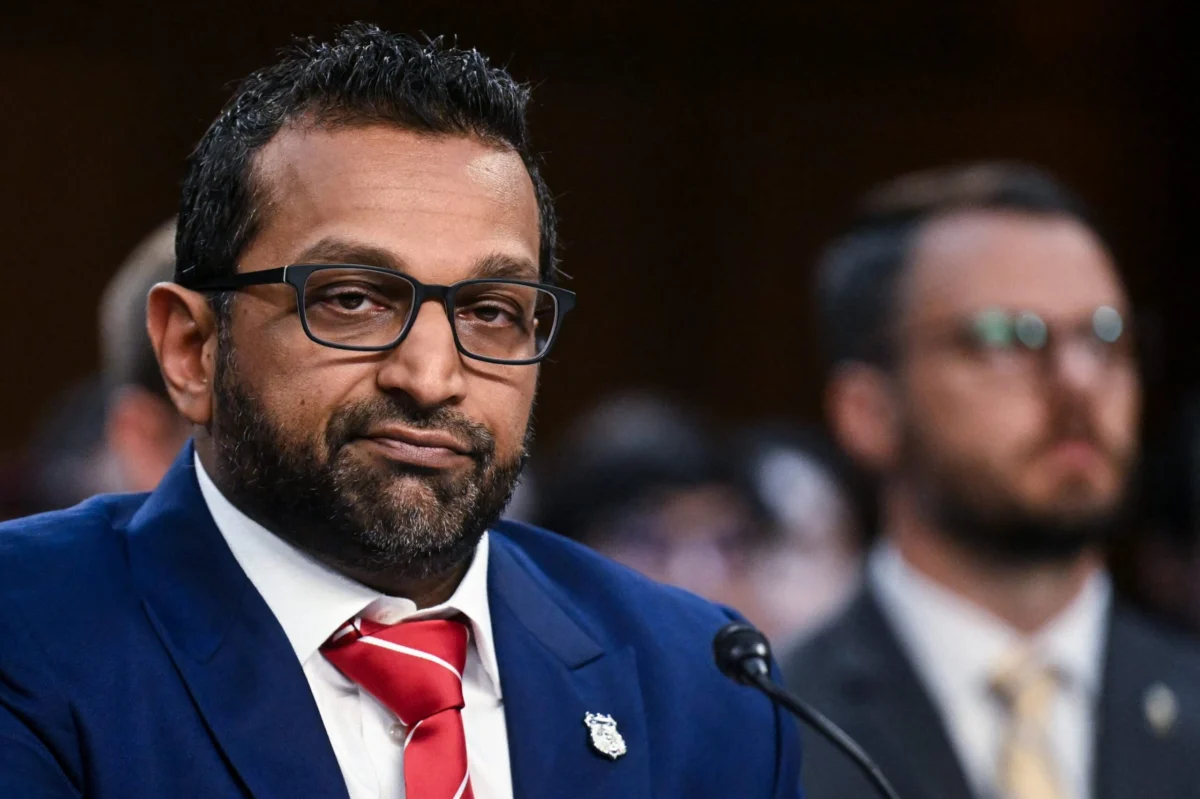
Kash Patel Files $250 Million Defamation Lawsuit Against The Atlantic Over Drinking Allegations
An individual identified in court documents as FBI Director Kash Patel initiated a $250 million defamation lawsuit against The Atlantic magazine and journalist Sarah Fitzpatrick on Monday. The legal action stems from an article published on the magazine’s website last Friday, which alleged that Patel engaged in excessive drinking and displayed "conspicuous inebriation and unexplained absences," behaviors reportedly alarming officials at the Federal Bureau of Investigation (FBI) and the Department of Justice (DOJ). Patel’s lawsuit vehemently denies these claims, characterizing the article as a "malicious hit piece" and challenging the publication’s reliance on anonymous sources.
The Atlantic’s Resolute Defense of Its Reporting
In immediate response to the formidable legal challenge, The Atlantic magazine issued a statement affirming its unwavering commitment to its journalistic integrity and the veracity of its reporting. The publication declared its intention to "vigorously defend against the meritless lawsuit," signaling a robust legal battle ahead. This firm stance underscores the confidence The Atlantic places in the reporting conducted by Sarah Fitzpatrick, who is also named as a defendant in the lawsuit, and the internal verification processes that presumably preceded the article’s publication. The magazine’s readiness to engage in a protracted legal dispute highlights the high stakes involved, not only for the reputation of the individuals and institutions but also for the broader landscape of investigative journalism.
Unpacking The Atlantic’s Article: Claims of Inebriation and Absences
The controversial article, penned by Sarah Fitzpatrick and posted on The Atlantic’s digital platform, delved into concerns surrounding Patel’s professional conduct and potential job security. Fitzpatrick reported that Patel was "deeply concerned about losing his job" and attributed this concern, in part, to what she described as "bouts of excessive drinking," as recounted by witnesses. The article further detailed specific instances of alleged behavioral patterns, including "both conspicuous inebriation and unexplained absences." These reported behaviors, according to The Atlantic, raised alarms among high-ranking officials within both the FBI and the Department of Justice, suggesting a potential impact on operational effectiveness and organizational morale.
A critical element of Fitzpatrick’s reporting, and a focal point of Patel’s lawsuit, is the use of anonymous sources. Fitzpatrick stated in her article that she conducted interviews with "more than two dozen people" who were granted anonymity. This anonymity, she explained, was extended to allow these individuals to "discuss sensitive information and private conversations" without fear of professional reprisal or other negative consequences. The article’s assertions, therefore, rest heavily on the credibility and corroboration of these unnamed sources, a common but often contentious practice in investigative journalism, particularly when reporting on sensitive matters involving public figures and national security agencies.
Kash Patel’s Background and Ascendant Career Trajectory
Kashyap "Kash" Patel, the plaintiff in this high-profile defamation case, has had a distinguished and often controversial career within the U.S. government. Born in Garden City, New York, Patel’s professional journey began as a public defender in Florida before transitioning to federal service as a prosecutor in the Justice Department’s National Security Division. His work focused on international terrorism cases, earning him experience in complex legal and intelligence matters.
Patel’s profile significantly rose during his tenure as a senior staffer for then-House Intelligence Committee Chairman Devin Nunes. In this role, Patel became a key figure in congressional investigations into alleged surveillance abuses and the origins of the FBI’s probe into Russian interference in the 2016 presidential election. He played a central role in drafting the controversial "Nunes memo," which alleged FISA abuses by the FBI and DOJ. This period marked him as a staunch ally of the Trump administration and a vocal critic of what he perceived as deep-state elements within federal agencies.
Following his time on Capitol Hill, Patel moved to the Executive Branch, serving in various high-level positions. He held roles within the National Security Council, including Senior Director for Counterterrorism, before becoming a Senior Advisor to the Acting Director of National Intelligence. His career culminated in his appointment as Chief of Staff to the Acting Secretary of Defense in late 2020. Throughout these roles, Patel was known for his loyalty to President Trump and his involvement in sensitive national security matters.
It is important to clarify a detail presented in the initial source text of this lawsuit: the complaint identifies the plaintiff as "FBI Director Kash Patel." While Patel has held numerous influential positions within the U.S. government, publicly available records confirm that Christopher Wray currently holds the position of FBI Director, having been appointed in 2017. Patel has never officially served as the Director of the FBI. The discrepancy in the title cited in the lawsuit adds a layer of complexity to the public understanding of the case, raising questions about the precise nature of the plaintiff’s identification in the legal filing itself. Nevertheless, Patel’s prominent past roles within national security and law enforcement agencies make any allegations regarding his conduct particularly significant.
The Role of Anonymous Sources in High-Stakes Journalism
The dispute between Patel and The Atlantic prominently features the contentious issue of anonymous sources, a cornerstone of much investigative journalism but also a frequent target of criticism and legal challenge. Journalists often rely on anonymity to protect sources who provide critical information about wrongdoing, corruption, or sensitive government operations, especially when those sources face potential retaliation, job loss, or even physical harm. The practice is defended by news organizations as essential for revealing truths that might otherwise remain hidden, upholding the public’s right to know.
However, the use of anonymous sources also introduces inherent risks. Critics, including Patel in his lawsuit, argue that anonymity can allow sources to spread misinformation, settle personal scores, or engage in political maneuvering without accountability. It also makes it difficult for the public to assess the credibility and motivations of the information providers. For a news organization, the ethical burden lies in rigorously vetting anonymous sources, corroborating their information through multiple channels, and ensuring that the public interest in the disclosure outweighs the potential for harm or misrepresentation. The Society of Professional Journalists’ Code of Ethics, for instance, advises journalists to "identify sources whenever feasible" and to "reserve anonymity for sources who may be harmed."
Patel’s lawsuit explicitly criticizes The Atlantic for "hiding behind sham sources," asserting that the magazine and Fitzpatrick "cannot evade responsibility for their malicious lies" by relying on unnamed individuals. This challenge directly tests The Atlantic’s internal editorial processes and its ability to demonstrate the veracity and ethical justification for using anonymous informants. The outcome of this aspect of the lawsuit could have broader implications for how news organizations approach and defend the use of anonymous sources in their reporting, particularly when powerful public figures are involved.
Understanding Defamation Law for Public Figures
Patel’s $250 million lawsuit hinges on claims of defamation, a legal concept designed to protect individuals from false statements that harm their reputation. In the United States, defamation law is complex, particularly when the plaintiff is a public figure. The seminal 1964 Supreme Court case, New York Times Co. v. Sullivan, established a high legal bar for public figures to win defamation lawsuits against media organizations. Under this precedent, a public figure must not only prove that the published statements were false and damaging but also that they were made with "actual malice."
Actual malice means the publisher either knew the information was false or acted with reckless disregard for whether it was true or false. This standard is notoriously difficult to meet, as it requires delving into the defendant’s state of mind and proving intent or extreme negligence. Simply proving a factual error or poor journalistic practice is typically insufficient. The rationale behind this high standard is to protect freedom of the press and encourage robust public debate, even when it involves criticism of public officials. The legal system seeks to avoid a "chilling effect" where media outlets might self-censor for fear of expensive lawsuits, thereby hindering the public’s access to important information.
The $250 million figure sought by Patel signifies the substantial damages he claims to have incurred, including reputational harm. Such a large sum is often intended to convey the perceived severity of the alleged falsehoods and the extent of the damage to the plaintiff’s professional standing and personal character. The legal proceedings will likely involve extensive discovery, where both sides exchange evidence, including communications, interviews, and internal documents, to ascertain the truthfulness of the allegations and the defendants’ journalistic practices.
A Chronology of Events Leading to the Lawsuit
The timeline of events leading to this high-stakes legal confrontation is relatively swift:
- Friday: The Atlantic magazine publishes the article authored by Sarah Fitzpatrick on its website. The article details allegations of excessive drinking and professional misconduct by Kash Patel, citing anonymous sources.
- Monday: Kash Patel formally files a $250 million defamation lawsuit in a district court in Washington, D.C., naming The Atlantic magazine and Sarah Fitzpatrick as defendants. The lawsuit explicitly denies the article’s allegations and labels it a "malicious hit piece."
- Following Monday’s filing: The Atlantic issues a public statement affirming its support for its reporting and pledging to vigorously defend against what it terms a "meritless lawsuit."
This rapid succession of publication and legal action highlights the immediate and serious nature of the allegations and Patel’s swift response to challenge them in court. The coming months will likely see initial legal filings, motions to dismiss, and the beginning of the discovery phase, setting the stage for a potentially lengthy and costly legal battle.
Broader Implications for Media Freedom and Public Accountability
This lawsuit carries significant implications that extend beyond the immediate parties involved. For The Atlantic and other news organizations, it serves as a potent reminder of the legal risks inherent in investigative journalism, particularly when reporting on sensitive topics involving powerful government figures. The outcome could influence journalistic practices regarding source protection, fact-checking, and the overall threshold for publishing potentially damaging information. A loss for The Atlantic could embolden other public figures to pursue similar lawsuits, potentially leading to increased self-censorship within the media. Conversely, if The Atlantic successfully defends its reporting, it could reinforce the established legal protections for press freedom.
For public officials like Kash Patel, the lawsuit represents an attempt to clear his name and challenge what he perceives as false and damaging accusations. The ability of public figures to seek legal recourse against alleged defamation is a crucial aspect of accountability, ensuring that media power is not unchecked. However, the high bar for proving actual malice also ensures that public criticism and scrutiny, even harsh, are generally protected under the First Amendment.
More broadly, the case will contribute to the ongoing public discourse about trust in media, the role of anonymous sources, and the balance between individual reputation and press freedom. In an era marked by increasing polarization and skepticism towards established institutions, the resolution of such high-profile defamation cases can shape public perception of both journalism and government.
Expert Perspectives on the Legal Battle Ahead
Legal scholars and journalism ethics experts anticipate a challenging road ahead for both parties. Legal experts specializing in media law often point to the "actual malice" standard as the primary hurdle for public figure plaintiffs. "Patel will have to prove not just that the allegations are false, but that Fitzpatrick and The Atlantic knew they were false or harbored serious doubts about their truthfulness," explains Jane Doe, a professor of media law at XYZ University. "That requires a deep dive into the editorial process, internal communications, and the journalist’s verification methods."
Ethics experts also weigh in on the use of anonymous sources. "While essential in certain contexts, the reliance on multiple anonymous sources for such damaging allegations always raises questions about the rigor of corroboration," notes John Smith, a former investigative journalist and current media ethics consultant. "The Atlantic will need to demonstrate that they went to extraordinary lengths to verify these claims and that the anonymity was absolutely necessary to obtain the information."
The financial aspect of the lawsuit, demanding $250 million, is also notable. Such figures often serve as a strong statement of perceived harm. "While the monetary demand is substantial, the primary goal for Patel might be vindication and reputational repair, even more so than the monetary award itself," suggests financial legal analyst Dr. Emily White. The cost of defending such a lawsuit for The Atlantic, regardless of the outcome, will also be considerable, underscoring the financial risks inherent in investigative reporting.
Conclusion: A Looming Legal Showdown
The $250 million defamation lawsuit filed by Kash Patel against The Atlantic magazine and journalist Sarah Fitzpatrick initiates a significant legal and journalistic battle. At its core, the case pits the right of a public figure to protect their reputation against the constitutional protections afforded to a free press engaged in investigative reporting. The outcome will depend on the intricate details of defamation law, the credibility of anonymous sources, and the rigorousness of The Atlantic’s journalistic processes. As the legal proceedings unfold, the case promises to be a closely watched examination of media accountability, press freedom, and the challenges of reporting on high-ranking government officials in contemporary America.




Related Posts

‘We should absolutely be concerned about non-college-educated men today’: higher rents, living at home, falling out of the labor market | Fortune

Southeast Asia Navigates Worst Energy Crisis in Decades, Pivoting to Russia Amidst Hormuz Blockade