

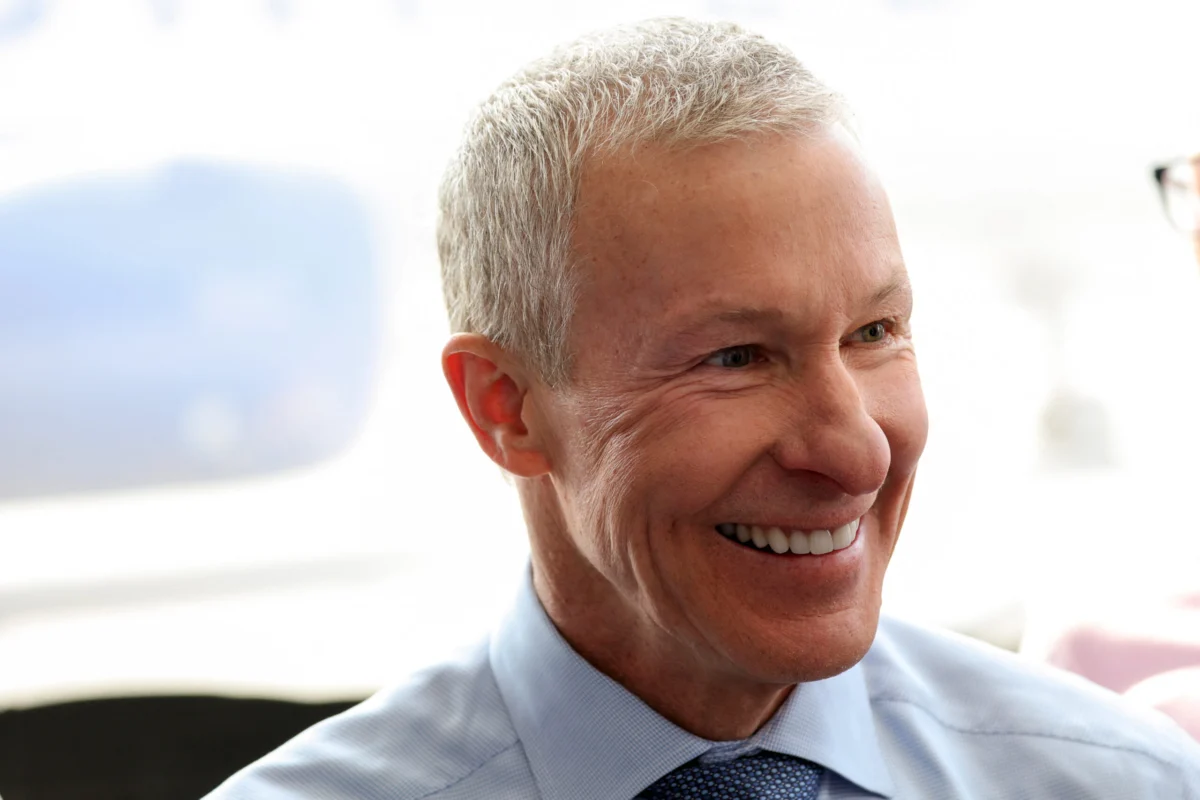
The aviation industry was once again set abuzz in mid-April with reports that Scott Kirby, the assertive Chief Executive Officer of United Airlines, had expressed interest in acquiring his long-standing rival, American Airlines. This revelation, first reported by Fortune, immediately cast a spotlight on Kirby’s reputation as a relentless architect of airline consolidation, marking his third significant endeavor to fundamentally alter the competitive landscape. While American Airlines promptly issued a definitive rejection on Friday, stating it was "not engaged with or interested in any discussions regarding a merger with United Airlines," the mere proposition underscores Kirby’s audacious strategic vision. Industry insiders, speaking to Fortune, acknowledged the formidable challenges such a merger would face, particularly concerning regulatory approval, yet cautiously deemed it "not impossible," citing a political environment potentially amenable to "big deals." To comprehend the gravity and potential ramifications of this latest move, it is imperative to delve into Scott Kirby’s extensive track record, a career defined by strategic audacity and a profound understanding of network economics.
A History Forged in Consolidation: Kirby’s Rise as an Industry Maverick
Scott Kirby’s career is a testament to his unique blend of analytical prowess and aggressive strategic execution within the highly competitive airline sector. His journey began to gain significant traction in the early 2000s at America West Airlines, where he ascended to become the top lieutenant to CEO Doug Parker. This partnership would prove to be one of the most transformative in modern aviation history.
The America West-US Airways Coup (2005): A David-and-Goliath Story
The first major demonstration of Kirby’s strategic acumen came in 2005. America West, a comparatively smaller, phoenix-like carrier that had itself emerged from bankruptcy, orchestrated a stunning offensive to acquire the much larger US Airways, which was then mired in Chapter 11 bankruptcy protection. This move was widely regarded as a "David-beats-Goliath" scenario, as America West, despite its smaller stature, leveraged a combination of financial engineering and strategic foresight to absorb its larger, ailing competitor. The merged entity, remarkably, adopted the more recognized "US Airways" brand, signaling a calculated move to capitalize on existing brand equity despite the acquirer’s operational dominance.
Kirby’s role in this intricate maneuver was pivotal. He was instrumental in designing the network strategy and revenue management models that would underpin the new US Airways, ensuring that the integration of two disparate route structures and operational philosophies yielded maximum synergy. The success of this merger laid the groundwork for future consolidation, demonstrating that smaller, agile carriers, led by visionary executives, could effectively acquire and integrate larger, struggling airlines.
The operational improvements post-merger were equally critical. In 2007, Robert Isom, American Airlines’ current CEO, joined US Airways as Chief Operating Officer. Alongside CEO Parker and President Kirby, Isom became part of what was quickly dubbed an industry "dream team." While Kirby focused on the strategic and financial architecture, Isom dedicated himself to operational excellence. He spearheaded a dramatic turnaround in US Airways’ industry-trailing performance metrics, including on-time performance, baggage handling, and customer service. Within an impressive two-year span, US Airways moved from being an industry laggard to ranking among the best in these critical categories, solidifying the team’s reputation for both strategic vision and meticulous execution.
The American Airlines Acquisition (2013): Reshaping the Global Landscape
The "brain trust" of Parker, Kirby, and Isom reprised their audacious playbook in December 2013. Following the template established with US Airways, they set their sights on American Airlines, which had entered Chapter 11 bankruptcy in 2011. This was an even more ambitious undertaking, as American was, at the time, a venerable but financially distressed titan of the aviation world. The merger created the world’s largest airline, a monumental shift in the global aviation landscape.
Once again, the acquiring entity, US Airways, adopted the more globally recognized "American Airlines" brand, leveraging its historical legacy and broader international presence. Parker, Kirby, and Isom continued in their respective roles as CEO, President, and COO, guiding the newly merged behemoth through a complex integration process. Their combined efforts orchestrated a remarkable comeback, with American Airlines’ stock by the mid-2010s recovering to near pre-Global Financial Crisis levels. Kirby’s expertise in network planning and revenue management was crucial in optimizing American’s vast route network and ensuring profitable growth in the intensely competitive post-merger environment.
Transition to United and the Pursuit of Premiumization (2016-Present)
The formidable partnership at American eventually saw a divergence. Doug Parker made it clear that Kirby was not slated to succeed him as CEO. Seizing the opportunity, United Airlines CEO Oscar Munoz moved swiftly in 2016 to poach the then 50-year-old Kirby, appointing him as President and heir apparent. This move signaled United’s ambition to emulate Delta Air Lines’ highly successful strategy of focusing on high-fare business and premium leisure customers.
At United, Kirby further burnished his credentials, building on Munoz’s initial efforts to move upmarket. He systematically optimized United’s network to capture lucrative corporate travel, investing in premium products and services, and streamlining operations to enhance the customer experience for high-value segments. This strategic shift, heavily influenced by Kirby’s data-driven approach, has been credited with significantly improving United’s financial performance and market positioning.
Jim Olson, who served alongside Kirby at both US Airways and United, heading communications for both companies, offers a telling anecdote about Kirby’s intellect. "He’s the smartest person I’ve ever worked with," Olson recounts. "He’s like an AI supercomputer in establishing routes, but he shows it even in funny ways. At US Airways, we had this contest at quarterly all-hands meetings where they’d put out this giant jar of jelly beans, and you’d win by getting closest to actual number of beans in the jar. Kirby just eyed it and won, he was off by just a few jelly beans." Olson adds that Kirby is "extremely politically savvy, and employees love him," highlighting his ability to navigate complex organizational dynamics alongside his analytical genius. (Olson recently published an acclaimed memoir and crisis management guide, Tailwind: A Compass for Turning Your Setback Story Into a Comeback Legacy, featuring a foreword by Munoz, which this writer highly recommends.)
The Current State of American Airlines: A Ripe Target?
Kirby’s current interest in American Airlines is not merely opportunistic; it reflects a calculated assessment of the target’s strategic vulnerabilities and potential for transformation. While United and Delta have largely pursued a strategy of attracting affluent flyers and prioritizing premium services, American Airlines under its post-Kirby leadership has charted a different course.
American emphasized competing primarily on price, even going so far as to remove premium rows from some of its aircraft to increase seat density and offer lower fares. This strategy, aimed at competing with ultra-low-cost carriers like Spirit and Frontier, ultimately led to lower yields on seats sold. The focus on high volume at lower margins, coupled with a less robust premium product, resulted in lower profitability and a comparatively higher debt load.
This strategic direction made American Airlines acutely vulnerable to external shocks, particularly the unprecedented downturn caused by the COVID-19 pandemic. To survive the severe travel restrictions and plummeting demand, American was forced to take on "gigantic levels of debt," which continue to hobble its finances to this day. Its current market capitalization, standing at just over $8 billion, starkly illustrates investor sentiment. This figure is roughly one-fourth of United’s and one-fifth of Delta’s respective valuations, despite American’s comparable size in terms of revenues. Such a tiny valuation, for a carrier of its scale, clearly underlines that investors are extremely downbeat on American’s future prospects, making it an attractive target for an acquirer like Kirby who sees potential for significant value creation through strategic reorientation and integration.
Navigating the Regulatory Minefield: Antitrust Concerns and Political Nuances
Any merger of the magnitude proposed by Kirby – combining two of the largest airlines in the world – would face an arduous and likely hostile regulatory review process. The U.S. Department of Justice (DOJ) and the Federal Trade Commission (FTC) have, in recent years, demonstrated an increased skepticism towards large-scale corporate consolidation, particularly in concentrated industries like aviation.
Historical Precedents and Evolving Antitrust Stance:
The airline industry has undergone a significant wave of consolidation over the past two decades, with major mergers including Delta-Northwest (2008), United-Continental (2010), Southwest-AirTran (2011), and the aforementioned American-US Airways (2013). While these mergers were ultimately approved, often with significant concessions such as slot divestitures and route adjustments, the regulatory environment has evolved. The current administration has signaled a more aggressive stance on antitrust enforcement, emphasizing concerns about consumer harm, reduced competition, and potential for higher fares.
A United-American merger would create an entity with unprecedented market power, potentially controlling close to 40-50% of the domestic market share when combined with Delta, effectively reducing the "Big Four" to a "Big Two" or "Big Three" depending on how Southwest is factored in. This level of concentration would almost certainly trigger intense scrutiny from antitrust regulators who would meticulously examine:
- Route Overlap: Significant overlap on key domestic and international routes, potentially leading to reduced competition and higher fares for consumers.
- Hub Concentration: Dominance at major hub airports, potentially limiting access for smaller carriers and stifling new entry.
- Network Effects: The combined network’s sheer scale could create an insurmountable barrier for competitors, reinforcing the merged entity’s pricing power.
- Consumer Impact: Fears of reduced choices, potentially higher ancillary fees, and diminished service quality due to lack of competitive pressure.
The Political Dimension:
The original Fortune report’s mention of a "president who loves big deals" introduces a crucial political variable. While traditional antitrust enforcement aims to protect competition and consumers, political considerations can sometimes influence outcomes. A pro-business administration might view large mergers as a sign of economic dynamism and global competitiveness, potentially softening the regulatory stance. However, even with political favor, the legal and economic arguments against such a concentrated market would be substantial, requiring robust justifications from the merging parties regarding efficiency gains, consumer benefits, and the ability to compete more effectively on a global scale. It is highly probable that any approval would come with stringent conditions, including forced divestitures of routes, slots, and gates at key airports.
Stakeholder Reactions and Broader Implications
The mere suggestion of a United-American merger has already elicited strong, albeit preliminary, reactions from various stakeholders, and any serious pursuit would ignite a firestorm of debate.
American Airlines’ Stance:
American Airlines’ swift rejection of the proposal is understandable. No management team readily cedes control, and CEO Robert Isom, himself a veteran of the previous American-US Airways merger, is currently focused on guiding American through its post-COVID recovery and addressing its debt burden. A merger would entail a loss of corporate independence, potential job redundancies, and a complex cultural integration, all of which would be fiercely resisted. Isom’s familiarity with Kirby’s operational style from their past collaborations might also inform his skepticism about the ease of integration.
Industry Analysts:
Analysts are largely skeptical about the merger’s feasibility given the current antitrust climate but acknowledge Kirby’s persistent ambition. They would weigh the potential for massive cost synergies, enhanced network optimization, and increased pricing power against the monumental integration risks, the sheer cost of the acquisition, and the near-certain regulatory hurdles. The integration of two massive airline IT systems, labor contracts (especially complex pilot seniority lists), and corporate cultures has historically proven to be incredibly challenging and expensive.
Labor Unions:
Airline labor unions, historically powerful and influential, would be vocal opponents. Concerns would center on job security, the complex and often contentious process of integrating seniority lists across different airlines (which can lead to significant internal strife), and the potential for reduced collective bargaining power. Strikes and industrial action could become significant threats if merger plans advanced without strong labor protections and agreements.
Consumer Advocates:
Consumer advocacy groups would undoubtedly launch a vigorous campaign against the merger, arguing vociferously that it would lead to higher fares, fewer choices, and diminished service quality for travelers. They would highlight the already consolidated nature of the U.S. airline industry and argue that further consolidation would be detrimental to the public interest.
Broader Industry Impact:
Should a merger somehow overcome all obstacles, the implications for the wider aviation industry would be profound. It could trigger a fresh wave of consolidation among remaining mid-sized carriers, fundamentally reshaping the competitive landscape. It would also likely lead to significant adjustments within global airline alliances (Star Alliance for United, Oneworld for American), further consolidating power among fewer, larger entities. For consumers, while a more streamlined network might offer some benefits in terms of connectivity, the overwhelming concern would be the potential for a less competitive market leading to higher prices and fewer incentives for service innovation.
Conclusion: A Maverick’s Unfinished Business?
Scott Kirby’s interest in American Airlines is a classic example of his strategic thinking: identify a struggling but fundamentally valuable asset, envision its transformation through superior network and revenue management, and pursue it with relentless determination. He is confronting a leader, Robert Isom, who was part of the very "brainiac trio" that performed the US Airways-American coup a decade ago, making this quest anything but easy.
Given American’s outright rejection and the immense regulatory, financial, and operational challenges, the immediate prospects for a United-American merger appear bleak. However, Kirby’s track record demonstrates an uncanny ability to identify and execute deals that initially seem impossible. From orchestrating the acquisition of a larger US Airways by a smaller America West, to leading the absorption of a bankrupt American Airlines, Kirby has consistently defied conventional wisdom. His journey is defined by a deep-seated belief in the power of consolidation to create more efficient and profitable airlines. While American has emphatically closed the door for now, those familiar with Scott Kirby’s history know that when he sets his sights on a deal, the initial rejection is rarely the final chapter. The aviation world will undoubtedly continue to watch, keenly aware that this maverick executive often finds a way to reshape the playing field to his vision.








Comments (0)