
Federal government launches broad probe into mysterious disappearances and deaths of top scientists. ‘We haven’t found anything alarming yet’ | Fortune
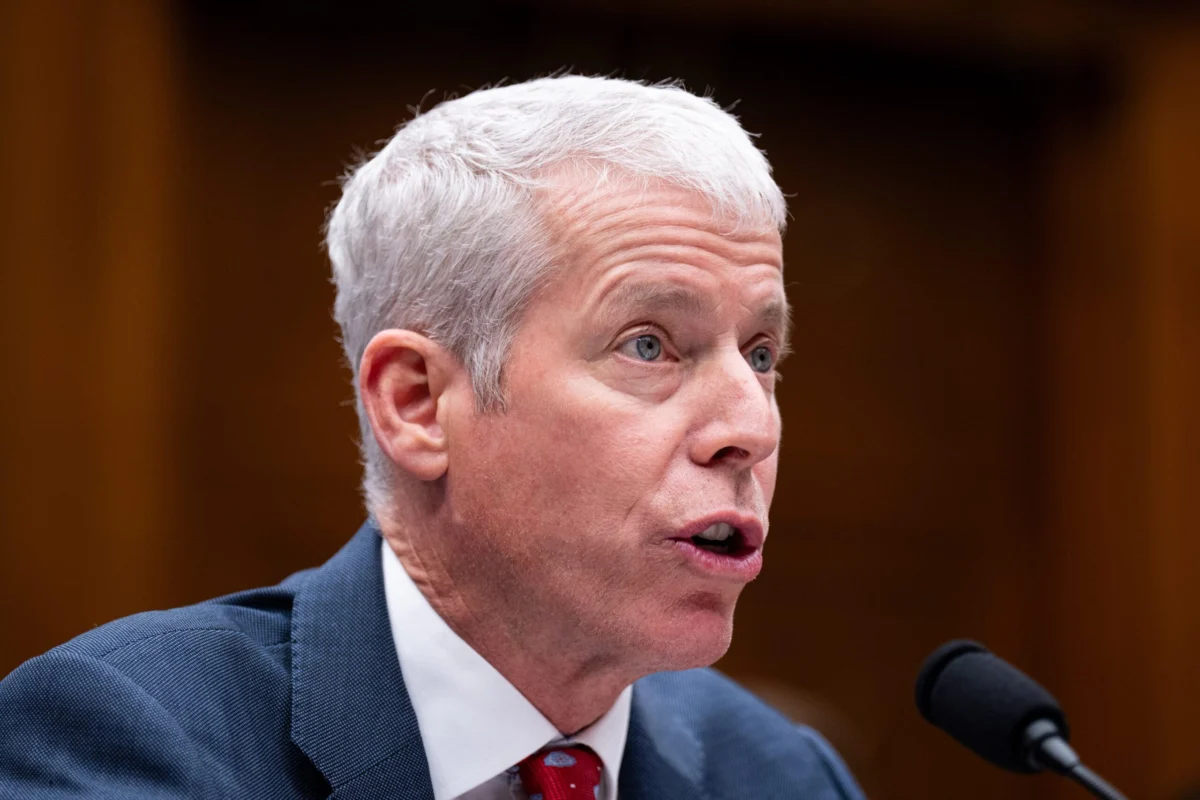
Energy Secretary Chris Wright has officially confirmed that the federal government is conducting a comprehensive investigation into the alarming series of top scientists who have either mysteriously vanished or been found dead over the past few years, signaling a significant escalation in the government’s response to a trend that has raised serious national security questions. Speaking in a recent interview, Secretary Wright disclosed the existence of a formal probe within the Department of Energy (DOE), emphasizing that this departmental inquiry is merely one component of a broader, coordinated investigation spanning multiple branches of the federal government. "A lot of the nuclear security scientists are in DOE," Wright stated, underscoring the department’s direct stake and responsibility in addressing the perplexing incidents. "So yes, of course we are looking into this." When pressed for details regarding any early findings, Secretary Wright remained cautious, remarking, "Too early to say about that. We haven’t found anything alarming yet." This nuanced statement, while suggesting no immediate breakthroughs, does not diminish the gravity with which these incidents are being treated at the highest levels of government.
The disclosure of this multi-agency investigation follows a period of growing unease within national security circles and among the scientific community, culminating in President Donald Trump’s public acknowledgement of the issue just days prior. On Thursday, when questioned by reporters on the South Lawn of the White House, President Trump revealed that he had just attended a high-level meeting on the subject. "I hope it’s random, but we’re going to know in the next week and a half," he stated, indicating a heightened sense of urgency and expectation for forthcoming information. He further added, "Hopefully, I don’t know, coincidence—whatever you wanna call it—but some of them were very important people, and we’re going to look at it." The President’s remarks, coupled with Secretary Wright’s confirmation, paint a picture of a federal apparatus now fully engaged in unraveling a mystery that touches upon the nation’s most sensitive scientific endeavors and critical intellectual capital.
A Disturbing Pattern Emerges in the Scientific Community
The unsettling trend of disappearances and deaths among highly skilled scientists, particularly those with ties to sensitive national security research or advanced technological development, began to manifest a few years ago. Initially, individual incidents might have been dismissed as isolated tragedies or personal matters. However, as the number of cases grew, and the profiles of those affected became clearer, alarm bells began to ring louder within intelligence and defense communities. The scientists involved hail from diverse but uniformly critical fields, ranging from nuclear physics and aerospace engineering to astrophysics and pharmaceutical research, often associated with institutions pivotal to U.S. innovation and security. The consistent theme across many of these cases—the unexplained nature of their fates—has fueled speculation and concern regarding potential foul play, espionage, or a coordinated effort by unknown actors.
One of the most high-profile cases that significantly amplified the urgency of the situation was the disappearance of retired Air Force Maj. Gen. William McCasland from his New Mexico home in February. General McCasland was not just any military officer; he previously served as the esteemed commander of the Air Force Research Laboratory (AFRL) at Wright-Patterson Air Force Base. The AFRL is a cornerstone of the U.S. Air Force’s scientific and technological research, responsible for developing cutting-edge aerospace capabilities that are vital to national defense. His disappearance, especially given his intimate knowledge of advanced military technologies and strategic research, sent shockwaves through the defense establishment and highlighted the potential national security implications of these incidents. The fact that a figure of such prominence could vanish without a trace underscored the unprecedented nature of the crisis.
Chronology of Unexplained Incidents
The list of individuals who have either disappeared or been found dead under mysterious circumstances is extensive and concerning, drawing from various critical sectors:
- Maj. Gen. William McCasland: As noted, the former commander of the Air Force Research Laboratory vanished from his New Mexico residence in February, intensifying the federal scrutiny. His expertise in aerospace research and development makes his disappearance particularly alarming.
- Monica Jacinto Reza: An accomplished aerospace engineer, Ms. Reza’s disappearance adds to the roster of experts in fields critical to national defense and technological superiority who have seemingly vanished.
- Melissa Casias: An administrative assistant who held a security clearance at the Los Alamos National Laboratory, Ms. Casias’s disappearance is troubling due to her access to sensitive information within a facility central to the U.S. nuclear arsenal.
- Anthony Chavez: A retired worker from the Los Alamos National Laboratory, Mr. Chavez also disappeared, raising questions about whether the targets are limited to active personnel or extend to those with past critical access and knowledge.
- Steven Garcia: A property custodian for the National Nuclear Security Administration (NNSA), Mr. Garcia’s disappearance is significant because the NNSA is responsible for maintaining the safety, security, and effectiveness of the U.S. nuclear weapons stockpile.
- Nuno Loureiro: An MIT physicist, Dr. Loureiro was tragically killed. MIT is a global leader in scientific research, and the loss of a physicist from such an institution under violent circumstances is highly unusual and deeply concerning.
- Carl Grillmair: A Caltech astrophysicist, Dr. Grillmair was also killed. Caltech is another prestigious research institution, and the death of an astrophysicist suggests a potential targeting that extends beyond immediate defense applications to broader scientific fields.
- Jason Thomas: A scientist affiliated with Novartis, a leading global pharmaceutical company, Mr. Thomas was found dead. While Novartis’s work is distinct from national security, the inclusion of a scientist from a major pharmaceutical firm broadens the scope of the mystery and raises questions about potential industrial espionage or other motives.
- Frank Maiwald: An engineer at NASA’s Jet Propulsion Laboratory (JPL), Mr. Maiwald was also found dead. JPL is a critical institution for space exploration and robotic missions, and the loss of an engineer under mysterious circumstances could impact ongoing or future projects of strategic importance.
A common and particularly chilling detail highlighted by Rep. Eric Burlison (R-Mo.) is that several of these individuals reportedly left their homes without their personal electronic devices, such as cell phones. "They just literally disappeared, left all of their devices at home," Burlison told Fox News, adding emphatically, "This is not normal." This detail suggests either a deliberate attempt by the individuals to avoid tracking or, more sinisterly, that they were taken under circumstances that prevented them from taking their devices or making contact.
The Bedrock Institutions and Their Vulnerability
The institutions associated with these missing or deceased scientists are not merely academic or industrial entities; they are pillars of American scientific leadership and national security. The Department of Energy (DOE) is at the heart of this crisis, not only confirming the investigation but also being directly impacted. The DOE oversees a vast network of national laboratories, including Los Alamos National Laboratory, which is responsible for nuclear weapons research and development, and the National Nuclear Security Administration (NNSA), which manages the nation’s nuclear arsenal. These facilities are guardians of some of the country’s most closely guarded secrets and advanced technologies. The disappearance or death of personnel, active or retired, from these sites inherently triggers national security alerts due to their access to classified information, specialized skills, and intellectual property.
The Air Force Research Laboratory (AFRL), where Maj. Gen. McCasland served, is crucial for maintaining the U.S. Air Force’s technological superiority. It conducts a wide array of research, from aerospace propulsion and materials science to cyber capabilities and directed energy. The loss of a leader from such an organization could represent a significant blow to ongoing strategic projects and future defense initiatives. Similarly, institutions like MIT and Caltech are at the forefront of fundamental scientific research, producing breakthroughs that often have dual-use applications in both civilian and military sectors. NASA’s Jet Propulsion Laboratory is critical for space technology, an arena with increasing strategic importance. The involvement of a Novartis scientist, while seemingly outside the immediate defense perimeter, could point to a broader campaign targeting intellectual property across various high-tech sectors, or perhaps a more complex motive yet to be understood.
Government Response and Coordination: A Multi-Front Effort
The confirmation from Energy Secretary Chris Wright that a "coordinated investigation across various branches of the government" is underway signifies the federal government’s recognition of the multi-faceted nature of this threat. While specific agencies involved beyond the DOE have not been explicitly named, such a coordination effort would logically involve key intelligence agencies, including the Federal Bureau of Investigation (FBI) for domestic law enforcement and counterintelligence aspects, the Central Intelligence Agency (CIA) for potential foreign connections, and various components of the Department of Defense (DoD) and the Department of Homeland Security (DHS). This interagency collaboration is essential to pool resources, share intelligence, and connect seemingly disparate incidents that might be part of a larger, more sophisticated pattern.
President Trump’s public statements and his attendance at a high-level meeting on the subject underscore the presidential attention and urgency attributed to these cases. His hope that the incidents are "random" reflects the potential implications if they are indeed targeted, suggesting a foreign adversary or sophisticated criminal organization at play. The timeline he mentioned – expecting more information "in the next week and a half" – indicates that investigators may be closing in on critical leads or preparing to disclose further details to the public, or perhaps to Congress in a classified briefing. The statements collectively serve as an assurance to the public and the scientific community that the full weight of federal resources is being brought to bear on this perplexing and potentially dangerous situation.
Broader Implications: National Security and Scientific Integrity
The disappearance and death of these highly specialized scientists carry profound implications that extend far beyond the personal tragedies of the individuals and their families.
National Security Risks: The most immediate and pressing concern is the potential impact on national security. Scientists working in fields like nuclear technology, aerospace, and advanced materials often possess intimate knowledge of classified projects, cutting-edge research, and critical infrastructure vulnerabilities. If these individuals were targeted for espionage, abduction, or assassination by foreign adversaries, the compromise of such knowledge could have catastrophic consequences for U.S. defense capabilities and strategic advantage. The loss of their expertise also represents an irreplaceable drain on intellectual capital, potentially delaying critical research and development programs that underpin national defense and economic competitiveness.
Erosion of Trust and Deterrence: The unsettling nature of these events could significantly erode trust within the scientific community, particularly among those engaged in sensitive research. A climate of fear or uncertainty could deter future talent from entering fields vital to national security, making recruitment more challenging and potentially leading to a "brain drain" if scientists feel their safety is compromised. This could have long-term detrimental effects on America’s scientific and technological leadership.
Economic and Industrial Espionage: While some cases point directly to national security, others, like the Novartis scientist, could hint at broader industrial or economic espionage. Highly valuable intellectual property in pharmaceuticals, biotechnology, artificial intelligence, and other advanced sectors could be targets for state-sponsored or corporate actors seeking to gain an unfair advantage. The "left devices at home" detail, as noted by Rep. Burlison, suggests a level of planning or coercion that is deeply troubling, whether the motive is national security, financial gain, or something else entirely.
The Unknown Variable: Random Coincidence vs. Targeted Campaign: The central question looming over the investigation is whether these incidents are a series of unrelated, albeit tragic, coincidences or if they represent a coordinated, targeted campaign. President Trump’s hope for "randomness" reflects the less alarming scenario. However, the profiles of the victims, their shared connection to high-level scientific expertise, and the mysterious circumstances surrounding their fates make a purely random explanation increasingly difficult to accept. Investigators will be meticulously looking for any patterns, common threads, or links that might connect these disparate cases, from methods of disappearance or death to potential motives and perpetrators.
The federal investigation will likely delve into various possibilities, including foreign intelligence operations, domestic extremist groups, organized crime, or even disgruntled insiders. The lack of "anything alarming yet" in terms of definitive links, as stated by Secretary Wright, suggests the complexity of the puzzle, where clear motives or perpetrators remain elusive in the early stages of a multi-agency probe. However, the very existence and coordination of such an investigation underscore the extraordinary nature of the crisis and the federal government’s unwavering commitment to protect its scientific assets and safeguard national security.
Conclusion: An Ongoing Priority
The confirmation of a sweeping federal investigation into the mysterious disappearances and deaths of top American scientists marks a critical juncture in addressing what has become an alarming and unsettling national phenomenon. With high-level attention from the President and coordinated efforts across multiple government branches, the nation is mobilized to uncover the truth behind these incidents. The stakes are immense, touching upon national security, the integrity of scientific research, and the safety of the country’s most brilliant minds. While the exact nature of the threat remains shrouded in mystery, the unified governmental response signals a clear message: these incidents are being treated with the utmost seriousness, and every effort will be made to protect the intellectual architects of America’s future and to bring clarity to this disturbing trend. The scientific community, defense establishment, and the public await the findings of this critical investigation with profound concern and anticipation.




Related Posts

‘We should absolutely be concerned about non-college-educated men today’: higher rents, living at home, falling out of the labor market | Fortune

Southeast Asia Navigates Worst Energy Crisis in Decades, Pivoting to Russia Amidst Hormuz Blockade