The United Arab Emirates Signals Potential Shift from Dollar Dominance in Oil Trade Amid Escalating Iran Tensions
The United Arab Emirates, a pivotal player in the global energy market and a long-standing U.S. ally, has subtly but significantly indicated that the U.S. dollar’s entrenched supremacy in international oil transactions might not be unassailable, particularly if geopolitical fallout from regional conflicts, specifically involving Iran, intensifies. This strategic overture emerged during recent high-level discussions in Washington D.C., where UAE officials reportedly floated the prospect of diversifying currency use in energy trade, signaling a potential recalibration of its economic alignment.
Diplomatic Overtures: Meetings in Washington
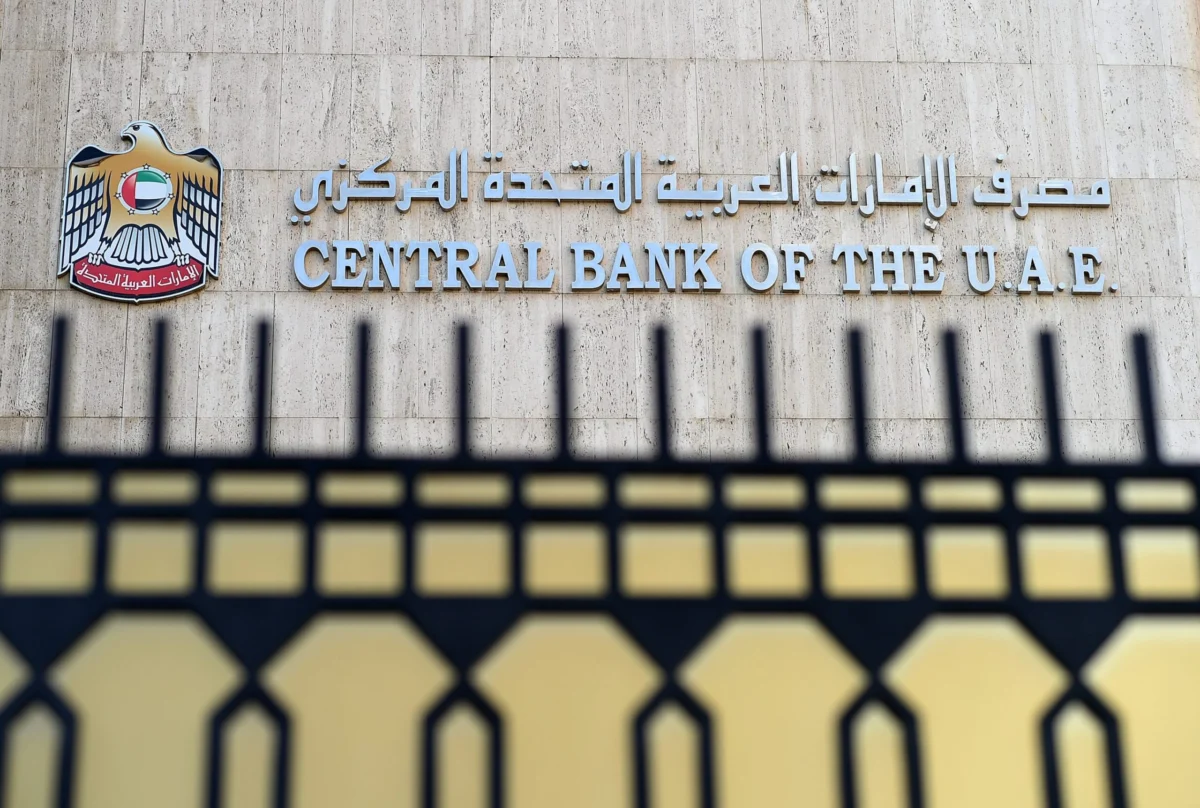
According to a detailed report by the Wall Street Journal, the governor of the UAE’s central bank engaged in critical discussions with senior officials from the U.S. Treasury Department and the Federal Reserve last week. A central theme of these meetings revolved around the UAE’s request for a currency-swap line with the United States. While seemingly a technical financial arrangement, the timing and context of this request imbue it with profound strategic implications, suggesting a complex interplay of economic prudence and geopolitical signaling from Abu Dhabi. The UAE central bank has not yet responded to requests for comment regarding these discussions.
The Context of Conflict: Regional Instability and Economic Fallout
The backdrop to these discussions is the escalating regional instability, referred to in the report as the "Iran war," which implies a scenario of heightened tensions, potential military escalation, or severe economic disruption stemming from Iran. In such a scenario, the UAE, despite its robust financial standing, perceives significant vulnerabilities. A primary concern is the potential for damage to critical energy infrastructure and, more acutely, the disruption or closure of the Strait of Hormuz.
The Strait of Hormuz is a narrow, strategically vital waterway connecting the Persian Gulf to the open ocean. Approximately 20% of the world’s petroleum liquids and 20% of global liquefied natural gas (LNG) pass through this choke point daily, making it arguably the most important oil transit point globally. Any significant disruption to shipping in the Strait, a frequent threat from Iran in times of heightened tension, would severely impact global energy supplies and, consequently, the dollar-denominated revenue of major oil exporters like the UAE. Such an event would not only weigh heavily on the UAE’s immediate energy income but could also trigger a deeper global economic downturn, further exacerbating financial pressures.
Currency Swap Lines: A Financial Lifeline?
The request for a currency-swap line, while unusual given the UAE’s immense wealth, is a calculated move. A currency-swap line is a bilateral agreement between two central banks to exchange currencies. In this case, it would allow the UAE central bank to access a ready and potentially cheap supply of U.S. dollars from the Federal Reserve. This mechanism is typically employed during periods of financial stress to ensure ample dollar liquidity in the global financial system.
The UAE possesses formidable financial reserves, including an estimated $270 billion in foreign-exchange reserves held by its central bank, and trillions of dollars managed across its influential sovereign wealth funds, such as the Abu Dhabi Investment Authority (ADIA) and Mubadala Investment Company. These figures underscore that the UAE is not currently facing a liquidity crisis. However, the pursuit of a swap line suggests a pre-emptive measure, a strategic hedge against potential future economic shocks. Should an "Iran war" scenario materialize, leading to a severe global economic downturn and a tightening of dollar liquidity, a swap line would provide crucial backing for the UAE dirham, which is pegged to the U.S. dollar, and allow the central bank to bolster its foreign-exchange reserves, thereby maintaining financial stability. This move could also be interpreted as a demand for a security blanket from its long-standing ally, the U.S., in exchange for continued adherence to the dollar-denominated oil trade.
The Petrodollar’s Cracks: A Geopolitical Gambit
Perhaps the most potent aspect of the UAE’s discussions was the explicit mention by its officials that if dollar availability became constrained due to the conflict, they might be compelled to use other currencies, such as China’s yuan, for oil transactions. This statement carries significant weight, as it challenges the bedrock of the global financial system: the petrodollar.
The petrodollar system, established in 1974 following an agreement between Saudi Arabia and the United States, stipulated that Saudi Arabia, and by extension other OPEC members, would price their vast oil exports exclusively in U.S. dollars. In return, the U.S. offered security guarantees and technological assistance. This arrangement effectively cemented the dollar’s status as the world’s premier reserve currency. Because oil is a fundamental input for manufacturing, transportation, and virtually every sector of the global economy, the dollarization of oil trade led to the dollarization of countless supply chains worldwide, reinforcing the greenback’s dominance in international payments, trade invoicing, and foreign exchange reserves.
This "exorbitant privilege," as former French President Valéry Giscard d’Estaing famously termed it, has provided the United States with immense economic advantages. It allows the U.S. federal government to issue debt at lower interest rates than it otherwise could, as global demand for dollar-denominated assets, particularly U.S. Treasury bonds, remains consistently high. Furthermore, it gives the U.S. unparalleled leverage in global finance, enabling it to impose sanctions and influence international economic policy. Any erosion of this privilege would ripple through the U.S. economy, potentially increasing borrowing costs and diminishing its financial clout.
The Rise of the Petroyuan? Expert Perspectives
The threat of a pivot away from the dollar by a major oil producer like the UAE signals a potential acceleration of "dedollarization" trends that have been nascent for years. Analysts at Deutsche Bank, in a warning issued last month, highlighted that the "Iran war" scenario could exacerbate existing "cracks" in the petrodollar regime. They cautioned that "damage to Gulf economies could encourage an unwind in their foreign asset savings" and urged close attention to "reports that the passage for ships through the Strait of Hormuz may be granted in exchange for oil payments in yuan." The Deutsche Bank analysis concluded that "the conflict could be remembered as a key catalyst for erosion in petrodollar dominance, and the beginnings of the petroyuan."
China, the world’s largest oil importer, has long expressed ambitions to promote the international use of its currency, the yuan (or renminbi). Beijing has actively pursued bilateral currency swap agreements with numerous countries and established the Cross-Border Interbank Payment System (CIPS) as an alternative to the dollar-dominated SWIFT system. Its Belt and Road Initiative (BRI) has also deepened economic ties with countries in the Middle East and beyond, offering infrastructure development in exchange for resource access and financial cooperation. Iran, already heavily sanctioned by the U.S. and a significant oil supplier to China, has reportedly engaged in yuan-denominated transactions for oil, illustrating a precedent for such a shift. The prospect of a "petroyuan," where Chinese currency gains significant traction in global energy trade, represents a direct challenge to the dollar’s long-held hegemony.
Counterarguments and Dollar Resilience
However, not all analysts are convinced that the dollar’s dominance is on the verge of collapse. Dan Alamariu, chief geopolitical strategist at Alpine Macro, expressed skepticism about predictions of a significant U.S. decline in a note earlier this month. While acknowledging that an outcome where Iran’s regime retains control over the Strait of Hormuz would be a "strategic setback" for the U.S. and a "humiliation" for its leadership, he argued that the Gulf Cooperation Council (GCC) states, including the UAE and Saudi Arabia, have even greater incentives to maintain close ties with the U.S. due to China’s growing links with Iran. Alamariu dismissed the idea of a "petroyuan or petroeuro replacement" as "far-fetched."
Paul Blustein, a scholar with the Center for Strategic and International Studies (CSIS), echoed this sentiment in a Fortune op-ed last month. He contended that even if the petrodollar system experiences some weakening, the dollar’s broader dominance rests on a confluence of factors that rival currencies cannot yet match. These include the unparalleled depth, breadth, and liquidity of U.S. financial markets, offering investors diverse and secure avenues for capital deployment. Furthermore, the freedom to move money across U.S. borders with minimal impediment and a robust legal framework contribute to the dollar’s appeal. Blustein pointed out that the dollar accounts for "well over half of foreign currency reserves held by central banks, and a similar share of export invoices for cross-border trade, as well as international bank loans and bond issuance." He emphasized the "network effects" that entrench its status, where "everybody has an incentive to use the dollar because so many others do." This self-reinforcing dynamic provides a formidable barrier to any rapid transition away from the greenback.
Broader Implications for Global Finance and Geopolitics
Should the UAE’s implied threat of currency diversification materialize, even partially, the ramifications for global finance and geopolitics would be substantial. For the United States, it could lead to increased borrowing costs for its massive national debt, as global demand for dollar-denominated assets potentially wanes. It would also signal a gradual erosion of its financial power and geopolitical leverage.
For the international monetary system, a move by a significant oil producer could catalyze a more multipolar currency landscape, where the yuan, and potentially other currencies like the euro, play a more prominent role in trade and reserve management. Central banks globally might begin to diversify their foreign exchange reserves more aggressively, shifting away from a heavily dollar-centric portfolio. This would reflect a broader geopolitical rebalancing, where emerging economic powers like China exert greater influence.
The implications for energy market stability are also profound. A shift in oil pricing mechanisms could introduce new complexities and volatilities, potentially fragmenting global energy markets along currency lines. The U.S. has historically leveraged the dollar’s role in oil trade to enforce sanctions and maintain stability; a challenge to this system could complicate future policy interventions.
Conclusion: A Tense Balancing Act
The UAE’s recent diplomatic overtures and veiled warnings represent a delicate balancing act. While clearly signaling a desire for greater financial security and potentially, strategic autonomy in an increasingly volatile region, it also serves as a potent reminder to the United States of the costs of regional instability. The request for a currency-swap line, coupled with the hint of currency diversification in oil trade, can be interpreted as a strategic play to secure U.S. commitment and support in managing the fallout from any escalation involving Iran, while simultaneously hedging against the potential weaponization or scarcity of the dollar itself.
The ongoing "Iran war" scenario, whether a full-blown conflict or sustained high tensions, thus acts as a critical catalyst, pushing Gulf states to re-evaluate their long-term economic and geopolitical allegiances. While the dollar’s dominance remains robust due to its foundational strengths, the UAE’s actions underscore that this supremacy is not immutable. The coming years will likely witness a tense interplay of economics, energy security, and geopolitical maneuvering that will ultimately shape the future of global currencies and the international order. The world watches closely to see if this is merely a warning shot or the first tangible crack in the enduring edifice of the petrodollar.




Related Posts

‘We should absolutely be concerned about non-college-educated men today’: higher rents, living at home, falling out of the labor market | Fortune
Southeast Asia Navigates Worst Energy Crisis in Decades, Pivoting to Russia Amidst Hormuz Blockade