The Indispensable Role of Project Monitoring and Control in Navigating Project Success
As complex undertakings begin their journey from concept to reality, the critical nexus of project monitoring and control emerges as the project’s central nervous system, ensuring its health and guiding its trajectory. Project managers are tasked with the continuous evaluation of all activities, proactively addressing any impediment that could potentially derail the project’s intended outcome. This vital function runs concurrently with project execution, providing the essential processes and sophisticated tools necessary to meticulously track performance, identify deviations, and implement timely adjustments. This comprehensive exploration delves into the multifaceted world of project monitoring and control, dissecting its core components, underscoring its profound significance, and outlining effective strategies for its implementation across the entire project lifecycle.
Defining Project Monitoring and Control: The Guardian of Project Integrity
Project monitoring and control, often considered the fourth phase in the conventional project management lifecycle, represents the systematic process of scrutinizing a project’s progress and taking decisive actions to ensure strict adherence to the approved plan. Far from being a discrete, sequential step, it is an ongoing, iterative activity that operates in tandem with project execution, providing project managers with real-time insights into scope adherence, schedule performance, budget utilization, and emerging risks.
Within the framework of industry-standard methodologies like the Project Management Body of Knowledge (PMBOK® Guide), monitoring and controlling is recognized as a crucial process group, encompassing a suite of activities focused on measuring performance, identifying variances from the baseline, and managing issues to guarantee the project continues to deliver its intended value. In practical terms, this involves the meticulous collection and analysis of data across all critical dimensions—scope, schedule, cost, quality, and risk—followed by the implementation of corrective or preventive actions whenever deviations are detected. This proactive stance is what transforms potential crises into manageable challenges, safeguarding the project’s objectives.
The Genesis and Evolution of Control in Project Management
The concept of control in projects is as old as organized human endeavor, from the construction of ancient pyramids to medieval cathedrals. However, its formalization within project management as a distinct discipline gained prominence with the advent of complex engineering and defense projects in the mid-20th century. Methodologies like PERT (Program Evaluation and Review Technique) and CPM (Critical Path Method) introduced structured ways to plan and, by extension, monitor project schedules. The growth of information technology and the increasing complexity of global projects further necessitated robust monitoring and control frameworks. Today, with agile methodologies and adaptive planning gaining traction, monitoring and control have evolved to be even more dynamic, emphasizing continuous feedback loops and rapid iteration rather than rigid, infrequent checks. It’s a testament to the discipline’s adaptability that it remains central whether a project follows a predictive Waterfall model or an adaptive Agile approach.
Why Project Monitoring and Control Is Indispensable for Success
The strategic importance of robust project monitoring and control cannot be overstated. It acts as the project’s early warning system, its performance dashboard, and its steering mechanism, collectively contributing to project success through several critical avenues:
-
Early Risk Detection and Mitigation: Consistent monitoring allows project managers to identify potential issues and risks long before they escalate into major problems. This early detection capability enables proactive mitigation strategies, preventing cost overruns, schedule delays, and quality compromises. As industry experts frequently highlight, a problem identified early is significantly cheaper and easier to resolve than one discovered late in the project lifecycle.
-
Performance Reporting and Transparency: Monitoring provides the factual basis for objective performance reporting. By tracking key metrics, project managers can accurately communicate project status to stakeholders, fostering transparency and trust. This data-driven reporting enables informed decision-making at all levels, from daily team adjustments to strategic executive interventions.
-
Scope Control and Prevention of Scope Creep: One of the most insidious threats to project success is scope creep—the uncontrolled expansion of project requirements without corresponding adjustments to time, cost, or resources. Effective monitoring and control systems include rigorous change management processes that ensure every proposed change is formally reviewed, approved, and documented, thereby preventing unauthorized additions to the project scope.
-
Optimized Resource Allocation: By continuously tracking resource utilization and performance, project monitoring allows managers to identify bottlenecks, under-utilized resources, or areas of over-allocation. This information facilitates dynamic adjustments, ensuring that human, financial, and material resources are deployed efficiently and effectively, maximizing productivity and minimizing waste.
-
Enhanced Quality Assurance: Monitoring extends to the quality of deliverables and processes. By tracking defect rates, adherence to standards, and customer feedback, project managers can ensure that the project output meets predefined quality benchmarks, thereby enhancing stakeholder satisfaction and the ultimate value delivered.
-
Financial Stewardship: Consistent cost monitoring helps keep projects within budget. By comparing actual expenditures against planned budgets, project managers can identify financial variances, investigate their causes, and implement corrective actions to prevent financial hemorrhaging. This meticulous financial oversight is crucial for demonstrating accountability and maximizing return on investment.
The cost of inadequate monitoring is substantial. According to PMI’s Pulse of the Profession 2023 report, the global average for wasted investment due to poor project performance stands at a concerning 5.2%. This translates into billions of dollars lost annually across industries. Through consistent, vigilant monitoring, project managers possess the tools to significantly reduce this waste by addressing issues proactively, often before they materially impact project cost or schedule. The Standish Group’s CHAOS Report, while varying in its annual findings, consistently points to factors like lack of user involvement, incomplete requirements, and poor planning/control as major contributors to project failure or challenge. Robust monitoring directly combats these issues by ensuring engagement, clarity, and continuous oversight.
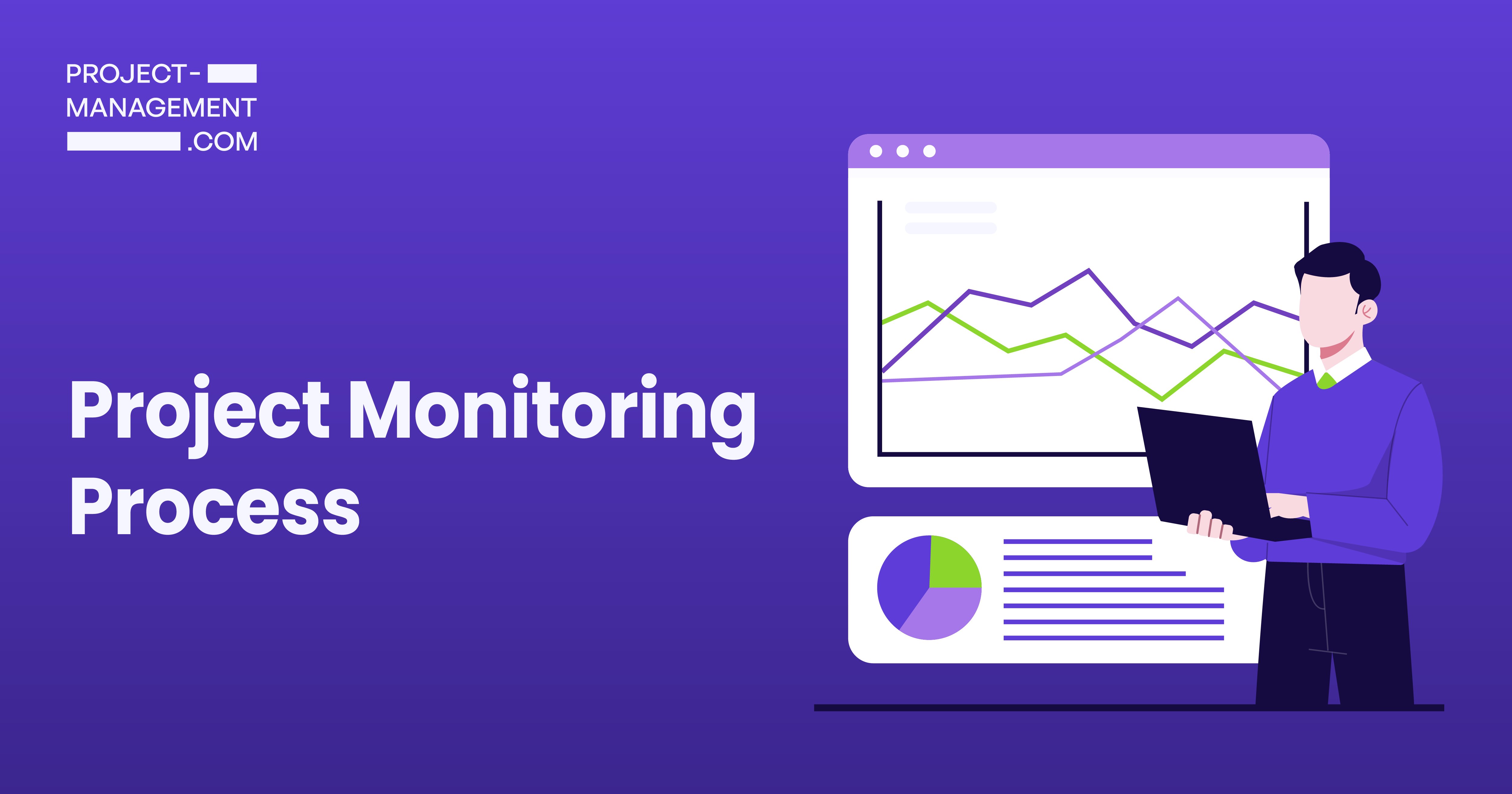
The Systematic Approach: A Six-Step Monitoring and Control Process
Effective project monitoring and control is not a haphazard activity but a structured process involving a series of recurring activities. These steps, performed iteratively throughout the project’s execution phase, provide project managers with a consistent and reliable mechanism for maintaining command over project performance.
Step 1: Collect Comprehensive Performance Data
The foundation of effective monitoring is accurate, real-time data. This step involves gathering quantitative and qualitative information on the project’s progress across all key dimensions: schedule (e.g., tasks completed, remaining duration), cost (e.g., actual expenditures, committed costs), scope (e.g., deliverables produced, features implemented), and quality (e.g., defect counts, test results). Leveraging modern project management software is highly beneficial here, as it centralizes project updates, automates data collection (e.g., time-tracking reports, task status updates), and reduces the need for error-prone manual record-keeping, ensuring all stakeholders are working from the same, up-to-date information.
Step 2: Analyze Performance Against Established Baselines
Once data is collected, it must be analyzed. This critical step involves comparing the actual collected data against the approved performance baselines (scope, schedule, cost) that were meticulously established during the planning phase. The goal is to identify variances—differences between planned and actual performance. Techniques like Earned Value Management (EVM) are particularly powerful here, providing objective metrics such as Schedule Variance (SV), Cost Variance (CV), Schedule Performance Index (SPI), and Cost Performance Index (CPI). Calculating these differences helps project managers determine whether the project is on track, ahead, or behind, and whether it requires intervention. For instance, a small cost variance early on might be manageable, but if left unaddressed and compounded over several weeks, it could signal a much deeper, systemic budgeting problem.
Step 3: Review Risks and Manage Emerging Issues
Project environments are inherently dynamic, and risks can materialize or shift in probability and impact. This step involves regularly reviewing the project’s risk register, a formal log of all identified risks, their potential impacts, and planned responses. During each monitoring cycle, project managers must assess changes in risk status, identify new risks, and track the progress of risk mitigation activities. Simultaneously, new issues—problems that have already occurred—must be logged, prioritized, assigned owners, and tracked through to resolution. Risks with low probability during planning can quickly become high-probability threats once project work commences, necessitating continuous vigilance.
Step 4: Report Performance to Key Stakeholders
Effective communication is paramount. Project status must be regularly and clearly communicated to all relevant stakeholders through various channels, such as progress reports, status meetings, and dashboards. The level of detail and frequency of reporting should be tailored to the audience. A project sponsor, for example, may only require a high-level summary of budget, key milestones, and overall health, whereas a team lead might need a detailed breakdown of task progress, blockers, and resource allocation. Consistent and transparent reporting builds confidence and enables stakeholders to make informed decisions and provide timely support.
Step 5: Implement Corrective or Preventive Actions
When analysis reveals a variance or a risk necessitates a response, project managers must take action. This step involves implementing either corrective actions or preventive actions. Corrective actions address problems that have already occurred, bringing actual performance back in line with the plan (e.g., reallocating resources to a delayed task, revising a faulty process). Preventive actions, conversely, are taken to reduce the probability or impact of future negative risks (e.g., adding a buffer to an upcoming milestone that is showing signs of running behind schedule, procuring additional safety equipment after a near-miss incident). These actions often trigger a formal change request process to update baselines if necessary.
Step 6: Monitor Approved Changes
The project environment is rarely static, and changes to scope, schedule, or budget are often inevitable. Every change request, once formally reviewed and approved through the change control process, must be meticulously monitored. This final step ensures that the approved change is implemented as intended, its impact on other areas of the project is assessed, and that it does not inadvertently introduce new risks or trigger additional, unplanned scope changes. This continuous validation loop is crucial for maintaining project integrity and preventing uncontrolled modifications.
Key Performance Indicators (KPIs) in Project Monitoring
To effectively track and analyze project performance, a suite of Key Performance Indicators (KPIs) is employed. These metrics provide quantitative insights into different facets of project health, allowing project managers to quickly grasp the current state and identify areas requiring attention.
- Schedule Variance (SV): Measures if the project is ahead of, behind, or on schedule at a given point. Calculated as Earned Value (EV) – Planned Value (PV). A positive SV indicates ahead of schedule, negative means behind.
- Cost Variance (CV): Indicates how actual spending compares to the budgeted cost of work completed. Calculated as Earned Value (EV) – Actual Cost (AC). A positive CV signifies under budget, negative means over budget.
- Cost Performance Index (CPI): Shows the efficiency of budget utilization – how much value the project is getting for every dollar spent. Calculated as Earned Value (EV) / Actual Cost (AC). A CPI > 1 is good, < 1 is bad.
- Schedule Performance Index (SPI): Measures how efficiently the project is progressing relative to the planned timeline. Calculated as Earned Value (EV) / Planned Value (PV). An SPI > 1 is good, < 1 is bad.
- Resource Utilization Rate: Quantifies how effectively team members and other resources are being allocated and used across the project. Often expressed as a percentage of actual work hours versus available hours.
- Milestone Achievement Rate: Tracks how many key targets and intermediate deliverables the project is hitting on time throughout its lifecycle, providing an overview of overall schedule adherence.
- Defect/Quality Metrics: Encompasses various indicators such as defect density (defects per unit of work), rework rate, and compliance with quality standards, reflecting how well deliverables are meeting specified quality benchmarks.
- Burn Rate: Indicates how fast the project budget is being consumed relative to what was planned, providing insight into the project’s financial sustainability and remaining runway.
- Earned Value (EV): The value of the work actually performed, expressed in terms of the budget assigned to that work. This is a core EVM metric.
- Planned Value (PV): The budgeted cost of the work scheduled to be completed up to a given point in time.
- Actual Cost (AC): The total cost actually incurred for the work performed up to a given point in time.
Common Challenges in Project Monitoring and Control
Despite its critical importance, implementing effective project monitoring and control is fraught with challenges. These issues often originate from deficiencies in the planning phase, where monitoring protocols and reporting standards may not have been adequately established, or from operational hurdles during execution.
- Inaccurate or Outdated Reporting: Relying on manual updates or infrequent data collection can lead to inaccurate or outdated information. This "garbage in, garbage out" scenario means project managers are making critical decisions based on flawed data, increasing the risk of missteps.
- Scope Creep: A perennial challenge, scope creep occurs when additional features or requirements are added to the project without formal approval or corresponding adjustments to the project’s baseline. Without a robust change control process, monitoring becomes reactive rather than proactive.
- Disconnected Tools and Data Silos: Many organizations suffer from a fragmented tool ecosystem, where different teams use disparate systems for planning, tracking, and reporting. This leads to data silos, making it difficult to gain a holistic, real-time view of project performance and necessitating arduous manual data aggregation.
- Lack of Team Support and Buy-in: If team members do not understand the importance of timely updates, accurate time tracking, or adherence to reporting protocols, the monitoring system will fail. Resistance to perceived "micromanagement" can also hinder effective data collection.
- Over-Monitoring vs. Under-Monitoring: Striking the right balance is crucial. Over-monitoring can lead to excessive administrative burden, diverting valuable time from actual project work, while under-monitoring leaves projects vulnerable to unforeseen issues and unchecked deviations.
- Lack of Skilled Project Managers: Without project managers who possess the analytical skills to interpret performance data, understand EVM metrics, and effectively implement corrective actions, even the most sophisticated monitoring systems will be ineffective.
Best Practices for Effective Project Monitoring and Control
Building a robust and effective monitoring and control framework requires consistent effort, clear processes, and the right tools. The following best practices outline how project managers can establish an approach that ensures projects meet their objectives and quality standards.
1. Establish a Clear Monitoring Cadence
Define a consistent schedule for data collection, performance reviews, and stakeholder communications. This cadence should be multi-layered: daily stand-ups for immediate blockers, weekly status reports for short-term progress against the plan, bi-weekly or monthly performance reviews for deeper analysis of trends and variances, and quarterly strategic reviews to ensure alignment with organizational goals. This multi-frequency approach ensures both tactical responsiveness and strategic oversight.
2. Utilize a Centralized Project Management Tool
A single, integrated project management information system (PMIS) is indispensable. Storing all project data—tasks, schedules, budgets, resources, risks, issues, documents—on a centralized platform eliminates the risk of teams working from conflicting information. It provides every stakeholder with access to the most recent project updates, facilitates real-time reporting, and automates many data collection and analysis tasks, significantly enhancing efficiency and accuracy. Tools like Smartsheet, Jira, Asana, or Microsoft Project provide varying levels of functionality suitable for different project types and organizational scales.
3. Standardize Reporting Templates and Definitions
Consistency in reporting is key to clarity and comparability. Develop standardized reporting formats and templates for status reports, variance analyses, and risk logs. Crucially, standardize the definitions of key terms and metrics (e.g., "completed," "on track," "at risk") to ensure everyone interprets information uniformly. This reduces the time project managers spend formatting updates and allows them to focus on analysis and decision-making.
4. Involve Stakeholders Proactively Throughout the Project
Stakeholder communication should not be limited to formal milestone completions or crisis points. Regular, proactive updates, tailored to their specific interests and level of detail, keep stakeholders informed and engaged. This continuous dialogue provides them with enough context to understand progress, approve changes quickly, respond to issues, and offer support when needed, fostering a collaborative environment.
5. Document Every Approved Change Rigorously
A formal change control process is a cornerstone of effective monitoring. Every modification to the project scope, timeline, or budget must be formally requested, analyzed for impact, approved by relevant authorities (e.g., change control board, project sponsor), and meticulously documented. Undocumented changes are notoriously difficult to track, often lead to scope creep, and can unravel project baselines, making accurate monitoring impossible.
6. Foster a Culture of Accountability and Transparency
Beyond tools and processes, the organizational culture plays a significant role. Encourage a culture where team members feel empowered to report issues honestly and where transparency about progress and challenges is valued. Project managers should lead by example, promoting open communication and ensuring that reporting is seen as a means to improve project outcomes, not as a punitive exercise.
Technological Enablers: The Digital Backbone of Control
Modern project monitoring and control are increasingly empowered by sophisticated technology. Project management software is no longer just a task tracker; it’s an integrated ecosystem that centralizes project data, automates workflows, and provides powerful analytical capabilities. Platforms like Smartsheet, for instance, allow for tracking projects of any size across multiple views—timeline, table, calendar, and Kanban boards. Features like Gantt charts with dependencies and predecessors are invaluable for identifying the critical path and staying ahead of tasks most likely to impact deadlines. For organizations managing portfolios of projects, advanced features like Smartsheet’s Control Center can aggregate performance data from all active projects into a single, executive-level reporting view, providing comprehensive oversight.
Beyond traditional PM software, emerging technologies are further enhancing monitoring capabilities. Artificial intelligence and machine learning are increasingly used for predictive analytics, forecasting potential delays or cost overruns based on historical data and real-time performance. IoT devices can provide real-time data from physical project sites (e.g., equipment utilization, environmental conditions), while advanced analytics tools can uncover hidden patterns and correlations in project data, offering deeper insights for more precise control.
Next Step: Project Closure – The Culmination of Control
Effective monitoring and control provide project managers with the invaluable performance data and insights needed to determine precisely when a project has successfully met its objectives and is ready to transition into the final, crucial phase of the lifecycle: project closure.
Project closure is the systematic process of wrapping up all project activities, ensuring that contractual obligations are fulfilled, final deliverables are accepted, and all documentation—including critical lessons learned—is completed, archived, and formally handed over to the relevant operational teams or stakeholders. It’s the point where the efficacy of the monitoring and control efforts is ultimately validated, confirming that the project has indeed delivered its intended value within the agreed-upon constraints. The comprehensive records maintained during the monitoring and control phase are indispensable during closure, providing the evidence needed to formally sign off on the project and prepare for future endeavors. In the subsequent article in this series, we will delve into the intricacies of this concluding phase, exploring how to confirm project completion, celebrate success, and institutionalize the knowledge gained.



Related Posts

PMI Unveils Major Overhaul of PMP Certification Exam for 2026, Signifying a New Era for Project Leadership

Choosing the Best Workflow Management Software for Enhanced Operational Efficiency