
The High-Stakes Battle: Are Prediction Markets "Truth Machines" or Unlicensed Gambling Platforms?
Prediction markets like Kalshi and Polymarket have emerged as formidable players in the financial technology landscape, boldly asserting their role as "truth machines" capable of distilling collective intelligence on everything from electoral outcomes to interest rate fluctuations. Yet, beneath this veneer of sophisticated financial innovation lies another, more contentious identity: that of massive sports betting platforms. Recent disclosures have illuminated this duality, revealing that sports wagers constitute an overwhelming majority – over 85% – of all bets placed on Kalshi. The financial implications are staggering; during a concentrated four-day period coinciding with the NCAA men’s basketball tournament, commonly known as March Madness, Kalshi reportedly generated an astounding $25 million in fee revenue from these sports-related activities alone. While prediction markets undeniably harbor promising applications for data aggregation and economic forecasting, it is unequivocally sports betting that currently serves as the burgeoning industry’s financial lifeblood, a lucrative segment now facing an existential threat from a torrent of legal challenges.
This existential threat emanates primarily from state governments and Native American tribal entities, which have initiated a wave of legal proceedings. Their core contention is that platforms like Kalshi are operating as unlicensed gambling enterprises, circumventing established state regulatory frameworks. Judicial decisions across various states have reflected this division, with judges in at least three jurisdictions concurring with the states’ assertion, labeling Kalshi’s offerings as illicit gambling. Conversely, other courts have sided with Kalshi, affirming its position that its sports wagers are not conventional gambling but rather a distinct category of contract permissible under federal law. This legal schism underscores a fundamental disagreement over the very definition and regulation of these novel financial instruments.
The Evolving Legal Landscape: Circuit Courts and the Path to the Supreme Court
The legal battle escalated significantly earlier this month when a federal appeals court, the Third Circuit, issued a landmark ruling on the matter. In a closely watched case, the court sided with Kalshi, overturning a previous decision that had favored the state of New Jersey’s regulatory body. This ruling provided a crucial, albeit temporary, victory for the prediction market industry, validating its argument that its operations fall under federal oversight. However, the legal narrative took another dramatic turn just this week, as a different panel of judges, this time in the Ninth Circuit, heard arguments in an appeal originating from Nevada. Reports from the hearing suggest that these judges expressed skepticism regarding Kalshi’s arguments, indicating a potential divergence in judicial opinion from the Third Circuit. Should the Ninth Circuit rule against Kalshi, or if another federal appeals court subsequently reaches a similar conclusion, it would create what is known as a "circuit split" – conflicting rulings from different federal appellate courts. Gaming industry lawyers widely anticipate that such a split would inevitably propel the issue to the U.S. Supreme Court by next year, setting the stage for a definitive, nationwide legal precedent.
The stakes are astronomically high. The sports prediction market industry is projected to reach an astonishing $200 billion in volume this year, a figure that highlights the immense economic impact of any Supreme Court decision. Observers currently characterize the potential outcome as a "true jump ball," given the complex interplay of legal principles involved. The case hinges not only on the delicate balance of state versus federal power but also on the interpretation and application of a federal law – the Dodd-Frank Act – enacted in the tumultuous aftermath of the 2008 financial crisis. Beyond the courts, these escalating legal skirmishes have also galvanized members of Congress, drawing them into a contentious debate that will ultimately determine not just the trajectory of the burgeoning prediction market industry but also, more broadly, the future regulatory landscape of gambling in America.
When is Gambling Not Gambling? The Dodd-Frank Conundrum
At the heart of this legal quagmire lies the definitional challenge: when does an activity that "looks like gambling, talks like gambling" cease to be gambling in the eyes of the law? U.S. Circuit Judge Jane Roth, in her dissenting opinion in the Third Circuit’s ruling, eloquently articulated this common-sense perspective, siding with the New Jersey Division of Gaming Enforcement. She posited, "Basic abductive reasoning tells us that if it looks like gambling, talks like gambling, and calls itself gambling, it’s gambling."
Unfortunately for the New Jersey regulators, Judge Roth’s pragmatic assessment was outvoted by the majority. The two other appeals court judges contended that while the wagers on Kalshi might outwardly resemble gambling, they are legally classified as "events contracts." Crucially, these events contracts are deemed a unique type of "swap" under federal law. To understand this distinction, one must delve into the origins and intent of the Dodd-Frank Wall Street Reform and Consumer Protection Act of 2010.
Dodd-Frank and the Redefinition of "Swaps"
The concept of a "swap" itself is not entirely foreign to finance, typically referring to an agreement between two parties to exchange financial instruments or cash flows. However, the term acquired a profoundly specific and expanded legal meaning following the cataclysmic financial crisis of 2008. The crisis was exacerbated, in large part, by the opaque and unregulated proliferation of "credit default swaps" – essentially insurance contracts between major financial institutions, largely hidden from broader market scrutiny. When the underlying assets of these swaps imploded, they triggered a cascade of failures across Wall Street, bringing the global financial system to the brink.
In response, Congress enacted Dodd-Frank, a sweeping piece of legislation designed to prevent a recurrence of such a meltdown. A pivotal component of these reforms was the reclassification and enhanced regulation of swaps, which were designated as a new form of "derivative" and placed under the direct oversight of the Commodity Futures Trading Commission (CFTC). The CFTC, traditionally responsible for regulating futures and options markets, saw its mandate significantly expanded to include these newly defined swaps.
In the eyes of the Third Circuit majority, Kalshi had successfully navigated the federal regulatory labyrinth to obtain a "Designated Contracts Market" (DCM) license from the CFTC. This license, they argued, effectively grants Kalshi the legal authority to operate a swaps forum, enabling users to enter into wagers, or "events contracts," on a vast array of outcomes, including sporting events. This federal authorization, the court concluded, provided a shield against state-level gambling regulations.
Federal Pre-emption and State Police Powers: A Constitutional Clash
The broader legal question for the Third Circuit, and indeed for over a dozen other courts grappling with similar cases across the country, revolves around the doctrine of pre-emption. This fundamental constitutional principle dictates that when the federal government lawfully exercises its powers, federal law takes precedence over conflicting state laws in the same domain. This means that if Kalshi’s operations, as a CFTC-regulated swap operator, fall squarely within the federal government’s authority, then state gambling authorities, traditionally empowered by the "police powers" reserved to the states by the Tenth Amendment, might be pre-empted from regulating them. States have historically used these inherent police powers to oversee, license, or outright ban various forms of gambling within their borders.
Common examples of federal pre-emption include fields such as immigration or pharmaceutical regulation, where federal authority is often so comprehensive that it completely "freezes out" state-level attempts at regulation. However, the case of Kalshi is far less clear-cut. The Third Circuit majority, in its ruling, ultimately concluded that Kalshi’s status as a federally regulated swap operator did indeed pre-empt New Jersey’s state gambling authorities from asserting jurisdiction. Judge Roth, in her strong dissent, vehemently disagreed with this premise, accusing her colleagues of engaging in "acts of alchemy" – transforming what she perceived as old-fashioned sports betting into a complex form of futures trading, thereby undermining the states’ long-held regulatory authority.
The Game Score So Far: Industry Impact and Future Challenges
Dustin Gouker, a prominent analyst who publishes a newsletter dedicated to the prediction market sector, underscores the current dominance of sports betting within the industry. "Right now it IS the industry," Gouker asserts, highlighting the disproportionate contribution of sports wagers to the overall volume and revenue of these platforms. While he anticipates that other categories, such as political events and cryptocurrency price movements, will gain a larger share over time, sports betting remains the "only game in town," pun intended. This lucrative segment has been instrumental in propelling Kalshi and its primary rival, Polymarket, to staggering valuations of $22 billion and $20 billion respectively.
These eye-popping valuations, however, are predicated on the continued ability of these platforms to operate relatively unencumbered by state gambling laws. A definitive ruling that strips Kalshi of its "swap operator" shield against state authorities would undoubtedly severely puncture these valuations. The distinct possibility of such an outcome emerged this week during the Ninth Circuit hearing. Reports from the courtroom indicated that the judges appeared to lean in favor of the arguments presented by the state of Nevada, which, along with other states, challenges the federal pre-emption claim. The lawsuit also involves other financial entities, including Robinhood and Crypto.com, which have ventured into their own prediction market offerings. (Notably, Kalshi’s main rival, Polymarket, is not directly involved in this specific litigation, as it currently does not operate within the United States.)
A ruling from the Ninth Circuit is expected in the coming weeks. Should it go against the prediction market companies, it would create the aforementioned circuit split, making the case ripe for Supreme Court review. However, legal experts suggest that the Supreme Court might strategically await further appeals rulings from other circuits before intervening, allowing a more robust body of legal opinion to coalesce. Daniel Wallach, a seasoned gaming lawyer, suggests that from the prediction markets’ perspective, "the goal is to create litigation in as many circuits as possible to expand the runway," thereby buying them precious time to continue offering sports bets while the legal battles unfold.
Meanwhile, the Commodity Futures Trading Commission (CFTC), a historically smaller and less publicly prominent agency, has taken an unusually proactive stance. It has initiated its own legal actions, seeking court rulings to prevent states such as Arizona, Connecticut, and Illinois (all states with significant gaming interests and robust regulatory bodies) from issuing injunctions against Kalshi. This aggressive posture by the CFTC further complicates the legal landscape, indicating its commitment to asserting its regulatory authority over these novel instruments.
The Supreme Court’s "Jump Ball" Decision: Precedent and Politics
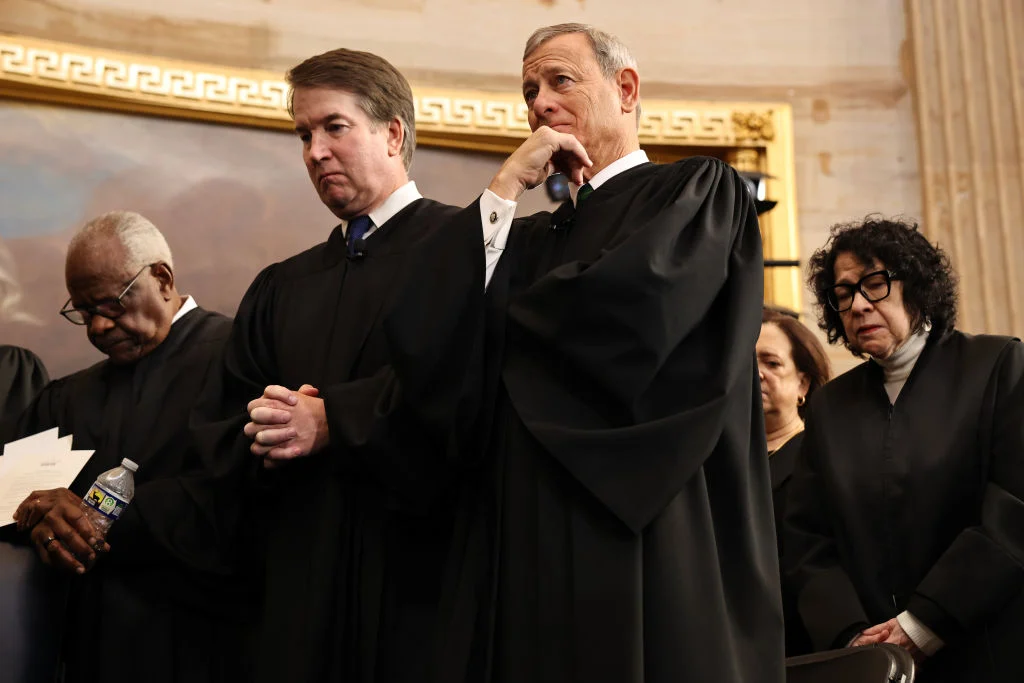
The ultimate arbiter in this complex dispute will likely be the Supreme Court, and for now, legal professionals across the spectrum agree that the outcome remains genuinely uncertain. Austin Evers, a partner at Freshfields in Washington, D.C., succinctly captures the essence of the challenge: "This is a classic case of old tools being applied to cutting edge technologies, and it’s too soon to say how courts will come out on those questions."
This sentiment is echoed by Kayvan Sadeghi, a partner at Jenner & Block in New York. Sadeghi points out a fascinating political dynamic: while the Trump administration and some Republican factions have expressed support for prediction markets, conservative judges, who constitute a significant majority on the current Supreme Court, often exhibit a strong inclination towards states’ rights arguments. This jurisprudential leaning could potentially work against Kalshi and its allies, regardless of any ideological alignment.
Legal scholars also highlight two relatively recent Supreme Court rulings that could pose significant challenges to the prediction markets’ position. The first is the 2018 decision in Murphy v. NCAA, which struck down the federal government’s exclusive authority over sports betting, effectively opening the door for states to legalize and regulate it. This ruling could undermine the CFTC’s argument that its authority over sports-related swaps inherently pre-empts state-level gambling regulation. The second is the 2024 case Loper Bright Enterprises v. Raimondo, where the justices curtailed the long-standing principle of "Chevron deference," ruling that courts owe no deference to the expertise of federal agencies when interpreting ambiguous statutes. This decision could further weaken the CFTC’s position, as its interpretation of Dodd-Frank to include sports wagers as swaps might not be given the traditional judicial deference it once enjoyed.
Even if the Supreme Court were to rule against Kalshi – an outcome by no means guaranteed – it would not necessarily spell the definitive end for the industry. While the litigation train barrels towards the highest court, another branch of government, Congress, has already begun to take a keen interest in prediction markets, signaling a potential legislative solution or further regulatory intervention.
Unusual Coalitions and the Congressional Debate
The debate over prediction markets has transcended traditional partisan divides, forging unusual political coalitions. Congresswoman Alexandria Ocasio-Cortez (D-N.Y.), a prominent progressive voice, recently took to X (formerly Twitter) to express her concerns, stating, "Pervasive gambling is not good for society. It turns life into a casino, traps people in addiction & debt, surges domestic violence, and fosters manipulation." Her remarks were prompted by news of Polymarket’s partnership with Major League Baseball, signaling mainstream acceptance. Surprisingly, her stance resonated with numerous conservatives, including Daily Wire host Michael Knowles, who remarked, "This is sad: I agree with @AOC."
This bipartisan concern is already manifesting in legislative efforts. While Republicans in Congress often align with former President Trump’s generally deregulatory stance, several members have moved to rein in prediction markets. Senator John Curtis (R-Utah) has co-sponsored a bipartisan bill with Senator Adam Schiff (D-Calif.) titled the "Prediction Markets are Gambling Act." This proposed legislation aims to close what the legislators perceive as a "CFTC loophole," explicitly classifying these event contracts as gambling and thus subjecting them to state-level regulation.
Austin Evers observes that prediction markets are still nascent enough that a definitive public consensus on their regulation has yet to crystallize. He cautions that even if Democrats were to regain full control of Congress, the passage of specific legislation is not an automatic outcome. "It’s always easy placing a bet on Congress being unable to pass legislation," Evers notes, alluding to the inherent difficulties in securing bipartisan agreement on complex issues. Nevertheless, he emphasizes that prediction markets represent an important and evolving public policy debate, ensuring continued engagement from lawmakers.
Adding another layer of complexity and demonstrating the fluidity of opinions, Blanche Lincoln, who as a Senator from Arkansas during the Dodd-Frank debate in 2010 warned against extending regulated swaps to cover wagers on events like the Masters or the Super Bowl, now serves as a registered lobbyist for Kalshi, advocating for the exact opposite position. This remarkable shift highlights the evolving understanding and vested interests surrounding these financial innovations.
As the fate of sports-related prediction markets hangs in the balance, both in the courts and in Congress, one might hope for a tool that could offer valuable insights into their future legality. Ironically, and perhaps tellingly, there are currently no events contracts available on Kalshi itself that would allow users to bet on the company’s own destiny in the halls of Congress or the chambers of the Supreme Court. The industry that prides itself on forecasting outcomes remains, for now, unable to predict its own most critical one.




Related Posts

‘We should absolutely be concerned about non-college-educated men today’: higher rents, living at home, falling out of the labor market | Fortune

Southeast Asia Navigates Worst Energy Crisis in Decades, Pivoting to Russia Amidst Hormuz Blockade