
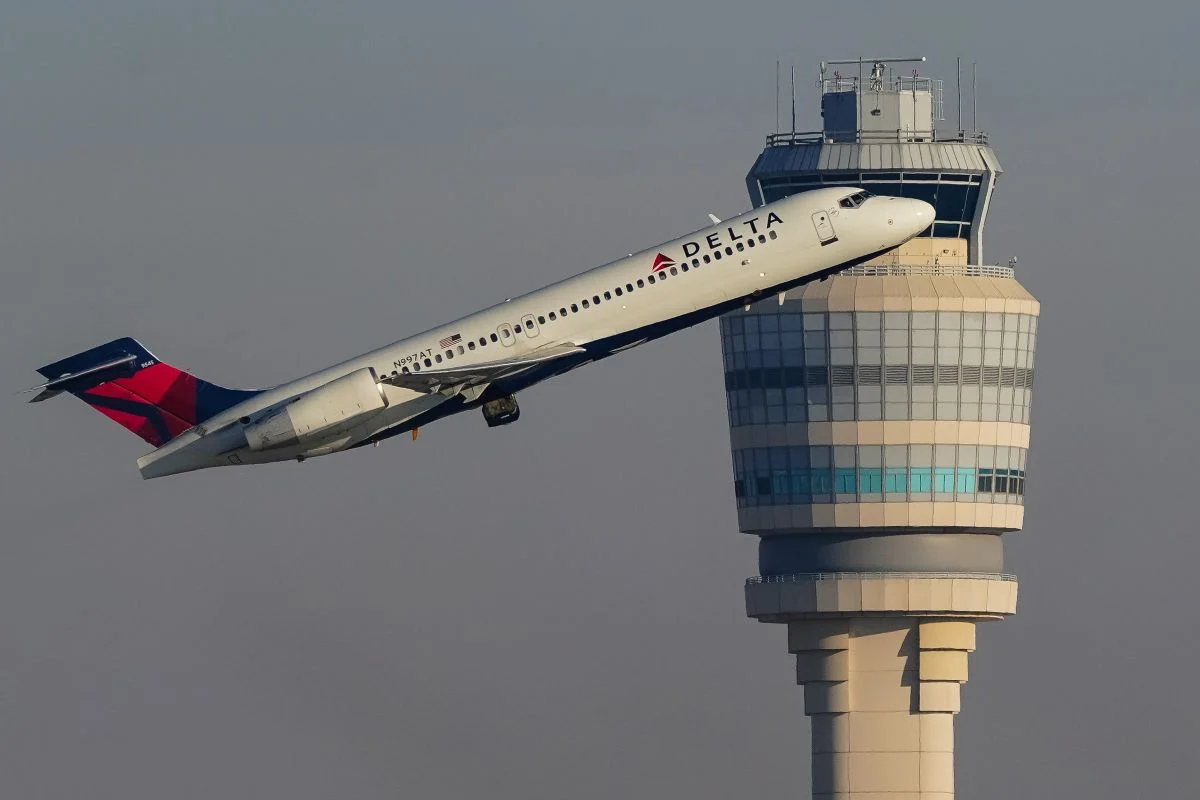
Delta Air Lines Adjusts Key Environmental Targets Amidst Slow Sustainable Fuel Progress
Delta Air Lines Inc., a major player in global aviation, has recently made quiet but significant revisions to its core environmental commitments, sparking renewed debate about the feasibility of the airline industry’s ambitious decarbonization pledges. The Atlanta-based carrier last week removed its specific pledge to incorporate sustainable aviation fuel (SAF) for 10% of its jet fuel consumption by 2030 from its official sustainability webpage. Concurrently, its commitment to achieve net-zero emissions by 2050 was subtly rephrased, transitioning from a definitive "goal" to a more flexible "aspiration." These changes, while seemingly minor in wording, signal a potential recalibration of the airline’s environmental strategy in the face of significant industry-wide challenges in scaling up sustainable fuel production.
The revisions by Delta come at a critical juncture for the aviation sector, which faces immense pressure to reduce its carbon footprint. Air travel is a significant contributor to global greenhouse gas emissions, and airlines have long championed SAF as the most viable path to decarbonization given current technological limitations for electric or hydrogen-powered commercial aircraft. Delta’s move, therefore, has far-reaching implications, not only for its own environmental trajectory but also for the broader industry’s collective efforts to meet climate targets.
Delta’s Evolving Environmental Stance
Delta Air Lines has historically positioned itself as a leader in sustainability within the aviation industry. Five years ago, the airline first publicly committed to sourcing 10% of its jet fuel from alternative, sustainable sources by 2030. This pledge was emblematic of a growing industry trend to address climate change concerns, with CEO Ed Bastian famously stating at the time, "Travelers should not have to choose between seeing the world and saving the world." This sentiment underscored a strategic effort to align the airline’s growth ambitions with increasing environmental consciousness among passengers and regulators. The 2050 net-zero target, a common benchmark across many industries, further solidified Delta’s long-term environmental vision.
However, the recent alterations suggest a divergence from these previously firm commitments. The complete removal of the 10% SAF by 2030 target from the public-facing sustainability page implies a recognition of the significant hurdles in achieving this specific benchmark within the defined timeframe. The reclassification of the 2050 net-zero ambition from a "goal" to an "aspiration" similarly introduces a degree of flexibility, potentially indicating a less rigid adherence to the original timeline or methodology should unforeseen challenges arise.
In an official statement released after the initial reports, a Delta spokesperson affirmed the carrier’s enduring commitment to its 2030 SAF objective, despite the website alteration. The spokesperson emphasized that Delta continues to view cleaner fuels as paramount to decarbonizing flight but acknowledged that "the technology has not advanced as rapidly as the industry or our ambitions require." This candid admission highlights the core dilemma confronting the aviation sector: while the desire for decarbonization is strong, the practicalities of achieving it, particularly through SAF, are proving more complex and slower than initially anticipated.
The Pivotal Role and Persistent Challenges of Sustainable Aviation Fuel (SAF)
Sustainable Aviation Fuel is widely regarded as the most promising near-to-mid-term solution for significantly reducing aviation’s carbon emissions. Unlike conventional jet fuel derived from fossil sources, SAF is produced from a variety of feedstocks such as used cooking oil, animal fats, municipal solid waste, agricultural residues, and even captured carbon dioxide. When produced using renewable energy, SAF can reduce lifecycle greenhouse gas emissions by up to 80% compared to traditional jet fuel, making it a critical component of any airline’s decarbonization strategy. Moreover, SAF is a "drop-in" fuel, meaning it can be blended with conventional jet fuel and used in existing aircraft engines and airport infrastructure without requiring significant modifications.
Despite its environmental advantages and operational compatibility, the widespread adoption of SAF faces formidable obstacles, which are increasingly coming to light and likely influencing decisions like Delta’s.
-
Limited Production Capacity and Availability: Global SAF production remains minuscule relative to the aviation industry’s vast fuel demands. In 2023, global SAF production reached approximately 600 million liters (158 million gallons), representing less than 0.5% of the total jet fuel consumed worldwide. While this marked a substantial increase from previous years, it pales in comparison to the billions of gallons required annually. The International Air Transport Association (IATA) estimates that SAF will account for only 0.8% of global airline fuel by 2026, underscoring the "glacial" progress described in the industry. Delta’s own SAF usage, while increasing six-fold in the past two years to 23 million gallons, still only accounted for about 0.5% of its total jet fuel consumption in 2025.
-
Exorbitant Costs: SAF is significantly more expensive than conventional jet fuel, often costing two to five times more. This premium is due to the higher costs associated with feedstock sourcing, complex refining processes, and the relatively small scale of current production facilities. For airlines operating on notoriously thin margins, absorbing such a cost differential for a substantial portion of their fuel needs presents an immense financial challenge, potentially impacting ticket prices and competitive positioning.
-
Feedstock Scarcity and Sustainability Concerns: While various feedstocks can be used, many face their own limitations. Used cooking oil and animal fats, for instance, are finite resources with growing demand from other sectors (e.g., road transport biofuels). Expanding into other feedstocks like agricultural residues or dedicated energy crops requires careful assessment to avoid competition with food production, land-use change, or deforestation, which could undermine the sustainability benefits of SAF. Advanced pathways like power-to-liquid (e-fuels) offer significant long-term potential but are still in early stages of commercialization and require massive investments in renewable energy infrastructure.
-
Policy and Infrastructure Gaps: While governments are increasingly introducing incentives and mandates – such as the U.S. Inflation Reduction Act (IRA) offering tax credits for SAF production, and the European Union’s ReFuelEU Aviation initiative mandating increasing SAF blending levels – these policies are still evolving. The lack of standardized global policies, coupled with insufficient investment in dedicated SAF production and distribution infrastructure, further complicates the scale-up process.
A Broader Industry Trend of Recalibration
Delta is not an isolated case in adjusting its environmental compass. The challenges inherent in aviation decarbonization are leading several major carriers to re-evaluate their publicly stated targets. Last year, Southwest Airlines significantly reduced its team dedicated to sustainable fuels and added a disclaimer to its website, outlining the "myriad uncertainties" surrounding its own 10% SAF by 2030 goal. Similarly, Air New Zealand Ltd. scrapped an ambitious carbon-reduction target in 2024, citing the complexities and difficulties of achieving it within the set timeframe.
These adjustments by prominent airlines suggest a growing realism within the industry regarding the pace and cost of achieving aggressive environmental targets, particularly those heavily reliant on SAF. While the commitment to decarbonization generally remains, the specific pathways and timelines are proving more challenging to navigate than initially projected.
Environmental Impact and Chronology of Delta’s Emissions
The scale of Delta’s emissions underscores the importance of its environmental targets. In 2024, the airline generated approximately 60 million tons of heat-trapping emissions. To put this into perspective, this single airline’s carbon footprint is roughly equivalent to the entire annual climate footprint of nations like Ireland or Hungary. This substantial contribution to global emissions is what drives the imperative for robust decarbonization strategies.
Timeline of Delta’s Key Environmental Commitments and Revisions:
- Circa 2019-2020: Delta publicly pledges to achieve 10% SAF usage by 2030 and a broader net-zero emissions goal by 2050. CEO Ed Bastian champions the "see the world, save the world" philosophy.
- Early 2020s: Delta invests in SAF initiatives, partners with producers, and incrementally increases its SAF usage.
- 2022-2023: Delta reports a six-fold increase in SAF usage over two years, reaching 23 million gallons, but this still represents only 0.5% of its total fuel. Industry reports (like IATA’s) begin to highlight the slow pace of global SAF production.
- Late 2023 – Early 2024: Other airlines, such as Southwest and Air New Zealand, begin to scale back or rephrase their environmental targets, signaling growing industry-wide challenges.
- Late Last Week (Recent Event): Delta Air Lines quietly scrubs the 10% SAF by 2030 target from its sustainability webpage and rephrases its 2050 net-zero "goal" to an "aspiration."
- Following Publication: Delta issues a statement reiterating its commitment to the 2030 SAF goal, attributing the website change to slow technological advancement in SAF production.
Broader Implications and Reactions
Delta’s move is likely to elicit a range of reactions from various stakeholders:
- Environmental Advocates: Groups focused on climate action are expected to voice strong criticism, potentially accusing Delta of "greenwashing" or backpedaling on vital commitments. They may argue that such adjustments undermine trust in corporate sustainability pledges and highlight the need for more stringent regulatory oversight and mandatory targets rather than voluntary ones.
- Investors: While some ESG (Environmental, Social, and Governance) focused investors might express concern over the potential impact on Delta’s sustainability ratings, others may view the adjustment as a pragmatic response to realistic market conditions. The financial implications of failing to meet overly ambitious targets could be seen as a greater risk than adjusting them. However, a sustained perception of weak environmental commitment could deter certain investor segments.
- Regulators and Policymakers: The airline’s recalibration could intensify calls for stronger governmental intervention. In regions like the European Union, where SAF blending mandates are already being implemented, Delta’s action might be viewed as further evidence that voluntary efforts alone are insufficient to drive the necessary systemic change. It could bolster arguments for increased subsidies for SAF production and more robust policy frameworks globally.
- SAF Producers and Innovators: While Delta’s statement acknowledges the slow pace of technological advancement, it also sends a signal about the urgent need for accelerated innovation and investment in SAF production technologies. It might encourage more collaborative efforts between airlines, energy companies, and governments to de-risk investments in new SAF pathways.
- Passengers: For environmentally conscious travelers, Delta’s adjustments could influence purchasing decisions. The growing phenomenon of "flygskam" (flight shame) suggests that consumers are increasingly aware of aviation’s environmental impact. Airlines perceived as less committed to genuine decarbonization efforts might face reputational damage and a shift in customer loyalty.
The Path Forward: A Balancing Act
Delta’s adjustments underscore the fundamental dilemma facing the aviation industry: how to reconcile the accelerating demand for air travel with the urgent imperative to decarbonize. While the ambition for net-zero emissions by 2050 remains an industry-wide objective, the immediate pathways, particularly the reliance on SAF, are proving more challenging than initially anticipated.
The situation necessitates a multi-faceted approach. Beyond SAF, airlines are exploring other decarbonization levers, including optimizing flight operations for fuel efficiency, investing in newer, more fuel-efficient aircraft, and exploring future technologies like electric or hydrogen propulsion, though these are largely beyond the 2030 horizon for widespread commercial use. Carbon offsets, while controversial, also remain a part of some airlines’ short-to-medium term strategies, though their long-term efficacy in achieving deep decarbonization is debated.
Ultimately, achieving aviation’s climate goals will require unprecedented collaboration among airlines, fuel producers, technology innovators, and governments. Policy support, through incentives for SAF production and research and development, alongside clear, consistent regulatory frameworks, will be crucial. Delta’s quiet but impactful decision serves as a stark reminder of the complexities and immense scale of the challenge that lies ahead for an industry striving to fly cleaner. It signals a shift from perhaps overly optimistic targets to a more pragmatic, albeit still ambitious, pursuit of sustainable aviation.
Related posts:



Related Posts
India’s Trade Deficit Narrows to $20.67 Billion in March Amidst Middle East Conflict Disruptions and Global Economic Headwinds

China Implements Sweeping Regulations Targeting Foreign Companies for Supply Chain Shifts Amid Escalating Geopolitical Tensions