
The Evolution of Ecommerce Pricing How AI is Transforming Static Labels into Dynamic Personalization for Global Retailers
The global ecommerce landscape is currently undergoing a fundamental structural shift as artificial intelligence transitions pricing strategies from a rigid, one-size-fits-all model to fluid, adaptive systems. For decades, the retail industry relied on static "list prices," occasionally modified by seasonal sales or manual markdowns. However, the integration of sophisticated AI agents now allows merchants to adjust pricing in real time based on complex shopper behaviors, environmental contexts, and historical data. This technological leap is designed not merely to increase sales volume but to solve one of the most persistent challenges in digital commerce: the preservation of profit margins in an increasingly competitive and transparent market.
While variations in what customers pay are not new—promotions, localized coupon codes, and bulk bundles have long created price discrepancies—the current evolution is defined by intentionality and optimization. Unlike the broad-stroke discounts of the past, AI-driven pricing is surgical. It enables a "segment-of-one" approach where the price or offer presented to a shopper is the result of a calculated decision-making process that balances the likelihood of conversion against the necessity of maintaining a specific margin. This transition marks the end of the "blanket discount" era and the beginning of the era of algorithmic precision.
The Chronological Evolution of Retail Pricing
To understand the magnitude of this shift, it is necessary to examine the timeline of pricing strategies in the retail sector. In the pre-digital era, pricing was largely cost-plus or dictated by suggested retail prices from manufacturers. Changes were slow, often requiring physical relabeling of products on shelves.
The first major disruption occurred in the 1980s and 1990s with the airline and hospitality industries. These sectors pioneered dynamic pricing, or "yield management," where prices fluctuated based on supply, demand, and time-to-departure. This model proved that consumers would accept different prices for the same seat or room if the logic was tied to scarcity and timing.
By the 2010s, enterprise-level ecommerce giants, most notably Amazon, took this concept to the digital storefront. Amazon began updating prices on millions of items as frequently as every ten minutes, responding to competitor moves and inventory levels. However, for most of that decade, such capabilities were restricted to the "retail 1%—companies with the capital to invest in massive data science teams and proprietary infrastructure.
The current phase, beginning in the early 2020s, is characterized by the democratization of these tools. The rise of "Plug-and-Play" AI and software-as-a-service (SaaS) platforms has moved dynamic pricing from the exclusive domain of enterprise giants to the Shopify and BigCommerce stores of small and medium-sized businesses (SMBs). Today, an independent merchant can install an AI-driven optimization app and implement pricing strategies that were once the sole province of multi-billion-dollar corporations.
The Mechanics of the Offer-and-Price System
Modern AI pricing systems operate as sophisticated agents that evaluate every user session. Rather than simply displaying a price fetched from a database, the system acts as a real-time gatekeeper. According to industry analysis, these AI agents are programmed to answer three critical questions before a price is rendered on a shopper’s screen:
First, the system asks: Is this shopper likely to buy without an incentive? By analyzing signals such as referral source (e.g., a direct visit versus a price-comparison site), browsing depth, and time spent on the page, the AI can predict the shopper’s intent. If the data suggests a high intent to purchase at full price, the system refrains from offering a discount, thereby protecting the merchant’s margin.
Second, if an incentive is required, what is the minimum amount needed to secure the conversion? The AI evaluates historical data to determine if a 5% discount is sufficient, rather than a standard 15% or 20% "welcome" code. This prevents "over-discounting," a common leak in retail profitability.
Third, the system determines the most effective format for the incentive. This might not always be a price reduction. For some shoppers, free shipping is the primary motivator; for others, it may be a "buy-one-get-one" offer or a loyalty point bonus. The AI selects the lever that has the highest probability of success for that specific individual in that specific moment.
This shift moves ecommerce from static pricing to dynamic decision-making. It transforms the digital storefront into a responsive environment that protects the bottom line across millions of individual transactions.
Data-Driven Insights and Market Impact
The financial implications of this shift are significant. Market research indicates that retailers implementing dynamic pricing can see revenue increases ranging from 8% to 25%, with a corresponding improvement in gross margins of 2% to 10%. In an industry where margins are often razor-thin, these percentages represent the difference between scaling and stagnation.

Supporting data from the "AI in Retail" market reports suggests that the global market for these technologies is expected to grow at a compound annual growth rate (CAGR) of over 30% through 2030. This growth is driven by the increasing volume of consumer data and the decreasing cost of cloud computing. Merchants are no longer guessing what their customers want; they are using clickstream data, IP-based geographical information, and device-type signals to build a high-definition profile of consumer willingness to pay.
Furthermore, the rise of inflation has made margin protection a top priority. As the cost of goods sold (COGS) and customer acquisition costs (CAC) rise, retailers can no longer afford to give away margin to shoppers who would have purchased anyway. AI provides the defensive layer necessary to survive in a high-cost environment.
The Controversy of "Surveillance Pricing" and Consumer Perception
Despite the economic benefits for merchants, the move toward personalized pricing has met with significant pushback from consumer advocacy groups and regulators. Critics have coined the term "surveillance pricing" to describe the practice of using personal behavioral signals to dictate costs.
The core of the controversy lies in the perception of fairness. While consumers have largely accepted dynamic pricing in the context of Uber rides or airline tickets, they remain skeptical of it for physical goods like apparel or electronics. Shoppers do not evaluate prices through a purely economic lens; they judge them based on consistency and perceived intent. If a customer discovers they paid more than a friend for the exact same item at the same time, the result is often brand erosion and a loss of trust.
Bernard Meyer, AI operations manager at the marketing platform Omnisend, emphasizes this delicate balance. "Consumers might have made peace with AI helping them shop, but there’s a very clear line between assistance and manipulation," Meyer noted. He points out that while shoppers are willing to trade personal data for better recommendations or a more streamlined experience, they react negatively when that data is used to extract a higher price from them.
Meyer added, "Our data shows consumers will share personal information if it helps them make better decisions, but not if it’s used against them. After years of inflation and constant price changes, people have a much clearer sense of what’s reasonable, and they’re far less tolerant of anything that looks like they’re being taken advantage of."
Regulatory Scrutiny and the Path Forward
The tension between algorithmic efficiency and consumer fairness has caught the attention of government entities. In the United States, the Federal Trade Commission (FTC) has recently begun investigating the use of "surveillance pricing" by major retailers and technology providers. The agency is seeking to understand how these opaque algorithms might facilitate price discrimination or exploit vulnerable consumers who may not have the time or tools to comparison shop.
In response to these concerns, many savvy retailers are adopting a "softer" approach to AI pricing. Instead of changing the base list price of an item—which is easily detectable and often causes friction—they focus on the "offer" layer. This involves maintaining a consistent public price but using AI to decide which shoppers receive specific discounts, perks, or "surprise and delight" rewards.
By framing the AI’s decision as a "reward" or an "exclusive offer" rather than a price hike for others, retailers can achieve the same margin-optimization goals without the public relations backlash. This method aligns with human psychology: a discount feels like a gain, whereas a higher base price feels like a penalty.
Broader Implications for the Future of Commerce
As AI agents become more autonomous, we may see a future where the concept of a "price tag" becomes obsolete. Instead, the interaction between a consumer’s "buying agent" and a merchant’s "selling agent" could result in a negotiated price settled in milliseconds.
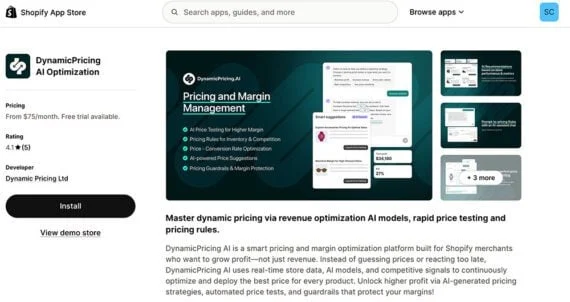
For smaller merchants, the immediate impact is the ability to compete on a level playing field with industry titans. Tools like DynamicPricing.ai and similar applications available on platforms like Shopify allow boutique brands to manage their inventory and margins with a level of sophistication that was previously impossible. This democratization of technology could lead to a more diverse and resilient retail ecosystem.
However, the long-term success of AI-driven pricing will depend on transparency and the maintenance of consumer trust. Retailers who use AI solely to squeeze every possible cent from a transaction may find themselves with high short-term margins but low long-term customer lifetime value. The most successful brands will be those that use AI to create "win-win" scenarios: providing the right incentive to the right shopper at the right time, ensuring the customer feels they got a fair deal while the merchant ensures the business remains profitable.
In conclusion, the shift from one-size-fits-all pricing to AI-driven adaptive systems is an inevitable evolution of digital commerce. It represents a move toward greater efficiency and economic rationality in the marketplace. As the technology matures, the challenge for the industry will be to navigate the ethical and psychological boundaries of personalization, ensuring that the quest for margin protection does not come at the expense of the consumer relationship.




Related Posts

The Strategic Integration of Conversion Rate Optimization Across Multi-Channel E-commerce Ecosystems

Global Ecommerce Evolution 2026: The Rise of Agentic Commerce, Circular Logistics, and Embedded Financial Systems