Nashville Incident Highlights Critical Role of Air Traffic Control and Onboard Safety Systems in Averting Mid-Air Collision
A harrowing close call unfolded in the skies above Nashville on Saturday, when two Southwest Airlines jets were forced to take immediate evasive action to prevent a mid-air collision, an incident directly attributed to an air traffic controller’s directive that inadvertently steered one aircraft into the flight path of the other. The alarming event underscores the fragile balance of aviation safety, where human judgment, sophisticated technology, and strict protocols must converge flawlessly to ensure the millions of safe flights undertaken annually. This near-catastrophe has reignited discussions about the pressures on air traffic control systems, the indispensable role of onboard collision avoidance technology, and the continuous imperative for vigilance across the aviation sector.
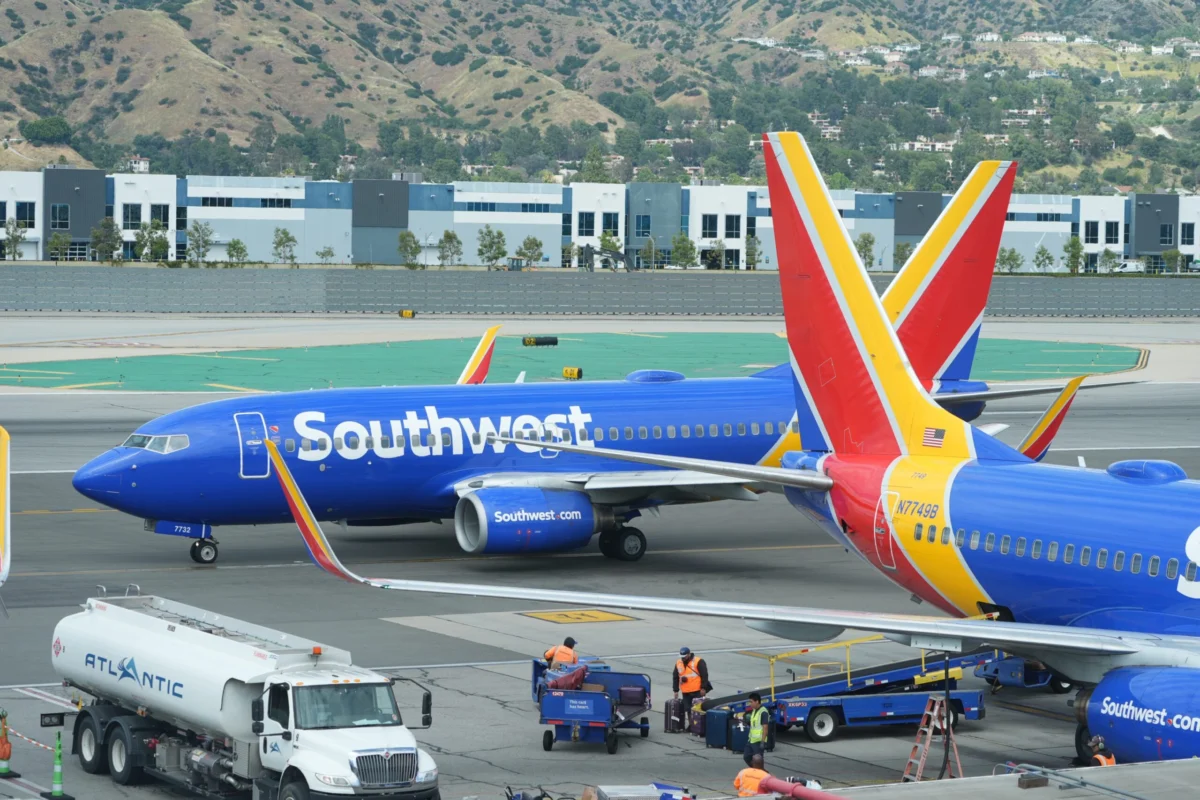
The incident occurred around 5:30 p.m. local time at Nashville International Airport (BNA). Southwest Airlines Flight 507, preparing for landing, encountered gusty wind conditions, prompting its pilot to initiate a "go-around" maneuver—an aborted landing procedure where the aircraft climbs and circles to attempt another approach. Following this standard safety protocol, the air traffic controller then instructed Flight 507 to turn, unknowingly directing it onto a converging course with another Southwest Airlines aircraft that had just departed from a parallel runway. This critical error created an immediate and severe conflict in the airspace, placing both aircraft and all occupants in peril.
Chronology of a Near Catastrophe
The sequence of events leading to the near-miss was swift and complex, highlighting the rapid decision-making required in high-stakes aviation scenarios. As Southwest Flight 507 commenced its go-around, the pilot communicated the maneuver to air traffic control. The controller, likely managing multiple aircraft in a busy airspace, issued a vector (a directional instruction) to Flight 507 that, unbeknownst to them at the time, intersected with the climb-out path of the other departing Southwest jet.
According to audio recordings posted by LiveATC.net, a platform that provides live air traffic control communications, the gravity of the situation became apparent almost instantaneously to the flight crews. Both Southwest pilots reported receiving urgent alerts from their onboard Traffic Collision Avoidance Systems (TCAS). TCAS is an independent airborne system designed to reduce the incidence of mid-air collisions between aircraft by providing timely warnings and resolution advisories to pilots. In this instance, the system functioned precisely as intended, overriding potentially conflicting air traffic control instructions with immediate, life-saving directives.
One pilot, upon receiving the TCAS Resolution Advisory (RA), was instructed to climb, while the other was advised to dive. These pre-programmed, coordinated maneuvers are designed to ensure that if two aircraft receive conflicting TCAS RAs, one will be directed up and the other down, maximizing separation. The pilots’ swift and professional response to these automated alerts was paramount. Location data, later analyzed by FlightRadar24, revealed that the two planes came perilously close, reportedly within 500 feet of each other, with one aircraft flying just over the top of the other. This proximity squarely falls within the official definition of a near mid-air collision (NMAC) as defined by aviation authorities.
The air traffic controller, belatedly recognizing the developing threat, attempted to intervene, directing the departing plane to maintain an altitude below 2,000 feet. However, by that point, the pilot of the departing aircraft reported already being above that level, indicating the rapid escalation of the situation and the pilots’ reliance on TCAS for immediate conflict resolution. The controller’s delayed recognition underscores the intense pressure and the potential for human error in managing complex airspace.
The Indispensable Role of Air Traffic Control and Its Challenges
Air traffic control (ATC) is the backbone of the global aviation system, responsible for safely guiding millions of aircraft through complex airspace every year. Controllers are highly trained professionals who manage aircraft movements on the ground and in the air, preventing collisions, organizing and expediting the flow of air traffic, and providing information and other support for pilots. Their work requires immense concentration, rapid decision-making, and an intricate understanding of airspace regulations, weather conditions, and aircraft performance characteristics.
The Nashville incident, where a controller issued an instruction that led to a conflict, highlights the critical human element in ATC operations. While systems and protocols are designed to minimize errors, the potential for human factors such such as high workload, fatigue, communication misunderstandings, or momentary lapses in attention remains a persistent challenge. Controllers often manage numerous aircraft simultaneously, each with its own trajectory, speed, and altitude requirements, particularly in busy terminal areas around major airports.
The Federal Aviation Administration (FAA) maintains rigorous training and certification programs for air traffic controllers, and continuous monitoring and performance evaluations are standard practice. However, the National Air Traffic Controllers Association (NATCA), representing controllers, has frequently voiced concerns about staffing levels, aging infrastructure, and the need for ongoing modernization of the National Airspace System (NAS). Incidents like the one in Nashville inevitably prompt renewed scrutiny of these operational conditions and resource allocations. While specific statements from NATCA regarding this particular event were not immediately available, their general stance emphasizes the demanding nature of the job and the need for robust support systems for their members.
Aviation Safety Systems: The Lifeline of TCAS
The successful avoidance of a collision in Nashville is a powerful testament to the effectiveness of the Traffic Collision Avoidance System (TCAS). TCAS is an active airborne system that interrogates the transponders of nearby aircraft, analyzes their positions, velocities, and projected flight paths, and then provides alerts and, if necessary, resolution advisories to the pilots.
There are two primary levels of TCAS alerts:
- Traffic Advisory (TA): This provides an audible "Traffic, Traffic" warning and displays the intruder aircraft’s position on the cockpit display, alerting pilots to potential threats and prompting them to visually acquire the traffic.
- Resolution Advisory (RA): If the collision risk increases, TCAS issues an RA, providing precise vertical maneuver instructions (e.g., "Climb, Climb," "Descend, Descend," "Maintain Vertical Speed, Maintain") to both pilots involved in the conflict. Crucially, when an RA is issued, pilots are trained to immediately follow its instructions, even if they contradict ATC clearances, as TCAS operates on the most immediate and accurate real-time data for collision avoidance.
TCAS is mandated for all commercial aircraft and larger business jets operating in controlled airspace. Its development and implementation have dramatically reduced the incidence of mid-air collisions involving commercial airliners since its widespread adoption in the 1990s. The Nashville incident serves as a textbook example of TCAS acting as the ultimate safety net, preventing a disaster when other layers of safety, specifically air traffic control, temporarily faltered. Without TCAS, the outcome on Saturday could have been tragically different.
Broader Context: Rarity of Commercial Mid-Air Collisions and Persistent Concerns
Mid-air collisions involving commercial aircraft are exceedingly rare events, a testament to the layers of safety built into the modern aviation system. However, when they do occur, or are narrowly averted, they draw intense scrutiny and highlight areas for potential improvement. The FAA defines a near mid-air collision (NMAC) as an incident where the distance between aircraft as a result of a deviation from an assigned flight path or a failure to follow air traffic control instructions is considered critical, or where the relative speed and proximity of the aircraft create a collision hazard. The 500-foot separation observed in Nashville unequivocally fits this definition.
The aviation industry continuously strives for zero accidents, and every incident, no matter how minor, is thoroughly investigated to learn lessons and implement corrective actions. However, the original article points to a concerning trend of recent mid-air incidents, some with tragic consequences. Earlier this year, on January 29, 2025, an American Airlines jet collided with an Army Black Hawk helicopter near Washington D.C., resulting in the deaths of all 67 people aboard both aircraft. This devastating event cast a stark spotlight on the complexities of operating in shared airspace, particularly involving military and commercial traffic, and the critical need for seamless coordination and advanced warning systems across all types of aircraft.
Furthermore, in February 2025, a collision involving small planes in Arizona claimed two lives. Such incidents involving general aviation aircraft are more frequent, often due to these smaller planes not being equipped with sophisticated collision avoidance systems like TCAS. While commercial aviation benefits from mandatory TCAS, the vast network of general aviation aircraft presents a different set of challenges for airspace management and collision avoidance. The FAA continually works to promote safety awareness and best practices for general aviation pilots, including advocating for voluntary adoption of ADS-B (Automatic Dependent Surveillance-Broadcast) Out technology, which enhances visibility to both air traffic control and other ADS-B equipped aircraft.
These recent events, coupled with other high-profile near-misses and runway incursions at major U.S. airports over the past year—such as those at Austin-Bergstrom International Airport and John F. Kennedy International Airport—have prompted an intensified focus on aviation safety by regulators, airlines, and the public. These incidents, while not all mid-air collisions, underscore the persistent challenges in maintaining absolute separation in increasingly congested skies and on busy airport surfaces.
Official Responses and Ongoing Investigations
The Federal Aviation Administration (FAA) has confirmed it is investigating the Nashville incident. In a statement, the agency indicated that the pilot of Southwest Flight 507 "received instructions from air traffic control that put the flight in the path of another airplane that was departing from a parallel runway. Both flight crews responded to onboard alerts." The FAA’s investigation will be comprehensive, examining air traffic control communications, radar data, controller actions, pilot adherence to instructions, and the performance of onboard equipment. The agency will analyze recorded audio from the control tower, radar tracks, flight data recorders from both aircraft, and potentially cockpit voice recorders, to reconstruct the event in minute detail.
While the FAA primarily focuses on regulatory compliance and immediate safety actions, the National Transportation Safety Board (NTSB) often becomes involved in significant aviation incidents to determine the probable cause and issue safety recommendations. Although the NTSB had not immediately announced its involvement in the Nashville near-miss, it typically monitors such events closely and may launch a full investigation if warranted, particularly given the proximity of the aircraft and the direct implication of air traffic control error. Such investigations are exhaustive and can take many months to complete, often resulting in systemic changes to procedures, training, or technology.
Southwest Airlines, through spokesperson Lynn Lunsford, reiterated its appreciation for the "professionalism of its pilots and flight crews in responding to the event." Lunsford confirmed that the go-around was initiated due to gusty winds at Nashville International Airport and that both pilots "followed the directions from the air traffic controller and their onboard collision avoidance systems to avoid running into each other." The airline emphasized that "Nothing is more important to Southwest than the safety of our customers and employees," indicating an internal review of the incident alongside the FAA’s investigation. Airlines typically conduct their own internal safety assessments following such events to identify any company-specific procedural or training improvements.
Implications for Aviation Safety and Public Confidence
The Nashville near-miss carries significant implications for the broader aviation industry and public confidence in air travel. Each close call, despite the high safety record of commercial aviation, serves as a stark reminder of the potential for catastrophic failure.
- Heightened Scrutiny on ATC: The incident will undoubtedly lead to increased scrutiny of air traffic control procedures, staffing levels, and training protocols. Regulators may revisit current operating standards and look for ways to enhance redundancy and error-trapping mechanisms within the ATC system. This could include technology upgrades, changes in controller workload management, or revised communication protocols.
- Reinforcement of TCAS Importance: The successful intervention of TCAS will further underscore its critical role as the final layer of defense against mid-air collisions. It reinforces the principle that automated safety systems are not merely supplementary but are vital, independent safeguards.
- Public Trust: While the incident was averted, it can momentarily shake public confidence in air travel. Transparent investigations and clear communication from aviation authorities and airlines are crucial to maintaining trust. The public needs assurance that all lessons learned will be promptly translated into actionable safety improvements.
- Human Factors and Automation: The event highlights the complex interaction between human operators (pilots and controllers) and automated systems. While automation provides significant safety benefits, it also introduces challenges, such as the potential for automation reliance or the need for seamless human-system interfaces. The incident demonstrates the necessity for pilots to be proficient in both following ATC instructions and overriding them when automated safety systems dictate a different course of action.
- Modernization Efforts: The event may add impetus to ongoing efforts to modernize air traffic management systems, such as the FAA’s NextGen program. NextGen aims to transition from a ground-based radar system to a satellite-based system, offering more precise tracking, enhanced communication, and greater efficiency, which could reduce the likelihood of such conflicts.
In conclusion, the averted mid-air collision in Nashville stands as a potent reminder of the intricate and interconnected safety mechanisms that underpin modern aviation. While a controller’s error initiated the dangerous convergence, the professionalism of the flight crews and the flawless operation of onboard collision avoidance technology ultimately prevented a tragedy. The thorough investigations now underway will be vital in identifying precise causal factors and implementing systemic improvements, reinforcing the continuous commitment of the aviation industry to ensuring the safest possible skies for all travelers.




Related Posts

‘We should absolutely be concerned about non-college-educated men today’: higher rents, living at home, falling out of the labor market | Fortune

Southeast Asia Navigates Worst Energy Crisis in Decades, Pivoting to Russia Amidst Hormuz Blockade