
Tech Leaders Grapple with AI’s Transformative Impact on Global Workforce: Augmentation vs. Annihilation
The global discourse surrounding Artificial Intelligence’s profound impact on the future of work remains sharply divided among the titans of the tech industry. While a segment of prominent CEOs foresees an imminent "jobs Armageddon" for white-collar professions, others champion AI as a revolutionary force poised to dramatically enhance human capabilities and productivity across all professional spheres. This fundamental divergence in perspective underscores the complexity and uncertainty inherent in the ongoing AI revolution.
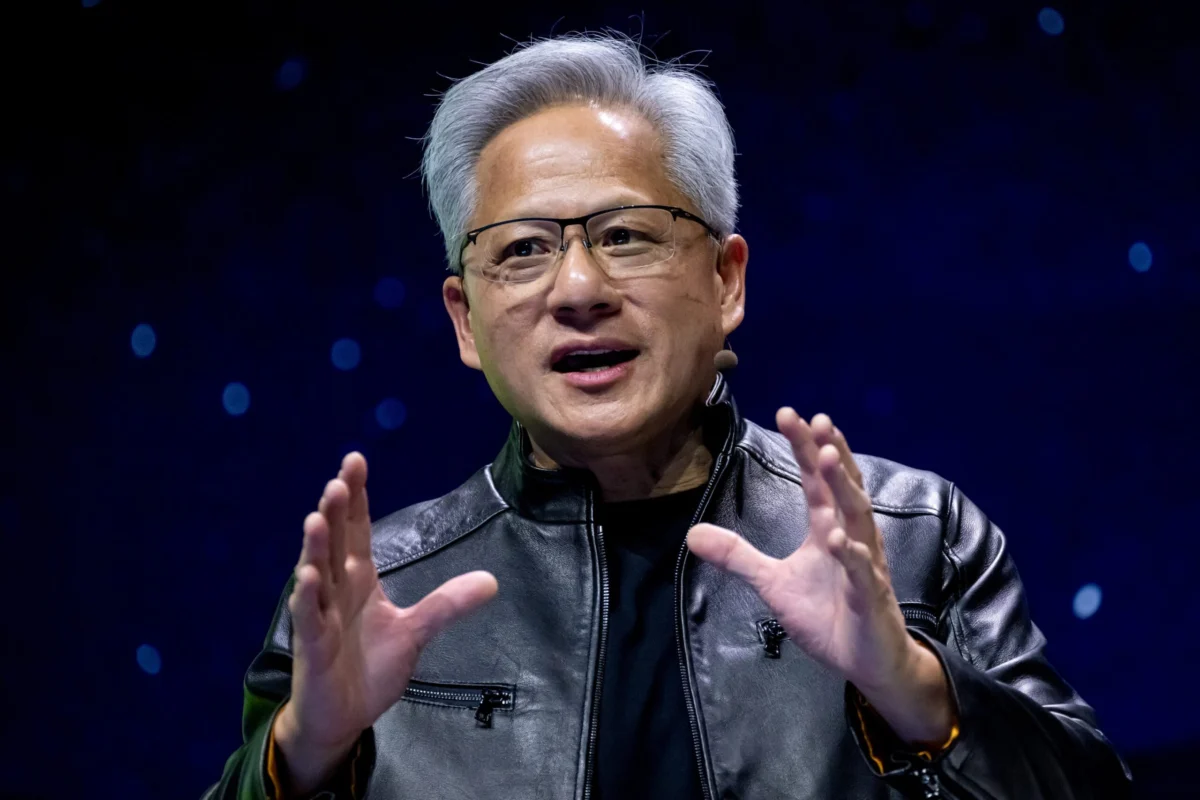
Jensen Huang, the visionary chief executive of Nvidia, a formidable $4.8 trillion technology giant, stands firmly in the latter camp. Huang posits that AI agents will predominantly function as demanding collaborators rather than direct job usurpers. During a recent panel discussion at Stanford Graduate School of Business, Huang painted a vivid, if somewhat humorous, picture of this future: "Your [AI] agents are harassing you, micromanaging you, and you’re busier than ever." Far from implying doom, Huang interprets this increased activity as a sign of accelerated progress and expanded human potential. "We’re doing things faster; we’re doing it at a larger scale; we’re thinking about doing things that we never imagined."
Huang, a 63-year-old entrepreneur with an estimated net worth of $167 billion, has consistently vocalized his opposition to the narrative that AI will precipitate a widespread jobs wipeout detrimental to nations like the United States. His company, Nvidia, has been at the very vanguard of this technological shift, with its GPU-accelerated computing business riding the crest of the AI wave to become one of the world’s most valuable enterprises. Nvidia’s exponential growth is intrinsically linked to the insatiable demand for the specialized hardware necessary to power advanced AI models, making Huang’s insights particularly weighty within the industry.
The Divergent Paths: Anxiety vs. Optimism
While tech behemoths like Nvidia continue to reap unprecedented success from the burgeoning AI boom, a palpable sense of apprehension permeates the everyday workforce. Workers globally are grappling with existential questions about the longevity and relevance of their careers. The rapid advancements in AI, particularly in large language models and autonomous agents, have demonstrated capabilities that were once exclusive to humans: writing sophisticated code, meticulously managing complex schedules, and crunching vast datasets with unparalleled speed and accuracy. Despite these demonstrable capabilities, Huang steadfastly maintains that this technology primarily unlocks new avenues for human endeavor, fostering greater engagement rather than diminishing it.
"The fact that we now have AI assistants [to] help us, we could explore more space, do better work, do things at a greater scale, do things more cost-effectively, do things better," the Nvidia CEO elaborated. He concedes that some job roles will inevitably be rendered redundant as a consequence of this technological revolution. However, his overarching sentiment remains one of profound optimism, envisioning a future where humans emerge from this transition with enhanced prospects and more fulfilling work. "My belief is we’re gonna create more jobs in the end," Huang asserted. "There’ll be more people working at the end of this industrial revolution than at the beginning of it." This perspective draws parallels with previous industrial revolutions, where initial disruptions ultimately led to net job creation and an elevation of living standards.
Huang’s Counsel: Distinguish Your Job from Your Tools
The anxieties gripping the workforce are far from unfounded. Reports of new job opportunities drying up and companies undertaking significant downsizing initiatives, often explicitly attributed to AI integration, contribute to a pervasive sense of vulnerability. The U.S. labor market, navigating post-pandemic complexities and inflationary pressures, has left many employees feeling precarious. A sobering report from ADP Research in 2025 revealed that a mere one in five workers felt their jobs were secure from elimination, with manufacturing and warehouse workers, alongside women, expressing the highest levels of concern regarding unemployment.
This widespread fear has, in some instances, translated into active resistance. A recent study by AI agent firm Writer and research business Workplace Intelligence indicated that approximately 29% of employees admitted to actively sabotaging their company’s AI agenda. This deliberate obstruction, largely driven by the fear of professional obsolescence, highlights the deep-seated psychological impact of this technological shift.
Adding to these concerns, a working paper from the National Bureau of Economic Research, published earlier this year, unveiled a stark projection: roughly 44% of CFOs at U.S. companies plan to implement AI-related job cuts in 2026. The analysis forecasted that approximately 0.4% of jobs, equating to about 502,000 roles, are expected to be eliminated by the end of 2026. This figure represents a staggering ninefold increase compared to the 55,000 AI-related layoffs reported in 2025, signaling an accelerating trend of automation-driven workforce reductions.
Despite these "doomsday" predictions and the tangible increase in AI-attributed job losses, Huang offers a grounded message of reassurance. He frames the current AI transformation as another iteration of historical industrial revolutions, positing that humanity will ultimately emerge in a stronger position. His core advice to AI-anxious individuals is to avoid conflating the essence of their job with the tools used to perform it. He draws on his own extensive career as evidence: "What I want to make sure we all do, is to recognize that people are really worried about their jobs," Huang stated on the Lex Fridman Podcast. "I just want to remind them that the purpose of your job, and the tasks and tools that you use to do your job, are related, not the same." He emphasized, "I’m the longest-running tech CEO in the world: 34 years. The tools that I’ve used to do my job have changed continuously in the last 34 years, and sometimes quite dramatically."
Historical Context and the Evolution of Work
Huang’s perspective gains historical resonance when viewed through the lens of past technological upheavals. The First Industrial Revolution, driven by steam power and mechanization, displaced countless agricultural and artisan jobs but simultaneously birthed entirely new industries and professional roles in factories, transportation, and urban infrastructure. Similarly, the advent of computers and the internet in the late 20th century transformed office work, rendering many clerical tasks obsolete, yet catalyzing the creation of millions of new jobs in software development, IT services, and digital content creation. Each wave of innovation, while disruptive, ultimately expanded the overall scope of human work and economic output.
Economists and labor market analysts frequently point to these historical precedents, suggesting that while specific tasks and roles will undoubtedly be automated, AI’s broader impact will be one of augmentation and transformation. The World Economic Forum, for instance, has projected that while AI may displace millions of jobs in the coming years, it is also expected to create an even larger number of new roles, particularly those requiring "human-centric" skills like creativity, critical thinking, emotional intelligence, and complex problem-solving. The challenge lies in managing the transition for displaced workers and ensuring adequate retraining and upskilling opportunities.
The Broader Implications: Reskilling, Policy, and the Future of Education
The debate surrounding AI’s impact extends far beyond immediate job losses and gains, touching upon fundamental questions about education, economic policy, and societal structure. The rapid evolution of AI capabilities necessitates a significant re-evaluation of educational curricula, emphasizing adaptable skills over rote memorization of now-automable tasks. Lifelong learning, reskilling initiatives, and flexible training programs are becoming imperative to ensure that the workforce can adapt to the shifting demands of an AI-driven economy. Governments, educational institutions, and private corporations will need to collaborate closely to develop robust frameworks for continuous learning and career transitions.
Moreover, the potential for significant disruption has ignited discussions around policy interventions such as Universal Basic Income (UBI). Proponents argue that UBI could provide a safety net for those whose livelihoods are irrevocably altered by automation, ensuring economic stability and allowing individuals to pursue new educational or entrepreneurial paths. Regulatory frameworks for AI are also under active development globally, aiming to balance innovation with ethical considerations, job protection, and equitable distribution of AI’s economic benefits. These policies will be crucial in shaping whether the AI revolution leads to widespread prosperity or exacerbates existing inequalities.
The nature of human-AI collaboration is also evolving rapidly. Rather than merely viewing AI as a tool, a growing number of experts, including Huang, see AI agents as active participants in the work process. This shift implies a need for new human skills in "prompt engineering" – effectively communicating with AI to achieve desired outcomes – as well as in overseeing, validating, and ethically guiding AI systems. Jobs involving creativity, strategic decision-making, interpersonal negotiation, and empathy are likely to remain firmly in the human domain, even as AI handles the more repetitive, data-intensive, or calculative aspects.
Conclusion: Navigating the Complexities of an AI-Driven Future
The current moment in the AI revolution is characterized by a fascinating interplay of fear and optimism, disruption and creation. While leaders like Jensen Huang offer a compelling vision of human augmentation and expanded productivity, the very real anxieties of workers facing job insecurity cannot be dismissed. The data on projected job cuts, coupled with reports of employee resistance, underscores the urgency of addressing the social and economic implications of AI with thoughtful policy and proactive adaptation strategies.
As AI continues its inexorable march forward, transforming industries from healthcare to finance, manufacturing to creative arts, the global workforce stands at a critical juncture. The path ahead will likely involve a dynamic equilibrium between automation and augmentation, demanding continuous learning, adaptability, and a willingness to redefine the very nature of work. The ultimate outcome – whether AI leads to a "jobs Armageddon" or a new era of human flourishing – will depend not solely on the technology itself, but on how societies choose to understand, integrate, and govern it. The dialogue among tech leaders, economists, policymakers, and workers will remain paramount in shaping a future where AI serves humanity’s best interests, creating more opportunities than it displaces.




Related Posts

‘We should absolutely be concerned about non-college-educated men today’: higher rents, living at home, falling out of the labor market | Fortune

Southeast Asia Navigates Worst Energy Crisis in Decades, Pivoting to Russia Amidst Hormuz Blockade