The Next ANA CEO Will Have to Face Down The Threat of AI
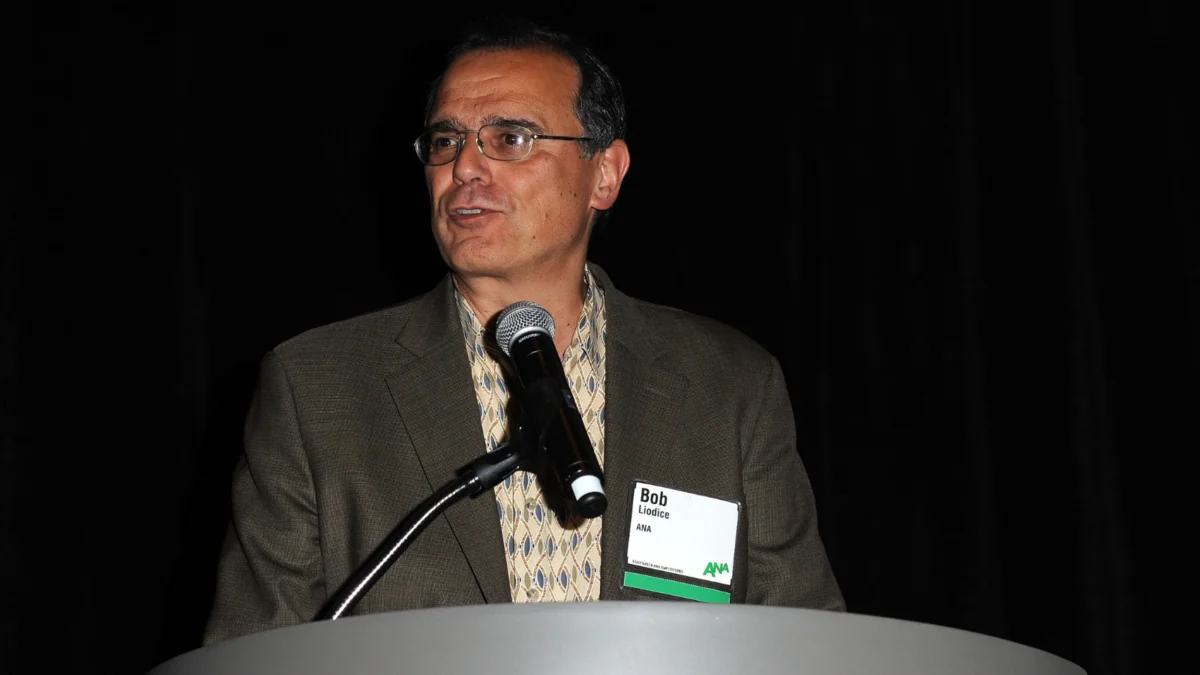
When Bob Liodice first walked into the offices of the Association of National Advertisers (ANA) for an interview 31 years ago, the advertising landscape was a radically different frontier. At the time, the organization was a struggling trade group with a mere $28,000 in the bank, and the primary tools of the trade were physical. During that initial meeting in 1995, Liodice was famously asked if he was willing to "lick envelopes and stamps"—a question that, while humorous today, reflected the manual, mailroom-centric nature of business operations in an era where only 14% of Americans had internet access.
Today, as Liodice prepares to step down as Chief Executive Officer, the ANA stands as a powerhouse of the marketing world, representing more than $400 billion in annual brand spend. However, the organization now faces a technological shift that Liodice argues is even more disruptive than the arrival of the World Wide Web: the ascent of Generative Artificial Intelligence (AI). This transition marks the end of a three-decade tenure defined by growth, professionalization, and the navigation of the digital revolution, leaving a complex legacy for his yet-to-be-named successor.
Three Decades of Growth: The Liodice Legacy
Liodice’s journey with the ANA began in 1995 when he joined as Senior Vice President. He ascended to the role of CEO in 2003, inheriting an organization that was still finding its footing in the post-broadcast era. Under his stewardship, the ANA transformed from a modest trade association into the primary voice for marketers in the United States.
The financial turnaround of the organization is perhaps the most quantifiable metric of his success. By shifting the ANA’s focus toward high-value resources and industry-leading events, Liodice grew the association’s influence exponentially. Key milestones in this expansion included the establishment of the Marketing Knowledge Center (MKC) and the growth of the "Masters of Marketing" conference, which has become a cornerstone event for the industry, drawing thousands of executives to discuss the future of brand building.
Beyond the balance sheet, Liodice’s tenure was marked by a commitment to industry transparency. Under his leadership, the ANA commissioned landmark studies into the media supply chain, most notably the 2016 K2 Intelligence report on media transparency, which sent shockwaves through the agency world by uncovering non-disclosed rebates and lack of clarity in media buying. This advocacy solidified the ANA’s role not just as a networking hub, but as a rigorous defender of brand interests.
The AI Frontier: A New Challenge for Leadership
As the ANA begins its search for a new leader, the focus has shifted from the successes of the past to the volatility of the future. Liodice has been vocal about the fact that his successor will face a landscape where the "rules of engagement" are being rewritten by AI. While Liodice regards AI as a fundamentally positive force for marketing efficiency and creativity, he warns of the existential risks it poses to "content companies"—a category in which he firmly places the ANA.
"We consider ourselves to be a content company, a convening company, and a leadership company," Liodice noted in a recent discussion regarding his departure. "We have to figure out a way to insulate that, such that the high-value content generated by the ANA is viewed as being valuable and unique within the minds and hearts of our members."
The concern stems from the way AI models "crawl" and ingest proprietary information. The ANA produces a vast amount of business intelligence through its 1,000 annual events and research papers. If this intelligence is scraped and synthesized by AI tools, the unique value proposition of ANA membership—exclusive access to expert insights—could be diluted. Protecting this intellectual property while simultaneously leveraging AI to enhance member services will be the primary tightrope the next CEO must walk.
A Chronology of the ANA’s Evolution Under Liodice
To understand the magnitude of the upcoming transition, it is necessary to look at the timeline of the ANA’s evolution over the last 30 years:

- 1995: Bob Liodice joins the ANA as Senior Vice President. The organization is financially precarious, and the internet is in its infancy.
- 2003: Liodice is named CEO. He begins a push to modernize the association’s offerings and expand its membership base to include a wider array of Fortune 500 companies.
- 2010s: The ANA aggressively expands through acquisitions and the creation of new divisions, including the acquisition of the Business Marketing Association (BMA) and the Brand Activation Association (BAA).
- 2016: The ANA releases its explosive report on media transparency, fundamentally changing the relationship between brands and advertising agencies.
- 2020-2022: The organization navigates the COVID-19 pandemic by pivoting to virtual "convening," maintaining its relevance during a global shutdown of physical events.
- 2024: Liodice announces his plans to step down, initiating a global search for a successor capable of navigating the "AI era."
- Late 2026: The official conclusion of Liodice’s tenure, marking one of the longest leadership runs in the history of American trade associations.
Defining the Modern Marketing CEO
The search for Liodice’s replacement is currently in its early stages, with the ANA in the process of finalizing an executive search firm. However, the criteria for the role have already shifted. Liodice himself admits that the profile of the ideal candidate has changed significantly since he took the reins.
While Liodice came from a traditional "brand guy" background—having spent 15 years at Kraft General Foods—he argues that a singular focus on brand management is no longer sufficient. The modern marketing landscape is a convergence of storytelling, data science, and technological infrastructure.
"If my successor is going to be able to navigate this extraordinarily complex terrain, brand experience is limiting unto itself," Liodice stated. "What about media expertise? What about technology? This person needs to have exposure to these things."
The industry reaction to this sentiment has been one of agreement. Analysts suggest that the next CEO will likely need to be a "polymath" leader—someone who understands the nuances of creative strategy but is equally comfortable discussing algorithmic bias, data privacy regulations, and the technicalities of retail media networks.
Implications for the Broader Advertising Industry
The transition at the ANA comes at a time when the advertising industry is grappling with several simultaneous disruptions. The "cookie-less" future, the rise of first-party data strategies, and the increasing pressure on CMOs to prove short-term ROI are all weighing heavily on the ANA’s membership.
- Content Protection and Intellectual Property: As Liodice highlighted, the "bottling" of expertise into content is under threat. The next leader will need to establish new frameworks for how trade organizations share knowledge in an age where information is easily commodified by LLMs (Large Language Models).
- Legislative Advocacy: The ANA has a significant presence in Washington D.C., lobbying on issues ranging from data privacy to tax deductibility of advertising. With AI regulation currently being debated in Congress, the new CEO will need to be a savvy political operator to ensure that brand interests are represented in emerging legislation.
- The Growth Agenda: The ANA has long championed the "Growth Agenda," a framework designed to help marketers drive business results. As AI automates many traditional marketing tasks, the definition of "growth" and the role of the marketer in achieving it will require a fundamental re-evaluation.
Industry Reactions and the Road Ahead
While names of potential candidates have not yet surfaced, the industry sentiment is one of cautious optimism. Marketers are looking for a leader who can maintain the ANA’s status as a "safe harbor" for brands while pushing the envelope on innovation.
The transition period—roughly 258 days remaining in the current phase of the handover process—provides a window for the ANA Board to vet candidates who can bridge the gap between the "Madison Avenue" traditions of the past and the "Silicon Valley" realities of the present.
The departure of Bob Liodice is more than just a change in personnel; it is a symbolic closing of the chapter on the "Digital Transformation" era and the opening of the "AI Integration" era. The next CEO will not be asked about licking stamps, but they will certainly be asked how they plan to defend the human element of branding in a world increasingly dominated by machines.
As the search continues, the industry remains focused on the ANA’s ability to remain "unique and valuable" in the hearts of its members. Liodice’s success was built on turning a $28,000 trade group into a $400 billion advocate. The next leader’s success will be measured by their ability to protect that $400 billion from the unpredictable currents of the next technological wave.
Related posts:

Related Posts
Beyond Follower Counts How Algorithmic Shifts and Integrated Strategies are Redefining Social Media Success in 2024
Viral Nation Leverages Artificial Intelligence and Big Data to Redefine Social Media ROI and Creator Marketing Strategies