
The RACI Matrix: A Critical Framework for Defining Project Roles and Enhancing Team Accountability
Successful project management fundamentally relies on a collective understanding of roles and responsibilities within a team. The RACI matrix stands as a pivotal project management tool, meticulously designed to assign and clarify ownership of tasks, thereby ensuring projects remain on schedule and poised for success. This framework is particularly effective when integrated with other critical project documents, such as a requirement traceability matrix, to provide a holistic view of project execution and oversight.
Understanding the RACI Matrix: A Foundation for Clarity
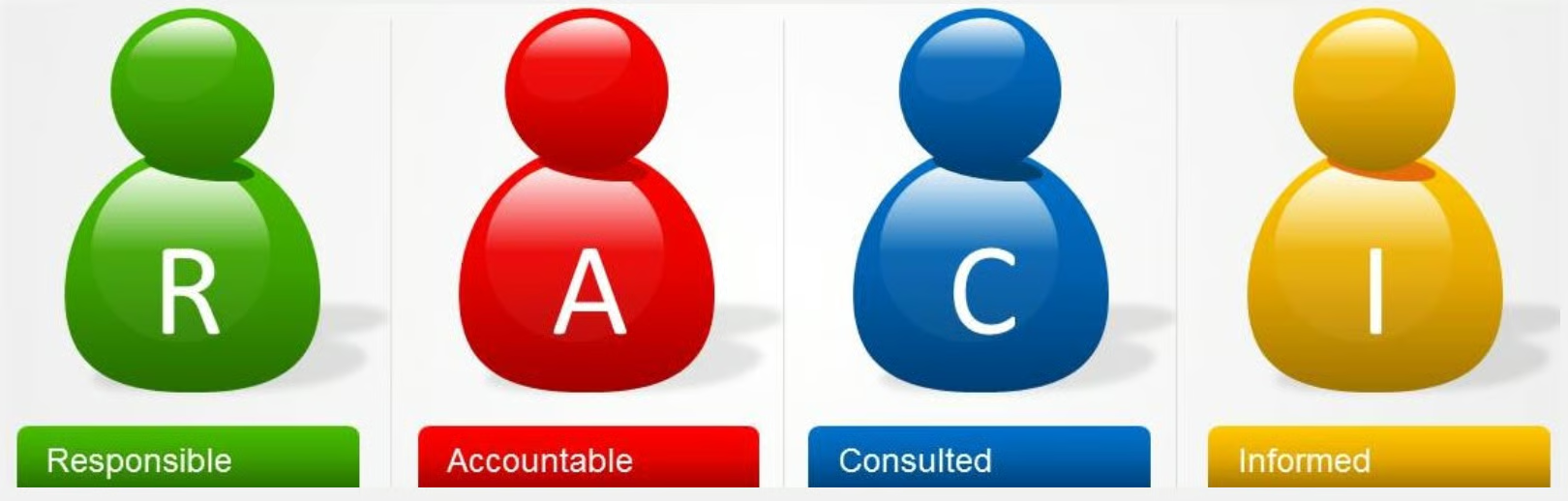
At its core, a RACI matrix is a responsibility assignment matrix that delineates each team member’s role in completing specific tasks or deliverables within a project. The acronym RACI represents four distinct roles: Responsible, Accountable, Consulted, and Informed. This categorization ensures that every individual involved in a project understands their precise level of engagement and contribution, effectively eliminating ambiguity, preventing overlapping duties, and significantly enhancing accountability.
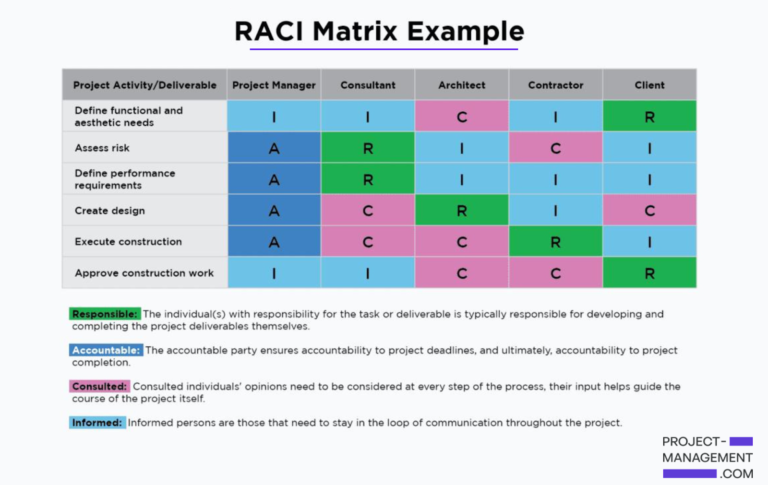
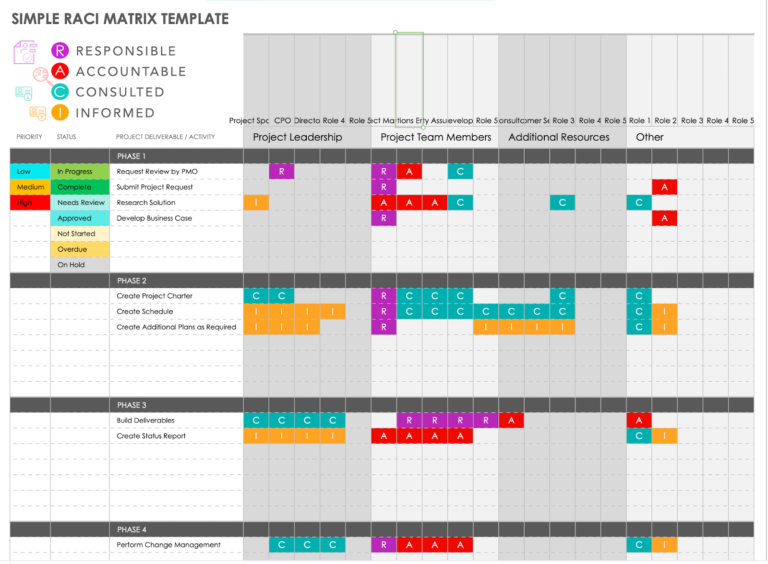
Developed largely within the consulting industry during the 1980s, the RACI framework emerged as a solution to pervasive issues like decision paralysis, duplicated effort, and communication breakdowns that plagued complex projects. Its systematic approach to role distribution has made it an indispensable asset, particularly for large-scale or intricate projects where clear lines of authority and participation are paramount for streamlining workflows and fostering effective communication. The matrix typically features project tasks or deliverables along its vertical axis and team members or roles along its horizontal axis. Each intersection within the matrix specifies an individual’s designated RACI role for a particular task.
The Four Pillars of RACI: Defining Core Roles
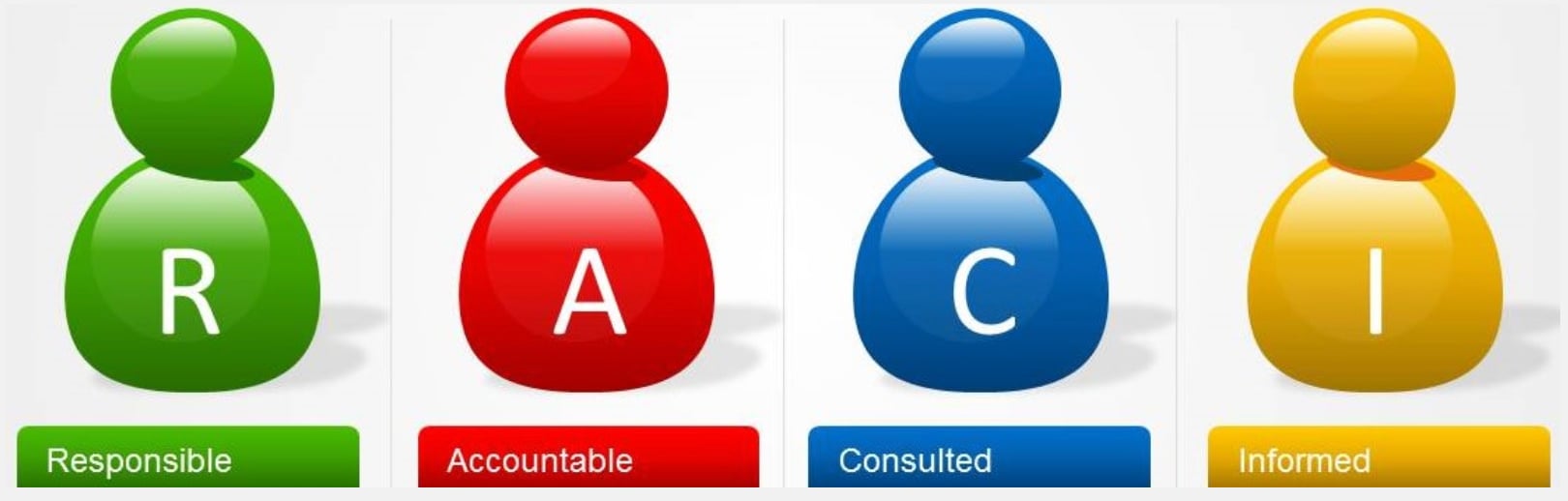
Effective team-based communication is often cited as a cornerstone of project success, yet statistics reveal that a significant portion of project spending—nearly half, according to some estimates—is at risk due to inadequate communication. The RACI matrix directly addresses this by formalizing communication pathways through its four core roles:
-
Responsible (R): This individual is the "doer" – the person who performs the work to complete a task or deliverable. There should ideally be only one Responsible person per task to avoid confusion and ensure clear execution. For larger deliverables composed of multiple sub-tasks, different individuals might be Responsible for each sub-task, but for a single atomic task, the responsibility is singular. Examples include copywriters crafting content, graphic designers creating visuals, or developers coding a feature. This role demands a hands-on approach and a commitment to timely delivery.
-
Accountable (A): The Accountable individual "owns" the outcome of the task or deliverable. They are the single point of approval, ensuring the work meets established expectations, quality standards, and timelines. There must be only one Accountable person per task to prevent decision-making bottlenecks and ensure ultimate ownership. This role often falls to product owners, project managers, or team supervisors. By clearly designating accountability, the RACI matrix prevents situations where multiple parties believe they have final say, or worse, where no one does.
-
Consulted (C): A Consulted party provides input, expertise, or advice before or during the project. Communication with this role is two-way, meaning their opinion is actively sought and considered. This could include legal experts offering guidance, subject matter experts validating technical approaches, or financial advisors assessing budgetary implications. While their input is crucial, the project team is not strictly bound to follow their recommendations; their role is advisory. Identifying who needs to be consulted minimizes unnecessary back-and-forth and enables more informed, efficient decision-making. Over-consultation, however, can lead to delays, so careful consideration of who genuinely needs to be consulted is vital.
-
Informed (I): Informed individuals receive one-way updates on project progress, key decisions, or final outcomes. They do not need to be consulted for input or involved in decision-making, but they must be kept aware. This typically includes business owners, senior stakeholders, or external partners who require a high-level overview of the project’s status and its impact on their areas of interest. The project manager is responsible for ensuring this group is kept in the loop through regular updates, summary reports, or inclusion in initial project kickoffs and demos as optional attendees. This prevents surprises and maintains transparency without bogging down operational teams with unnecessary communications.
Strategic Advantages: How RACI Empowers Project Managers
The RACI matrix offers significant value to project management professionals, addressing several critical challenges that can impede project success. Its implementation provides a structured approach to team organization and project execution.
1. Unparalleled Clarity in Roles and Responsibilities:
The primary benefit of RACI is the organizational clarity it instills. As Molly Beran, President and founder of Projects by Molly, LLC, observes, "RACIs are a great way to help keep your project team and stakeholders accountable to what they should be doing. Sometimes people forget things like who makes decisions or who is in charge of setting agendas, especially over the course of a long project. It can be a useful reminder or an easy way to help bolster requests for project team members to complete their duties on a project." This clarity extends beyond simple task assignment, fostering a culture of accountability. Jamilyn Trainor, Senior Project Manager and owner at Müller Expo Services International, considers RACI her team’s indispensable tool: "[RACI matrices] force owners of the project to clear timelines for approvals, provide clarity, push decisions faster, and call out gaps before they become failures. Many teams misplace alignment with agreement. The RACI forces clarity." Roman Rylko, Pynest CTO, further emphasizes its importance in complex environments, noting, "With over 200 developers across different levels, it’s essential to define who’s informed, who’s executing, and who owns the final call. Otherwise, senior engineers get stuck waiting on input no one feels responsible for. RACI cuts that noise early."
2. Elimination of Duplicate Effort and Enhanced Efficiency:
By clearly delineating who is Responsible for what, the RACI matrix prevents the costly and time-consuming problem of multiple individuals unknowingly working on the same task. Rohit Agarwal, Zenius co-founder, highlights this, stating, "When everyone knows what they are responsible for, multiple people don’t unknowingly work on the same task, like writing job descriptions for the same position. This also helps us save time and resources." James Foote, SEO Director at POLARIS, adds, "[RACI] is the most efficient way to communicate responsibility across various parties. Without a RACI, managing to keep everyone informed only where they are required would not be as easy." Ruth Phillips, Head of Training Delivery at Parallel Project Training, recounts how RACI consistently helps her avoid confusion and duplication, especially when project roles span multiple departments or organizations. "By using a RACI, I am able to clarify who is doing, approving, and supporting every task. I would always use a RACI matrix when working across functions or with different organizations, where assumptions about roles and responsibilities might vary. A RACI chart provides clarity on who does what."
3. Proactive Prevention of Project Delays:
Implementing a RACI matrix at the project’s inception serves as a powerful preventative measure against unnecessary delays that can severely jeopardize project success. Ruth Phillips states, "[RACI] prevents delays by aligning expectations early in the lifecycle and ensures that accountability is clear for everyone to see." Chandler Paul, Senior Project Manager at NEWMEDIA.com, provides a compelling example from a national campaign launch where a simple handout was stalling a multi-million-dollar media plan. By implementing a RACI chart, his team clarified responsibilities for copywriting, quality approval, input, and information dissemination. This strategic shift resulted in feedback being reduced by two-thirds, accelerating asset delivery by five business days.
4. Optimized Communication Pathways:
Beyond merely assigning roles, the RACI matrix significantly enhances project communication by establishing clear channels for information flow. Chandler Paul underscores this, stating, "Assigning one Accountable person per task makes it clear who to escalate issues to, which matches what PMI says about how having engaged project sponsors is a main factor in project success. Organizations that communicate well are far more likely to achieve their goals, and just clearly distinguishing two-way Consulted from one-way Informed in a RACI chart makes a big difference in keeping communication clear." By defining who needs what information and in what capacity, RACI ensures that relevant stakeholders are engaged appropriately without overwhelming others, fostering a more efficient and targeted communication environment.
Integrating RACI into the Project Lifecycle

Creating a RACI matrix is a systematic process, best undertaken early in the project lifecycle. The project manager, often in collaboration with key stakeholders and team leads, typically initiates this process.
Steps to Create a RACI Matrix:
- Identify Project Tasks and Deliverables: Begin by breaking down the project into its constituent tasks and major deliverables. A Work Breakdown Structure (WBS) is an excellent precursor to this step, providing a hierarchical list of all work required.
- Identify Project Participants: List all individuals, roles, or teams involved in the project across the horizontal axis of the matrix.
- Assign RACI Roles for Each Task: For each task, assign one of the four RACI roles to each participant. Crucially, ensure there is only one "Accountable" person per task and at least one "Responsible" person.
- Review and Validate: Circulate the draft RACI matrix among the team and key stakeholders. This collaborative review ensures buy-in, identifies potential conflicts, and clarifies any misunderstandings. It’s vital for all parties to agree on their assigned roles.
- Communicate and Implement: Once finalized, formally communicate the RACI matrix to all project participants. Integrate it into project kickoff meetings and reference it throughout the project.
It is important to remember that a RACI matrix is not a static document. As projects evolve, tasks change, or team compositions shift, the matrix should be reviewed and updated accordingly, making it a living document that continually reflects the current state of responsibilities.
Technological Facilitation of RACI
Modern project management software solutions have increasingly integrated features that facilitate the application of the RACI matrix, making it easier to assign, track, and manage roles and responsibilities within digital workflows.
- Asana: This platform allows users to assign tasks to individuals and then leverage custom fields or tags to explicitly label roles like "Responsible" or "Accountable." Project managers can create dedicated sections or boards to visualize RACI assignments, ensuring all team members are aware of their specific contributions and oversight responsibilities. This central visibility prevents miscommunication and task overlap, enhancing team collaboration.
- Jira: Widely used for agile development, Jira enables the linking of RACI roles directly to issue tickets. Custom fields can be configured to designate Responsible, Accountable, Consulted, and Informed parties for each task or user story. Jira’s robust reporting features allow project managers to track progress against these defined roles, ensuring accountability and clear decision pathways throughout the development lifecycle.
- Trello: With its intuitive, card-based interface, Trello utilizes labels and categories effectively to represent RACI roles. Project managers can assign members to cards (tasks) and then add color-coded labels or custom fields to denote their RACI status. This visual approach is particularly beneficial for smaller teams requiring a quick, clear overview of task assignments and role distribution.
Integrating the RACI matrix into these and other project management tools (like Smartsheet or Wrike, which offer dedicated templates) significantly enhances accountability and clarity, empowering teams to stay aligned on task responsibilities and minimize delays.

RACI and Stakeholder Management: A Symbiotic Relationship
Stakeholder analysis is a crucial preliminary step that directly informs and strengthens the implementation of the RACI matrix. By systematically identifying all relevant stakeholders, project managers gain critical insights into who has a vested interest in the project and to what extent. This understanding is then translated into the RACI matrix, ensuring appropriate roles are assigned.
Steps for Effective Stakeholder Analysis:
- Identify All Potential Stakeholders: Brainstorm and list everyone who could be affected by the project or influence its outcome, both internal (team members, management) and external (clients, vendors, regulatory bodies).
- Analyze Stakeholder Interest and Influence: For each stakeholder, assess their level of interest in the project and their potential influence over its success. Tools like a power-interest grid can be useful here.
- Understand Stakeholder Expectations and Requirements: Determine what each stakeholder expects from the project and what their specific needs or concerns are.
- Categorize and Prioritize Stakeholders: Group stakeholders based on their influence, interest, and specific needs. This helps in tailoring communication and engagement strategies.
Aligning stakeholder involvement with the RACI framework creates a comprehensive roadmap for communication and decision-making. High-influence, high-interest stakeholders might frequently be ‘Consulted’ or ‘Informed’, while those with direct oversight could be ‘Accountable’ for specific project phases. This synergy ensures that all critical parties are appropriately engaged and informed throughout the project lifecycle, leading to improved buy-in, reduced resistance, and ultimately, more successful project outcomes.
Common Pitfalls and Best Practices in RACI Implementation
While powerful, the RACI matrix can be misapplied, leading to its own set of problems. Awareness of common mistakes and adherence to best practices are crucial for maximizing its benefits.

Common Mistakes:
- Too Many ‘Responsible’ (R) Individuals: Assigning multiple ‘R’s to a single task can dilute responsibility, leading to confusion about who is actually doing the work and potentially resulting in no one completing it effectively.
- No ‘Accountable’ (A) Person or Too Many ‘A’s: The absence of a clear ‘A’ means no one takes ultimate ownership for the task’s completion and quality, leading to decision paralysis. Conversely, having multiple ‘A’s creates conflict and ambiguity regarding final approval.
- Over-consultation: Consulting too many individuals for every decision can significantly slow down progress and lead to information overload, making it difficult to synthesize feedback and move forward.
- Under-informing: Failing to keep relevant stakeholders ‘Informed’ can lead to surprises, resistance, and a feeling of being excluded, potentially undermining project support.
- Static Matrix: Treating the RACI matrix as a one-time setup document without reviewing or updating it as the project evolves can render it irrelevant and ineffective.
- Lack of Buy-in and Communication: If the RACI matrix is not properly communicated, understood, and agreed upon by all team members, it will fail to achieve its intended purpose.
Best Practices:
- One ‘A’ and One (Primary) ‘R’ per Task: Strict adherence to this rule is fundamental for clarity and accountability.
- Keep it Concise: Focus on key tasks and deliverables, avoiding excessive detail that can make the matrix cumbersome.
- Collaborative Creation: Involve the team and key stakeholders in the creation and review process to foster ownership and ensure accuracy.
- Regular Review and Update: Periodically revisit the RACI matrix, especially during phase changes or significant project shifts, to ensure it remains current and relevant.
- Train and Communicate: Educate team members on what each RACI role entails and ensure the matrix is readily accessible and understood by everyone.
- Focus on Outcomes: The RACI matrix should ultimately serve to achieve project outcomes, not become an administrative burden.
RACI: Pros, Cons, and Alternatives
Like any tool, the RACI matrix has its strengths and weaknesses, and its suitability can vary depending on the project context.
Pros:
- Clarity: Clearly defines who does what, eliminating confusion.
- Accountability: Establishes clear ownership for tasks and decisions.
- Efficiency: Prevents duplicated effort and streamlines workflows.
- Communication: Structures communication pathways, ensuring relevant parties are engaged appropriately.
- Conflict Reduction: Minimizes misunderstandings and disputes over responsibilities.
- Onboarding: Helps new team members quickly understand their roles.
Cons:
- Rigidity: Can be perceived as overly bureaucratic or rigid for highly dynamic or agile projects.
- Time-Consuming: Initial setup and ongoing maintenance can require significant effort.
- Doesn’t Capture Nuance: May not fully capture the collaborative nature of some tasks or the depth of involvement.
- Can Lead to Micromanagement: If misapplied, it can become a tool for excessive oversight rather than empowerment.
- Single Point of Failure: Over-reliance on a single ‘A’ or ‘R’ can create bottlenecks if that individual is unavailable.
RACI Alternatives:
For projects with different needs, several alternatives to the traditional RACI matrix exist:
- RASCI (Responsible, Accountable, Support, Consulted, Informed): Adds a ‘Support’ role, identifying individuals who assist the ‘Responsible’ person in completing the work. This is particularly useful for operational tasks or projects requiring significant auxiliary effort.
- DACI (Driver, Approver, Contributor, Informed): Often used for decision-making processes. The ‘Driver’ leads the initiative, the ‘Approver’ has final say, ‘Contributors’ provide input, and ‘Informed’ parties receive updates.
- RAPID (Recommend, Agree, Perform, Input, Decide): Another decision-making framework, focusing on clear steps: ‘Recommend’ proposes a course of action, ‘Agree’ provides consent, ‘Perform’ executes, ‘Input’ offers data/expertise, and ‘Decide’ makes the final call.
- ARCI (Accountable, Responsible, Consulted, Informed): Essentially the same as RACI, but with a different ordering, sometimes used to emphasize the importance of accountability upfront.
- PACSI (Perform, Accountable, Control, Suggest, Informed): Introduces a ‘Control’ role for those who monitor and ensure compliance, and a ‘Suggest’ role for those offering ideas, distinct from ‘Consulted’ who provide specific expertise.
The choice of matrix depends on the project’s complexity, the organizational culture, and the specific emphasis required (e.g., decision-making vs. task execution).
The Enduring Value of the RACI Matrix
In conclusion, the RACI matrix remains an exceptionally powerful and valuable tool in the project manager’s arsenal. By meticulously defining who is Responsible for execution, Accountable for the outcome, Consulted for input, and Informed of progress, it lays a clear foundation for project success. This framework effectively addresses common project pitfalls such as role confusion, duplicated efforts, decision paralysis, and communication breakdowns.
While alternative responsibility assignment matrices exist, RACI’s simplicity, clarity, and widespread understanding make it particularly effective for a vast range of projects, from straightforward initiatives to complex endeavors. When implemented thoughtfully, collaboratively, and maintained as a living document, the RACI matrix significantly enhances project clarity, streamlines communication, bolsters accountability, and ultimately leads to smoother execution and more successful project outcomes. Its continued relevance in a dynamic project landscape underscores its fundamental importance in fostering organized, efficient, and cohesive team efforts.




Related Posts

PMI Unveils Major Overhaul of PMP Certification Exam for 2026, Signifying a New Era for Project Leadership

Choosing the Best Workflow Management Software for Enhanced Operational Efficiency