Beyond Conventional Wisdom: Unpacking China’s Enduring Manufacturing Edge Amidst Global Shifts
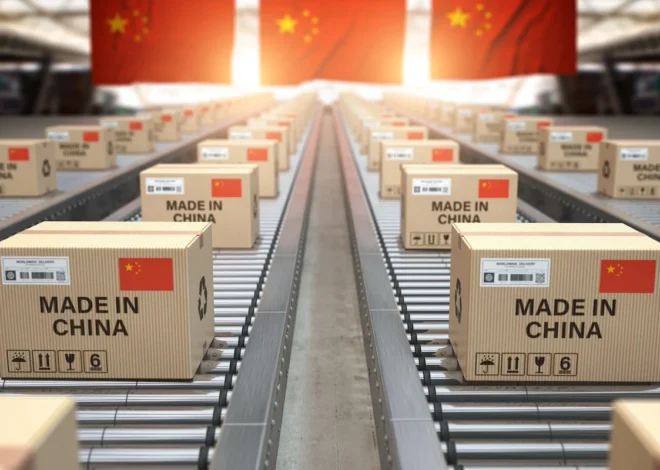
The prevailing narrative in recent years has painted a picture of China gradually relinquishing its dominion as the world’s manufacturing powerhouse. Influential factors such as the consistent ascent of Chinese labor wages, the unpredictable fluctuations of U.S. tariffs, escalating geopolitical tensions, and the inherent logistical costs associated with shipping goods across vast distances to international markets are frequently cited as compelling justifications for reshoring production capabilities back to Western economies. However, this widely accepted viewpoint may overlook a fundamental aspect: the intrinsic nature of Chinese manufacturing itself, a characteristic that continues to confer a distinct advantage, potentially leaving the American production model at a systemic disadvantage.
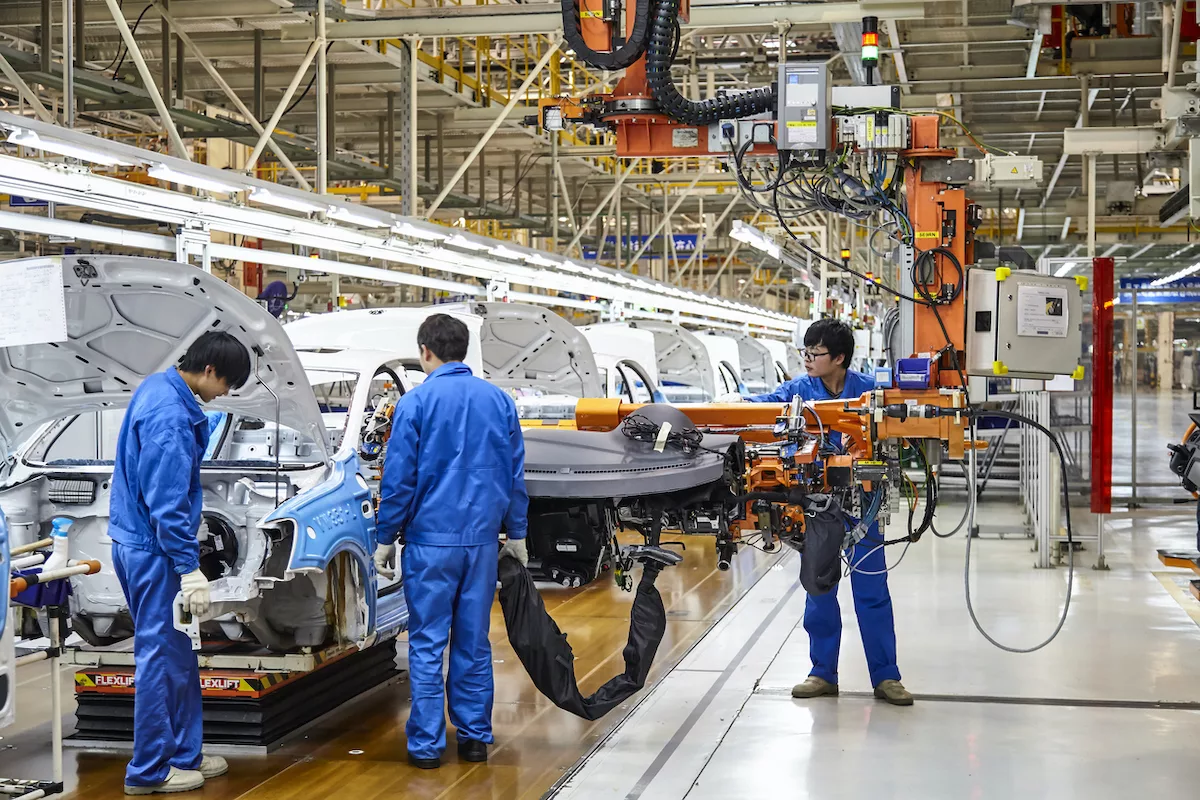
This counter-perspective is strongly advocated by Allan Evans, the chief executive officer of Unusual Machines, a U.S.-based entity specializing in the production of drone components for both military and commercial applications. Operating in a sector where direct competition with Chinese manufacturers is a daily reality, Evans brings a decade of invaluable first-hand experience from China, where he was instrumental in establishing virtual-reality headset production lines, achieving an impressive output of tens of thousands of units annually. His extensive tenure provided him with an unparalleled vantage point into the intricate workings of Chinese factories, offering deep insights into their sophisticated management of suppliers, components, finished goods, and the operational dynamics of their shop floors. Evans contends that the contemporary reality of Chinese manufacturing deviates significantly from the often-outdated perceptions held by many Western observers.
The Evolution of China’s Industrial Workforce: A Paradigm Shift
The historical bedrock of China’s manufacturing boom, particularly in its nascent stages, was predominantly laid by an immense workforce comprising individuals from rural communities. These workers embarked on arduous journeys, often spanning thousands of miles, to converge on major industrial hubs like Shenzhen in the Pearl River Delta. They typically resided in rudimentary, dormitory-style accommodations provided by their employers, their only annual respite being the journey back to their ancestral villages and families during the Chinese New Year — an event famously described as the largest human migration on the planet. This period, stretching from the late 1970s through the early 2000s, saw China leverage its vast, inexpensive labor pool to become the "world’s factory," dominating sectors from textiles to electronics.
However, as Evans highlights, this historical depiction no longer encompasses the full scope of China’s industrial landscape. The demographic profile of the Chinese factory worker has undergone a profound transformation. Today, a substantial and ever-growing proportion of these workers are urban dwellers, belonging to a younger generation that has directly benefited from China’s remarkable economic ascent and the proliferation of a burgeoning middle class. This demographic is deeply integrated into the internet economy, readily embracing digital conveniences and demonstrating a different set of aspirations and skills compared to their predecessors. Evans emphatically states, "China, in the last 30 years, has done the greatest job in the history of the world in destroying poverty." This assertion is supported by World Bank data, which indicates that China has lifted over 800 million people out of extreme poverty since 1978, a monumental achievement that has fundamentally reshaped its society and workforce. Average manufacturing wages in China have seen significant increases, roughly tripling in the last decade, reflecting both economic growth and a tightening labor market in certain coastal regions.
Cultural Pillars of Productivity and Dedication
Beyond mere economic indicators, Evans points to a deeply ingrained cultural ethos that distinguishes the Chinese manufacturing workforce. He observes an enthusiasm for work that, in his view, is not easily replicated in Western industrial settings. This characteristic is often intertwined with a strong culture of hierarchy, prevalent across much of Asia, fostering a general willingness to adhere to managerial directives. While individual workers may exhibit reluctance to openly challenge or contradict their superiors, they tend to find comfort and purpose within their assigned roles, contributing to a workforce characterized by harmony and dedication. This cultural framework, whether appreciated or not by Western standards, undeniably contributes to operational efficiency and consistency on the factory floor.
This operational philosophy is encapsulated in Evans’s observation: "China builds systems to scale, not people." This implies a strategic emphasis on robust tooling and sophisticated process engineering, designed to ensure uninterrupted production flows even in the face of disruptions. Chinese manufacturers invest heavily in creating resilient, highly integrated production systems where individual components are part of a larger, optimized whole. This systematic approach allows for rapid scalability and adaptability, critical attributes in a fast-paced global market.
The American Counterpoint: Contractual vs. Cultural Manufacturing
In stark contrast, the American manufacturing environment, as Evans describes it, is predominantly "contractual instead of cultural." This distinction manifests in various ways, notably in the workforce composition. American factories often rely on highly specialized, "rockstar" engineers whose unique skills and individual contributions are paramount. While invaluable, this model can lead to a workforce where key individuals are less easily replaceable, potentially creating vulnerabilities if talent departs. Furthermore, the U.S. system, with its greater emphasis on individual autonomy and contractual obligations, sometimes struggles to match the collective dedication and hierarchical efficiency observed in China.
Another critical differentiator lies in the concept of "density" within supplier relationships. China benefits immensely from its dense, geographically concentrated industrial clusters, where a multitude of suppliers for raw materials, components, and sub-assemblies are often located within close proximity to major manufacturing plants. This creates a highly responsive and integrated supply chain ecosystem, allowing for quick adjustments, reduced lead times, and lower logistical costs. U.S. manufacturers, by contrast, typically operate within a more dispersed supplier network, necessitating more rigorous supplier planning and deeper inventory strategies to mitigate potential disruptions. Even when a U.S. manufacturer embarks on a reshoring initiative, relocating a production plant domestically, it frequently remains dependent on a complex web of distant offshore sub-suppliers for critical raw materials, specialized components, and intricate assemblies, underscoring the enduring challenges of complete supply chain independence.
Bridging the East-West Divide: Cultural Friction and Mutual Learning
The cultural disparities become particularly pronounced and can generate friction when American managers operate within Chinese factories, or when Chinese managers assume oversight roles in U.S. plants. The inherent Western emphasis on individualism often clashes with the Asian ethos of group primacy and collective harmony. While these differences present significant challenges, Evans believes the gulf can be bridged through substantial patience, sustained effort, and a profound commitment to mutual understanding. Effective cross-cultural communication and leadership are paramount to navigating these divergent management philosophies.
However, it is crucial to resist the temptation to oversimplify the intricate East-West dynamic. China has, in fact, adeptly integrated certain Western ideas and methodologies into its own industrial culture. For instance, the principles of lean manufacturing, quality control, and kaizen (continuous improvement and waste reduction), though most famously associated with Japan, found their roots in American business advisory practices introduced after World War II. Japan’s remarkable post-war industrial recovery and subsequent global competitiveness were significantly bolstered by the adoption of these concepts. Similarly, China has selectively adopted and adapted various Western management techniques and technological innovations to suit its own context. Conversely, the United States could derive valuable lessons from the dedicated work ethic prevalent among Chinese workers, even if such emulation does not necessitate adopting practices like singing a company anthem every morning. The underlying principle of commitment to one’s role and the collective success of the enterprise holds universal value.
Policy Responses and the Reshoring Imperative
The drive to reindustrialize and strengthen domestic supply chains has gained significant momentum in the U.S., particularly following the disruptions caused by the COVID-19 pandemic, the semiconductor shortage, and heightened geopolitical tensions. These events starkly exposed vulnerabilities inherent in relying heavily on concentrated offshore manufacturing. In response, legislative initiatives such as the CHIPS and Science Act, passed by the Biden Administration in August 2022, represent a concerted effort to bolster domestic production. This landmark legislation allocates over $52 billion in subsidies for American semiconductor research, development, and manufacturing, aiming to reduce reliance on foreign-made chips and enhance national security. Other policies, like elements of the Inflation Reduction Act, also provide incentives for domestic manufacturing, particularly in clean energy technologies.
Despite these significant policy interventions, the path to comprehensive reshoring is fraught with complexities. Challenges include the higher cost of labor in the U.S., stringent regulatory environments, and a persistent shortage of skilled workers in certain manufacturing sectors. Moreover, as Evans noted, even domestic production facilities often remain entangled in a global supply chain for critical raw materials and specialized components, making complete independence an elusive goal in many industries.
The Transformative Role of Automation and Artificial Intelligence
Against this backdrop of evolving geopolitical and economic landscapes, a powerful, unifying force is reshaping manufacturing globally: the relentless march of automation and artificial intelligence (AI). This technological revolution is impacting both Chinese and American factories with equal vigor, fundamentally altering the nature of work. Mundane, repetitive, and physically demanding tasks are increasingly being delegated to advanced robotics and AI-driven systems. This shift, far from rendering human labor obsolete, necessitates a significant upskilling of the workforce. Workers are now expected to transition into higher-value roles, focusing on tasks such as programming, machine maintenance, data analysis, quality control, and process optimization.
China has been a global leader in the adoption of industrial robots, consistently being the world’s largest market for these machines. Its "Made in China 2025" strategic plan, though officially rebranded, continues to guide massive investments in advanced manufacturing technologies, aiming to move up the value chain. Similarly, U.S. manufacturers are increasingly investing in automation to improve efficiency, reduce labor costs, and enhance competitiveness. The integration of AI, particularly in areas like predictive maintenance, quality inspection, and supply chain optimization, promises further efficiencies and intelligent decision-making capabilities.
As automation and AI continue their rapid advancement, Evans posits that the traditional differences between Eastern and Western manufacturing models are likely to diminish. The increasing reliance on intelligent machines and sophisticated software means that the human element, while still crucial, shifts from direct manual labor to oversight, programming, and innovation. "It’s a global phenomenon," Evans observes, "impacting more and more of our lives." The competitive edge, in this future scenario, may less depend on cultural work ethic or labor costs, and more on a nation’s capacity for technological innovation, its infrastructure for advanced manufacturing, and its ability to cultivate a highly skilled, adaptable workforce capable of collaborating with intelligent systems.
Broader Implications and Future Outlook
The complex interplay of these factors—cultural differences, evolving labor markets, strategic policy interventions, and technological revolutions—carries profound implications for the global economy, international trade, and geopolitical stability. The ongoing debate about decoupling and reshoring is not merely an economic discussion; it is a strategic imperative concerning national security, technological leadership, and the resilience of critical supply chains.
Economically, these shifts could lead to a reconfiguration of global trade patterns, potentially increasing costs for consumers in the short term as supply chains adjust, but offering greater resilience and diversity in the long run. Geopolitically, the race for technological supremacy in advanced manufacturing, particularly in areas like semiconductors and AI, is intensifying, shaping alliances and rivalries. For labor markets, the imperative for continuous education and vocational training will become even more critical, ensuring workers are equipped with the skills needed for the factories of tomorrow.
In conclusion, while conventional wisdom might suggest a waning of China’s manufacturing might, a deeper analysis, informed by figures like Allan Evans, reveals a more nuanced reality. China’s enduring advantages, rooted in its unique operational model, cultural dynamics, and rapidly evolving workforce, coupled with its aggressive pursuit of automation, suggest that it will remain a formidable force. The future of global manufacturing will likely be defined not by a simple East-West divide, but by a dynamic interplay of innovation, adaptation, and mutual learning, as both hemispheres grapple with the transformative power of technology and the imperative to build more resilient and competitive industrial bases. The journey towards a truly automated and integrated global manufacturing ecosystem is still unfolding, promising both challenges and unprecedented opportunities for all involved.


Related Posts

Delta Air Lines Adjusts Key Environmental Targets Amidst Slow Sustainable Fuel Progress
India’s Trade Deficit Narrows to $20.67 Billion in March Amidst Middle East Conflict Disruptions and Global Economic Headwinds