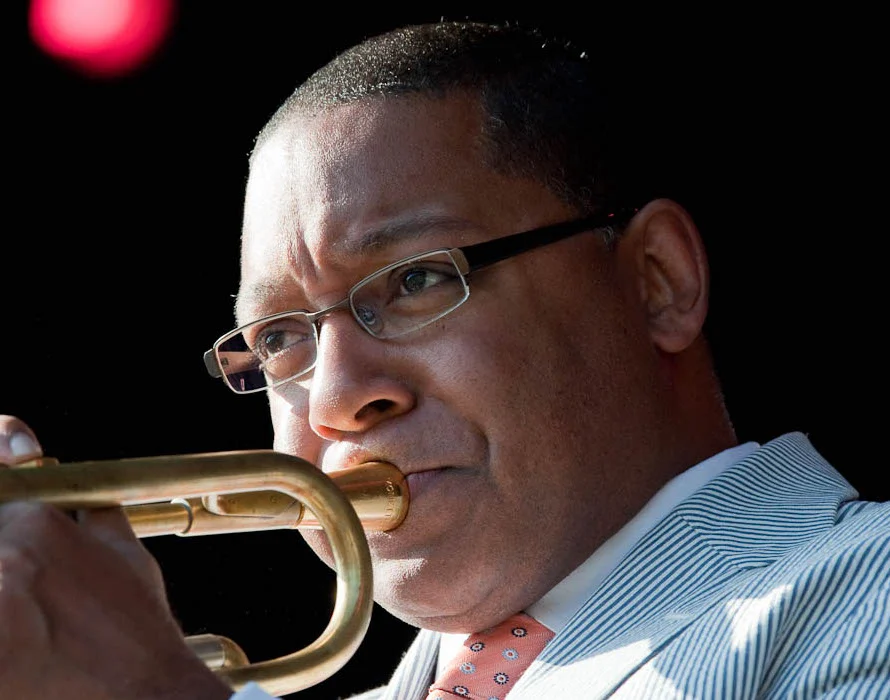
Wynton Marsalis Honored at Jazz at Lincoln Center Gala Amidst Leadership Transition
Jazz at Lincoln Center (JALC) recently celebrated its enduring legacy and its visionary founder, Wynton Marsalis, at its annual gala, "Rhythms That Move the World." The prestigious event, held on April 15th at the Frederick P. Rose Hall in New York City, served as a poignant moment for the jazz community to acknowledge Marsalis’s profound impact on the institution he brought to life in 1987, especially as he prepares to step down from his role as artistic director next summer.
The gala, hosted by the acclaimed actress Angela Bassett, was a star-studded affair that underscored the vibrant spirit and global reach of JALC. This year’s event specifically highlighted Marsalis’s nearly four-decade tenure and his unparalleled contributions to the preservation and promotion of jazz as a vital American art form. The evening also recognized other significant figures in the arts and leadership, further cementing JALC’s position as a nexus of cultural and philanthropic excellence.
A Night of Celebration and Acknowledgment
Wynton Marsalis, a Grammy Award-winning trumpeter and composer, was the central figure of the evening. He graced the stage not only as the guest of honor but also as a performer, sharing his musical genius with an appreciative audience. His performance with the Jazz at Lincoln Center Orchestra was a powerful reminder of the artistic prowess that has defined his career and inspired the institution.
The gala’s program was designed to honor Marsalis’s multifaceted role as founder, artist, and educator. The presence of distinguished individuals like former American Express CEO Kenneth I. Chenault and his wife, Kathryn, who were presented with the 2026 Ed Bradley Award for Leadership in Jazz, added a layer of gravitas to the proceedings. Chenault, a long-time supporter and admirer of Marsalis’s work, delivered a heartfelt tribute that resonated deeply with the attendees.
"He built an enduring institution that stands today as a beacon of excellence and creativity," Chenault remarked during his address, his words echoing the sentiment of many present. "And, while he’s changing roles, he will remain a vital part of [JALC]. He is and will always be our founder." This sentiment was amplified by his description of Marsalis as "our founder, our heartbeat, and a true American original," a phrase that encapsulates the deep personal and professional connection many feel towards the jazz luminary.
Recognizing Artistic and Global Contributions
Beyond honoring its founder, "Rhythms That Move the World" also celebrated other exceptional talents who embody the spirit of artistic innovation and global citizenship. Weedie Braimah, a Ghanaian djembe virtuoso, was awarded the 2026 Award for Artistic Excellence. Braimah’s recognition highlights JALC’s commitment to showcasing diverse musical traditions and celebrating artists who push the boundaries of their respective genres. His electrifying performances have captivated audiences worldwide, bringing a rich tapestry of African rhythms to the global stage.
Furthermore, Joan Chamorro, Band Director of the Sant Andreu Jazz Band in Barcelona, Spain, received the Global Citizen Award. Chamorro’s work with young musicians in Spain has been instrumental in fostering a new generation of jazz enthusiasts and performers, mirroring JALC’s own dedication to education and youth engagement. The Sant Andreu Jazz Band has gained international acclaim for its impressive talent and sophisticated musicality, demonstrating the universal appeal of jazz and the power of dedicated mentorship.
A Legacy in Transition: Marsalis Steps Down
The gala took place against the backdrop of a significant leadership transition at Jazz at Lincoln Center. In January, it was announced that Wynton Marsalis would be stepping down as artistic director next July, a move that has been met with a mix of appreciation for his immense contributions and anticipation for the future direction of the organization.
The Board of Directors of Jazz at Lincoln Center had previously outlined Marsalis’s evolving role. While he will relinquish his direct artistic leadership next summer, he is slated to remain involved in an advisory capacity as founder until his contract concludes in June 2028. Following this period, Marsalis will continue to serve on JALC’s Board of Directors as founder in perpetuity, ensuring his guiding influence remains integral to the institution he so passionately built.
This transition marks the end of an era for JALC, an organization that has become synonymous with Marsalis’s name and his unwavering commitment to jazz. Founded in 1987, JALC has grown from a visionary concept into a world-renowned institution with a comprehensive programming schedule that includes concerts, educational initiatives, and national and international outreach.
Marsalis’s Vision and the Future of JALC
In a written statement released earlier this year, Marsalis reflected on the journey of Jazz at Lincoln Center. "When we established Jazz at Lincoln Center in 1987, our goal was to build an enduring jazz institution that would both entertain and educate by exposing multi-generational audiences to an often-overlooked aspect of American culture, and I am proud of the tremendous progress we’ve made," he stated. He further emphasized the profound personal significance of the organization, noting, "JALC and the Jazz at Lincoln Center Orchestra have always been my main artistic priority as a musician and a citizen."
Marsalis’s vision has been instrumental in elevating jazz to a respected position within the broader cultural landscape. Under his artistic direction, JALC has presented thousands of performances, educated millions of students through its outreach programs, and fostered a deeper understanding and appreciation for jazz’s rich history and its contemporary relevance. The Jazz at Lincoln Center Orchestra, a 15-piece ensemble comprised of some of the finest jazz musicians in the world, has become a flagship ensemble, touring extensively and releasing numerous critically acclaimed recordings.
The implications of Marsalis’s transition are significant. While his departure from the day-to-day artistic direction signifies a new chapter, his continued advisory role and perpetual board membership suggest a carefully managed succession plan. This approach aims to preserve the core values and artistic integrity of JALC while allowing for fresh perspectives and future growth. The organization is well-positioned, thanks to Marsalis’s foundational work, to continue its mission of bringing jazz to audiences of all ages and backgrounds, fostering creativity, and championing this uniquely American art form.
Historical Context and Supporting Data
The establishment of Jazz at Lincoln Center was a bold undertaking in a time when jazz was, for some, perceived as a niche or declining art form. Marsalis, already a celebrated musician, leveraged his influence and passion to advocate for a dedicated space for jazz education and performance. The organization’s home at Frederick P. Rose Hall, part of the Lincoln Center complex, provides a prestigious and accessible venue for its diverse programming.
Since its inception, JALC has served millions of people through its various initiatives. Its educational programs, such as "Essentially Ellington," a national high school jazz band competition, have been pivotal in nurturing young talent and introducing them to the discipline and artistry of jazz. The "Jazz for Young People" series has introduced countless children to the fundamentals of jazz and its historical significance.
The economic impact of JALC is also noteworthy. As a major cultural institution in New York City, it draws both local and international visitors, contributing to the city’s vibrant tourism and arts economy. The organization’s annual budget and fundraising efforts reflect its substantial operational scale and its reliance on the support of donors, corporations, and government grants. The success of galas like "Rhythms That Move the World" is crucial for securing the financial resources needed to sustain these extensive programs.
Broader Impact and Future Outlook
Wynton Marsalis’s tenure at Jazz at Lincoln Center has undoubtedly shaped the trajectory of jazz in the 21st century. His advocacy has helped to solidify jazz’s place in educational curricula and concert halls worldwide. The institution he founded has become a global ambassador for American culture, showcasing the power of improvisation, collaboration, and storytelling through music.
The transition in leadership presents an opportunity for JALC to evolve while remaining true to its core mission. The selection of a new artistic director will be a critical decision, one that will influence the organization’s programming, artistic direction, and its continued relevance in a rapidly changing world. The inclusion of diverse voices and perspectives within JALC’s leadership and artistic programming will be essential for its sustained success and its ability to connect with new generations of audiences.
The recognition of international artists like Weedie Braimah and Joan Chamorro at the gala signals JALC’s commitment to a global perspective, acknowledging that jazz is a universal language with deep roots in various cultures. This outward-looking approach is vital for fostering cross-cultural understanding and promoting the ongoing evolution of jazz as a living, breathing art form.
As Wynton Marsalis prepares to transition from his active artistic leadership role, the legacy he leaves behind at Jazz at Lincoln Center is one of profound accomplishment and enduring inspiration. The institution stands as a testament to his vision, his dedication, and his unwavering belief in the power of jazz to enrich lives and connect communities. The recent gala served as a fitting tribute to his monumental contributions, while also looking forward to the continued vibrancy and impact of Jazz at Lincoln Center in the years to come. The jazz world, and indeed the broader cultural landscape, will undoubtedly continue to be shaped by the institution Marsalis so carefully crafted.