Walmart Expands B2B Footprint with Launch of Upstream Facility Services for Commercial Maintenance Management
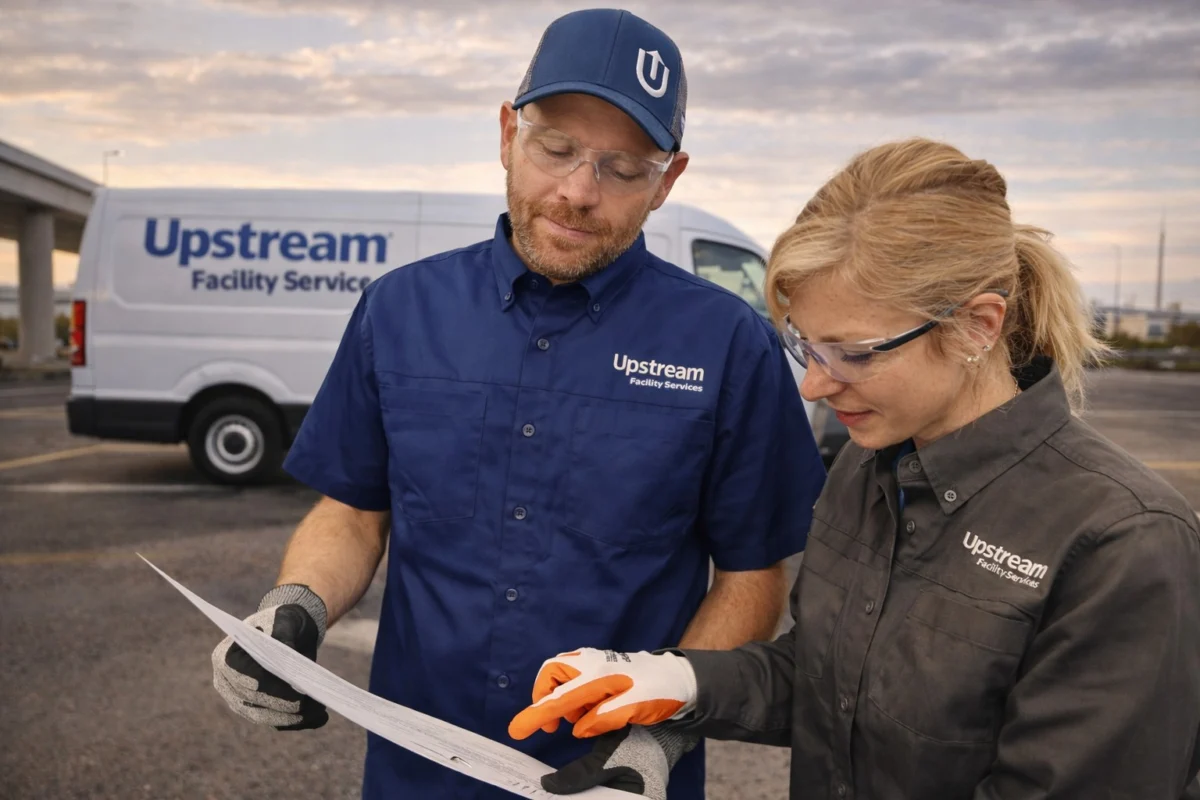
Walmart Inc. has officially announced the launch of Upstream Facility Services, a comprehensive business-to-business (B2B) solution designed to manage complex facility operations for commercial clients. This new venture leverages Walmart’s extensive internal infrastructure to provide maintenance services, including heating, ventilation, and air conditioning (HVAC), plumbing, electrical work, and general facility upkeep. By externalizing a system originally built to maintain its own massive retail footprint, Walmart is positioning itself as a major player in the facility management sector, targeting organizations that operate across multiple locations with high levels of operational complexity.
The launch of Upstream Facility Services represents a strategic pivot for the retail giant, transforming what was once an internal cost center into a sophisticated, revenue-generating service product. This move follows a broader trend among tech and retail leaders—most notably Amazon with its Web Services (AWS) division—wherein a company perfects an internal capability and subsequently offers it to the broader market. For Walmart, this capability is the management of physical environments at scale, a necessity for a company that operates more than 5,000 locations in the United States alone.
The Operational Framework of Upstream Facility Services
Upstream Facility Services is built upon a proprietary portal that serves as the central nervous system for maintenance operations. This system is a direct evolution of the internal services platform used by Walmart and Sam’s Club locations across the country. Through this portal, business clients can create service tickets, monitor the real-time progress of repairs, and access high-level data analytics regarding their facility’s health.
The service is designed to address two primary categories of maintenance: preventative and reactive. Routine preventative maintenance includes scheduled inspections, equipment tune-ups, and filter changes, all intended to extend the lifecycle of expensive mechanical systems and prevent costly emergency breakdowns. On the reactive side, Upstream provides a rapid-response mechanism for urgent repairs to essential systems like plumbing and electrical grids, which are critical for the daily operation of commercial spaces.
A key differentiator for Upstream is the level of visibility it provides to clients. Beyond simply fixing a broken pipe or a failing air conditioner, the portal offers performance trends and historical data. This allows business owners and facility managers to track work requests over time, identify recurring issues with specific equipment, and make more informed, data-driven decisions regarding capital expenditures and long-term facility planning.
A Massive Network of Skilled Technicians
The backbone of Upstream Facility Services is a network of more than 8,000 Walmart-trained local technicians. These professionals are not third-party contractors in the traditional sense; they are trained according to Walmart’s specific operational standards, ensuring a level of consistency and quality control that is often difficult to achieve in the fragmented facility management industry.
R.J. Zanes, Vice President of Walmart Facility Services, emphasized the importance of this human element in a statement regarding the launch. Zanes noted that Walmart has spent years building one of the largest in-house facility service operations in the United States. By bringing this capability "beyond the walls" of Walmart, the company aims to combine national scale with skilled local expertise to help businesses run with fewer disruptions.
This workforce is strategically distributed to provide rapid coverage, particularly in the regions where Upstream is currently licensed. At launch, the service is available in Alabama, Arkansas, Louisiana, North Carolina, Oklahoma, South Carolina, and Texas. While this initial footprint is concentrated in the Southern United States, Walmart has indicated that the service is expanding rapidly, with plans to obtain licensing and deploy technicians in additional states in the coming months.
Strategic Targeting and the B2B Market
Walmart is specifically targeting commercial clients that mirror its own operational complexity. This includes quick-service restaurants (QSRs), retail chains, and banking institutions. These types of businesses typically operate dozens or hundreds of small-to-medium-sized locations that require constant maintenance to ensure customer comfort and operational continuity.
For a bank or a restaurant chain, managing maintenance across a hundred locations can be a logistical nightmare involving dozens of different vendors. Upstream offers these clients a single point of contact and a unified platform, streamlining the administrative burden of facility management. By providing a "one-stop-shop" for HVAC, plumbing, and electrical needs, Walmart is betting that its scale can offer price efficiencies and reliability that smaller, localized maintenance firms cannot match.
The timing of this launch coincides with a period of significant growth for Walmart’s B2B and diversification efforts. As the No. 2 ranked retailer in North America by annual e-commerce sales and the No. 8 global online marketplace by third-party gross merchandise value, Walmart is increasingly looking toward service-based revenue streams to complement its traditional retail margins.
The Evolution of Walmart’s Diversification Strategy
The introduction of Upstream Facility Services is not an isolated event but rather a piece of a much larger puzzle. Over the past several years, Walmart has aggressively diversified its business model, moving into healthcare, financial services, advertising, and logistics.
One of the most notable recent examples of this diversification is the company’s acquisition of Vizio in 2024. This acquisition was aimed at bolstering Walmart’s "content to commerce" capabilities, using Vizio’s SmartCast operating system to drive advertising revenue and create a more integrated shopping experience through connected TVs. Similarly, the retailer has invested heavily in "agentic commerce" through the development of Sparky, an AI-powered shopping assistant designed to anticipate customer needs and automate the replenishment of household essentials.
This diversification strategy has yielded significant financial results. In its fiscal year 2026, which ended January 31, Walmart reported its 20th consecutive year of total revenue growth. The company’s revenue grew 5% year-over-year, reaching a staggering $680.99 billion. By launching Upstream, Walmart is opening a new channel for growth that capitalizes on its physical assets and operational expertise rather than just its retail inventory.
Chronology of Development and Market Context
The development of Upstream can be traced back to Walmart’s long-standing commitment to operational efficiency. In the early 2000s, Walmart began investing heavily in energy management systems and internal maintenance protocols to reduce the massive overhead costs associated with cooling and lighting thousands of "big box" stores.
By the mid-2010s, these internal systems had become some of the most advanced in the world, utilizing IoT (Internet of Things) sensors to monitor refrigerator temperatures and HVAC performance in real-time. The decision to commercialize this expertise began to take shape as Walmart looked for ways to monetize its "back-office" excellence.
The facility management market itself is a multi-billion-dollar industry that is currently undergoing a digital transformation. Traditional players in the space, such as CBRE and JLL, have increasingly focused on technology-driven solutions. Walmart’s entry into this market introduces a formidable competitor that possesses both the digital infrastructure and a massive, pre-existing physical workforce.
Implications for the Facility Management Industry
The entry of Walmart into the commercial facility maintenance space is likely to have several long-term implications for the industry:
- Standardization of Service: With 8,000 technicians trained to a single standard, Walmart may drive a higher level of service consistency in the market, forcing smaller regional competitors to upgrade their training and reporting capabilities.
- Data-Driven Maintenance: The emphasis on "real-time visibility" and "performance trends" suggests that the industry is moving away from a "break-fix" model toward a predictive maintenance model. Businesses will increasingly expect detailed analytics on their infrastructure health.
- Price Competition: Walmart’s scale often allows it to negotiate better rates for parts and equipment. This purchasing power could allow Upstream to offer more competitive pricing for routine maintenance contracts, putting pressure on traditional service providers.
- Integration with Logistics: There is potential for Walmart to eventually integrate Upstream with its other B2B services, such as Walmart GoLocal (its last-mile delivery service). A business could theoretically use Walmart to deliver its inventory and maintain its physical storefront, creating a deep level of operational dependency.
Future Outlook and Expansion
As Upstream Facility Services moves beyond its initial seven-state footprint, the industry will be watching closely to see how quickly it can scale. The success of the venture will depend on Walmart’s ability to maintain its high service standards while managing the needs of external clients who may have different requirements than its own retail stores.
The "rapid expansion" mentioned on the Upstream website suggests that licensing is currently underway in several other states, likely focusing on high-density commercial corridors in the Midwest and Northeast. If Walmart can successfully replicate the reliability of its internal maintenance system for third-party clients, Upstream could become a significant contributor to the company’s goal of continued revenue diversification.
In conclusion, Upstream Facility Services represents the "Amazon-ification" of physical maintenance. Just as Amazon turned its internal computing power into a global cloud standard, Walmart is attempting to turn its internal maintenance and logistics prowess into a global facility management standard. In an era where "agentic commerce" and AI-driven efficiency are becoming the norm, Walmart is proving that there is still immense value in the physical world—provided you have the technology and the talent to manage it effectively.


Related Posts

The Strategic Integration of Conversion Rate Optimization Across Multi-Channel E-commerce Ecosystems
Global Ecommerce Evolution 2026: The Rise of Agentic Commerce, Circular Logistics, and Embedded Financial Systems