
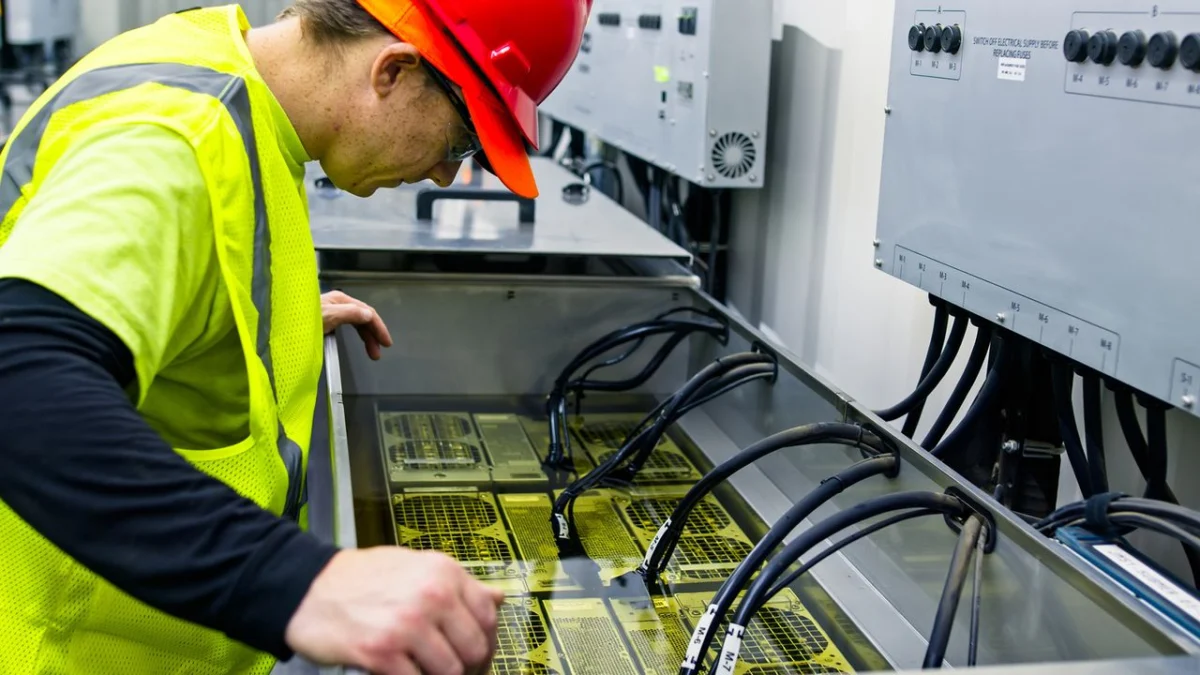
The Unfolding Crisis: Data Centers Grapple with Exploding Demand and Environmental Strain
The insatiable appetite for data, amplified by the meteoric rise of artificial intelligence, is pushing the world’s data centers to a critical environmental precipice. As the volume of generated and stored data has surged from approximately 2 zettabytes in 2010 to a staggering 181 zettabytes by 2025, the infrastructure underpinning this digital revolution faces unprecedented challenges in terms of energy consumption and water usage. This escalating demand is no longer a theoretical concern; it is a present-day crisis demanding immediate and innovative solutions to safeguard global power grids and water-stressed regions.
The Genesis of the Challenge: Data Deluge and AI’s Insatiable Appetite
The digital age has witnessed an exponential growth in data creation. Even before the advent of generative AI, the period between 2010 and 2025 saw a nearly 90-fold increase in data volume. This data, the lifeblood of modern commerce, science, and communication, is predominantly stored and processed within the confines of data centers. These facilities, once seen as mere utility hubs, are now recognized as significant consumers of global resources.
The advent of generative AI has dramatically accelerated this trend, pushing data center demand into overdrive. A 2023 report by Deloitte projected that data centers would consume a significant 4% of global electricity by 2030. This figure is already a reality in some regions, with the U.S. Department of Energy indicating that data centers currently account for 4-5% of the nation’s electricity consumption. This substantial energy draw places immense pressure on existing power grids, particularly in areas already experiencing high demand or grappling with renewable energy integration challenges.
Beyond electricity, water consumption presents another critical environmental concern. The cooling systems essential for maintaining optimal operating temperatures within data centers are becoming increasingly water-intensive. Estimates suggest that large data centers can consume as much water as a town of 10,000 to 50,000 people, according to data from the Environmental and Energy Study Institute. This level of water usage is particularly alarming in regions already facing water scarcity, raising questions about the sustainability of current data center expansion models.
The urgency to address these environmental impacts is palpable. The strain on electricity grids and the depletion of precious water resources necessitate a paradigm shift in how data centers are designed, powered, and operated. The question is no longer whether action is needed, but rather what form that action will take and how quickly it can be implemented.
The Data Centers of Tomorrow: Charting a Sustainable Path
The industry is actively exploring a multifaceted approach to mitigate the environmental footprint of data centers. This includes a combination of technological innovation, strategic partnerships, and a re-evaluation of fundamental data management principles.
Harnessing Renewable Energy: A Greener Grid
One of the most direct avenues for reducing the environmental impact of data centers lies in decarbonizing their power supply. Data centers face steep power constraints, and theoretical models suggest that a complete transition to clean energy sources could dramatically slash their overall emissions.
Renewable energy sources such as solar, wind, and hydropower have already been deployed to power and cool data centers on Earth. The increasing cost-effectiveness of renewables is making the concept of "green data centers" not just an aspiration, but a tangible and financially viable reality. Companies are increasingly investing in power purchase agreements (PPAs) for renewable energy, aiming to offset the carbon footprint of their operations.
The Future in Orbit? Space-Based Data Centers
Looking further ahead, some industry leaders and innovators are exploring the audacious concept of space-based data centers. Several ambitious plans for orbiting data centers are reportedly underway, including a collaboration between an Australian compute module manufacturer and an Indian space-based infrastructure company. Even technology giant Nvidia has released computing platforms specifically designed for orbital data centers, signaling a potential long-term vision.
While the prospect of data processing in the vacuum of space offers intriguing possibilities, such as passive cooling and reduced terrestrial footprint, the practical challenges remain immense. The cost of deployment, maintenance, and the energy requirements for launching and sustaining operations in orbit are significant hurdles. Furthermore, the immediate need to address current environmental strains means that orbital solutions are a distant prospect, not a present-day panacea.
Nuclear Power: A Controversial but Potential Solution
Amidst the ongoing debate about energy sources, nuclear power is re-emerging as a potential solution for data centers, despite historical public and political mistrust. In a significant move in 2024, Microsoft entered into a 20-year power purchase agreement (PPA) with Constellation to supply its data centers with nuclear energy from the reopened Three Mile Island plant. This partnership highlights a growing recognition of nuclear’s potential to provide a stable, low-carbon baseload power source.
Similarly, AWS announced a substantial $650 million plan to acquire a data center adjacent to the Susquehanna nuclear power station in Pennsylvania, in collaboration with Talen Energy. While initial plans for a 480MW data center were later scaled back to 300MW due to regulatory hurdles, the underlying strategy remains clear: leverage the consistent power output of nuclear facilities.
Nuclear power, while not reducing overall power or cooling loads, offers the distinct advantage of easing the demand on local electricity grids. The development of Small Modular Reactors (SMRs) further enhances this proposition. SMRs promise lower costs and a more scalable form factor, potentially addressing some of the most prevalent criticisms associated with traditional nuclear power. Industry analysts suggest that SMRs could provide a more efficient and adaptable solution for data center energy needs, offering a consistent power supply without the intermittency challenges of some renewables.
Innovative Cooling and Water Management: Efficiency at the Forefront
While the focus on power sources is critical, significant efforts are also underway to optimize current data center components and reduce both energy and water consumption.
One striking example is a Google data center located in Hamina, Finland. This facility, situated in a former paper mill, utilizes tunnels to access the nearby sea. Seawater is pumped in to cool the servers, and the warmed water is then released back into the sea. This natural cooling system dramatically reduces the reliance on energy-intensive chillers.
Another innovative approach is seen in Nantes, France, where a small data center is strategically placed within the Loire River. The natural flow of the water provides cooling, and future plans are exploring offshore models that leverage ocean currents. These initiatives demonstrate a move towards integrating data center infrastructure with natural cooling resources, minimizing both energy use and water waste.
Adnan Masood, chief AI architect at technology business consultancy UST, views these systems as crucial "early proof that chillers [fan, freshwater and pump systems] aren’t destiny." This suggests a broader shift in thinking about cooling technologies, moving away from conventional methods towards more environmentally integrated solutions.
The Ocean Sewage Alliance, a body focused on industry partnerships to address marine environmental issues, proposes another promising avenue: the use of reclaimed or treated wastewater instead of potable water sources for cooling. Larissa Balzer, a spokesperson for the alliance, notes that this is a "growing trend among major tech companies," indicating a broader industry acceptance of this sustainable practice. By repurposing wastewater, data centers can significantly reduce their demand on freshwater supplies, a critical consideration in water-scarce regions.
Small Wins: The Power of Resourcefulness and E-Waste Recycling
Beyond large-scale infrastructure projects, a series of smaller, yet impactful, strategies are emerging to enhance efficiency and reduce the environmental burden of data processing.
A fundamental principle being revisited is the understanding that not all data is created, stored, or accessed with the same requirements. A significant portion of information can function effectively with lower power inputs, less stringent latency demands, and even intermittent connectivity.
A study published in the January-March 2025 issue of IEEE Pervasive Computing explored the intriguing possibility of repurposing discarded and retired smartphones to create distributed, low-power data centers. By networking these devices, which already possess processors and storage, the aim is to simultaneously address the demand for new data center equipment and combat the escalating problem of electronic waste (e-waste).
Amit Chadha, CEO and managing director of L&T Technology Services, advocates for what he terms "micro server farms." These distributed systems can handle lighter, yet essential workloads such as IoT data aggregation, local caching, or microservices. While they may not replace the need for powerful GPU-heavy AI clusters, Chadha suggests they can effectively offload less intensive tasks, thereby freeing up capacity in larger data centers for more demanding applications.
This concept of repurposing hardware extends to retired supercomputer components. As supercomputers become obsolete, their parts are often repurposed for less demanding workloads, a practice that mirrors the potential for utilizing older consumer electronics.
Ezra Hodge, an expert in AI and Data Centers at EMA Partners, envisions a future where idle smartphone chipsets could form a globally distributed, low-cost parallel processing grid. He notes that this could provide emerging markets and early-stage AI startups with access to significant computational power without the prohibitive overhead of traditional data center infrastructure.
The potential of former electric vehicle (EV) batteries is also being explored as a power source for data centers. While EV batteries reach the end of their automotive lifespan when their capacity drops to around 75%, they retain sufficient power for data processing applications, especially for off-peak workloads. These batteries can serve as clean alternatives to diesel generators for backup power, and their capacity can be managed according to workload schedules. Redwood Materials, a battery recycling provider, recently deployed second-life EV batteries for a Nevada data center, contributing to the second-largest battery-powered grid in North America.
The sheer volume of e-waste presents a vast resource for creative solutions. Retired laptops and gaming consoles are being considered for building micro-clouds for smaller organizations like schools. Displays from old phones and tablets can be repurposed as monitoring dashboards for server racks. Furthermore, components like microphones, accelerometers, gyroscopes, and cameras from old devices can be integrated into monitoring stations to detect anomalies such as server room sounds or vibrations, potentially warning operators of impending fan or motor failures.
The Timeline for Action: Addressing the Immediate and the Future
While ambitious projects like space-based data centers, widespread nuclear adoption, and large-scale e-waste recycling programs are long-term endeavors, the pressing need for efficient data handling solutions is immediate. The industry must focus on maximizing the efficiency of existing infrastructure while simultaneously laying the groundwork for future innovations.
Optimizing Current Operations: Decoupling Compute and Storage
A key strategy for immediate impact involves optimizing the way data is handled with current equipment. One significant approach is the separation of compute and storage functions.
Tobie Morgan Hitchcock, CEO and co-founder of AI-native database firm SurrealDB, explains that "Helper’ components like SmartNICs can move, filter, encrypt or prepare data while main processors, the ‘brains’ doing queries, analytics or AI, can focus on the heavy lifting." By offloading auxiliary tasks to specialized hardware, main processors can dedicate their resources to the most computationally intensive operations.
Hitchcock further elaborates that decoupling these systems allows the storage layer to deliver "smaller, cleaner, more focused information to operate on." This modular approach enables independent scaling of storage and compute components based on their specific needs, leading to greater efficiency and reduced resource utilization.
Edge Computing: Bringing Processing Closer to the Source
In some respects, the concept of decoupling compute and storage shares similarities with edge computing. While edge computing doesn’t strictly separate compute and storage, it emphasizes data preparation at the source of collection and storage. This involves sorting, indexing, cleaning, and packaging data neatly before it is transmitted to central data centers for further processing.
Amit Chadha highlights that "Embedding compact, high-efficiency compute modules into existing environments like factories or offices doesn’t only help reduce latency but effectively turns everyday spaces into mini data centers, alleviating pressure on central facilities." This distributed approach not only minimizes latency but also transforms everyday environments into localized processing hubs, thereby reducing the burden on centralized data centers.
Data Minimization: The Unseen Strategy
Perhaps the most overlooked, yet fundamental, strategy for reducing data center demand is the principle of data minimization. Maggie Laird, president of data management software provider Pentaho, points out that "companies are storing data they don’t understand or don’t need."
Enterprises often accumulate vast quantities of data spread across various cloud platforms, applications, endpoints, and shadow IT systems. Much of this data is ungoverned, unused, and falls into the category of ROT (redundant, obsolete, or trivial). Laird states that companies are "spending millions storing data they can’t use, undermining the very AI initiatives meant to unlock value, while bloated storage needs are driving up energy costs and straining water access where data centers are built."
As Adnan Masood aptly puts it, "Not all data deserves a 24/7 heartbeat. Archive deep, run hot where it matters." This philosophy underscores the importance of intelligently managing data, ensuring that only essential and actively used data is maintained at peak performance, while less critical information is archived or purged, thereby significantly reducing the overall storage and processing demands on data centers. The environmental imperative is clear: a more judicious approach to data itself is as crucial as technological innovation in powering and cooling the digital world.
Related posts:




Related Posts

Liverpool FC Leverages Wasabi’s Cloud Storage to Supercharge Digital Engagement and On-Pitch Success

The Hidden Cost of Outdated Technology: Employee Experience and Retention Under Threat