North American Retail Giants Urge Stability and Continuity for USMCA Ahead of Critical 2026 Review
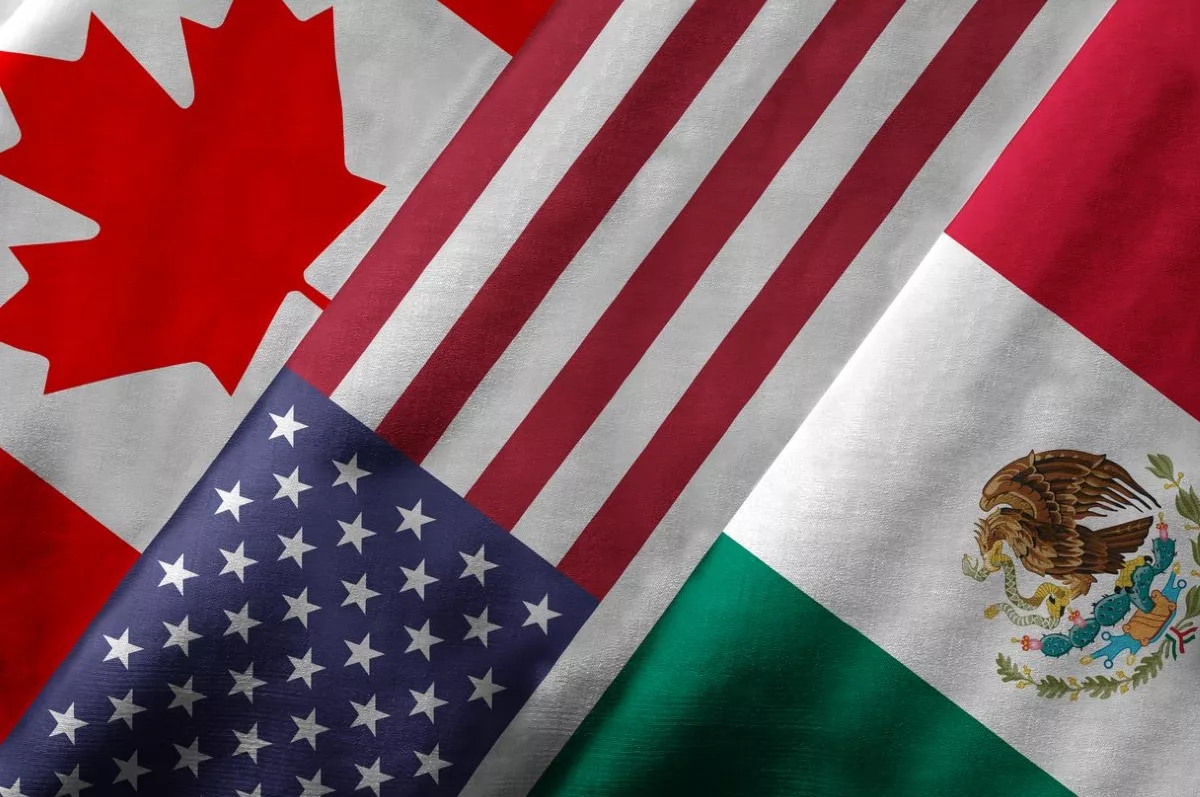
As the pivotal 2026 review of the U.S.-Mexico-Canada Agreement (USMCA) approaches, leading retail organizations from all three signatory nations have issued a unified call for stability, urging their respective governments to adopt a "do no harm" approach to the vital North American commercial partnership. The U.S. National Retail Federation (NRF), the Retail Council of Canada (RCC), and Mexico’s National Association of Selfservice and Department Store Chains (ANTAD) have collectively voiced their strong support for the trilateral trade pact, emphasizing its indispensable role in fostering economic prosperity and integrated supply chains across the continent. This concerted declaration underscores the significant stakes involved in the upcoming review, which is designed to assess the agreement’s effectiveness and determine its future trajectory.
The USMCA Framework: A Successor Forged from Necessity
The USMCA, which officially entered into force on July 1, 2020, replaced the nearly three-decade-old North American Free Trade Agreement (NAFTA). Its genesis was rooted in the desire of the U.S. administration at the time to renegotiate what it deemed an outdated and imbalanced NAFTA, citing concerns over trade deficits, job losses in manufacturing, and a lack of provisions addressing modern economic realities like digital trade. After intense negotiations spanning over a year, involving numerous points of contention and concessions, the three nations successfully ratified the USMCA.
Key enhancements and updates in the USMCA compared to NAFTA include stricter rules of origin for automobiles, requiring 75% North American content for tariff-free treatment, up from NAFTA’s 62.5%. Additionally, new labor provisions mandate higher wages for a portion of auto production, aiming to incentivize manufacturing in higher-wage regions. The agreement also introduced comprehensive chapters on digital trade, intellectual property protection, and environmental standards, reflecting the evolution of global commerce. A distinguishing feature of the USMCA is its "sunset clause," which mandates a joint review every six years, allowing the parties to evaluate the agreement’s performance and determine whether to extend it for another 16-year term. This clause, a point of considerable debate during negotiations, injects a degree of periodic uncertainty into the long-term stability of the agreement, making the 2026 review a critical juncture for North American trade relations.
A Unified Front: The Retail Sector’s Stance
In a significant show of solidarity, the NRF, RCC, and ANTAD recently reaffirmed their unwavering support for the USMCA. During a visit to Washington on April 13, the RCC met with the NRF to discuss, among other critical issues, the paramount importance of preserving the agreement. This meeting culminated in a joint statement from Kim Furlong, President and CEO of RCC; Matthew Shay, President and CEO of NRF; and Diego Cosio Barto, Executive President and CEO of ANTAD. Their collective message to their respective governments was unequivocal: "Above all else, do no harm."
The joint statement highlighted the profound impact of integrated retail supply chains, asserting that they "have enriched the lives of citizens in Canada, the United States and Mexico alike." This integration, they argue, is not merely a logistical convenience but a fundamental driver of consumer welfare, providing access to a wider variety of goods at competitive prices. The associations view the upcoming 2026 milestone not as an opportunity for radical overhaul, but rather "as a formal review of the agreement and an opportunity to fine-tune a successful framework." This perspective advocates for continuity and minor adjustments rather than disruptive renegotiation.
Furthermore, the retail leaders strongly advocated for the maintenance of the agreement’s tripartite nature. "The trilateral nature of this deal is what provides the stability and scale necessary for North American businesses to compete globally," they contended. This emphasis on the three-way partnership underscores the belief that a fragmented approach or bilateral deals would undermine the collective strength and efficiency that the current framework provides. They also called for the unwavering continuation of seamless cross-border movement of goods and tariff-free trade, asserting that "predictability in trade costs is the backbone of retail affordability." Any imposition of new tariffs or significant trade barriers would inevitably translate into higher operational costs for retailers, ultimately impacting consumer prices and eroding purchasing power.
Economic Pillars: Trade Volume and Impact
The economic interdependence fostered by decades of free trade across North America is immense. According to the Office of the U.S. Trade Representative (USTR), total trade in goods and services between the U.S. and Canada exceeded $790 billion in 2022, while trade with Mexico surpassed $860 billion in the same year. Mexico and Canada consistently rank as the United States’ top two trading partners, highlighting the deep integration of their economies. For the retail sector specifically, these trade flows are the lifeblood of their operations. Retailers heavily rely on cross-border supply chains for everything from raw materials and components to finished goods. Canadian and Mexican agricultural products fill U.S. grocery shelves, while American-manufactured goods find eager markets in its northern and southern neighbors.
The USMCA, like its predecessor, has significantly contributed to the economic growth and job creation in all three countries. Studies have shown that NAFTA, and subsequently USMCA, supported millions of jobs across North America by facilitating exports and imports, attracting foreign direct investment, and enhancing supply chain efficiencies. The retail industry, a major employer, benefits directly from this robust trade environment through increased sales, diversified product offerings, and competitive sourcing. For instance, a considerable portion of apparel, electronics, and automotive parts sold in U.S. retail stores either originates from or transits through Canada and Mexico. Disrupting these established networks would not only lead to higher costs but also potentially limit product availability and consumer choice, thereby negatively impacting GDP and overall economic stability. The predictability of tariff-free trade under USMCA allows retailers to plan inventory, manage costs, and offer competitive pricing, which is crucial in a highly competitive market landscape.
A Chronology of North American Trade Agreements
Understanding the current context requires a brief look back at the historical trajectory of North American trade relations:
- 1989: The Canada-U.S. Free Trade Agreement (CUSFTA) takes effect, marking a significant step towards economic integration between the two largest North American economies.
- 1994: The North American Free Trade Agreement (NAFTA) comes into force, expanding CUSFTA to include Mexico. NAFTA aimed to eliminate tariffs and non-tariff barriers to trade and investment among the U.S., Canada, and Mexico, creating one of the world’s largest free trade zones.
- 2016-2017: During his presidential campaign, Donald Trump frequently criticized NAFTA, labeling it "the worst trade deal ever made" and vowing to renegotiate or withdraw from it.
- 2017 (August): The Trump administration formally notifies Congress of its intent to renegotiate NAFTA, initiating the process with Canada and Mexico.
- 2018 (September 30): An agreement in principle is reached, initially between the U.S. and Mexico, with Canada joining later after intense last-minute negotiations. The new agreement is named the U.S.-Mexico-Canada Agreement (USMCA) in the U.S., Canada-United States-Mexico Agreement (CUSMA) in Canada, and Tratado entre México, Estados Unidos y Canadá (T-MEC) in Mexico.
- 2018 (November 30): Leaders from all three countries—President Trump, Prime Minister Justin Trudeau, and then-President Enrique Peña Nieto—sign the USMCA during the G20 summit in Buenos Aires.
- 2019-2020: The agreement undergoes ratification processes in each country, often involving legislative approval and implementing measures. The U.S. Congress passes the USMCA implementing bill in December 2019, and President Trump signs it into law in January 2020. Canada ratifies the agreement in March 2020, and Mexico was the first to ratify in June 2019.
- 2020 (July 1): The USMCA officially enters into force, replacing NAFTA.
- 2026: The first mandated six-year review of the USMCA is scheduled to take place, where the three parties will assess the agreement’s performance and decide on its continuation. This upcoming review is the immediate focus of the retail associations’ joint appeal.
Broader Industry and Governmental Perspectives
While the retail sector has been vocal, the sentiment for maintaining the USMCA’s core tenets resonates across numerous other industries heavily reliant on North American trade. The automotive sector, with its deeply integrated supply chains spanning all three countries, views the agreement as fundamental to its operational efficiency and global competitiveness. Agricultural producers, energy companies, and manufacturing firms likewise benefit from the predictability and reduced barriers that the USMCA provides. Any significant changes or, worse, a collapse of the agreement, could send shockwaves through these sectors, leading to increased costs, reduced investment, and potential job losses.
From a governmental perspective, while there is always room for refinement and modernization, the prevailing sentiment among trade officials across the three nations has generally been to preserve the stability of North American trade. The U.S. Commerce Department and USTR often highlight the benefits of USMCA in supporting American jobs and economic growth. Similarly, Canadian and Mexican trade ministries frequently underscore the importance of their trade relationships with the U.S. for their national economies. While specific administrations might prioritize different aspects, the fundamental strategic and economic importance of the trilateral trade relationship is widely acknowledged. Any inferred statements from these governmental bodies would likely echo the importance of cooperation and the continued smooth functioning of the agreement, even as they acknowledge the review process as an opportunity for constructive dialogue.
The Stakes of the 2026 Review
The 2026 review is not merely a bureaucratic exercise; it carries significant economic and geopolitical implications. One scenario envisions a smooth extension, with the three countries agreeing that the framework remains effective, perhaps with minor technical adjustments to specific clauses. This would be the ideal outcome for businesses seeking certainty and stability.
Another possibility involves more substantive negotiations, perhaps driven by evolving economic conditions, technological advancements, or new trade priorities of future administrations. For example, discussions around climate change, digital economy regulations, or critical minerals supply chains could lead to proposals for amendments. While such adjustments could potentially improve the agreement, they also introduce a period of uncertainty and the risk of disagreements.
The most concerning scenario would be a failure to agree on an extension, leading to the potential termination of the agreement. This would thrust North American trade into a state of flux, potentially reverting to World Trade Organization (WTO) rules, which would mean higher tariffs, increased trade barriers, and significant disruption to established supply chains. The economic fallout from such a move would be substantial, impacting industries, consumers, and investor confidence across the continent. The political climate in 2026, especially in the United States, could heavily influence the review. A presidential election year in the U.S. could see trade policy become a prominent campaign issue, potentially introducing political rhetoric that could complicate objective negotiations.
Looking Ahead: Maintaining North American Competitiveness
The USMCA represents more than just a trade agreement; it is a cornerstone of North American economic integration and a crucial element in the region’s ability to compete on the global stage. In an increasingly complex geopolitical and economic environment, a stable and predictable trade framework among the U.S., Canada, and Mexico allows businesses to plan for the long term, invest confidently, and innovate. The retail sector’s emphasis on "predictability in trade costs" and the "integrated nature of our retail supply chains" underscores the tangible benefits that translate directly into consumer affordability and choice.
As the 2026 review approaches, the joint message from the NRF, RCC, and ANTAD serves as a powerful reminder of the deep interconnectedness of the North American economies and the imperative of safeguarding the mechanisms that facilitate this prosperity. The call to "do no harm" is a plea for pragmatism and continuity, recognizing that the framework, while always subject to refinement, has successfully underpinned significant economic growth and improved living standards for millions. The ability of the three nations to navigate this review collaboratively and constructively will be a testament to their commitment to a shared future of North American competitiveness and resilience in the global marketplace.



Related Posts

Delta Air Lines Adjusts Key Environmental Targets Amidst Slow Sustainable Fuel Progress
India’s Trade Deficit Narrows to $20.67 Billion in March Amidst Middle East Conflict Disruptions and Global Economic Headwinds