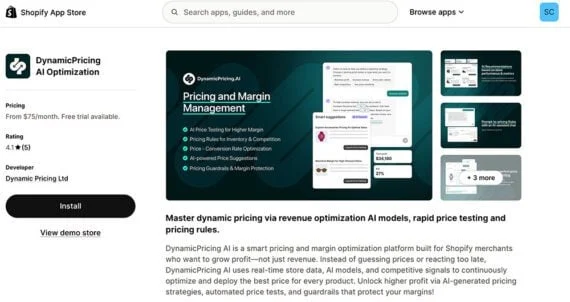

New Ecommerce Merchant Tools Signal a Shift Toward Agentic Commerce and AI-Driven Global Logistics
The digital commerce landscape is undergoing a fundamental transformation as artificial intelligence moves from a secondary optimization tool to a core operational necessity. This week’s developments in the merchant services sector highlight a significant pivot toward "agentic commerce"—a model where AI agents facilitate discovery, comparison, and transactions—alongside a push for frictionless logistics and sophisticated B2B financial infrastructure. From the integration of Shopify storefronts into ChatGPT to the expansion of box-free return networks through FedEx Office, the latest suite of tools for ecommerce merchants reflects an industry-wide effort to lower technical barriers while increasing global reach.
The Rise of Agentic Commerce and AI-Driven Discovery
One of the most significant shifts identified this week is the maturation of agentic commerce. Shopify has announced a major milestone in this transition, enabling its merchant brands to be discoverable and purchasable directly within ChatGPT. This integration, managed through Shopify’s "Agentic Storefronts," allows brands to reach users on generative AI platforms including Microsoft Copilot, Google Search’s AI Mode, and the Gemini app.
Industry analysts suggest that this move represents the beginning of the "post-search" era. In traditional ecommerce, consumers use search engines to find products; in agentic commerce, AI agents act as intermediaries that understand intent and navigate catalogs on the user’s behalf. To support this, Firmly has launched "Connect," a no-code onboarding tool designed to autonomously integrate merchant websites with these agentic marketing channels. By allowing merchants to publish catalogs to AI agents without deploying new code, Firmly is addressing the technical debt that often prevents smaller retailers from adopting cutting-edge sales channels.

Complementing this shift is the launch of VisiGEO, a platform dedicated to Generative Engine Optimization (GEO). As traditional SEO tactics lose efficacy in the face of AI-generated answers, VisiGEO provides tools to analyze brand visibility and sentiment within AI models. Their "Website GEO Audit" identifies technical barriers, such as robots.txt misconfigurations, that might prevent AI crawlers from accurately indexing product data, ensuring that brands remain visible in an era dominated by large language models (LLMs).
Streamlining Creative Workflows with AI
The cost and complexity of visual content creation have long been a bottleneck for scaling ecommerce brands. This week, two major players introduced solutions to democratize high-end product photography. Designkit launched an AI-powered platform that enables sellers to generate entire listing sets—including white-background shots, lifestyle scenes, and in-use visuals—from a single prompt. The platform’s ability to handle high-volume batch processing and localization across five languages addresses the needs of global sellers who must adapt visuals for different cultural markets.
Simultaneously, Shopify debuted "Tinker," a free mobile application that consolidates 100 specialized AI tools. By bringing models from OpenAI, Google, and Anthropic into a single interface, Tinker allows merchants to create logos, social media videos, and 360-degree product views on the go. This move is particularly impactful for micro-merchants and "solopreneurs" who lack the budget for professional creative agencies but require high-quality assets to compete on platforms like Instagram and TikTok.
Expansion of Logistics and Returns Infrastructure
Logistics remain the most capital-intensive aspect of ecommerce, and recent updates from Amazon and FedEx indicate a continued push toward convenience as a competitive advantage. Amazon has expanded its return network by partnering with over 1,500 FedEx Office locations across the United States. This partnership allows customers to drop off eligible items without a box or label, simply by presenting a QR code.

The move is strategically significant as returns continue to be a major pain point for both consumers and retailers. According to data from the National Retail Federation, the average rate of returns for online purchases hovers around 17.6%, representing hundreds of billions of dollars in processed goods annually. By simplifying the return path, Amazon reduces the friction of the initial purchase decision.
Furthermore, Amazon is testing a program that allows external websites to offer Prime shipping benefits without requiring an Amazon login. This initiative targets merchants who use Amazon’s multichannel fulfillment (MCF) services but wish to maintain a distinct brand identity on their own domains. If successful, this could decouple the "Prime" delivery experience from the Amazon.com marketplace, effectively turning Amazon into a broader logistics utility for the entire web.
In the realm of shipping intelligence, ShipperHQ has launched ShipperHQ.ai. This platform uses AI agents to analyze and optimize checkout performance in real-time. By connecting directly to live shipping configurations, the tool can identify where shipping costs are causing cart abandonment and suggest optimizations to improve conversion rates.
B2B Ecommerce and Financial Infrastructure
While consumer-facing updates often grab headlines, the B2B sector is seeing equally rapid innovation. Shopware, the open-source ecommerce platform, has partnered with Balance to integrate advanced B2B payment options. This allows merchants to offer "pay-by-invoice" and "buy-now-pay-later" (BNPL) programs specifically tailored for business buyers. Balance’s infrastructure automates the entire invoice-to-cash lifecycle, providing built-in fraud detection and credit management—features that are essential as B2B ecommerce is projected to reach $36 trillion globally by 2031.

For brands operating across borders, Jliveo has introduced an AI-driven platform that integrates sourcing, dropshipping, and fulfillment into a single system. By automating multilingual communication and content workflows, Jliveo aims to simplify the complexities of international wholesale, which often involves navigating disparate regulatory environments and language barriers.
Additionally, Ordoro and SPS Commerce have announced a partnership aimed at high-growth brands on Amazon and Walmart. This collaboration focuses on "revenue recovery," helping brands reclaim funds tied to retailer deductions and compliance fines. As marketplaces become more stringent with their requirements, tools that ensure operational compliance are becoming vital for protecting profit margins.
Social Commerce and Affiliate Growth
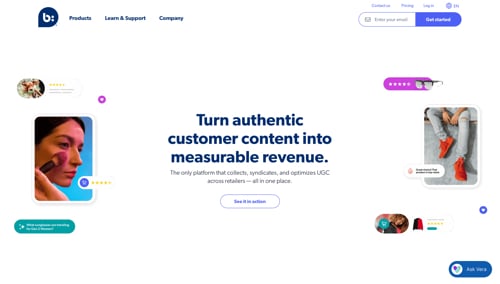
Social commerce continues to evolve as platforms seek to shorten the path from discovery to checkout. Bazaarvoice has announced a new integration with TikTok Shop, allowing brands to syndicate their existing reviews and user-generated content (UGC) directly to TikTok product pages. This allows brands to leverage established social proof from their main websites to build trust on a newer, high-growth platform.
Meta is also expanding its Facebook affiliate partnerships to include major retailers like Amazon, eBay, Temu, Mercado Libre, and Shopee. This expansion allows creators to tag products in their posts and earn commissions on sales, creating a more structured ecosystem for influencer marketing. Meta has indicated that similar affiliate experiences will soon be tested on Instagram, further blurring the lines between social media and digital storefronts.
Small Business Automation and Lead Management
For small businesses that struggle with the "leaky bucket" of lead management, Thryv has launched AI Lead Flow. By combining online visibility tools with the Keap sales automation engine, the platform creates an automated pipeline from the first impression to the final sale. This is particularly relevant for service-based businesses and niche retailers where follow-up timing is critical to closing deals. Statistics suggest that responding to a lead within five minutes increases the likelihood of conversion by nine times; AI Lead Flow aims to automate this immediacy.
Broader Impact and Industry Implications
The convergence of these tools suggests three major trends for the remainder of 2026 and beyond. First, the "democratization of sophistication" is accelerating. Small merchants now have access to AI tools for photography, global logistics, and B2B financing that were previously the exclusive domain of enterprise-level corporations.
Second, the "platform-agnostic" nature of commerce is increasing. Whether it is Amazon Prime shipping appearing on independent sites or Shopify catalogs appearing in ChatGPT, the "walled gardens" of ecommerce are beginning to develop more gates. Merchants are no longer choosing a single platform; they are managing a presence across a decentralized web of AI agents, social networks, and marketplaces.
Finally, efficiency is being redefined through automation. The shift from manual task management (like editing photos or following up on leads) to "agentic" oversight allows business owners to focus on strategy and product development. However, this also raises the stakes for data accuracy. As AI agents begin to handle more of the commerce lifecycle, the quality of a merchant’s product data and the technical health of their digital infrastructure will become the primary determinants of success in an increasingly automated global market.


Related Posts
The Strategic Integration of Conversion Rate Optimization Across Multi-Channel E-commerce Ecosystems
Global Ecommerce Evolution 2026: The Rise of Agentic Commerce, Circular Logistics, and Embedded Financial Systems