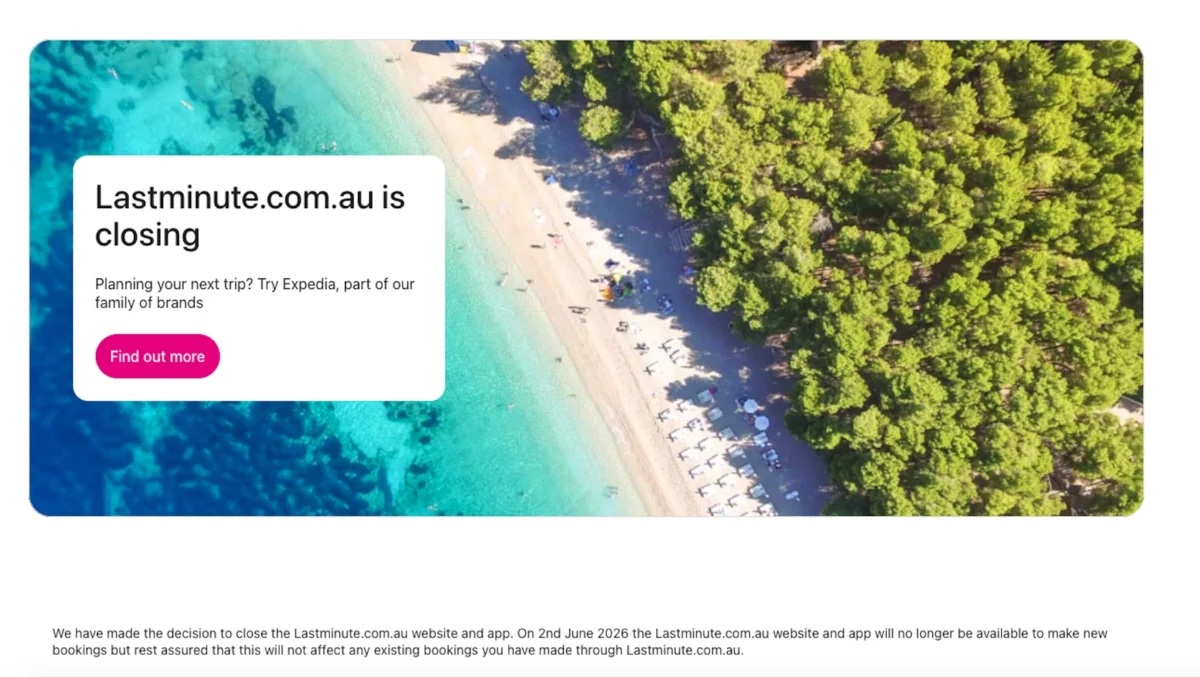
Lastminute.com.au Ceases Operations in Australia After 25 Years of Last-Minute Travel Deals
The Australian arm of the prominent online travel booking platform, lastminute.com.au, is set to close its virtual doors permanently on June 2, 2026, marking the end of an era for Australian travellers seeking spontaneous holiday opportunities. After a quarter of a century serving the Australian market, the company, now a subsidiary of the global Expedia Group, confirmed the shutdown this week, leaving many to ponder the future of last-minute travel booking in the region.
A Legacy of Spontaneity: The Rise and Fall of Lastminute.com.au
Founded in the United Kingdom in 1998, lastminute.com quickly established itself as a go-to resource for travellers willing to embrace spontaneity. Its unique selling proposition lay in offering heavily discounted deals on flights, hotels, car rentals, and holiday packages for immediate or near-future departures. This model resonated strongly with a segment of the travel market that valued flexibility and sought to capitalize on unsold inventory, thereby securing attractive prices.
The Australian iteration, lastminute.com.au, launched in 2000, mirroring the successful UK blueprint. For over two decades, it became an ingrained part of the Australian travel landscape. The platform’s intuitive interface and consistent promise of "last-minute" savings attracted a loyal customer base. During its peak, it was a common starting point for individuals and families looking for weekend getaways, last-minute business trips, or simply a spontaneous escape from the everyday. The allure of snagging a bargain on a flight to Bali or a hotel in Sydney just days before departure was a powerful draw.
The company’s business model was built on leveraging surplus inventory from airlines and hotels. By offering these at a reduced rate, lastminute.com.au provided a valuable service to both travellers and travel providers. For travellers, it democratized travel, making spontaneous trips more accessible and affordable. For providers, it offered a crucial channel for filling empty seats and rooms, mitigating losses that would otherwise be incurred.
The Expedia Group Era and the Unforeseen Closure
The acquisition of lastminute.com by the US-based Expedia Group, a titan in the online travel industry, brought the Australian platform under a larger corporate umbrella. While such acquisitions often lead to synergy and expanded offerings, in this instance, it appears to have preceded a strategic decision to exit the Australian market. The Expedia Group boasts a diverse portfolio of travel brands, including Expedia.com, Hotels.com, Vrbo, and Travelocity, among others. The integration of lastminute.com into this vast ecosystem likely involved a comprehensive review of its global operations and market performance.
The announcement of the closure has been met with a degree of surprise, given the platform’s long-standing presence. No specific reasons for the shutdown have been publicly disclosed by lastminute.com.au or the Expedia Group. This lack of transparency has fueled speculation among industry observers and consumers alike. Potential factors contributing to the decision could include increased competition in the online travel agency (OTA) space, shifting consumer booking habits, evolving market dynamics, or a strategic realignment of the Expedia Group’s brand portfolio within the Australian context.
Chronology of Events: A Timeline of Lastminute.com.au’s Australian Journey
- 2000: Lastminute.com.au launches in Australia, establishing its presence as a dedicated platform for last-minute travel deals.
- Early 2000s: The platform gains popularity, becoming a key player in the Australian online travel market, catering to spontaneous travellers.
- 2000s-2010s: Lastminute.com.au experiences significant growth, solidifying its brand recognition and customer loyalty through consistent offerings of discounted travel.
- Mid-2010s: The global lastminute.com group, including its Australian operations, is acquired by the Expedia Group, integrating it into a larger travel conglomerate.
- Late 2020s: Reports emerge of the Australian arm of lastminute.com.au facing significant operational changes.
- April 2026 (Early): Lastminute.com.au begins informing its Australian customers about the impending closure.
- June 2, 2026: Lastminute.com.au officially ceases all operations in Australia, with the website and booking services becoming inaccessible.
Supporting Data and Market Context
The online travel market in Australia is highly competitive and has undergone significant evolution since lastminute.com.au’s inception. The rise of direct bookings with airlines and hotels, the proliferation of other OTAs, and the increasing sophistication of metasearch engines like Google Flights and Skyscanner have all contributed to a dynamic landscape.
According to reports from Statista, the Australian online travel market is projected to reach billions of dollars in revenue, with a significant portion attributed to flight bookings and accommodation. However, the market is also characterized by intense price competition and a constant need for innovation. While lastminute.com.au’s niche of "last-minute deals" was once a strong differentiator, the broader OTA market has also incorporated dynamic pricing and flash sales, potentially eroding some of its unique advantage.
Furthermore, the global travel industry has faced unprecedented challenges in recent years, including the COVID-19 pandemic, which drastically impacted travel volumes and consumer confidence. While the industry has shown resilience and is experiencing a rebound, the lingering effects and the need for businesses to adapt to new travel patterns and economic conditions remain a significant factor.
Official Statements and Industry Reactions (Inferred)
While a specific spokesperson for lastminute.com.au provided a brief statement to The Daily Telegraph, details regarding the rationale behind the closure remain scant. This silence from a major entity like the Expedia Group is not uncommon in corporate restructuring, where strategic considerations often outweigh the need for detailed public explanations.
"The company has not offered any detail on why the platform is shutting down," the article states. This lack of official clarification leaves room for interpretation. Typically, in such scenarios, companies focus on thanking customers and partners for their patronage and outlining the logistical aspects of the closure, such as booking finalization and customer support during the transition period.
From an industry perspective, the departure of a long-standing player like lastminute.com.au could be viewed with a mix of concern and opportunity. Competitors might see a chance to capture a segment of its customer base, particularly those who valued its specific offering. However, it also signals potential challenges within the broader OTA market in Australia, prompting introspection among other players regarding their own strategies and market positioning. Travel industry analysts may point to this closure as an indicator of the intense consolidation and evolving business models within the digital travel space.
Broader Implications for Australian Travellers and the Market
The closure of lastminute.com.au has several implications for Australian consumers and the travel industry:
- Reduced Choice for Spontaneous Travel: For travellers who relied on lastminute.com.au for spontaneous, budget-friendly trips, the absence of the platform means one less dedicated avenue for finding such deals. This could lead to a need to diversify search strategies across multiple platforms or adjust travel plans.
- Impact on Discount Seekers: While other OTAs and travel comparison sites exist, the specific niche of "last-minute" deals, often with significant discounts, was a hallmark of lastminute.com.au. Its departure might mean fewer readily available ultra-low-cost options for immediate travel.
- Consolidation in the OTA Market: This closure contributes to the ongoing trend of consolidation within the online travel agency sector. Large players like Expedia Group often streamline their brand portfolios, focusing resources on their most dominant or strategically important platforms. This can lead to a less fragmented market, with a few major players holding significant sway.
- Shift in Consumer Behaviour: The closure might also reflect or accelerate a shift in consumer booking behaviour. Travellers may be increasingly planning further in advance due to economic uncertainties or a desire for greater certainty, or they may be more adept at finding deals directly or through a wider array of digital tools.
- Opportunity for Niche Players: While large platforms consolidate, there might be an emerging opportunity for smaller, more specialized travel companies to fill the void left by lastminute.com.au, particularly those focusing on curated last-minute experiences or unique travel packages.
The digital landscape of travel is in constant flux. The closure of lastminute.com.au serves as a reminder that even well-established brands must continuously adapt to market demands, technological advancements, and evolving consumer preferences to remain relevant. As June 2, 2026, approaches, Australian travellers will bid farewell to a platform that, for over two decades, embodied the spirit of spontaneous adventure and accessible travel. The legacy of lastminute.com.au will be etched in the memories of countless travellers who seized the opportunity for an unplanned getaway, all thanks to a click and a promise of a last-minute bargain.