Google Maps AI Integration Reshapes Local Search Landscape for Small Businesses
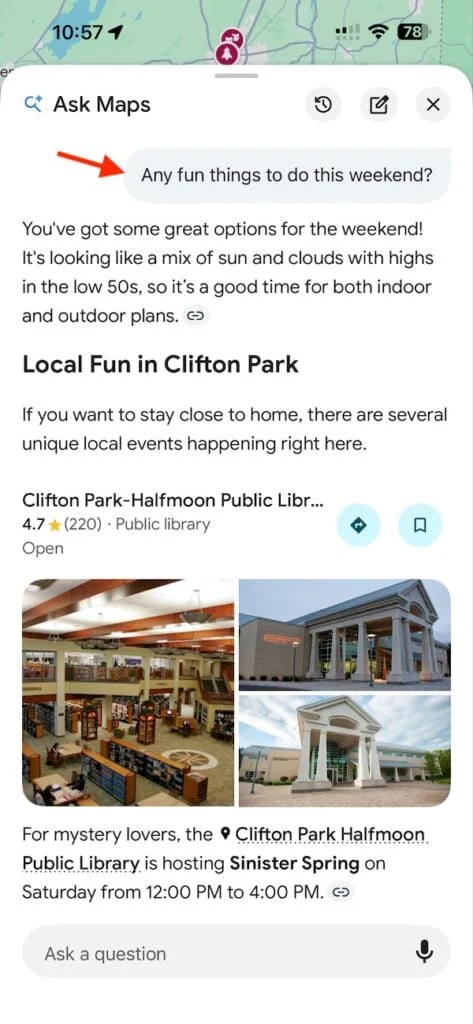
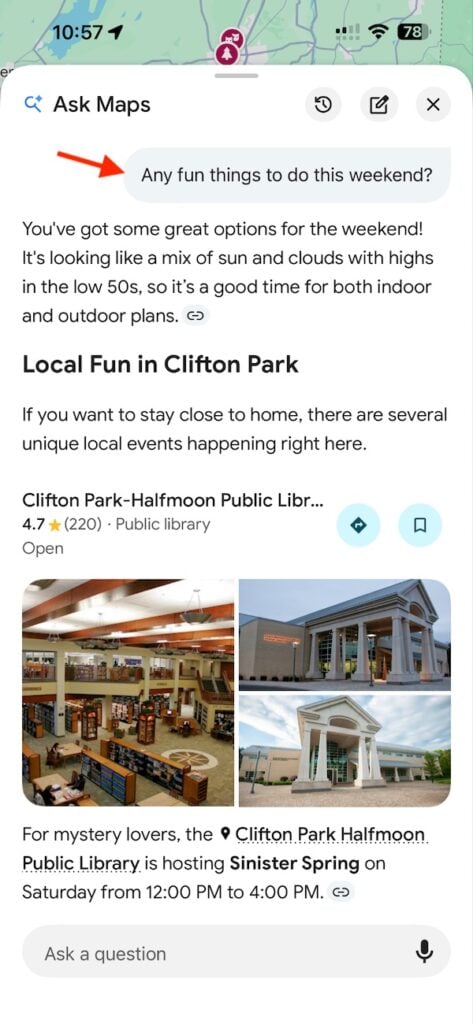
The digital search ecosystem is undergoing a fundamental transformation as Google integrates its most advanced generative artificial intelligence into Google Maps, a move that provides local businesses with unprecedented opportunities to capture "low-intent" consumer interest. This new feature, frequently referred to as "Ask Maps," allows users to engage with the navigation platform through conversational queries, moving beyond traditional keyword searches to discover local activities, retail options, and niche services through AI-curated recommendations. By leveraging the Gemini large language model, Google Maps can now synthesize vast quantities of data from across the web—including business profiles, customer reviews, and website content—to provide nuanced answers to complex questions such as "Any fun things to do this weekend?" or "Where can I find a quiet cafe suitable for reading?"
The introduction of generative AI into Google Maps represents a shift from a directory-style interface to a proactive discovery engine. For decades, local SEO was predicated on ranking for specific keywords like "pizza near me" or "dry cleaners in Chicago." However, the "Ask Maps" functionality prioritizes contextual relevance and comprehensive data availability. When a user asks for "fun things to do," the AI does not merely look for the word "fun"; it analyzes business descriptions, upcoming event listings, and recent user updates to identify workshops, farmers’ markets, and pop-up sales that match the user’s implicit intent. This capability creates a level playing field where smaller, local merchants can compete with massive retail chains by providing high-quality, specific information that the AI can interpret and present to potential customers.
The Evolution of Google Maps: A Chronology of Local Discovery
The journey of Google Maps from a simple web-based mapping service to an AI-driven concierge has been marked by several key milestones that have redefined how consumers interact with their physical surroundings. Understanding this timeline is essential for businesses looking to grasp the significance of the current AI pivot.
- 2005 – Launch and Acquisition: Google Maps debuted as a desktop solution following the acquisition of Where 2 Technologies. Initially, its primary function was providing driving directions and static maps.
- 2007 – Street View and Mobile Integration: The introduction of Street View and the launch of Google Maps on the first iPhone began the transition toward a mobile-first discovery tool.
- 2011-2014 – The Rise of Local Business Profiles: With the launch of Google+ Local (later Google My Business), the platform began prioritizing merchant data, allowing businesses to claim their "pins" on the map and interact with customer reviews.
- 2021 – Rebranding to Google Business Profile: Google streamlined the merchant interface, emphasizing real-time updates and direct communication between consumers and local shops.
- 2023 – Search Generative Experience (SGE): Google announced the integration of generative AI into its core search product, signaling that AI-driven summaries would soon replace or augment traditional search results.
- 2024 – Gemini Integration and "Ask Maps": The rollout of Gemini-powered features within Maps allows for conversational querying, enabling the platform to understand complex human prompts and provide curated, multi-source responses.
Technical Mechanics of AI-Driven Local Discovery
To understand how to appear in "Ask Maps" responses, one must understand the data sources the AI prioritizes. Unlike traditional search algorithms that rely heavily on backlink profiles and keyword density, the Gemini-powered Maps engine functions as a reasoning engine. It attempts to "understand" the nature of a business by triangulating data from multiple touchpoints.
The primary source of truth remains the Google Business Profile (GBP). The AI parses every field within the GBP, from the primary category to the most granular attributes like "wheelchair accessible seating" or "locally owned." Furthermore, the AI analyzes the "Updates" section—a feature often underutilized by small businesses. These updates serve as a real-time signal to the AI about the current relevance of a business. If a local bookstore posts an update about a weekend poetry reading, the AI stores this information to answer queries about "cultural events" or "weekend activities."
Beyond the GBP, the AI crawls the business’s official website. It looks for "unstructured data" that adds depth to the business’s profile. For instance, if a website lists specific materials used in products (e.g., "organic cotton," "recycled glass"), the AI can surface that business when a user asks for "sustainable shopping options." This shift necessitates a move toward "semantic SEO," where the focus is on the meaning and context of the content rather than just the presence of specific search terms.

Strategic Optimization for the AI Era
For local businesses to remain visible in this new paradigm, a multifaceted optimization strategy is required. Industry experts suggest that the "Ask Maps" feature rewards "completeness" and "freshness" above all else.
Comprehensive Google Business Profile Management
Businesses must ensure that every section of their GBP is populated with accurate, detailed information. This includes not only the basics—hours, location, and contact info—but also high-resolution imagery and a thorough "About" section. The use of "Attributes" is particularly critical; these are the tags that tell Google whether a business offers "outdoor seating," "free Wi-Fi," or "veteran-led" services. In the conversational AI era, these attributes act as the filters the AI uses to narrow down results for specific user requests.
Deep Content Integration on Websites
To capture traffic from highly specific queries, business websites must serve as exhaustive repositories of information. This includes detailed product descriptions that cover materials, dimensions, use cases, and price points. Service-based businesses should include "How-to" guides, FAQ sections, and detailed service menus. By solving common consumer problems through on-site content, a business increases the likelihood that Google’s AI will cite them as an authoritative solution to a user’s prompt.
Leveraging External Ecosystems
The AI does not limit its search to Google-owned properties. It frequently pulls data from third-party event platforms, social media, and local news sites. To maximize visibility in "Ask Maps," businesses should list their events on platforms like Eventbrite, Facebook Events, and local community calendars. These external signals provide the "social proof" and "contextual density" that AI models use to verify the legitimacy and relevance of a business for a given query.
Data Analysis: The Impact of AI on Local Consumer Behavior
Market data suggests that the transition to AI-driven search is already altering consumer habits. According to recent search trend reports, "near me" searches have evolved from simple location-based queries to "experience-based" queries. Data from 2023 indicated a 400% year-over-year increase in searches that include specific qualifiers like "open now" and "highly rated."
Furthermore, digital marketing analysts note that the "zero-click search" phenomenon—where a user finds all the information they need on the search results page without clicking through to a website—is likely to accelerate with "Ask Maps." While this might seem detrimental to website traffic, it is highly beneficial for physical foot traffic. If the AI provides a user with a business’s hours, location, and a summary of why it’s the best choice for their needs, the "conversion" happens directly on the map. For local merchants, a visit to the physical storefront is often more valuable than a click on a website.
Projections for 2025 suggest that AI-driven discovery will account for over 40% of local intent queries. This shift underscores the urgency for small businesses to move away from static digital presences and toward dynamic, data-rich profiles that are easily interpretable by large language models.
Industry Responses and Implications for Main Street
The reaction from the small business community and digital marketing experts has been a mix of optimism and caution. On one hand, advocates for local commerce argue that AI discovery reduces the dominance of big-box retailers who have historically outspent small shops on traditional SEO and pay-per-click advertising. Because the AI prioritizes specific relevance over sheer domain authority, a niche local boutique with a well-maintained profile can now appear alongside a national department store in search results.
However, some analysts raise concerns about the "black box" nature of AI recommendations. Unlike traditional search results, which can be somewhat predicted through SEO best practices, AI responses are generated in real-time and can vary based on how a user phrases their question. There is also the ongoing challenge of "AI hallucinations," where the model might inadvertently provide incorrect information about business hours or services if the available data is conflicting or outdated.
Small business organizations have emphasized that the burden of accuracy now falls squarely on the business owner. In a statement regarding the future of AI in local search, one industry consultant noted, "The AI is only as good as the data we feed it. If a business hasn’t updated its holiday hours or its menu, the AI will either provide wrong information or, more likely, stop recommending that business altogether in favor of a more reliable data source."
Broader Implications: The Shift to Generative Engine Optimization (GEO)
The emergence of "Ask Maps" is a clear indicator that the SEO industry is pivoting toward "Generative Engine Optimization" (GEO). This new discipline focuses on making content "AI-ready." For local businesses, this means focusing on the "E-E-A-T" principle: Experience, Expertise, Authoritativeness, and Trustworthiness.
Google’s AI is designed to favor businesses that demonstrate these qualities through consistent positive reviews, detailed responses to customer queries, and a clear presence across multiple digital platforms. The broader implication for the retail landscape is a move toward "hyper-personalization." As the AI learns more about individual user preferences, the recommendations provided in Maps will become increasingly tailored, creating a highly efficient bridge between local supply and consumer demand.
In conclusion, the integration of Gemini AI into Google Maps is more than just a functional update; it is a fundamental shift in the mechanics of local commerce. By focusing on comprehensive data entry, real-time updates, and detailed website content, local businesses can harness the power of "Ask Maps" to elevate their visibility and compete effectively in an increasingly AI-centric world. The success of "Main Street" in the coming years will likely depend on how well these businesses can translate their physical excellence into the digital language understood by generative AI.


Related Posts
The Strategic Integration of Conversion Rate Optimization Across Multi-Channel E-commerce Ecosystems
Global Ecommerce Evolution 2026: The Rise of Agentic Commerce, Circular Logistics, and Embedded Financial Systems