


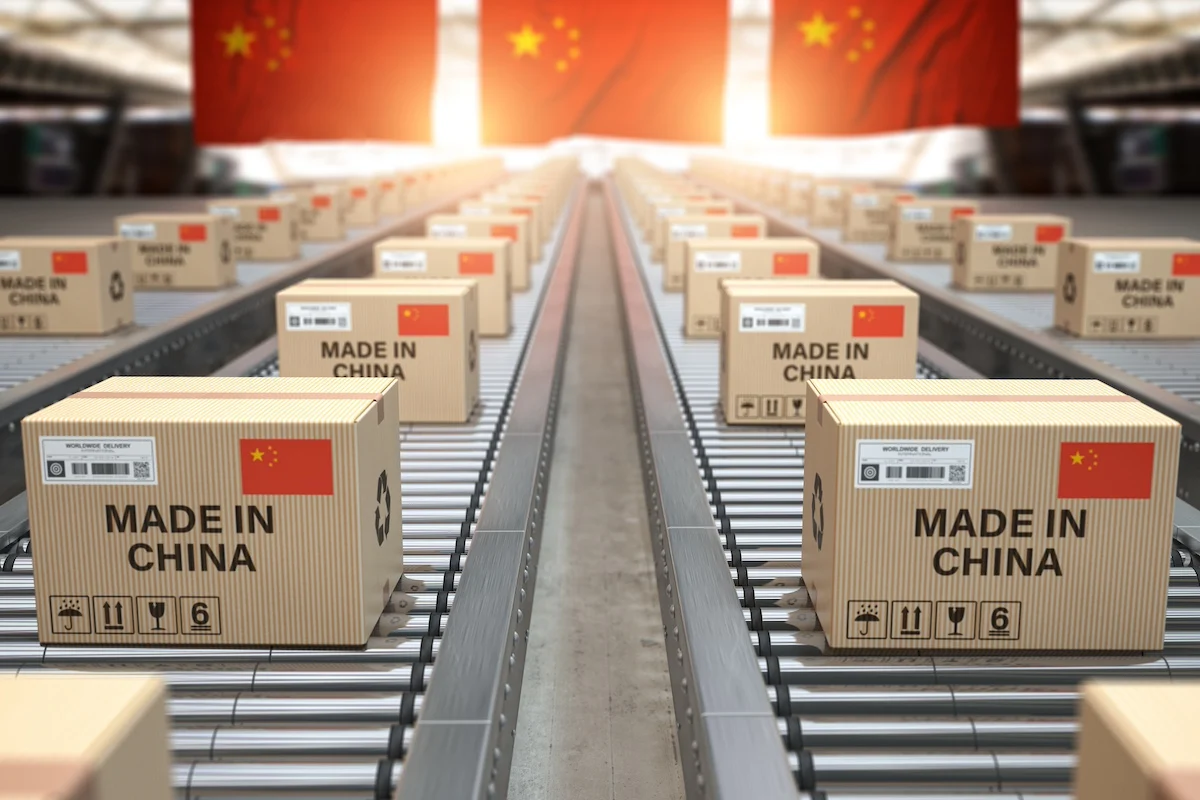
China has introduced wide-ranging new regulations designed to investigate and punish foreign companies that cease using Chinese suppliers, particularly when such decisions are influenced by political pressure from their home governments. These rules, which were signed into effect by Premier Li Qiang on April 7, have immediately triggered strong concern among foreign business groups due to their vaguely worded nature. Analysts have warned that the new framework could significantly complicate efforts for multinational corporations to divest from joint ventures within China or to reroute their production orders to suppliers located in other nations.
A Decades-Long Shift: The Genesis of De-Risking
The introduction of these regulations marks a significant escalation in the ongoing economic and geopolitical friction between China and Western nations, particularly the United States. For nearly a decade, a discernible trend of manufacturers, predominantly from the U.S., has seen them gradually reduce their reliance on China as a primary manufacturing hub. This shift predates the most recent trade disputes and was initially driven by evolving economic realities within China itself. Rising labor costs, increasingly stringent environmental regulations, and growing concerns over intellectual property protection began to erode China’s once-unquestioned dominance as the global leader in low-cost, high-quality manufacturing. Companies started exploring diversification strategies, often referred to as "China Plus One," seeking alternative production bases in countries like Vietnam, India, Mexico, and Thailand to mitigate risks and capitalize on emerging markets.
The initial tremors of a full-blown trade conflict began in 2018 under the administration of then-U.S. President Donald Trump, who characterized the trade imbalance between the U.S. and China as a "rip-off" and a threat to American manufacturing jobs. His administration initiated a series of tariffs on various Chinese imports, citing national security concerns and unfair trade practices, including forced technology transfer and state subsidies. These tariffs, imposed under Section 301 of the Trade Act of 1974, at times soared as high as 145% on specific goods, significantly increasing the cost of importing from China for U.S. businesses.
While a "Phase One" trade deal was signed in January 2020, offering a temporary de-escalation, many of the core issues remained unresolved, and a significant portion of the tariffs stayed in place. The subsequent COVID-19 pandemic further accelerated the "de-risking" trend, as global supply chain disruptions exposed the vulnerabilities inherent in over-reliance on a single manufacturing base. Companies worldwide began prioritizing supply chain resilience and geographical diversification, a strategic shift that gained bipartisan support in the U.S. and was embraced by European nations as well.
Escalating Tensions and Tariff Warfare
The trade tensions have continued under the current U.S. administration, albeit with a refined focus. While some tariffs from the Trump era remain, the Biden administration has increasingly targeted strategic sectors such as semiconductors, artificial intelligence, and electric vehicles, aiming to bolster domestic manufacturing capabilities and prevent China from acquiring advanced technologies deemed critical for national security. This approach, often framed as "friend-shoring" or "ally-shoring," seeks to build resilient supply chains among trusted partners, further contributing to the re-evaluation of China-centric supply models.
In April 2025, President Trump again introduced a range of new tariffs, further intensifying the economic pressure on China. These measures, combined with the ongoing strategic shifts by businesses, have had a measurable impact on trade flows. According to figures released by the Office of the U.S. Trade Representative, the trade deficit between China and the U.S. dropped by a substantial 31.6% in 2025, reaching $202.1 billion, down from $295.5 billion in 2024. This significant reduction was primarily driven by a 29.7% drop in U.S. imports from China, bringing the deficit to its lowest level in over a decade. This data underscores the tangible effect of both U.S. policy and corporate diversification strategies on bilateral trade.
China’s Counter-Offensive: The New Regulations
Beijing views these trends as a manifestation of rising protectionism in the West and a deliberate attempt to decouple from the Chinese economy, potentially undermining its economic growth and national security. In response, China has incrementally developed a legal and regulatory framework to counter what it perceives as economic coercion. The new 18-point regulations, described in state media as an effort to "prevent security risks in industrial and supply chains," are the latest and arguably most direct measure in this counter-offensive.
These regulations significantly supplement the already formidable authority afforded to Chinese regulators to investigate multinational corporations. China already possesses a suite of laws, including the National Security Law, the Anti-Foreign Sanctions Law, and the Export Control Law, which grant broad powers to the government to intervene in corporate operations deemed detrimental to national interests. The new supply chain regulations appear to specifically target the intent behind supply chain shifts, aiming to penalize companies that move production or sourcing because of external political pressure, rather than purely commercial considerations.
The "vaguely worded" nature of the rules is a major point of contention for foreign business communities. Without clear definitions of what constitutes "political pressure" or what actions would trigger punishment, companies face a heightened risk of arbitrary enforcement. This ambiguity creates a chilling effect, making it exceptionally difficult for foreign firms to conduct risk assessments, plan long-term investments, or execute strategic adjustments to their supply chains without fear of repercussions. Potential penalties could range from substantial fines and restrictions on market access to delays in regulatory approvals and even blacklisting, severely impacting a company’s ability to operate profitably in China.
Reactions from the International Business Community
Foreign business groups operating in China have consistently voiced concerns over the deteriorating business environment, characterized by increasing regulatory unpredictability, heightened data security requirements, and a perceived shift away from market-oriented reforms. Organizations like the American Chamber of Commerce in China (AmCham China) and the European Union Chamber of Commerce in China have frequently published surveys and reports highlighting these challenges.
Upon the announcement of the new supply chain regulations, these groups reiterated their apprehensions. While no specific public statements directly addressing these new rules immediately followed their signing on April 7, the consistent messaging from these organizations suggests a deep-seated worry. They are likely to express concerns that the regulations will further erode business confidence, deter new foreign investment, and potentially force existing companies to reconsider their presence in the Chinese market. The lack of transparency and due process in such investigations is a perennial concern, potentially exposing foreign firms to legal jeopardy without clear recourse.
Analysts further emphasize that the regulations could complicate divestment strategies, especially for foreign companies seeking to exit joint ventures. Chinese partners might leverage these new rules to block or delay sales, potentially trapping foreign investors in unprofitable or strategically undesirable partnerships. This could significantly impact the ease of doing business and the perceived security of investments in China.
Economic and Geopolitical Implications
The timing of these regulations is also noteworthy, coinciding with the preparations for the highly anticipated Beijing Auto Show, which ran from April 24 to May 3. This event typically draws thousands of auto executives and engineers from around the globe, making it a critical platform for international collaboration and market development in one of China’s most important industrial sectors. Issuing such impactful regulations just weeks before a major international business gathering could be interpreted as a deliberate signal of China’s resolve to defend its industrial base.
The broader economic implications are multifaceted. While China aims to protect its supply chains and employment, the regulations could inadvertently accelerate the very "de-risking" trend they seek to counter. Increased regulatory uncertainty and the threat of punitive action could make China a less attractive destination for foreign direct investment (FDI). Recent data already indicates a significant slowdown in FDI into China, with some reports suggesting it has fallen to its lowest levels in decades. If foreign companies continue to scale back investments or shift production elsewhere, it could impact China’s technological advancement, job creation, and overall economic growth, particularly in export-oriented sectors.
For the global economy, these regulations contribute to the ongoing fragmentation of supply chains. Instead of a single, integrated global manufacturing network, the world could increasingly see the emergence of parallel supply chains: one centered on China and its partners, and another focused on Western alliances. While this might enhance resilience in some respects, it could also lead to higher production costs, reduced efficiencies, and slower innovation due to diminished cross-border collaboration and competition.
The geopolitical dimension is equally significant. These regulations are a clear manifestation of China’s "whole-of-government" approach to national security, where economic levers are increasingly employed to achieve strategic objectives. They underscore Beijing’s determination to resist what it perceives as external interference in its economic policies and to assert its sovereignty over critical industrial sectors. This stance is likely to further exacerbate tensions with Western governments that advocate for greater supply chain transparency, human rights standards, and a level playing field for their domestic industries.
Looking ahead, the enforcement of these regulations will be closely watched. The degree of flexibility, the types of cases pursued, and the severity of penalties will all provide crucial insights into China’s long-term strategy. The global business community faces the daunting task of navigating an increasingly complex and politicized international trade landscape, where economic decisions are inextricably linked to geopolitical realities, and the once clear lines between commerce and national security continue to blur.







Comments (0)