
Ecommerce Tech Update AI Agents and Predictive Intelligence Reshape Global Merchant Operations
The global ecommerce landscape is currently undergoing a transformative shift as the industry moves from simple automation toward "agentic commerce"—a state where artificial intelligence does not merely assist but actively executes complex business operations. This week’s influx of new tools and service updates from major industry players like FedEx, Google, Alibaba, and ShipStation underscores a broader trend: the integration of predictive intelligence and autonomous agents into every facet of the merchant workflow, from the "last mile" of delivery to the granular details of customs documentation and social media marketing.
Predictive Logistics and the Evolution of Fulfillment
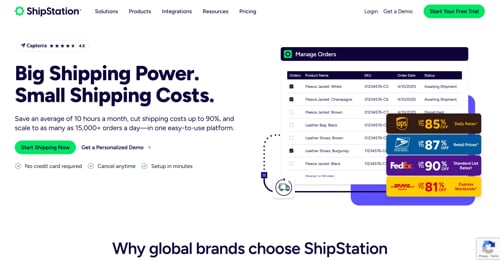
As consumer expectations for delivery speed continue to climb, logistics providers are turning to predictive AI to mitigate the rising costs of shipping and returns. ShipStation, a leading shipping and logistics platform, recently launched "Intelligence," a predictive AI tool designed to address operational inefficiencies. By leveraging vast amounts of historical shipment data, the tool allows merchants to automatically select the most cost-effective carrier and service level for every package.
The implications of this technology are significant. Logistics costs typically account for 10% to 15% of a merchant’s total revenue, and the "returns problem" has become a multi-billion-dollar headache for the industry. ShipStation’s new tool aims to identify delivery risks and delays before they occur, allowing for proactive customer service. Furthermore, the tool’s ability to optimize international shipping decisions, including the management of customs and duties, addresses a major barrier for small to medium-sized enterprises (SMEs) looking to scale globally.

Simultaneously, FedEx has announced a strategic rollout of "SameDay Local" in collaboration with OneRail. This service targets the "last mile"—the final and most expensive leg of the delivery journey, which can account for up to 53% of total shipping costs. By connecting FedEx customers to a network of roughly 1,000 delivery providers in the U.S., the service enables shoppers to choose two-hour or end-of-day delivery directly at checkout. This move is widely seen as a direct response to the logistics dominance of Amazon, providing independent merchants with the infrastructure needed to compete on speed.
The Rise of Agentic Commerce and Autonomous Operations
Perhaps the most significant trend this week is the formalization of "agentic commerce." Unlike traditional AI, which requires constant human prompting, agentic AI can take a high-level goal—such as "increase sales for this product category"—and independently coordinate the necessary actions across multiple platforms.
Alibaba International’s launch of "Accio Work" represents a major leap in this direction. As an enterprise AI agent, Accio Work is designed to handle complex, long-horizon operations like VAT filings, tax refunds, and customs documentation across more than 100 markets. For global merchants, these administrative tasks have historically required specialized teams; Alibaba’s move suggests that software can now perform these roles with minimal setup. The platform even facilitates multi-round negotiations with suppliers through common messaging apps like Telegram and WhatsApp, effectively acting as an autonomous procurement officer.
Similarly, Shoplazza, a direct-to-consumer (D2C) commerce platform, has adopted an agentic commerce architecture. Merchants using Shoplazza can now describe a desired business outcome, and the platform’s AI agents will coordinate actions across payments, marketing, and storefront merchandising. This shift reduces the "cognitive load" on entrepreneurs, allowing them to focus on brand strategy while the AI manages the technical execution of campaigns and performance monitoring.
Google has also signaled its commitment to this future by updating its Universal Commerce Protocol (UCP). The new updates allow AI agents to add multiple items to a shopping cart simultaneously and retrieve real-time product details from a retailer’s catalog. By supporting identity linking, Google ensures that AI agents can also secure loyalty benefits and member-only pricing for the humans they represent, paving the way for a future where a significant portion of ecommerce transactions may be agent-to-agent.
Marketing Automation and Conversational Content Creation
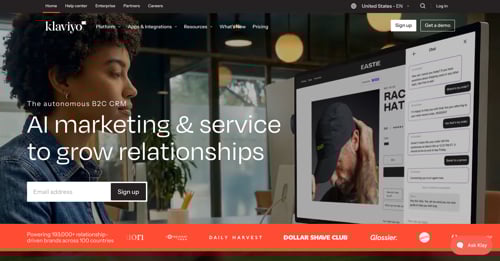
The marketing sector is seeing a parallel evolution toward autonomy. Klaviyo’s new "Composer" tool exemplifies this shift. By using an agentic experience, Composer allows marketers to describe a campaign in plain language. The AI then builds the launch-ready campaign, including audience segmentation and channel-specific messaging. Klaviyo has also expanded its Customer Agent tools to include order tracking and subscription editing, moving the AI closer to the role of a full-service brand representative.
Content creation is also becoming more seamless. WordPress.com has integrated with the Model Context Protocol (MCP) server, allowing AI agents like Claude, ChatGPT, and Cursor to take direct action on websites. Users can now instruct their AI to draft, edit, and publish blog posts through natural conversation. This reduces the friction of site management, enabling merchants to keep their content fresh without needing deep technical knowledge of the WordPress CMS.
Visual content, often a bottleneck for smaller brands, is being addressed by WizCommerce’s new AI Video Generator. The module can transform a single product image into a publish-ready video in minutes. In an era where social media algorithms heavily favor video content over static images, the ability to generate lifestyle videos, 360-degree spins, and product closeups without a professional production studio is a game-changer for brand storytelling.
Enhancing Product Discovery Through Conversational AI
As catalogs grow larger, the traditional search bar is becoming an insufficient tool for product discovery. Several companies are now launching search-native conversational AI to help shoppers find what they need through dialogue.
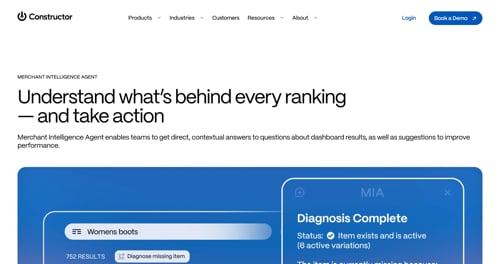
Coveo’s "Conversational Product Discovery" and Constructor’s "Merchant Intelligence Agent" (MIA) are at the forefront of this trend. Coveo’s system interprets shopper intent to retrieve relevant products while adhering to specific merchandising rules. Meanwhile, Constructor’s MIA allows merchandising teams to ask natural-language questions about campaign performance and receive recommendations to hit specific sales goals.
Algolia has also enhanced its Shopify integration by introducing a "Commerce Pipeline" for faster indexing and "Click-to-Activate Pixel Analytics." By indexing Shopify’s Standard Product Taxonomy and Metaobjects, Algolia gives merchants more precise control over how their products appear in search results, directly impacting conversion rates. Industry data suggests that even a one-second delay in search results can lead to a 7% drop in conversions, making these backend speed improvements vital for high-volume retailers.
Cross-Border Expansion and Financial Flexibility
The complexity of international trade remains one of the steepest hurdles for ecommerce growth. Zonos has addressed this by launching a suite of six AI products specifically designed to validate customs data. From "Classify," which determines commodity codes, to "Greenlight," an API for export compliance, these tools aim to eliminate the "landed cost" surprises that often lead to refused packages and customer dissatisfaction.
In the realm of B2B and dropshipping, Mliveo has upgraded its AI Livestream Commerce Suite. The platform automates product analysis and livestream distribution, allowing cross-border sellers to scale their operations by simply defining profit margins and uploading SKUs. This reflects the growing influence of "live commerce," a trend that originated in Asia and is now rapidly gaining traction in Western markets.
Finally, the physical and digital worlds are merging through new payment solutions. Splitit has launched "Go," a mobile tool that brings credit-card-linked installments to field sales. This allows merchants to offer "Buy Now, Pay Later" (BNPL) options during face-to-face interactions via QR codes or text links. As installment payments become a standard expectation for consumers, extending this flexibility to in-person sales events and pop-up shops provides merchants with a powerful tool to increase average order values.
Broader Implications and Industry Analysis
The convergence of these technologies suggests that the "technical barrier" to running a global ecommerce business is rapidly dissolving. However, as AI agents take over the execution of tasks, the competitive advantage for merchants will likely shift from operational efficiency to brand identity and customer trust.
The heavy investment in agentic commerce by giants like Google and Alibaba indicates a move toward a "headless" shopping experience, where the storefront matters less than the data feed that feeds the AI. For merchants, this means that maintaining high-quality, structured product data is no longer optional—it is the foundational requirement for being "discoverable" by the next generation of AI shoppers.

Furthermore, the focus on predictive intelligence in logistics highlights an industry-wide push for sustainability and cost reduction. By reducing "failed deliveries" and optimizing routes, these tools not only save money but also reduce the carbon footprint of the ecommerce sector. As the industry looks toward 2026 and beyond, the winners will likely be those who can successfully balance the efficiency of autonomous agents with the authentic, human-centric brand experiences that consumers continue to crave.
To assist with design consistency during this rapid scaling, Netguru has released "Silk," a free design system for marketplaces. By providing reusable UI components and documented patterns, Silk allows product teams to ship commerce applications faster, ensuring that as back-end operations become more complex, the front-end remains intuitive and user-friendly.
This week’s developments confirm that the ecommerce industry is no longer just about selling products online; it is about managing a sophisticated ecosystem of AI-driven logistics, marketing, and discovery tools that work in concert to meet the consumer wherever they are.




Related Posts

The Strategic Integration of Conversion Rate Optimization Across Multi-Channel E-commerce Ecosystems
Global Ecommerce Evolution 2026: The Rise of Agentic Commerce, Circular Logistics, and Embedded Financial Systems