Coachella 2024 Brand Activations Transform the Music Festival Landscape through Experiential Strategy and Utility
The Coachella Valley Music and Arts Festival has long transcended its origins as a desert-based alternative rock gathering to become a global epicenter for cultural trends, fashion, and, increasingly, high-stakes brand marketing. In 2024, the shift in corporate strategy became more pronounced than ever, as brands moved away from traditional "billboard-style" advertising toward immersive, utility-driven experiences. While the musical lineup, headlined by the likes of Lana Del Rey, Tyler, the Creator, and Doja Cat, provided the primary draw for the 125,000 daily attendees, the brand activations served as essential infrastructure, offering solutions to festival-specific problems while weaving products into the fabric of the weekend’s narrative.
This year’s activations were characterized by a departure from passive observation. Instead of merely providing a backdrop for photos, brands like Wavytalk, Pinterest, and American Express focused on "experiential utility"—the concept of providing a service that enhances the consumer’s immediate environment. This evolution reflects a broader trend in the marketing industry where Gen Z and Millennial consumers, who make up the bulk of the Coachella demographic, prioritize authenticity and tangible value over traditional celebrity endorsements.
The Rise of Utility-Based Experiential Marketing
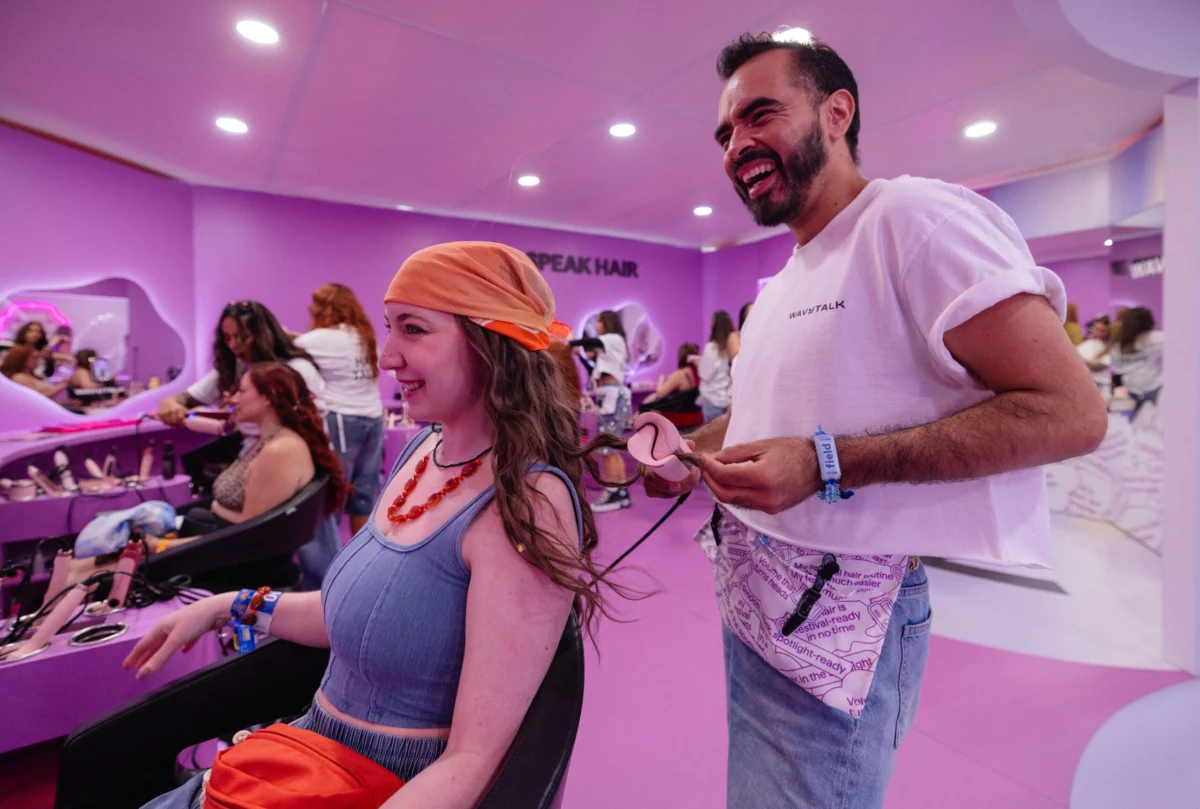
A standout example of this shift was the presence of Wavytalk, a brand that identified a specific "pain point" for festival-goers: maintaining personal aesthetics in the harsh environment of the Colorado Desert. The Coachella Valley is notorious for its extreme conditions, including triple-digit heat, high winds, and pervasive dust, all of which can wreak havoc on elaborate hairstyles. Wavytalk’s activation centered on a professional hair-styling station where attendees could receive complimentary treatments using the brand’s suite of tools.
By offering professional styling, Wavytalk transformed a marketing moment into a high-demand service. This strategy ensured a high "dwell time"—the amount of time a consumer spends interacting with a brand. While a typical social media ad might capture a second of attention, a hair-styling session creates a 20-to-30-minute window of engagement. During this time, brand representatives can demonstrate product features, collect consumer data, and foster a positive emotional connection by solving a real-time problem.
The success of such activations is backed by industry data. According to the 2024 Experiential Marketing Trend Report, 82% of festival-goers are more likely to purchase from a brand that provides a "useful" experience during an event. Furthermore, the "Instagrammability" of these moments remains a key metric; by ensuring attendees looked their best, Wavytalk essentially turned every person leaving their booth into a walking, high-quality content creator for the brand.
Chronology of the Coachella Brand Ecosystem
The lifecycle of a Coachella brand activation begins months before the gates of the Empire Polo Club open. For 2024, the planning cycle for major sponsors began as early as June 2023, following the post-event analysis of the previous year.
- Strategic Planning (June – October): Brands analyze social media sentiment and "Media Impact Value" (MIV) from the previous festival. They identify gaps in the attendee experience, such as lack of shade, charging stations, or beauty services.
- Concept Development (November – January): Creative agencies pitch immersive concepts. In 2024, the focus shifted toward "phygital" experiences—blending physical structures with digital components like Augmented Reality (AR) filters and NFT-based loyalty rewards.
- Logistics and Build-out (February – March): The physical structures are fabricated off-site and transported to Indio. This phase involves rigorous coordination with Goldenvoice, the festival’s organizer, to ensure compliance with safety and environmental regulations.
- The Activation Period (Mid-April): Over two consecutive weekends, brands operate their spaces. This is the peak data-collection period, where brands monitor foot traffic, social media mentions, and product trials.
- Post-Event Amplification (May): Brands leverage the content captured during the festival for year-long marketing campaigns, extending the ROI of a three-day event into a multi-month strategy.
Supporting Data: The Economic and Digital Impact
The scale of Coachella makes it a uniquely lucrative environment for brands. Economic impact reports indicate that the festival contributes over $600 million to the local Coachella Valley economy annually. For brands, the investment is equally significant. A prime activation spot on the festival grounds can cost anywhere from $500,000 to over $2 million, excluding the costs of staffing, construction, and celebrity appearances.
The 2024 festival saw a massive surge in "earned media." Data from Launchmetrics suggests that Coachella generates over $1.2 billion in Media Impact Value across its two weekends. A significant portion of this value is driven by the "Bieberchella" effect—a term coined by fans to describe the frenzy surrounding surprise appearances by celebrities like Justin Bieber. When a celebrity is spotted near a brand activation, the MIV of that specific location can skyrocket by 400% within hours. Brands in 2024 strategically placed their activations near VIP pathways and artist lounges to capitalize on these organic celebrity interactions.

Official Responses and Strategic Intent
While Goldenvoice rarely comments on specific brand partnerships, industry insiders and marketing executives have been vocal about the changing expectations of festival sponsorships. "The goal is no longer just to have your logo on a map," says Marcus Elrod, a veteran experiential marketing consultant. "The goal is to be the reason someone’s day got better. If you’re the brand that provided the cold water, the hair fix, or the comfortable seat, you’ve won the weekend."
Representatives from beauty and tech brands noted that the 2024 focus was on "radical accessibility." In previous years, the most elaborate activations were often cordoned off for VIPs and influencers. However, this year, many of the most successful hubs, including the Wavytalk station, were accessible to general admission attendees. This inclusivity helps brands avoid the "gatekeeping" stigma and builds a broader base of brand advocates.
Broader Impact and Implications for the Industry
The shift toward experiential utility at Coachella 2024 has significant implications for the future of the multi-billion-dollar festival industry. First, it sets a new standard for sponsorship ROI. Metrics are moving away from "impressions" (how many people saw a logo) toward "interactions" (how many people used a service).
Secondly, the success of these activations highlights the growing importance of the "creator economy." By providing services that help attendees create better content—such as professional lighting, hair styling, and aesthetic backdrops—brands are effectively outsourcing their content creation to thousands of individual influencers. This creates a decentralized marketing campaign that is far more authentic than a single high-budget commercial.
Finally, the 2024 season underscored the necessity of environmental and social responsibility in activations. Several brands incorporated sustainable materials into their structures and focused on "leave-no-trace" policies, responding to the growing demand from younger consumers for environmentally conscious brand behavior.
Analysis of the "Experience Economy"
As the "experience economy" continues to grow, Coachella serves as a bellwether for how brands will interact with consumers in the physical world. The 2024 activations demonstrated that the most effective way to reach a modern audience is not through interruption, but through integration. By becoming a necessary part of the festival experience—providing the tools to look good, the space to rest, and the technology to stay connected—brands are no longer just sponsors; they are participants in the culture.
The Wavytalk activation, specifically, represents a masterclass in demographic targeting. By understanding that their audience values self-expression and "festival fashion," they positioned themselves as an ally in the attendee’s journey. This creates a lasting brand affinity that persists long after the desert dust has settled.
In conclusion, Coachella 2024 proved that the most successful marketing is that which recognizes the humanity of the consumer. In an age of digital saturation, the brands that stand out are those that offer something tangible, helpful, and memorable. As other festivals like Lollapalooza and Glastonbury look toward their 2024 and 2025 seasons, they will undoubtedly look to the Coachella model as the blueprint for modern experiential engagement. The festival has moved beyond the music; it is now a living laboratory for the future of brand-consumer relationships.
Related posts:

Related Posts
Beyond Follower Counts How Algorithmic Shifts and Integrated Strategies are Redefining Social Media Success in 2024
Viral Nation Leverages Artificial Intelligence and Big Data to Redefine Social Media ROI and Creator Marketing Strategies