Navigating Project Success: A Deep Dive into Agile and Waterfall Methodologies
Project management stands as a critical discipline ensuring the successful delivery of initiatives across all sectors, with various methodologies serving as frameworks for planning, execution, and oversight. Among the most prominent and historically significant approaches are the Waterfall and Agile methodologies, each offering distinct pathways to project completion. While the Waterfall method, a time-tested sequential approach, has underpinned countless successful projects for decades, the Agile methodology emerged as a powerful alternative, particularly suited for projects characterized by evolving requirements and a need for rapid iteration. The strategic choice between these two, or indeed a hybrid model, is paramount for organizational success, dictating efficiency, adaptability, and ultimately, the ability to meet stakeholder expectations in a dynamic business landscape. Understanding their fundamental differences and specific applications is crucial for project managers aiming to optimize their operational frameworks.
Historical Roots and Evolutionary Paths
The Waterfall methodology, often recognized as the oldest formal project management approach, traces its conceptual origins to the early 1970s. Its seminal articulation came from Winston W. Royce, who, in his 1970 paper, "Managing the Development of Large Software Systems," presented a sequential, non-iterative design process. While Royce himself cautioned against a rigid, single-pass implementation, his model quickly became simplified into the linear "waterfall" sequence: Requirements, Design, Implementation, Verification (Testing), and Maintenance. This structure drew heavily from established engineering and manufacturing processes, notably Henry Ford’s assembly line principles, which emphasized upfront planning, detailed documentation, and a disciplined, phase-gated progression. Its appeal lay in its apparent simplicity, predictability, and the robust control it offered, making it a natural fit for industries like construction, defense, and large-scale industrial projects where changes are prohibitively expensive once a phase is complete. For instance, constructing a skyscraper or a complex government system necessitates meticulous planning and sign-offs at each stage, making the Waterfall’s structured approach invaluable.
However, by the late 20th century, particularly within the burgeoning software development industry, the limitations of the Waterfall approach became increasingly apparent. Rapid technological advancements, coupled with an escalating demand for software that could adapt quickly to user feedback and market shifts, exposed the rigidity of the traditional model. Projects often faced significant challenges: requirements defined years in advance became obsolete by the time the product launched, late-stage discoveries of flaws led to costly rework, and customer involvement was minimal until the final product delivery. This growing dissatisfaction spurred a movement towards more flexible, adaptive paradigms.
This shift culminated in February 2001, when seventeen independent software developers convened in Snowbird, Utah, to discuss lightweight development methods. Their collaboration led to the drafting and release of the "Manifesto for Agile Software Development." This landmark document articulated four core values and twelve supporting principles, emphasizing:
- Individuals and interactions over processes and tools
- Working software over comprehensive documentation
- Customer collaboration over contract negotiation
- Responding to change over following a plan
While initially conceived for software development, the principles underpinning the Agile Manifesto proved universally applicable, resonating with companies across diverse industries seeking to enhance responsiveness, foster innovation, and improve customer satisfaction. The Agile methodology thus represents a paradigm shift, moving away from a command-and-control structure to one that champions collaboration, continuous feedback, and iterative delivery.
Core Distinctions: A Comparative Analysis
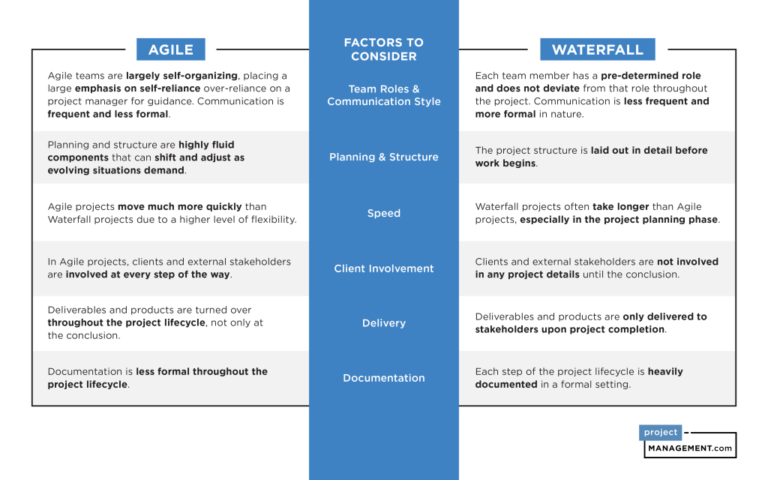
Despite their shared objective of successful project delivery, Agile and Waterfall diverge significantly in their underlying philosophy and execution. These differences manifest across several critical dimensions:
-
Approach:
- Agile: Adopts an iterative and incremental delivery model. Projects are broken down into small, manageable "sprints" or iterations, typically lasting 1-4 weeks. Each sprint aims to deliver a usable, tested slice of functionality, allowing for continuous feedback and refinement. This "build-test-learn" cycle ensures that development aligns closely with evolving needs.
- Waterfall: Follows a sequential, phase-gated approach. Each phase (requirements, design, implementation, testing, deployment) must be completed and approved before the next can begin. The entire project plan is typically laid out from start to finish, with a clear beginning, middle, and end, resembling a flowing cascade.
-
Flexibility:
- Agile: Characterized by high flexibility. The plan is dynamic and adapts with each iteration, incorporating new insights and changes readily. This inherent adaptability makes it suitable for projects where requirements are likely to evolve or are not fully known upfront.
- Waterfall: Exhibits low flexibility. Once the project plan and requirements are defined and approved, the aim is for them to remain fixed. Changes are typically discouraged and, if necessary, are managed through formal change control processes that can be time-consuming and costly, often causing significant delays and budget overruns.
-
Requirements:
- Agile: Requirements evolve over time. They are captured initially as high-level "user stories" or features and continuously refined and prioritized throughout the project lifecycle. This allows for discovery and adaptation as the project progresses.
- Waterfall: Requires all requirements to be defined and "baselined" upfront. Detailed specifications are typically documented comprehensively before any development work commences, leaving little room for ambiguity or late alterations.
-
Stakeholder Involvement:
- Agile: Emphasizes continuous customer and stakeholder participation. Regular reviews, demonstrations of working software, and frequent feedback loops are integral to each iteration, ensuring the product continually meets user needs.
- Waterfall: Involves heavy stakeholder participation early in the project during the requirements gathering phase. Involvement tends to be lighter during the design and implementation phases, only picking up again significantly during the final acceptance testing.
-
Timeline:
- Agile: Operates within timeboxed sprints. The duration of each sprint is fixed, but the scope within that sprint can be flexible, allowing teams to deliver the most valuable features within the allocated time. The overall project timeline can be more fluid, adapting to learning and change.
- Waterfall: Defined by fixed phases and milestones. The scope is typically fixed upfront, and time is estimated to fit this scope. Any deviation often requires extensive replanning and formal change requests.
-
Risk Management:
- Agile: Aims to surface risks early through iterative development, regular feedback, and continuous testing. Smaller iterations allow for quicker identification and mitigation of issues, reducing the likelihood of catastrophic late-stage failures. This approach inherently builds resilience.
- Waterfall: Relies heavily on upfront risk analysis and planning. While comprehensive, this approach carries a greater risk of discovering significant issues late in the project lifecycle, potentially leading to costly rework or project failure. Mitigation is primarily through detailed foresight.
-
Change Management:
- Agile: Welcomes and prioritizes change. Changes are managed through the product backlog, where new requirements or modifications can be added, prioritized, and incorporated into future sprints, making the process highly adaptive.
- Waterfall: Manages change through strict change requests and formal approval processes. Changes, especially after the design phase, can be very costly in terms of time, budget, and resources, often requiring re-baselining of the entire project.
Strengths and Weaknesses: A Balanced Perspective
Both methodologies present distinct advantages and disadvantages, making their suitability highly dependent on the project context.
Agile Pros:
- High Adaptability: Excellent for projects with evolving requirements or uncertain outcomes, allowing teams to pivot quickly to market changes or new insights.
- Increased Customer Satisfaction: Continuous feedback and collaboration ensure the final product closely aligns with customer needs and expectations.
- Faster Time-to-Market: Delivers working software incrementally, allowing early features to be released and value to be realized sooner.
- Improved Quality: Regular testing and integration throughout the development cycle help identify and fix defects early, leading to higher quality outputs.
- Enhanced Team Collaboration: Fosters self-organizing teams, promotes transparent communication, and encourages collective ownership.
- Early Risk Detection: Small, frequent iterations allow for quicker identification and mitigation of technical or business risks.
Agile Cons:
- Less Predictability: Can be challenging to estimate upfront costs, timelines, and final scope accurately due to its flexible nature. This can be a concern for budget-conscious stakeholders.
- Intensive Resource Demands: Requires continuous engagement from stakeholders and dedicated, cross-functional team members, which might not always be feasible.
- Documentation Can Be Lacking: While focused on "working software," the emphasis on minimal documentation can sometimes lead to knowledge gaps, especially for complex systems or new team members.
- Risk of Scope Creep: Without strong product ownership and backlog management, the continuous influx of new requirements can lead to uncontrolled growth in project scope.
- Requires Mature Teams: Success heavily relies on self-motivated, disciplined, and experienced teams who can manage their own work and collaborate effectively.
Waterfall Pros:
- Clear Structure and Predictability: Provides a well-defined, linear structure with clear milestones and deliverables, making it easier to plan, track progress, and manage resources.
- Extensive Documentation: Each phase typically generates comprehensive documentation, which is valuable for compliance, knowledge transfer, and maintenance, particularly in regulated industries.
- Ease of Management: The sequential nature simplifies project management for managers who prefer a structured, step-by-step approach.
- Suitable for Stable Requirements: Ideal for projects where requirements are fully understood and unlikely to change, such as those with regulatory mandates or established blueprints.
- Effective for Novice Teams: Its clear, prescriptive steps can be easier for less experienced teams to follow.
Waterfall Cons:
- Lack of Flexibility: Highly resistant to changes once a phase is complete, making it ill-suited for projects with evolving requirements.
- Late Risk Discovery: Major problems or discrepancies may only be discovered during the testing or deployment phases, leading to expensive and time-consuming rework.
- Limited Customer Involvement: Reduced stakeholder interaction during the core development phases can lead to a final product that does not fully meet evolving customer needs.
- Slower Time-to-Market: The entire product must be completed before any part of it can be delivered to the end-user, delaying value realization.
- "Big Bang" Release Risk: A single, large release at the end carries higher risk compared to incremental deliveries, as any major flaw can impact the entire project.
Strategic Application: When to Choose Which
The choice between Agile and Waterfall is not a matter of one being inherently superior, but rather aligning the methodology with the project’s characteristics, industry context, and organizational culture.
Agile Industry Use Cases:
- Software Development and IT: As its birthplace, Agile remains the gold standard for software projects, mobile app development, web development, and IT infrastructure upgrades where requirements frequently change, and rapid deployment is crucial. Companies like Google, Spotify, and Amazon heavily leverage Agile frameworks.
- Advertising and Marketing: The dynamic nature of market trends, consumer behavior, and campaign strategies makes Agile an excellent fit for marketing initiatives. Teams can quickly adapt content, targeting, and channels based on real-time performance data and emerging opportunities.
- Aerospace (specific applications): While traditionally a Waterfall domain, segments of the aerospace industry, especially in software for control systems, mission planning, or iterative hardware prototyping, have adopted Agile to streamline technical processes, reduce costs, and improve time-to-market. Organizations like NASA and Lockheed Martin have integrated Agile principles for specific components or phases.
- Product Development (General): Any industry focused on rapidly iterating on product features based on user feedback, from consumer electronics to SaaS platforms, benefits from Agile’s adaptive nature.
Waterfall Industry Use Cases:
- Construction: Building a bridge, a commercial high-rise, or a residential complex requires meticulous upfront planning, detailed blueprints, and sequential execution. Changes once construction begins are incredibly costly, making Waterfall ideal.
- Government Systems and Compliance-Driven Projects: Projects with strict regulatory requirements, extensive documentation needs, and predefined outcomes, such as developing new government infrastructure or highly regulated public sector IT systems, benefit from Waterfall’s structured, auditable approach.
- Healthcare and Pharmaceuticals: Industries with stringent regulations, rigorous testing protocols, and a zero-tolerance for error, like developing new medical devices or pharmaceutical drugs, often rely on Waterfall to ensure every step is documented, verified, and compliant before moving to the next.
- Manufacturing: For planning production lines, building complex machinery, or large-scale product assembly, where processes are highly sequential and rely on fixed specifications, Waterfall provides the necessary control and predictability.
Risk Management Philosophies
Both methodologies offer robust frameworks for managing risk, but their approaches differ fundamentally. Agile’s philosophy towards risk is proactive and continuous. By breaking projects into small iterations, teams are constantly testing, integrating, and demonstrating working solutions. This iterative cycle brings potential risks to the surface much earlier than in a Waterfall model. Technical challenges, misinterpretations of requirements, or shifts in market demand can be identified and addressed within a single sprint, preventing them from escalating into major project impediments. This "fail fast, learn fast" mentality significantly reduces the impact of unforeseen issues, making the overall project more resilient and less prone to catastrophic failures.
Conversely, Waterfall’s risk management emphasizes thorough upfront analysis and documentation. A significant portion of the initial planning phase is dedicated to identifying all foreseeable risks, developing mitigation strategies, and documenting contingency plans. This exhaustive preparatory work aims to eliminate or minimize risks before development even begins. While this approach provides a sense of security through comprehensive planning, it carries the inherent risk of "unknown unknowns." If a critical risk is overlooked or a new, unforeseen challenge emerges late in the project cycle, the sequential nature of Waterfall makes it difficult and expensive to adapt, potentially leading to significant delays or project failure.
Team Dynamics and Organizational Impact
The choice of methodology also profoundly influences team structure, roles, and organizational culture. In a Waterfall environment, teams are typically hierarchical, with clearly defined roles and responsibilities that remain consistent throughout the project lifecycle. The project manager acts as a central figure, coordinating between distinct functional teams (e.g., requirements analysts, designers, developers, testers). Communication often flows linearly through channels, and individual contributions are tightly scoped. This structure thrives in environments that value stability, clear lines of authority, and specialized expertise.
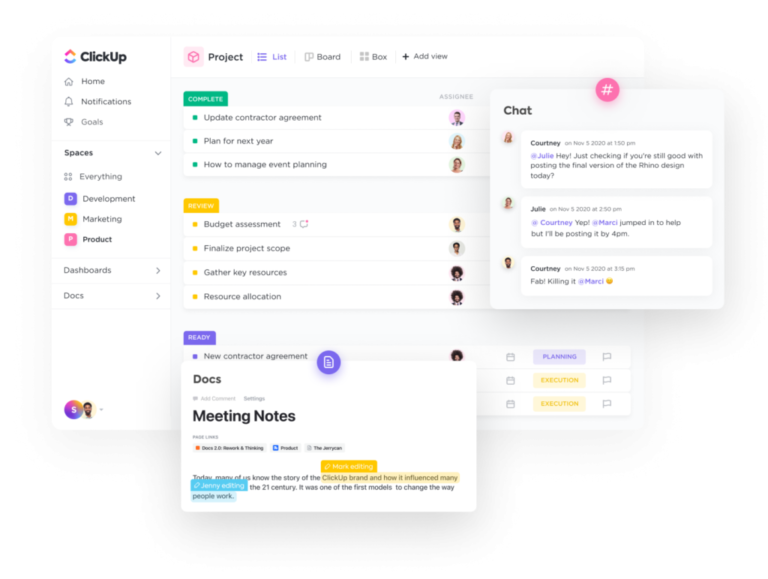
Agile, by contrast, favors dynamic, self-organizing, cross-functional teams. Roles are often more fluid, with team members expected to contribute across different areas as needed. The emphasis is on collective ownership, shared responsibility, and direct, frequent communication within the team and with stakeholders. Agile teams are empowered to make decisions about how they will achieve sprint goals, fostering a sense of autonomy and innovation. This requires a cultural shift towards trust, transparency, and continuous learning, which can be challenging for organizations accustomed to more traditional, top-down management styles. The success of Agile teams is often bolstered by modern project management software like ClickUp, which offers flexible dashboards, collaborative workspaces, and communication tools tailored for iterative workflows. For Waterfall projects, tools like monday.com provide robust capabilities for structured planning, automated workflows, and comprehensive project monitoring, aligning with their sequential nature.
The Rise of Hybrid Methodology Options
Recognizing that neither pure Agile nor pure Waterfall is a perfect fit for every project or organization, a growing trend involves combining elements of both into hybrid methodologies. These approaches seek to leverage the strengths of each while mitigating their weaknesses, offering a tailored solution for complex, real-world scenarios. Examples of hybrid project management include:
- Agile-Waterfall Hybrid: This often involves an initial Waterfall phase for comprehensive requirements gathering and high-level design, followed by iterative Agile sprints for development and testing. This can be particularly useful for projects with stable core requirements but flexible implementation details.
- Wagile: A common informal term describing projects that attempt to implement Agile practices within a predominantly Waterfall framework, often resulting in a "mini-Waterfall" within each sprint. While sometimes functional, it can also lead to conflicts if not carefully managed.
- Phased Agile: Breaking a large project into distinct phases (similar to Waterfall), but conducting each phase using Agile principles. For instance, a "discovery phase" might be Waterfall-like, but the subsequent "build phase" would be fully Agile.
- Scaled Agile Frameworks (SAFe, LeSS, Scrum@Scale): These frameworks are designed to apply Agile principles to very large organizations and complex programs, often blending elements of structured planning (like Waterfall’s program-level foresight) with iterative execution at the team level.
While hybrid approaches offer significant potential, their implementation requires careful consideration. Introducing too many methods or frameworks to a novice team without proper training and guidance can lead to confusion, inefficiency, and redundancy. Success hinges on a clear understanding of which elements from each methodology best serve the project’s unique characteristics and the team’s capabilities.
Common Pitfalls to Avoid When Using Waterfall & Agile
Despite their proven utility, both Agile and Waterfall methodologies come with common pitfalls that, if ignored, can undermine project success, lead to team frustration, and erode confidence in the chosen approach.
Agile Pitfalls:
- Utilizing Agile for projects requiring strict prior resource allocation: Agile’s budget unpredictability, due to evolving scope, can clash with rigid financial planning or fixed-price contracts.
- Failing to understand the four values and twelve principles of Agile: Misinterpretation or superficial adoption of Agile can lead to "fake Agile" or "Scrum-but," where teams follow rituals without internalizing the underlying mindset, resulting in inefficiencies rather than improvements.
- Becoming impatient with the initial implementation process: Transitioning to Agile, especially from a Waterfall background, is a cultural shift that takes time, effort, and continuous learning. Expecting instant results or perfection can lead to premature abandonment.
- Lack of strong Product Owner or Scrum Master roles: Without dedicated and effective leadership in these key roles, Agile teams can lose direction, struggle with prioritization, or fail to remove impediments effectively.
- Insufficient stakeholder engagement: While Agile emphasizes collaboration, if stakeholders are not genuinely engaged and providing timely feedback, the benefits of iterative development are lost.
Waterfall Pitfalls:
- Pairing the Scrum framework with Waterfall: Scrum is an Agile framework and fundamentally incompatible with the sequential, fixed-plan nature of Waterfall. Attempting to force-fit Scrum into a Waterfall project often creates process overhead without realizing Agile’s benefits.
- Implementing Waterfall solely to improve the chance of project success without considering project type: Waterfall is not a silver bullet. Using it for projects with high uncertainty or evolving requirements often leads to significant cost overruns, delays, and a product that fails to meet market needs.
- Using Waterfall for long-term or complicated projects with high uncertainty: Since these projects are highly likely to encounter unforeseen changes, the rigidity of Waterfall becomes a major liability, making adaptation incredibly difficult and costly.
- Insufficient upfront planning: While Waterfall emphasizes detailed planning, if this phase is rushed or incomplete, it can lead to critical omissions or errors that cascade through subsequent phases, proving incredibly difficult and expensive to correct later.
- Ignoring feedback until late stages: The lack of continuous feedback loops means that if the initial requirements were misunderstood or market conditions changed, these issues are only discovered during final testing or deployment, when the cost of correction is astronomical.
Conclusion
In the complex realm of project management, the choice between Waterfall and Agile methodologies is a strategic decision that shapes project outcomes, organizational culture, and competitive advantage. The Waterfall method, with its structured, sequential approach, continues to be invaluable for projects demanding predictability, strict compliance, and stable requirements, such as those in construction, government, or highly regulated industries. Its strength lies in comprehensive upfront planning and robust documentation, offering clarity and control.
Conversely, the Agile methodology, born from the demands of dynamic software development, thrives in environments characterized by evolving requirements, uncertainty, and a need for rapid adaptation and continuous feedback. Its iterative nature fosters collaboration, accelerates value delivery, and enhances customer satisfaction.
Ultimately, there is no universally "better" methodology. The optimal choice hinges on a thorough assessment of project specifics—its scope, complexity, regulatory environment, stakeholder involvement, and the inherent stability or volatility of its requirements. Moreover, organizational culture, team maturity, and the availability of appropriate tools play crucial roles in determining success. As the project management landscape continues to evolve, a nuanced understanding of both Agile and Waterfall, alongside the judicious exploration of hybrid models, empowers organizations to select the most effective pathway to achieve their strategic objectives and deliver successful, impactful projects.

Related Posts
Project Managers at the Forefront of Accelerating Software Delivery with CI/CD Pipelines
Mastering the Sprint Retrospective: Strategies for Agile Team Improvement and Enhanced Project Outcomes