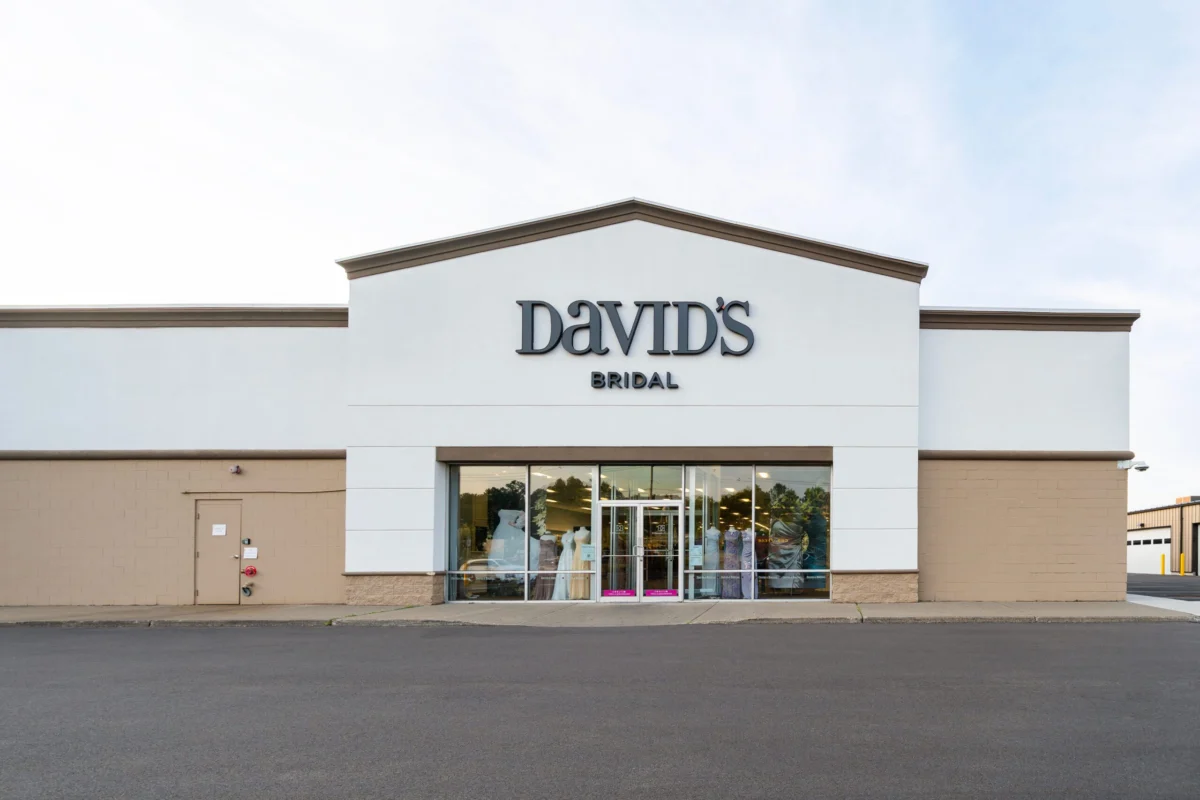
David’s Bridal Integrates AI-Driven Agentic Commerce via Microsoft Copilot and ChatGPT to Redefine the Wedding Shopping Experience
David’s Bridal, the prominent North American wedding and special-occasion retailer, has officially transitioned its digital storefront into the ecosystem of generative artificial intelligence, allowing consumers to browse and purchase wedding attire directly within popular AI chat platforms. Through a strategic integration with Shopify’s "agentic storefronts," the retailer’s extensive catalog is now accessible via Microsoft Copilot and OpenAI’s ChatGPT. This move, which went live on April 13, 2026, marks a significant milestone in the evolution of conversational commerce, enabling a seamless transition from product discovery to final checkout within a single AI-driven interface.
The integration allows shoppers to engage with David’s Bridal’s inventory using natural language queries. Instead of navigating traditional search filters on a standard website, customers can ask an AI assistant for recommendations based on specific themes, silhouettes, or price points. The AI tools then surface high-fidelity product images, real-time pricing, and detailed descriptions. Transactions are processed through the Shopify infrastructure that David’s Bridal adopted in June 2025, ensuring that the retailer maintains its status as the merchant of record while retaining control over critical customer data and fulfillment processes.
The Evolution of Agentic Commerce: A Chronological Overview
The launch of AI-integrated shopping is the culmination of a multi-year digital transformation strategy at David’s Bridal. Historically known for its massive physical footprint, the company has spent the last several years pivoting toward a digital-first, "asset-light" model to better align with the habits of modern brides and bridesmaids.
In June 2025, David’s Bridal migrated its core e-commerce operations to Shopify, a move designed to enhance its omnichannel capabilities and provide a more flexible foundation for emerging technologies. Shortly thereafter, the company introduced "agentic" wedding planning features within its "Pearl by David’s" platform, a digital ecosystem that consolidates planning tools, vendor marketplaces, and retail media.
By late March 2026, Shopify announced the general availability of its Agentic Storefronts on ChatGPT, providing the technical bridge for brands to syndicate their product catalogs directly into Large Language Models (LLMs). David’s Bridal’s April 13 launch positions it as an early adopter in the bridal sector, joining other major consumer brands such as Stanley, Pura Vida, and Keen, which have implemented similar integrations on Microsoft Copilot.
This timeline reflects a broader industry shift toward "agentic commerce," a term used to describe a shopping environment where AI agents act as intermediaries, performing tasks such as product comparison, availability checks, and even executing purchases on behalf of the consumer.
Technical Infrastructure and the Shopping Experience
The user experience within these AI platforms is designed to mimic the personalized service of an in-store bridal consultant. When a shopper prompts an AI tool—for example, by asking for "modern minimalist wedding dresses under $1,000"—the system generates "product cards." These cards include essential data points: professional photography, current pricing, style specifications, and customer ratings, which David’s Bridal reports currently average 4.9 stars across its digital inventory.
The functionality differs slightly between the two primary AI platforms:
- OpenAI’s ChatGPT: The system focuses on stylistic grouping. It can categorize products into curated themes such as "Classic Ball Gowns" or "Bohemian Chic." On mobile devices, the checkout is completed through an in-app browser, while desktop users are redirected to the David’s Bridal Shopify storefront to finalize the sale.
- Microsoft Copilot: This platform offers a more deeply embedded experience. Shoppers can check size and color availability in real-time, with the system supporting the brand’s full inclusive sizing range from 0 to 30W. On Copilot, checkout can occur directly within the chat interface via embedded "buy buttons." Shopify has also indicated that support for "Shop Pay," its accelerated checkout solution, will be integrated into these platforms in the near future.
Behind the scenes, the "agentic storefront" model ensures that David’s Bridal does not lose its connection to the customer. Even though the discovery happens on a third-party AI platform, the transaction runs through the retailer’s existing Shopify architecture. This preserves the brand’s attribution models, payment processing settings, and fulfillment workflows.
Strategic Objectives: The "Aisle to Algorithm" Initiative
The integration into AI platforms is a core component of David’s Bridal’s broader "Aisle to Algorithm" strategy. This initiative aims to position the company as the technological leader in the $70 billion wedding industry. According to CEO Kelly Cook, the move is a response to a "structural shift" in consumer behavior.
"Consumers are moving from traditional search to AI-driven discovery at an extraordinary pace and increasingly expect to complete their purchase in that same moment," Cook stated during the announcement.
To support this shift, David’s Bridal has undertaken a massive data enrichment project. The company’s technology team, led by CTO Scott Saeger, has been auditing and refining thousands of product attributes. Details such as neckline styles, fabric types, train lengths, and silhouettes are being meticulously tagged to ensure they are "LLM-ready." This high-quality data allows AI agents to accurately rank and surface David’s Bridal products when users provide highly specific prompts.
"The next phase of retail competition will be won at the data layer," Saeger noted. "Brands that structure, enrich, and optimize their product data most effectively for AI will be the ones that surface first and convert fastest."
Market Context and Economic Impact
The adoption of AI in retail is backed by significant economic projections and consumer data. According to research from McKinsey, generative AI agents are expected to facilitate between $3 trillion and $5 trillion in global commerce by 2030. David’s Bridal is tapping into this momentum, citing Adobe Analytics data which showed that AI-driven tools influenced $14.2 billion in global online sales during recent peak retail periods, representing a growth of over 800% in retail traffic driven by AI.
Consumer sentiment also appears to be trending in favor of these tools. Data from the Interactive Advertising Bureau (IAB) suggests that over 80% of consumers believe AI provides a more personalized and enjoyable shopping experience. Furthermore, research cited by David’s Bridal indicates that more than 70% of consumers are willing to complete purchases within a chat environment, and the implementation of AI-driven tools can boost conversion rates by as much as 23%.
For Shopify, providing the infrastructure for these experiences is a major growth lever. Currently, 118 of the Top 2000 online retailers in North America utilize Shopify’s platform. In 2025, the combined web sales of these retailers reached $10.458 billion. By offering "Agentic Storefronts" as a default feature for eligible merchants, Shopify is positioning itself as the foundational layer of AI commerce, regardless of whether the final discovery happens on Google, Microsoft, or OpenAI platforms.
Implications for the Future of Retail
The move by David’s Bridal, currently ranked No. 467 in the Top 2000 database of North American retailers, signals a democratization of advanced AI tools. While high-end tech firms were the first to experiment with AI shopping, the "agentic" model is now accessible to specialized retailers in the bridal and apparel sectors.
Industry analysts suggest that this shift will have three primary implications for the retail landscape:
- The Decline of Traditional SEO: As users move away from search engine results pages toward conversational interfaces, the importance of traditional keyword optimization may diminish in favor of "Agentic Engine Optimization" (AEO). Retailers will need to focus on the depth and accuracy of their product metadata to ensure AI agents can understand and recommend their inventory.
- First-Party Data Sovereignty: A major risk of third-party platform integrations is the loss of customer data. However, the Shopify-David’s Bridal model demonstrates a path forward where retailers can utilize AI reach while maintaining control over the customer relationship and the "merchant of record" status.
- Hyper-Personalization at Scale: AI agents can remember a user’s preferences, wedding date, and style history across different sessions. This allows for a level of personalized service that was previously only available through human consultants in physical boutiques.
As David’s Bridal continues to refine its "Aisle to Algorithm" strategy, the company is also evaluating Shopify tools that automatically score product data for AI readiness. This proactive approach to data management suggests that the retailer views AI not just as a new sales channel, but as the primary interface through which the next generation of consumers will interact with the brand.
While the volume of sales directly through AI channels is still in its early stages, the infrastructure is now firmly in place. For David’s Bridal, the goal is clear: to be present wherever the bride is dreaming, planning, and now, purchasing. Through the convergence of robust data architecture and generative AI, the retailer is attempting to turn the complex process of wedding shopping into a streamlined, conversational experience that begins and ends within a digital chat.



Related Posts
The Strategic Integration of Conversion Rate Optimization Across Multi-Channel E-commerce Ecosystems

Global Ecommerce Evolution 2026: The Rise of Agentic Commerce, Circular Logistics, and Embedded Financial Systems