Another memory chip shortage? How soon we forget.
The global technology landscape is once again grappling with a significant strain on the supply of high-end memory chips, a predicament that evokes a familiar sense of déjà vu for an industry notoriously prone to cycles of scarcity and abundance. This latest crunch is primarily fueled by the unprecedented demand emanating from the artificial intelligence (AI) boom, particularly the rapid proliferation of massive new data centers designed to support sophisticated AI workloads. However, the current situation is not merely a simple demand-supply imbalance; it is a complex interplay of deeply entrenched structural issues within the semiconductor ecosystem. Contributing factors include a highly concentrated supplier base, numerous potential logistical choke points across a globally distributed manufacturing network, persistent geopolitical tensions, and, inevitably, rising prices that reverberate throughout the entire electronics value chain. Graham Scott, Chief Procurement Officer with electronics manufacturing giant Jabil, offers a critical perspective on the multifaceted nature of this challenge. In a conversation hosted by Bob Bowman, Editor-in-Chief of SupplyChainBrain, Scott meticulously outlines the origins and implications of the current chip shortage, elucidating the profound impact of AI on the semiconductor supply chain and proposing actionable strategies for manufacturers striving to navigate future demand volatility. His analysis underscores a fundamental truth about this vital sector: it is an industry defined by "feast or famine," and regrettably, the lean times currently prevail.
The Cyclical Nature of the Semiconductor Industry: A Historical Perspective
The semiconductor industry has long been characterized by its inherent cyclicality, a pattern of rapid expansion followed by periods of oversupply and contraction, only to swing back into shortage. This "boom and bust" dynamic is a consequence of several factors: the immense capital expenditure required to build and equip advanced fabrication plants (fabs), the protracted lead times involved in bringing new capacity online (often several years), and the inherent difficulty in accurately forecasting demand for rapidly evolving technologies.
Previous notable shortages include the dramatic scarcity of automotive chips during the COVID-19 pandemic, which brought vehicle production lines to a standstill globally, and earlier memory chip shortages in the late 1990s and mid-2010s driven by PC and smartphone booms, respectively. Each cycle shares common threads: an unexpected surge in demand, insufficient existing capacity, and the inflexibility of highly specialized manufacturing processes to adapt quickly. Graham Scott’s observation of an industry perpetually caught between "feast or famine" is thus deeply rooted in its historical trajectory, serving as a stark reminder that while the specific triggers may evolve, the underlying vulnerabilities persist. The current AI-driven shortage is merely the latest, and arguably most intense, manifestation of this recurring pattern, exacerbated by the unique demands of cutting-edge AI hardware.
The AI Imperative: Unprecedented Demand Drivers for High-End Memory
The genesis of the current memory chip shortage can be traced directly to the explosive growth of artificial intelligence, particularly the development and deployment of large language models (LLMs) and generative AI applications. These technologies demand computational power and data throughput on a scale previously unimaginable, placing immense pressure on both processing units and, critically, high-bandwidth memory (HBM).
Data Center Expansion and AI Workloads
The construction of massive new data centers, often referred to as "AI factories," is proceeding at an unprecedented pace. These facilities are designed not just for storage and conventional cloud computing but specifically to train and run complex AI models. Training a single, sophisticated LLM can require thousands of powerful graphics processing units (GPUs) working in parallel for weeks or months, processing petabytes of data. Each of these GPUs, essential for AI computations, requires tightly integrated, high-speed memory to feed its immense processing capabilities efficiently.
Industry analysts project that the global AI market, valued at hundreds of billions of dollars today, is set to grow exponentially, potentially reaching trillions within the next decade. This growth translates directly into a colossal demand for the underlying infrastructure. Data center investments are soaring, with cloud providers and tech giants pouring billions into new facilities and hardware upgrades. A significant portion of this investment is dedicated to acquiring AI accelerators and the specialized memory they require.
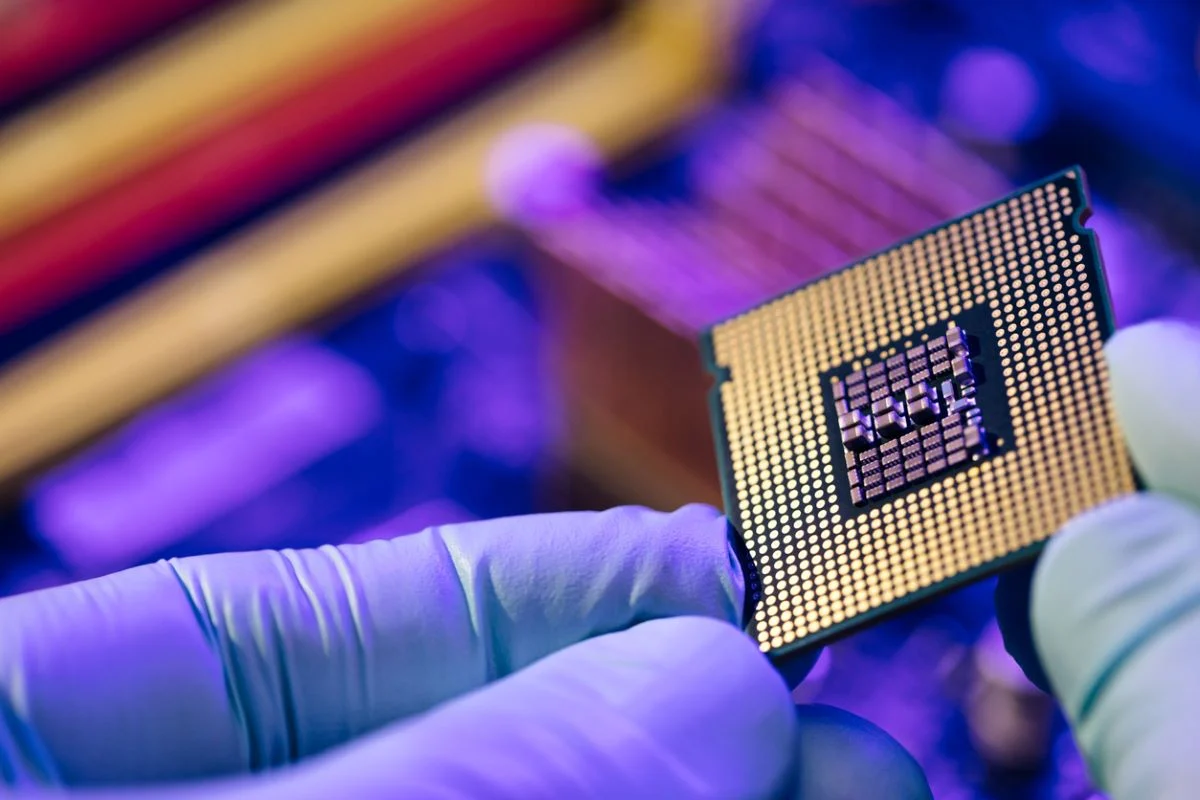
The memory chips most impacted by this demand are High-Bandwidth Memory (HBM) variants, such as HBM3 and the even more advanced HBM3E. Unlike standard DRAM (Dynamic Random-Access Memory), HBM is stacked vertically in layers and integrated directly onto the same package as the GPU, offering significantly higher bandwidth and lower power consumption. This architecture is crucial for AI workloads that constantly move vast amounts of data between the processor and memory. The demand for HBM is projected to double year-over-year for the foreseeable future, far outstripping the industry’s current ability to scale production.
The Indispensable Role of GPUs and Accelerators
While CPUs remain the workhorses of general-purpose computing, GPUs have become the undisputed engines of AI. Their parallel processing architecture is ideally suited for the matrix multiplications and tensor operations that form the backbone of neural networks. Leading AI accelerators, like NVIDIA’s H100 and upcoming B200 series, are in extremely high demand, with lead times stretching to many months. A critical component of these high-performance accelerators is their integrated HBM. Without sufficient HBM, the full potential of these powerful GPUs cannot be realized, creating a direct bottleneck. The symbiotic relationship between advanced GPUs and HBM means that a shortage in one inevitably impacts the availability and effectiveness of the other, effectively slowing down the global AI race.
Supply Side Constraints: A Highly Concentrated Market
The challenges on the supply side are equally formidable, stemming largely from the highly concentrated nature of the high-end memory market. The production of advanced memory chips, particularly HBM, is dominated by a very small number of global players, creating significant vulnerabilities within the supply chain.
Dominant Players
The market for DRAM and HBM is predominantly controlled by three major South Korean and American manufacturers: Samsung Electronics, SK Hynix, and Micron Technology. These three companies collectively account for over 90% of the global DRAM market and an even higher percentage of the specialized HBM market. SK Hynix, for instance, has been a pioneer in HBM technology and holds a substantial market share, particularly for the latest HBM3 and HBM3E generations. Samsung and Micron are rapidly expanding their HBM production, but the sheer technological complexity and capital intensity of this segment limit rapid diversification of the supplier base.
This high concentration means that any disruption to one of these major players – whether due to natural disaster, geopolitical event, or manufacturing issue – can have an outsized impact on global supply. It also limits the ability of the industry to rapidly scale up production in response to sudden demand surges, as witnessed with the AI boom. Manufacturers seeking to procure high-end memory often find themselves negotiating with only a handful of options, giving suppliers significant leverage and contributing to price volatility.
Technological Complexity and Capital Investment
Building and operating a state-of-the-art semiconductor fabrication plant (fab) is an undertaking of colossal scale and cost. A single new fab can cost tens of billions of dollars and take years to become fully operational. The technology involved in manufacturing advanced memory chips is extraordinarily complex, requiring extreme precision, cleanroom environments, and highly specialized equipment. Developing and implementing new process nodes (the microscopic scale at which transistors are built) demands immense research and development investment and years of refinement.
The production of HBM is particularly challenging. It involves intricate 3D stacking of memory dies using Through-Silicon Vias (TSVs), a process that requires advanced packaging techniques and extremely high yields to be cost-effective. These technological hurdles act as significant barriers to entry for new competitors, reinforcing the oligopolistic structure of the market. Even the dominant players face immense challenges in rapidly expanding HBM capacity due to the long lead times for specialized equipment and the need to qualify complex new processes. This capital intensity and technological barrier are fundamental reasons why the "feast or famine" cycle is so pronounced in this sector.
Logistical Choke Points and Geopolitical Undercurrents
Beyond the immediate issues of demand and supply capacity, the semiconductor supply chain is inherently fragile due to its globalized nature and susceptibility to external shocks. Logistical bottlenecks and escalating geopolitical tensions add further layers of complexity to the current shortage.
Global Supply Chain Fragility
The journey of a semiconductor chip from raw material to finished product is a complex odyssey spanning continents. It begins with specialized raw materials (e.g., silicon, rare earth elements) often sourced from specific regions, followed by wafer fabrication, typically concentrated in East Asia (Taiwan, South Korea). These wafers then travel to different locations for assembly, testing, and packaging (ATP), often in Southeast Asian countries. Each step in this intricate process represents a potential choke point.
- Transportation: Global shipping lanes, air cargo capacity, and port infrastructure are critical. Events like the Suez Canal blockage, Houthi attacks in the Red Sea, or even localized port congestion can disrupt the timely movement of vital components.
- Natural Disasters: Regions critical to semiconductor manufacturing are often prone to natural disasters such as earthquakes (e.g., Taiwan, Japan), typhoons, or prolonged droughts (impacting water-intensive fab operations). A major earthquake in a key manufacturing hub could have catastrophic global consequences.
- Labor Shortages: Shortages of skilled labor, from highly specialized engineers to factory floor technicians, can impede production and expansion efforts.
Geopolitical Strife and Trade Policies
Geopolitical tensions, particularly between the United States and China, have profoundly reshaped the semiconductor landscape. Export controls imposed by the U.S. government on advanced chip technology, aimed at limiting China’s access to cutting-edge AI and military capabilities, have created ripples throughout the industry. These policies compel chip manufacturers to navigate a complex web of regulations, sometimes forcing them to choose between market access and technological leadership.
The potential for conflict in strategically vital regions, such as the Taiwan Strait, where a significant portion of the world’s most advanced logic chips are produced, casts a long shadow over the entire industry. Any disruption to Taiwan’s semiconductor industry would have unimaginable global economic repercussions, far exceeding the current memory shortage.
In response to these vulnerabilities, governments worldwide are enacting policies like the U.S. CHIPS and Science Act, the EU Chips Act, and similar initiatives in Japan and other nations. These programs offer significant subsidies and incentives to encourage the reshoring or "friend-shoring" of semiconductor manufacturing, aiming to build more resilient, localized supply chains. While these efforts are crucial for long-term strategic independence, building new fabs and establishing a complete ecosystem takes many years and tens of billions of dollars, meaning their impact on the current shortage will be minimal. They represent a long-term strategy for resilience, not an immediate solution to the "famine" currently prevailing.
The Impact of Rising Prices and Market Dynamics
The combination of surging demand and constrained supply inevitably leads to price inflation, which has cascading effects throughout the electronics supply chain and impacts every manufacturer from large original equipment manufacturers (OEMs) to smaller innovators.
Price Volatility
The memory market is infamous for its price volatility. During periods of shortage, prices for specific memory components can surge dramatically. For instance, contract prices for HBM are reported to have increased significantly over the past year, with some estimates suggesting increases of 20-30% or more for certain high-demand variants. These price hikes are not uniform; the most advanced and sought-after chips experience the steepest increases. This volatility makes planning incredibly difficult for purchasing departments.
Impact on Downstream Manufacturers
Electronics manufacturing services (EMS) providers like Jabil, who build products for a vast array of clients across diverse industries, are at the forefront of this impact. Higher component costs directly translate to increased manufacturing expenses, which must either be absorbed by the manufacturer, passed on to the customer, or result in reduced profit margins. This can make products less competitive or delay their introduction to market.
Furthermore, the inability to secure sufficient quantities of high-end memory chips means that manufacturers cannot complete products, leading to delayed shipments, missed revenue targets, and potential loss of market share. This can be particularly damaging for companies operating in fast-paced markets like AI hardware, where time-to-market is a critical competitive advantage.
Demand Forecasting Challenges
Graham Scott’s point about manufacturers struggling to get a handle on future demand is particularly salient in this environment. The "feast or famine" cycle is exacerbated by the difficulty of accurately forecasting demand for nascent but rapidly growing technologies like AI. While AI’s long-term trajectory appears strong, the exact pace of adoption, the specific hardware configurations that will dominate, and the timing of new product releases remain somewhat unpredictable.
Traditional forecasting models often struggle with such unprecedented growth vectors. Companies must invest heavily in sophisticated data analytics and market intelligence to gain even a partial understanding of future needs. Without reliable forecasts, manufacturers risk either overinvesting in capacity that may become redundant during a "famine" or, more commonly in the current climate, under-ordering critical components, leading to lost opportunities during a "feast."
Strategies for Survival and Future Resilience
In the face of these formidable challenges, manufacturers are compelled to adopt proactive and adaptive strategies to survive the current shortage and build greater resilience into their future supply chains.
Diversification of Supply
Relying on a single supplier for critical components is a recipe for disaster in a volatile market. Manufacturers are increasingly pursuing multi-sourcing strategies, qualifying multiple vendors for key memory chips and other semiconductors. While this can increase complexity and potentially cost, it provides crucial redundancy in times of shortage. Building strategic buffer inventories, where financially feasible, can also help mitigate short-term disruptions, though this comes with the risk of holding obsolete stock if technology evolves rapidly.
Design for Supply Chain
Engineering and procurement teams are collaborating more closely to implement "design for supply chain" principles. This involves designing products with component flexibility in mind, identifying alternative parts or acceptable substitutes during the design phase, and potentially using more standardized components where high-end specialization isn’t strictly necessary. The goal is to reduce reliance on single-source, highly specialized chips that are prone to shortages.
Enhanced Visibility and Collaboration
Improved supply chain visibility is paramount. This means better data sharing across the entire value chain, from end-customer demand signals to real-time factory output from chip manufacturers. Closer collaboration between customers, EMS providers like Jabil, and the semiconductor foundries themselves can enable more accurate forecasting, earlier identification of potential bottlenecks, and more agile responses to changing market conditions. This might involve sharing long-term demand projections with suppliers, fostering transparency about production capacities, and joint planning initiatives.
Long-Term Partnerships
In a "feast or famine" industry, transactional purchasing often gives way to strategic, long-term partnerships. Manufacturers are increasingly seeking to establish deeper, more collaborative relationships with their key suppliers, moving beyond mere price negotiations to foster mutual trust and commitment. Such partnerships can secure preferential allocation of scarce components during shortages and ensure a more stable supply, even if it means committing to higher volumes or longer-term contracts.
Regionalization and Reshoring Efforts
While not an immediate solution, participating in or leveraging regionalization and reshoring initiatives driven by government incentives is a long-term strategy for resilience. As new fabs and an expanded ecosystem develop in regions like North America and Europe, manufacturers will have more localized options for sourcing, potentially reducing geopolitical and logistical risks, even if the primary production of cutting-edge HBM remains concentrated in Asia for the foreseeable future.
Official Responses and Industry Reactions
The severity of the current memory chip shortage has prompted reactions and statements from various stakeholders across the industry and government.
Industry bodies such as the Semiconductor Industry Association (SIA) have consistently highlighted the strategic importance of semiconductors and advocated for policies that support research, development, and manufacturing capacity expansion. They frequently issue reports emphasizing the need for global collaboration while acknowledging the push for regional supply chain diversification. While specific public statements on the current HBM shortage might be limited to broad assurances, the underlying message is a continuous call for investment and policy support.
The dominant memory chip manufacturers—Samsung, SK Hynix, and Micron—have publicly acknowledged the surging demand for HBM. They have announced significant capital expenditure plans to expand their HBM production capabilities, with SK Hynix, in particular, emphasizing its lead in the HBM3E segment and outlining aggressive expansion targets for the coming years. Samsung and Micron are also heavily investing in advanced packaging technologies and new fab capacity specifically for HBM to catch up and meet the burgeoning AI market needs. These companies are actively working with their major customers, including leading AI hardware developers and cloud service providers, to manage allocations and prioritize supply based on strategic partnerships and long-term commitments.
Cloud service providers and data center operators, the primary consumers of these high-end memory chips, have generally indicated that they are managing procurement through multi-year agreements and direct investments or partnerships with chip manufacturers. While they might not publicly detail the specific impact on their own supply, their massive investment in AI infrastructure signals an intense drive to secure these critical components, sometimes even leading to pre-payment for future capacity.
Broader Economic and Technological Implications
The memory chip shortage carries significant broader implications, extending beyond the immediate challenges for manufacturers.
Innovation Bottleneck: A prolonged shortage of high-end memory chips could act as a bottleneck for AI innovation and deployment. The pace at which new AI models can be trained, refined, and brought to market is directly tied to the availability of the underlying hardware. Delays in chip supply can slow down research, impede the commercialization of AI applications across various industries, and potentially hinder global technological progress.
Economic Impact: The inflationary pressure from rising chip prices will filter down to end-user products, from enterprise servers to specialized AI appliances. This contributes to overall economic inflation and can impact the profitability of tech companies. Delays in product launches and the inability to meet customer demand can also lead to lost revenue and market opportunities across sectors reliant on advanced computing, including automotive, healthcare, finance, and industrial automation.
Strategic Importance: The current situation further underscores the critical strategic importance of semiconductors in modern economies and national security. The ability to control or influence the supply of these foundational technologies has become a geopolitical leverage point, prompting nations to rethink their industrial strategies and invest in domestic capabilities.
Future Outlook: While the current "famine" is challenging, it also serves as a powerful catalyst for innovation and investment. The intense demand for HBM is spurring chip manufacturers to accelerate R&D, optimize production processes, and invest massively in new capacity. This will eventually lead to an increase in supply, though likely not before several years have passed. However, the cyclical nature of the industry suggests that these periods of massive investment could eventually lead to oversupply, setting the stage for the next "feast" followed by another "famine."
In conclusion, the current memory chip shortage is a stark reminder of the delicate balance within the global technology supply chain. It is a complex confluence of unprecedented demand from the AI revolution, a highly concentrated and capital-intensive supply base, and a backdrop of persistent geopolitical and logistical uncertainties. As Graham Scott of Jabil aptly characterizes, the industry continues its dance between "feast or famine." While manufacturers implement strategies for survival and governments pursue long-term resilience, the immediate challenge lies in navigating this period of intense scarcity, ensuring that the relentless pace of technological innovation is not unduly constrained by the fundamental building blocks of the digital age. The journey towards a truly resilient semiconductor supply chain remains a complex, multi-year endeavor, with volatility likely to remain a defining characteristic for the foreseeable future.


Related Posts

Delta Air Lines Adjusts Key Environmental Targets Amidst Slow Sustainable Fuel Progress
India’s Trade Deficit Narrows to $20.67 Billion in March Amidst Middle East Conflict Disruptions and Global Economic Headwinds