Agentic AI’s Transformative Impact Reshapes Software Development and Logistics, Demanding Strategic Adaption
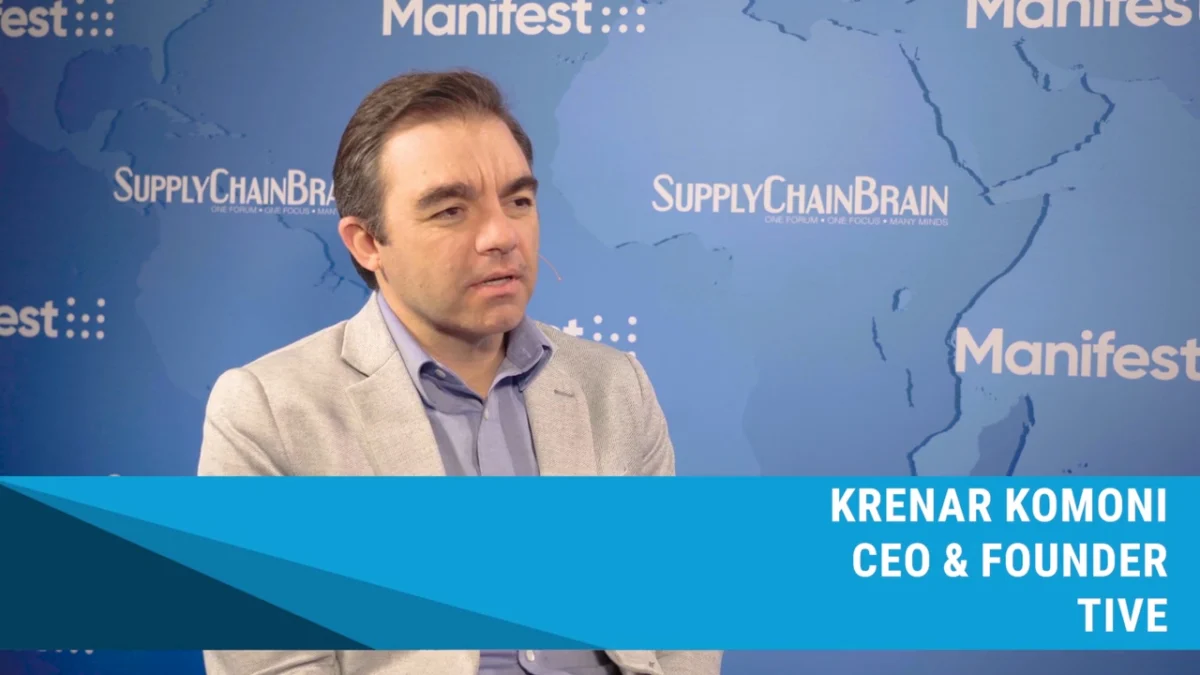
The rapid ascent of agentic artificial intelligence is fundamentally altering the landscape for software developers and the broader supply chain ecosystem, transitioning it from a mere system of record to a dynamic engine of "action." This profound shift, articulated by Krenar Komoni, Chief Executive Officer and Founder of Tive, signals a paradigm change where AI moves beyond data processing to autonomous execution, compelling industries to rethink established methodologies and competitive advantages. Komoni’s observations underscore a critical inflection point, particularly within the technology and logistics sectors, where the implications range from the revaluation of software companies to an urgent imperative for AI adoption among shipping enterprises.
The Commoditization of Software Development
Komoni posits that AI is rapidly "commoditizing" software development, a statement that resonates deeply within the tech community. The emergence of sophisticated large language models (LLMs) like OpenAI’s GPT series and Anthropic’s Claude has showcased an unprecedented ability to generate complex code from natural language prompts. These models can, for instance, create fully functional video games that previously demanded years of human effort, design intricate software architectures, and debug code with remarkable efficiency. This capability has not only "opened up the eyes of everybody in software development," as Komoni notes, but has also instigated a widespread reevaluation of developer roles and the traditional software development lifecycle.
Historically, software development has been a labor-intensive, skill-dependent process, with demand for skilled programmers consistently outstripping supply. The advent of generative and agentic AI tools, however, threatens to democratize access to coding capabilities, potentially reducing the entry barrier and accelerating development cycles exponentially. A report by McKinsey & Company in 2023 highlighted that generative AI could automate up to 70% of coding tasks, freeing human developers to focus on higher-level architectural design, complex problem-solving, and creative innovation. This doesn’t necessarily imply job displacement on a massive scale but rather a significant transformation of existing roles. Developers are increasingly expected to become "AI whisperers," adept at crafting effective prompts and integrating AI-generated code, rather than writing every line from scratch. This shift necessitates a substantial investment in reskilling and upskilling initiatives across the industry, preparing the workforce for a future where human-AI collaboration is the norm.
The economic implications for software companies are equally significant. Komoni suggests that it "might be time to reprice some software companies" as their intrinsic value, traditionally tied to proprietary code and development teams, becomes disrupted by AI models. Companies whose primary value proposition lies in routine coding or easily replicable software functions may face severe competitive pressure. Conversely, firms that leverage AI to create novel solutions, enhance existing products with intelligent features, or operate in highly specialized niches with unique data sets are poised for growth. Industry analysts, like those at Gartner, predict that by 2027, over 50% of software engineers will be leveraging AI coding assistants, fundamentally altering productivity metrics and, consequently, business valuations. This necessitates a strategic pivot for many software firms, moving away from sheer code output as a metric of value towards innovation, unique intellectual property, and superior user experience.
The Logistics Sector’s Urgent Embrace of AI
While the software sector grapples with internal transformation, the logistics and shipping industry faces an equally urgent mandate to embrace AI. Komoni emphasizes the critical need for companies in this sector to adopt AI today, noting a stark contrast in attitude compared to just one year prior. What was once met with skepticism or cautious optimism is now largely accepted as an indispensable technology. This shift in perception stems from AI’s demonstrated ability to deliver tangible benefits in an industry characterized by complex, dynamic, and often unpredictable variables.
The logistics sector, valued globally at trillions of dollars, operates on razor-thin margins and is highly susceptible to disruptions from geopolitical events, natural disasters, and economic fluctuations. Traditional supply chain management has relied heavily on historical data, manual processes, and reactive decision-making. Agentic AI, however, offers a proactive and predictive paradigm. For instance, AI-powered predictive analytics can forecast demand fluctuations with greater accuracy, optimize shipping routes to minimize fuel consumption and delivery times, and even predict equipment failures before they occur, reducing costly downtime. According to a report by Statista, the market for AI in logistics is projected to grow from $2.1 billion in 2022 to over $13 billion by 2027, underscoring the rapid investment and adoption rates.
The true power of agentic AI in logistics lies in its ability to transition from a "system of record" to a "system of action." Where previous AI applications might have analyzed data and presented insights, agentic AI can now autonomously execute tasks based on those insights. Komoni illustrates this with the example of agentic voice agents capable of sophisticated conversations, making users "feel like I’m talking to another human." This level of interaction and trust has profound implications for logistics companies. Imagine an AI system monitoring a refrigerated container; if the internal temperature exceeds acceptable limits, the agentic AI can not only detect the anomaly and issue an immediate alert but also autonomously initiate corrective actions. This could involve rerouting the shipment to the nearest cold storage facility, notifying relevant personnel, or even automatically adjusting refrigeration settings, all without direct human intervention in the initial stages.
The Evolution of the Human-in-the-Loop Paradigm
Despite the increasing autonomy of agentic AI, humans "remain in the loop for the time being," Komoni assures. This concept, known as "human-in-the-loop" AI, is crucial for ensuring oversight, accountability, and the handling of edge cases that AI might not be programmed to address. In the context of logistics, this means that while AI might manage routine temperature deviations, a human operator would still be notified and could intervene if the situation escalates or requires nuanced judgment, such as deciding whether to discard an entire shipment due to irreversible spoilage.
However, the nature of this human involvement is evolving. As trust in AI’s capabilities grows, humans will gradually delegate more responsibility to the machines. Komoni predicts that eventually, people "are going to start trust AI to do the right thing. Then they’ll become more involved in taking care of the worst-case exceptions." This represents a shift from constant supervision to exception management. Instead of monitoring every single shipment parameter, human logistics professionals will be elevated to roles focused on strategic problem-solving, crisis management, and continuous improvement of the AI systems themselves. This transition requires robust AI governance frameworks, transparent decision-making processes by AI, and continuous training for human operators to understand and interact effectively with intelligent agents.
The New Pillars of Competitive Advantage: Data, Physicality, and Relationships
In this AI-driven economy, Komoni identifies three critical assets that companies will need to "win with AI": proprietary data, physical products or goods that cannot be replaced by AI, or direct customer relationships. These pillars represent the enduring sources of value that AI, powerful as it is, cannot easily replicate or diminish.
-
Proprietary Data: Data is the fuel of AI. Companies possessing unique, high-quality, and ethically sourced datasets have a distinct advantage. This data can be used to train specialized AI models that offer superior performance in niche applications, provide deeper insights into market trends, or optimize internal processes more effectively than general-purpose AI. For a logistics company, this might include historical shipping data, sensor readings from millions of containers, or detailed information on specific supply chain vulnerabilities. This data, when properly leveraged, creates a moat around their operations that competitors, even with access to advanced AI tools, cannot easily breach. The value of data stewardship and data sovereignty is thus significantly amplified.
-
Physical Products or Goods that Can’t Be Replaced by AI: While AI can design, manage, and optimize the production and delivery of goods, it cannot replace the inherent value of physical products themselves. Manufacturing firms, agricultural producers, and companies dealing in tangible assets have a fundamental advantage. AI can enhance efficiency, reduce waste, and improve quality in these sectors, but the core offering remains a physical entity. For instance, while AI might optimize the entire manufacturing process of a semiconductor chip, the chip itself is a physical product that AI cannot create from nothing. Similarly, a logistics company’s ability to physically move goods from point A to point B remains its core, irreplaceable service, albeit one made vastly more efficient by AI. This category also extends to services that require physical presence or interaction, such as specialized maintenance or certain medical procedures.
-
Direct Customer Relationships: In an increasingly automated world, the human touch and strong customer relationships become even more valuable. AI can automate customer service, personalize marketing, and streamline interactions, but it often lacks the nuanced understanding, empathy, and ability to build long-term trust that human relationships foster. Companies that cultivate deep, direct relationships with their customers can better understand their evolving needs, provide tailored solutions, and build loyalty that transcends mere transactional efficiency. For logistics firms, this could mean dedicated account managers who understand a client’s specific supply chain challenges, offering bespoke solutions that AI alone cannot devise. This emphasizes that while AI optimizes processes, human connection remains vital for strategic partnerships and brand loyalty.
Broader Economic and Societal Implications
The transformative impact of agentic AI extends beyond individual companies and sectors, carrying broader economic and societal implications. The potential for increased productivity across industries could lead to significant economic growth, but also raises questions about labor market dynamics. While some jobs may be redefined or automated, new roles requiring AI proficiency, ethical oversight, and creative problem-solving are likely to emerge. Governments and educational institutions will need to collaborate to ensure workforces are equipped with the skills necessary for the AI-driven economy.
Investment trends are already reflecting this shift, with venture capital pouring into AI startups, particularly those focused on agentic capabilities and industry-specific applications. This capital influx is accelerating the pace of innovation, pushing the boundaries of what AI can achieve. Simultaneously, regulatory bodies are beginning to grapple with the ethical considerations surrounding autonomous AI agents, including issues of accountability, bias, and data privacy. Establishing clear guidelines and frameworks will be crucial for fostering responsible AI development and deployment.
In conclusion, Krenar Komoni’s insights highlight a pivotal moment in the evolution of artificial intelligence. Agentic AI is not merely an incremental improvement but a foundational shift that promises to reshape software development, revolutionize logistics, and redefine competitive advantages across industries. The transition from systems of record to systems of action, powered by increasingly sophisticated and trustworthy AI, demands proactive adaptation. Companies that strategically leverage proprietary data, capitalize on their physical assets, and nurture robust customer relationships, while embracing the evolving "human-in-the-loop" paradigm, will be best positioned to navigate and thrive in this rapidly unfolding AI-centric future. The imperative is clear: embrace AI today, or risk being left behind in the wake of this technological revolution.

Related Posts

IEA Warns of Imminent Flight Cancellations as Europe Faces Dire Jet Fuel Shortage Amid Persian Gulf Conflict

TSMC Soars on AI Demand with 58% Profit Surge in Q1 2026, Yet Geopolitical Tensions in Iran Cast Long Shadow Over Critical Supply Chains