The Integration of Model Context Protocol in Ecommerce Software and the Evolution of Agentic Business Operations
The recent announcement by Beehiiv, a rapidly growing email newsletter platform, regarding its integration with the Model Context Protocol (MCP) marks a significant milestone in the convergence of artificial intelligence and ecommerce infrastructure. While the move initially appears to be a standard feature update for a digital publishing tool, it signals a deeper, systemic shift in how software-as-a-service (SaaS) providers are architecting their platforms to accommodate "agentic" AI. Beehiiv joins an expanding cohort of ecommerce-adjacent companies, including Shopify, WooCommerce, Yottaa, and Shippo, that are moving beyond simple chatbot interfaces toward native, bidirectional AI connections that allow large language models (LLMs) to interact directly with business data and operational logic.
The Emergence of a New Standard: Understanding MCP
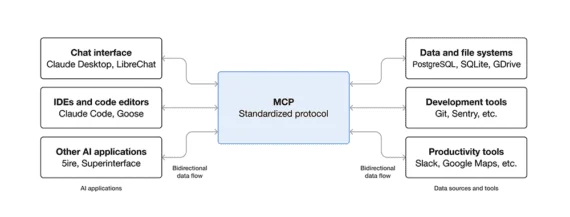
To understand the implications of Beehiiv’s integration, one must first examine the origin and technical necessity of the Model Context Protocol. Introduced by Anthropic in late 2024, the MCP was designed to solve a persistent bottleneck in AI implementation: the "data silo" problem. While frontier models like Claude, GPT-4, and Gemini possess immense reasoning capabilities, they traditionally lack secure, standardized access to a company’s private data repositories, specialized business tools, and development environments.
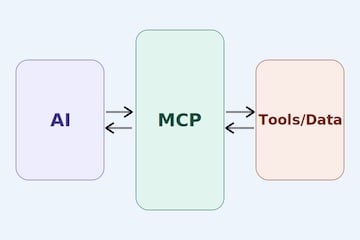
Before the advent of MCP, connecting an AI to a business system required the development of bespoke, one-off integrations using Application Programming Interfaces (APIs). While effective for specific tasks, this approach was often rigid and expensive to maintain. Anthropic’s MCP functions as an open standard that enables a secure, two-way bridge between data sources and AI-powered agents. By adopting this protocol, a software provider allows an AI model to query its systems, retrieve relevant context, and execute actions with a level of flexibility that traditional API calls cannot easily replicate.
In the words of Anthropic’s technical documentation, the protocol aims to help frontier models produce more relevant responses by providing a "universal translator" between the AI and the systems where business data lives. For the ecommerce sector, this means that instead of an AI merely suggesting a marketing strategy, it can now access real-time inventory, customer lifetime value metrics, and shipping logs to execute that strategy autonomously.
A Chronology of AI Integration in the Ecommerce Stack
The journey toward agentic commerce has moved through several distinct phases over the last three years. The initial phase, beginning in late 2022, was characterized by "Generative Assistance," where tools were used primarily to write product descriptions or generate marketing copy. The second phase, which gained momentum in 2023, saw the rise of "Analytic Integration," where AI tools were used to summarize reports and visualize data trends.
The current phase, accelerated by the release of MCP and similar protocols in late 2024 and early 2025, is defined by "Operational Agency." In this era, AI is no longer a passive consultant but an active participant in the business workflow.
- Late 2024: Anthropic releases the Model Context Protocol as an open standard, inviting developers to build MCP servers that expose their data to AI models.
- Early 2025: Shopify updates its Hydrogen framework to include native support for Storefront MCP, allowing AI agents to navigate digital storefronts as structured environments.
- Mid 2025: Logistics and shipping platforms like Shippo release MCP servers, enabling AI to handle complex fulfillment tasks without manual oversight.
- Current Period: Beehiiv integrates MCP, bringing sophisticated AI analysis to the newsletter and subscription economy, effectively closing the loop between content marketing and commerce data.
Case Studies in Agentic Implementation: Shopify, Shippo, and Beehiiv
The practical application of MCP varies across the ecommerce ecosystem, yet the underlying goal remains the same: reducing the friction between data and action.
Shopify and the Structured Storefront
Shopify’s Hydrogen update introduced a "Storefront MCP" that fundamentally changes how AI interacts with a merchant’s shop. Previously, if a developer wanted an AI to help a customer, the AI would have to "scrape" the website or use specific API endpoints to find products. With the Storefront MCP, the entire shop becomes a structured environment. AI agents can now browse products, manage shopping carts, and facilitate the checkout process with high precision. This allows for a truly personalized shopping assistant that understands inventory levels and product relationships in real-time.
Shippo and Autonomous Logistics
Shippo’s implementation of an MCP server addresses the most labor-intensive aspect of ecommerce: fulfillment. By exposing shipping workflows to AI systems, Shippo allows AI agents to perform tasks that previously required manual intervention or complex custom code. An AI assistant can now compare carrier rates across multiple providers, generate shipping labels, validate international addresses, and track packages.
Consider a scenario where a sudden weather event delays shipments in a specific region. An MCP-enabled AI system can identify the affected orders, check alternative carriers for faster routes, update the fulfillment status, and send personalized notifications to customers explaining the delay and providing a new delivery estimate—all without a human operator initiating the process.
Beehiiv and the Content-to-Commerce Loop
Beehiiv’s entry into the MCP ecosystem focuses on the intersection of audience engagement and monetization. By linking newsletter accounts to AI tools like ChatGPT and Claude via MCP, Beehiiv allows creators and brands to perform deep-dive analyses of their subscriber base. The AI can evaluate which subject lines correlate with the highest conversion rates on a linked Shopify store, analyze churn patterns among high-value subscribers, and suggest content pivots based on real-time engagement trends. This integration transforms the newsletter from a broadcast tool into a data-rich environment that informs broader business decisions.
Technical Analysis: MCP vs. Traditional APIs
It is essential to clarify that MCP is not intended to replace the API. Instead, the two technologies are complementary components of a modern tech stack. APIs remain the gold standard for high-reliability, high-volume transactions—such as processing a payment or updating a core database record. They are "deterministic," meaning they follow a rigid, predictable path.
MCP, by contrast, is "probabilistic" and flexible. It allows an AI model to explore data and determine the best course of action based on the context of a request. While an API might require ten different endpoints to be called in a specific order to generate a complex report, an MCP-enabled AI can "reason" its way through the data, asking the system for exactly what it needs to solve a specific problem. For merchants, this means the ecommerce stack will likely evolve into a hybrid model: APIs will provide the stable foundation, while MCP layers will provide the flexibility needed for AI-driven automation.
The Competitive Landscape: A Battle of Protocols
The industry is currently witnessing a "protocol war" as major AI players attempt to set the standard for agentic interactions. While Anthropic champions the MCP, other giants are moving in similar directions:
- OpenAI’s Agentic Commerce Protocol: This initiative focuses heavily on the consumer side, aiming to enable seamless product discovery and direct transactions within the ChatGPT interface. It seeks to turn the AI into a point-of-sale.
- Google’s Gemini Ecosystem: Google is leveraging its dominance in search and Chrome to create "Vertex AI" integrations that allow agents to interact with Workspace and Google Shopping data.
- Open-Source Alternatives: Various community-driven protocols are emerging to ensure that smaller merchants are not locked into a single AI provider’s ecosystem.
For the merchant, the distinction is critical. One set of protocols (like OpenAI’s) governs how customers find and buy products in an AI-first world, while another set (like Anthropic’s MCP) governs how the business operates internally to fulfill those orders and manage data.
Strategic Implications for Ecommerce Leaders
The transition toward MCP-enabled software signals that AI is moving out of its "experimental" phase and into the core of business operations. For ecommerce executives and founders, the primary takeaway is that the "readiness" of a company’s data is now more important than the specific AI tools they use.
To capitalize on this shift, businesses must prioritize data hygiene. AI agents, no matter how sophisticated the protocol, cannot operate effectively on disorganized or siloed data. Companies that maintain clean, well-structured product catalogs, customer databases, and logistics logs will find it significantly easier to plug into the MCP ecosystem.
Furthermore, the rise of agentic protocols suggests a shift in human labor. As AI takes over the "middleware" tasks—comparing rates, updating statuses, and summarizing trends—human roles will shift toward oversight, strategy, and creative direction. The "operator" of the future will not be the person who manually moves data between systems, but the person who defines the guidelines and ethical boundaries within which the AI agents operate.
Conclusion: Toward an Agentic Future
The integration of Beehiiv into the MCP framework is a small but telling indicator of the future of the digital economy. As software providers across the ecommerce spectrum—from storefronts like Shopify to logistics tools like Shippo and marketing platforms like Beehiiv—adopt standardized protocols for AI interaction, the friction of running a global business will continue to decrease.
The move from "AI as a chatbot" to "AI as an operator" is well underway. For merchants, the goal is no longer just to "use AI," but to build a flexible, interconnected infrastructure where AI can act as a force multiplier for human intent. As these protocols mature, the businesses that thrive will be those that view AI not as a separate tool, but as the underlying fabric of their operational reality.


Related Posts

The Strategic Integration of Conversion Rate Optimization Across Multi-Channel E-commerce Ecosystems
Global Ecommerce Evolution 2026: The Rise of Agentic Commerce, Circular Logistics, and Embedded Financial Systems