
Ecommerce Merchant Services Roundup Shopify Democratizes B2B Tools and AI-Driven Analytics Transform the Retail Landscape
The global ecommerce ecosystem is currently undergoing a period of rapid technological convergence, characterized by the democratization of enterprise-grade tools and the deep integration of artificial intelligence into daily operations. This week’s developments across the sector highlight a significant shift: features once reserved for high-revenue enterprises—such as sophisticated B2B management, real-time profit analytics, and specialized fulfillment—are now being made accessible to small and medium-sized businesses (SMBs). This evolution is being led by major platforms like Shopify and Miva, alongside specialized service providers targeting niche markets such as apparel logistics and Amazon-centric advertising.
Shopify and the Democratization of B2B Commerce
In one of the most significant moves for the mid-market sector, Shopify has announced the extension of its native B2B features to all merchants. Previously, these foundational wholesale tools were largely restricted to Shopify Plus, the platform’s high-end enterprise tier. By making these features available to merchants on Basic, Grow, and Advanced plans at no additional cost, Shopify is effectively lowering the barrier to entry for hybrid business models that combine direct-to-consumer (DTC) and wholesale operations.
The update allows merchants to manage complex B2B workflows without the need for third-party plugins or fragmented workarounds. Key features now available to the broader merchant base include the ability to create dedicated company profiles for wholesale buyers, the implementation of up to three custom catalogs with tailored pricing structures, and the application of volume-based discounts and quantity rules. Furthermore, the inclusion of vaulted credit cards and flexible payment terms addresses the specific cash-flow and security needs of the wholesale environment.

This strategic shift reflects a broader industry trend where the lines between DTC and B2B are blurring. According to recent industry data, the global B2B ecommerce market is projected to reach a valuation of over $36 trillion by 2031. By providing these tools to smaller merchants, Shopify is positioning itself to capture a larger share of this growth as emerging brands seek to diversify their revenue streams beyond traditional retail.
Logistics Innovation: ShipMonk’s Specialized Apparel Hub
As ecommerce becomes increasingly specialized, fulfillment providers are moving away from "one-size-fits-all" warehousing. ShipMonk, a global leader in ecommerce fulfillment, has inaugurated a new 406,000-square-foot facility in Louisville, Kentucky, designed specifically to meet the unique demands of apparel brands.
The apparel sector is notorious for high SKU counts, complex return logistics, and the need for value-added services. The new Louisville center addresses these challenges with 60 dock doors and over 300,000 storage locations optimized for high-density inventory. Beyond simple picking and packing, the facility offers dedicated rework stations and on-site embroidery services, allowing premium brands to offer customization without adding days to the shipping cycle.
The choice of Louisville is strategically significant. As the home of the UPS Worldport, Louisville serves as a primary global logistics hub, allowing ShipMonk to offer later cutoff times for shipping and faster transit for both domestic and international orders. For apparel merchants, who often operate on thin margins and high turnover, this specialized infrastructure reduces the "hidden costs" of fulfillment, such as mismanaged returns and slow turnaround for customized products.

The Rise of Agentic AI in Business Formation and Search
The integration of generative AI is moving from simple content creation to "agentic commerce"—tools that perform complex tasks on behalf of the user. Swyft Filings has exemplified this trend by launching an OpenAI app that allows entrepreneurs to form a business, start an LLC, or register a corporation directly within the ChatGPT interface. This application leverages large language models (LLMs) to provide real-time guidance through the legal and administrative hurdles of business formation, effectively turning a chat interface into a legal services portal.
Simultaneously, the challenge of being "discovered" by AI is becoming a priority for merchants. Durable has launched "Discoverability," a tool specifically designed to help small businesses optimize their presence for generative AI search platforms like ChatGPT, Google Gemini, and Perplexity. As consumers increasingly use AI to find products and services, the traditional rules of Search Engine Optimization (SEO) are evolving into Generative Engine Optimization (GEO). Durable’s tool provides a metric for findability across these new channels, offering guided suggestions to improve rankings against competitors in an AI-driven search landscape.
Advanced Analytics and AI-Powered Reporting
The demand for real-time, actionable data is driving ecommerce platforms to embed AI directly into their administrative backends. Miva’s release of its 26 R1 update introduces "AI Insights," an in-line reporting assistant. This tool allows merchants to use natural-language queries—such as "Show me my top-performing products in the electronics category from last quarter"—to generate performance summaries and conversion analyses. This eliminates the need for merchants to export data into external spreadsheets or build complex dashboards, significantly reducing the time between data collection and decision-making.
In a similar vein, Bitly has expanded its utility from a simple URL shortener to a sophisticated marketing analytics platform. Its new "Bitly Assist" and "Weekly Insights" features use AI to highlight meaningful changes in link and QR code performance. By identifying patterns across different geographies and devices, Bitly enables marketers to pivot their strategies based on real-time engagement data rather than waiting for monthly reports.

Strategic Acquisitions and B2B Integrations
The ecommerce technology landscape continues to consolidate as platforms seek to offer end-to-end solutions. Levanta, an affiliate and creator platform, recently acquired Perch+, an affiliate network specifically for Amazon sellers. This acquisition integrates 60,000 partners into a single marketplace, providing Amazon brands with sophisticated attribution tools and automated product sampling. The move highlights the growing importance of "creator commerce" in the Amazon ecosystem, where external traffic is increasingly vital for maintaining search rankings and sales velocity.
Furthermore, Commercetools has partnered with TradeCentric to bridge the gap between enterprise ecommerce and e-procurement systems. This partnership allows global enterprises to integrate their storefronts with over 220 different procurement platforms, automating the order-to-cash cycle and reducing the manual errors that often plague large-scale B2B transactions. For Commercetools, this partnership strengthens its position in the "headless" commerce space, where flexibility and integration are the primary selling points for enterprise clients.
Financial Transparency and Payment Infrastructure
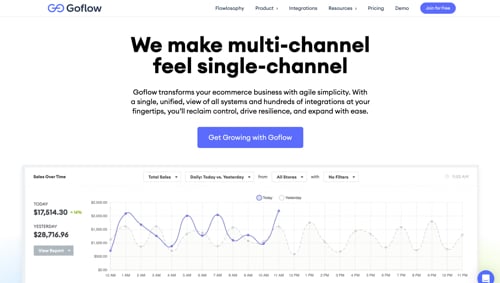
Profitability, rather than just top-line revenue, has become the primary focus for ecommerce merchants in a high-interest-rate environment. Goflow has addressed this by launching "Order-Level P&L," a feature that brings real-time profit visibility to multichannel operations. By factoring in inventory batch costs and shipping rates for every individual order, Goflow allows merchants to see their true margins instantly. This transparency is critical for Amazon-first merchants who must navigate a complex web of referral fees, storage costs, and advertising spend.
On the payment side, BitRail has introduced a new merchant payment suite in partnership with Payment Lock. The suite is designed to help businesses take control of their payment infrastructure and eliminate excessive fees. By offering branded digital wallets and compliant pricing for cash and credit transactions, BitRail provides an alternative to traditional payment processors. This focus on "branded" financial experiences allows merchants to build deeper loyalty while simultaneously reducing the overhead costs associated with third-party payment gateways.
Accessibility in Advertising: Criteo and BQool
Advertising platforms are also simplifying their interfaces to attract SMB spend. Criteo has expanded its "Go" self-service platform, allowing smaller businesses to launch multi-channel campaigns—spanning display, video, and social—in as few as five clicks. The platform uses generative AI to automatically adapt creative assets for different formats, ensuring brand consistency across the web.
For Amazon sellers, BQool has released an AI-powered advertising feature that automates repetitive campaign management tasks. Its "auto-harvesting" system identifies high-performing keywords and optimizes bids in real-time. This level of automation was previously only available to brands with large agencies or dedicated in-house advertising teams, but it is now being offered as a scalable solution for growing brands.
Implications for the Future of Ecommerce
The collective impact of these updates points toward a more efficient and accessible ecommerce market. The transition of B2B features to entry-level plans suggests that the next generation of successful brands will likely be "born hybrid," selling to both consumers and wholesalers from day one. Meanwhile, the proliferation of AI-driven tools for reporting, advertising, and search visibility suggests that the competitive advantage in ecommerce is shifting from those who have the most data to those who can most effectively act on it.
As fulfillment becomes more specialized and payment systems more integrated, the "friction" of running an online business continues to decrease. However, this also means that the baseline for success is rising. Merchants are no longer just competing on product quality; they are competing on the sophistication of their tech stack, the efficiency of their logistics, and their ability to remain visible in an AI-saturated information environment. The developments this week underscore that for the modern merchant, technology is no longer an optional add-on—it is the very foundation of the business.




Related Posts

The Strategic Integration of Conversion Rate Optimization Across Multi-Channel E-commerce Ecosystems
Global Ecommerce Evolution 2026: The Rise of Agentic Commerce, Circular Logistics, and Embedded Financial Systems