The Definitive Roadmap to Mastering Python for a Data Science Career
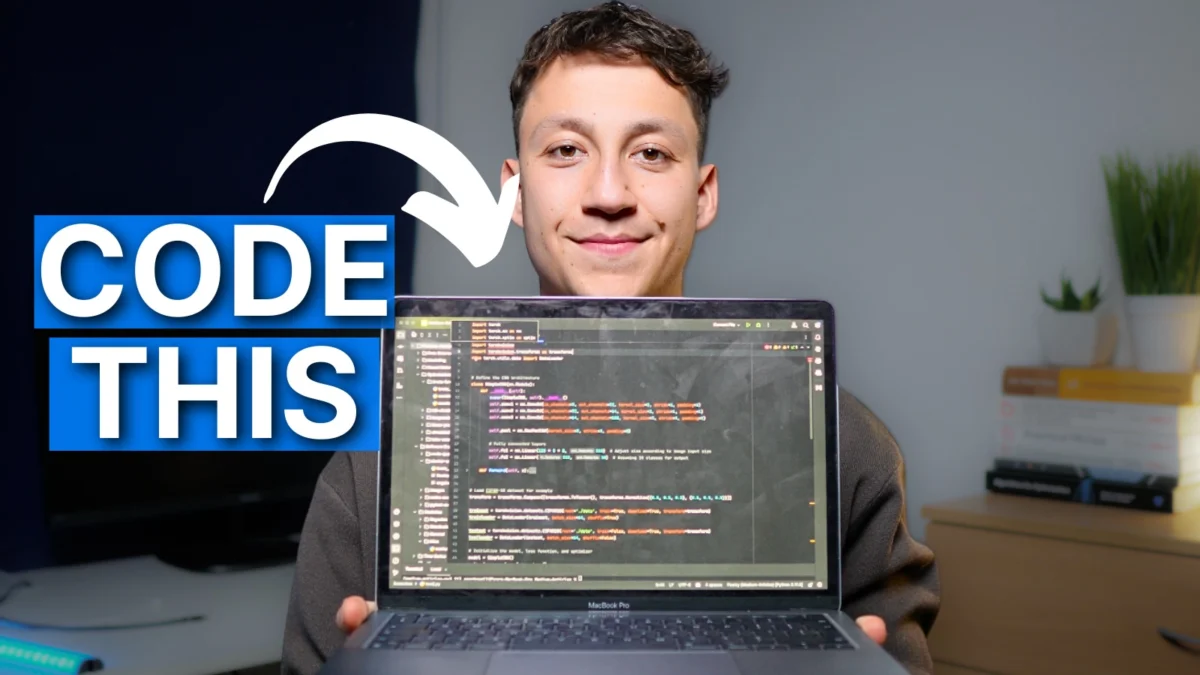
The journey into data science, for many, begins with a single, pivotal moment—a realization that transforms a casual interest into a dedicated pursuit. For Egor Howell, a seasoned data scientist and machine learning engineer with over five years of experience, that moment was truly life-changing. It marked the genesis of a career that has seen him navigate the complex landscapes of both large technology corporations and agile startups, ultimately securing lucrative offers exceeding $100,000. However, reflecting on his initial foray, Howell acknowledges a path marked by numerous missteps and a distinct lack of a clear, structured roadmap from novice to proficient. This article aims to distill that hard-won wisdom, presenting an exact, step-by-step plan for anyone seeking to rapidly acquire Python proficiency for a career in data science.
The Enduring Value of Python in the Age of AI
In an era where artificial intelligence tools like Claude Code can generate code with remarkable speed and apparent efficiency, a pertinent question arises: is learning to code, specifically Python, still a worthwhile endeavor? Howell contends emphatically that it is, arguing that the rise of AI has not rendered coding obsolete but rather amplified its importance. He likens the reliance on AI-generated code without understanding its underlying logic to expecting an AI to produce a Shakespearean sonnet. While the output might be functional, it often lacks the nuance, robustness, and depth of human expertise.
"This ‘vibe code’ is mid-level at best, and so error-prone it’s ridiculous," Howell states, emphasizing the limitations of current AI coding assistants. The ability to comprehend, read, and debug code is rapidly becoming a superpower in the professional world. Instead of spending valuable time iterating on prompts to an AI for fixes, individuals with strong coding fundamentals can swiftly identify and resolve issues. This mastery of code translates directly into practical advantages, especially for aspiring data scientists. The data science job market, despite the advancements in AI, still heavily relies on candidates demonstrating their technical prowess through coding interviews. These assessments, Howell notes, unequivocally disallow the use of AI assistance, underscoring the necessity of foundational coding skills.
Establishing Your Development Environment
Before embarking on the coding journey, establishing a robust development environment is paramount. This environment serves as the digital workshop where Python code is written, executed, and refined. It provides essential features such as syntax highlighting, automatic indentation, and code formatting, all of which contribute to writing cleaner, more readable, and less error-prone code.
For individuals entirely new to programming, Howell recommends a notebook environment. These platforms, such as Jupyter Notebooks or Google Colaboratory, offer an interactive and beginner-friendly interface. They allow users to write and execute code in small, manageable chunks, facilitating an iterative learning process.
For those transitioning to more professional or production-level coding, Integrated Development Environments (IDEs) are the standard. Howell’s primary recommendations are PyCharm and Visual Studio Code (VSCode). Both are powerful, feature-rich IDEs, and the choice between them often comes down to personal preference. He notes that both are equally capable of supporting a professional development workflow.
While AI-powered IDEs like Cursor and Claude are emerging as powerful tools, Howell advises caution for beginners. "Given that we are trying to learn Python," he explains, "I don’t recommend using an AI editor to write code for you, as that defeats the point." The goal at this stage is to build fundamental understanding and problem-solving skills, which is best achieved through direct engagement with the code.
Mastering the Fundamentals: The Bedrock of Proficiency
The initial phase of learning Python is often the most challenging, as it involves moving from a state of zero knowledge to grasping foundational concepts. Howell acknowledges that this period can be arduous, but stresses that it is a normal and necessary part of the process. Every successful data scientist and machine learning engineer has navigated this initial steep learning curve. The key, he advises, is perseverance.
The core areas of Python fundamentals that demand attention include:
- Variables and Data Types: Understanding how to store and manipulate different kinds of information, such as numbers (integers and floats), text (strings), and boolean values (true/false).
- Operators: Learning the symbols and keywords that perform operations on variables and values, including arithmetic, comparison, and logical operators.
- Control Flow: Mastering the logic that dictates the order in which code is executed. This includes conditional statements (if, elif, else) for making decisions and loops (for, while) for repeating actions.
- Data Structures: Becoming proficient with built-in Python data structures like lists, tuples, dictionaries, and sets. These are crucial for organizing and managing collections of data efficiently.
- Functions: Learning to define and use functions, which are reusable blocks of code that perform specific tasks. This promotes code modularity and reduces redundancy.
- Object-Oriented Programming (OOP) Concepts: Understanding the basic principles of OOP, such as classes and objects, is beneficial for writing more organized and scalable code, though it might not be the absolute priority for initial data science applications.
This foundational knowledge is the bedrock upon which all subsequent, more advanced skills will be built. Without a solid grasp of these basics, tackling complex data science problems will be significantly more difficult.
Specializing with Data Science Packages
Once the fundamental Python syntax and concepts are in place, the focus shifts to specialized libraries and packages that are indispensable for data science tasks. These tools provide pre-built functionalities that streamline complex operations, allowing data scientists to focus on analysis and model building rather than reinventing the wheel.
Howell identifies the following core data science packages as essential learning targets:
- NumPy (Numerical Python): This library is fundamental for numerical computations in Python. It provides efficient array objects and a vast collection of mathematical functions for performing operations on these arrays. Its speed and memory efficiency make it ideal for handling large datasets.
- Pandas: Pandas is the workhorse for data manipulation and analysis. Its primary data structure, the DataFrame, allows for easy reading, writing, cleaning, transforming, and analyzing tabular data. It is indispensable for tasks like data wrangling and exploratory data analysis.
- Matplotlib and Seaborn: These libraries are crucial for data visualization. Matplotlib provides a foundational plotting library, while Seaborn builds upon it to offer more aesthetically pleasing and informative statistical graphics. Effective visualization is key to understanding data patterns, communicating findings, and identifying anomalies.
Howell advises against delving into deep learning frameworks like TensorFlow, PyTorch, or JAX at this early stage. While these are powerful tools for advanced machine learning, they are often not required for entry-level data science positions and can be overwhelming for beginners. Mastering the core data manipulation and visualization tools first provides a more direct path to practical data science application.
The Power of Projects: Bridging Theory and Practice
The most potent catalyst for rapid Python acquisition, according to Howell, is the consistent undertaking of projects. Projects serve as practical laboratories where theoretical knowledge is applied to solve real-world problems, fostering critical thinking, problem-solving abilities, and creativity. They force learners to confront challenges, find solutions independently, and build a portfolio of tangible work.
Platforms like Kaggle offer a wealth of datasets and competitions, providing excellent opportunities to practice data science skills. Building machine learning models from scratch or completing structured projects within online courses are also valuable avenues. However, Howell emphasizes that the most impactful projects are those that are personally meaningful.
"The best projects are the ones that are personal to you," he asserts. "These projects are intrinsically motivating and, by definition, unique. So, when it comes to an interview, they are actually interesting to discuss, as the interviewer has never had it before." This personal connection not only fuels dedication but also provides a unique narrative for interview discussions, differentiating a candidate from others.
Howell outlines a straightforward process for generating project ideas:
- Identify a Passion or Interest: What topics or problems genuinely intrigue you?
- Brainstorm Potential Data Sources: Where can you find data related to your interest? This could be public datasets, APIs, or data you can collect yourself.
- Define a Clear Question or Goal: What specific insight are you trying to uncover, or what problem are you trying to solve?
- Outline the Scope: What are the essential steps and functionalities required for your project?
This ideation process, he notes, should ideally take no more than an hour. The emphasis is on iteration and learning, not on achieving perfection or constructing an elaborate portfolio from the outset. The true value lies in the learning journey itself.
Advancing Your Skills: Beyond the Basics
With a solid foundation in Python and practical experience gained from projects, the next step is to elevate your skills to encompass more advanced Python programming and software development practices. This phase is crucial for transitioning from a hobbyist coder to a professional capable of building robust and scalable data science solutions.
The core areas to focus on include:
- Virtual Environments: Understanding and utilizing tools like
venvorcondato isolate project dependencies. This prevents conflicts between different projects and ensures reproducible environments. - Package Management: Proficiency in using
pipto install, manage, and upgrade Python packages. - Testing: Learning to write unit tests and integration tests using frameworks like
pytest. This ensures code quality, reliability, and prevents regressions. - Version Control (Git): Mastering Git and platforms like GitHub or GitLab is non-negotiable for collaborative development and managing code changes effectively.
- Object-Oriented Programming (OOP) in Depth: A deeper understanding of classes, inheritance, polymorphism, and design patterns allows for the creation of more maintainable and extensible codebases.
- Error Handling and Debugging: Developing advanced strategies for identifying, diagnosing, and resolving errors in complex code.
- Basic Software Architecture: Gaining an appreciation for how different components of a software system interact, which is crucial for building larger data science applications.
This comprehensive technical stack forms the foundation of professional data science and machine learning engineering roles, equipping individuals with the skills needed to contribute effectively in real-world development environments.
Navigating Data Structures and Algorithms (DSA) for Interviews
A significant hurdle in securing a data science position is often the coding interview, which frequently includes questions on Data Structures and Algorithms (DSA). Howell acknowledges that this aspect of the hiring process can feel detached from the day-to-day tasks of a professional data scientist. However, he stresses that DSA proficiency is often a necessary evil for career advancement.
The necessity and depth of DSA study can vary depending on the specific role. Machine learning-focused positions are more likely to feature rigorous DSA assessments than analytical or product-focused data science roles. Regardless, investing time in DSA is essential for maximizing hiring opportunities.
Howell offers a pragmatic approach to DSA preparation, advising against getting sidetracked by less commonly tested topics. He highlights the most frequently encountered areas in technical interviews:
- Arrays and Strings: Fundamental manipulation and pattern recognition.
- Linked Lists: Understanding sequential data structures and their operations.
- Stacks and Queues: LIFO (Last-In, First-Out) and FIFO (First-In, First-Out) data structures.
- Hash Tables (Dictionaries): Efficient key-value storage and retrieval.
- Trees (Binary Trees, BSTs): Hierarchical data structures and traversal algorithms.
- Graphs: Representing relationships between entities and common traversal algorithms (BFS, DFS).
- Recursion: Understanding how functions can call themselves.
He specifically advises against dedicating excessive time to topics like dynamic programming, tries, or bit manipulation unless specifically required for a niche role. The focus should be on the high-return-on-investment topics that appear most frequently in interviews.
For practice, Howell recommends Neetcode’s DSA course, followed by working through the "Blind 75" question set on LeetCode. This curated collection represents some of the most frequently asked interview questions across various platforms. The most effective strategy for mastering DSA, he concludes, is consistent daily practice over a sustained period, ideally around eight weeks, to build both conceptual understanding and coding fluency.
Concluding Advice: The Unseen Currency of Consistency
Ultimately, there is no magical shortcut to mastering Python for data science. The most profound insight, Howell reiterates, is the power of consistent practice over a sustained period. He shares his personal experience of coding for approximately an hour every day for three months, a commitment that demanded significant effort but yielded substantial rewards.
"You have to put in the hours, and eventually things will click," he encourages. "You need to give it a bit of time." This dedication of time and energy, he emphasizes, has a disproportionately high return on investment, far exceeding initial expectations. Coding, for him, has been a transformative force, providing a fulfilling and long-term career path.
For those inspired to embark on this learning journey, Howell offers a crucial caveat: Python proficiency alone is not a guarantee of employment. Securing a full-time data science position requires a broader skill set. He directs aspiring professionals to a related article where he details the comprehensive array of knowledge and skills necessary to land their dream data science job.
In conclusion, the path to Python mastery for data science is a structured, iterative process. It begins with establishing a solid technical foundation, progresses through practical application via projects, and culminates in advanced skill development and targeted interview preparation. The consistent application of effort, coupled with a strategic learning approach, is the true differentiator in building a successful and rewarding career in this dynamic field.

Related Posts

Unlocking Engineering Efficiency: A Deep Dive into Anthropic’s Claude Cowork for Enhanced Productivity
Uncertainty Quantification in Machine Learning: A Deep Dive into Evidential Deep Learning and Deep Evidential Regression