


The global energy landscape was thrust into a state of intense volatility on April 17 as Iran declared the Strait of Hormuz "completely open," prompting a flurry of activity from oil tankers and a sharp initial drop in crude prices. The announcement by Iranian Foreign Minister Abbas Araghchi, swiftly echoed by U.S. President Donald Trump, momentarily eased anxieties over one of the world’s most critical maritime chokepoints. However, this immediate relief was quickly tempered by contradictory statements from Iranian media, industry warnings, and the sheer complexity of navigating a waterway fraught with geopolitical peril and lingering uncertainties. While a handful of tankers reportedly began moving towards the strait, the vast majority of shipowners, traders, and international maritime bodies adopted a cautious "wait-and-see" approach, highlighting the deep mistrust and operational challenges that persist despite the ostensible reopening.
The Unfolding Announcement and Contradictions
The initial announcement on April 17 sent shockwaves through the oil markets. Iranian Foreign Minister Abbas Araghchi’s declaration that the Strait of Hormuz was "completely open" for transit, provided ships adhered to "previously announced routes" through its waters, was a significant departure from recent rhetoric. This statement, disseminated via social media, suggested a de-escalation of tensions that had effectively constrained maritime traffic in the Persian Gulf for weeks. The impact was immediate and dramatic: oil prices, which had been elevated due to supply concerns, plunged as traders anticipated a flood of previously stranded crude and refined products entering the global market.
The perceived breakthrough gained further momentum when U.S. President Donald Trump quickly affirmed the Iranian statement, repeating the news on his own social media platforms. This rare alignment between Washington and Tehran, even if brief and rhetorical, fueled hopes for a return to normalcy. However, the optimism proved fleeting. Within hours, Iranian state media began circulating crucial caveats that fundamentally altered the perception of a "full reopening." Reports indicated that ships and cargoes linked to "hostile" countries would not be permitted transit, that any passage required prior arrangement with Iranian authorities, and, most critically, that Iran reserved the right to re-close the strait if the U.S. blockade of its own shipping continued. This conditional and highly politicized stance immediately re-injected uncertainty into the market, causing oil prices to pare some of their earlier losses.
Strategic Importance of the Strait of Hormuz
To understand the profound impact of these developments, it is essential to grasp the strategic significance of the Strait of Hormuz. This narrow waterway, connecting the Persian Gulf to the Arabian Sea and beyond, is indisputably the world’s most vital oil transit chokepoint. Approximately one-fifth of global oil consumption, representing roughly 20-30% of the world’s total seaborne oil trade, passes through its waters daily. This equates to an average of 17 million barrels per day (bpd) of crude oil and refined petroleum products, according to data from the U.S. Energy Information Administration (EIA) prior to recent disruptions. Beyond crude, a substantial portion of the world’s liquefied natural gas (LNG) also transits the strait, primarily from Qatar, the world’s largest LNG exporter.
The Strait is the sole maritime outlet for major oil producers such as Saudi Arabia, Iran, Iraq, Kuwait, Qatar, and the United Arab Emirates. Any significant disruption to its flow has immediate and far-reaching consequences for global energy security, impacting prices, supply chains, and the economies of importing nations across Asia, Europe, and North America. Its strategic importance has historically made it a flashpoint in regional conflicts and international disputes, underscoring its vulnerability to geopolitical tensions.
A History of Volatility: Contextualizing the Closure
The effective closure, or severe restriction, of the Strait of Hormuz leading up to April 17 was the culmination of escalating tensions between the United States and Iran. The roots of the recent crisis trace back to the U.S. withdrawal from the Joint Comprehensive Plan of Action (JCPOA), commonly known as the Iran nuclear deal, in May 2018, and the subsequent re-imposition and tightening of crippling sanctions on Iran’s oil exports and financial sector.
Timeline of Escalation:
- May 2018: U.S. withdraws from JCPOA, begins re-imposing sanctions on Iran.
- May 2019: Four tankers are attacked off the coast of Fujairah, UAE, near the Strait of Hormuz. The U.S. blames Iran.
- June 2019: Two more tankers are attacked in the Gulf of Oman. Iran shoots down a U.S. surveillance drone, claiming it violated Iranian airspace. The U.S. denies this, calling it an "unprovoked attack."
- July 2019: British-flagged tanker Stena Impero is seized by Iran’s Revolutionary Guard Corps in the Strait of Hormuz, ostensibly for "violating international maritime rules," following the seizure of an Iranian tanker by British forces off Gibraltar.
- September 2019: Drone and missile attacks on Saudi Aramco oil facilities, significantly disrupting global oil supply. U.S. and Saudi Arabia blame Iran, which denies involvement.
- Early 2020: Heightened military posturing, including U.S. deployment of additional troops and naval assets to the region.
- Throughout 2020-202X: Continued U.S. sanctions enforcement, leading to a de facto blockade of Iranian oil exports and significantly increased risk for any vessel transiting the Persian Gulf. Insurance premiums for voyages through the region skyrocketed, and many major shipping lines began avoiding the area or implementing extensive security measures. This period saw numerous unconfirmed reports of vessels turning back or anchoring indefinitely, illustrating the chilling effect on maritime trade.
The cumulative effect of these incidents and the persistent threat of further escalation had created an environment where the Strait, while technically open, was effectively too risky or costly for many operators. Over 400 million barrels of oil and fuel shipments, alongside a swath of natural gas cargoes, had been eliminated from global markets due to the de-risking or outright cancellation of voyages. This supply constraint significantly drove up prices and contributed to a slowdown in global economic growth.
Shipping Industry’s Measured Response
Despite the Iranian announcement, the international shipping industry’s response was overwhelmingly characterized by caution. Bloomberg reported speaking to over a dozen shipowners, agents, brokers, and traders, the vast majority of whom indicated a "wait-and-see" approach. The world’s largest international shipping association, Bimco, was even more explicit, stating its belief that shipping companies "should consider avoiding the area." Jakob Larsen, Bimco’s chief safety and security officer, directly refuted President Trump’s assertion that the Strait of Hormuz was "fully open," deeming it "inaccurate." He underscored that "the status of mine threats in the Traffic Separation Scheme is unclear," referring to the internationally established traffic management system in the strait. Similarly, the U.K. Maritime Trade Operations (UKMTO), a liaison between the Royal Navy and the shipping industry, issued an advisory warning that "the regional security environment remains volatile, with ongoing military activity and continued threat to commercial shipping."
This professional skepticism was not unfounded. Shipowners operate under complex risk assessments, and the financial and human costs of a miscalculation are immense. As Captain Farhad Patel, director of Sharaf Shipping Agency in Dubai, articulated, "The market will treat it with cautious optimism rather than full confidence. While this move should help restore some vessel movement and ease immediate pressure on energy flows, the operating environment remains highly controlled and sensitive." He added that routing restrictions, inspections, and parallel enforcement measures meant this was "not yet a return to normal trading conditions."
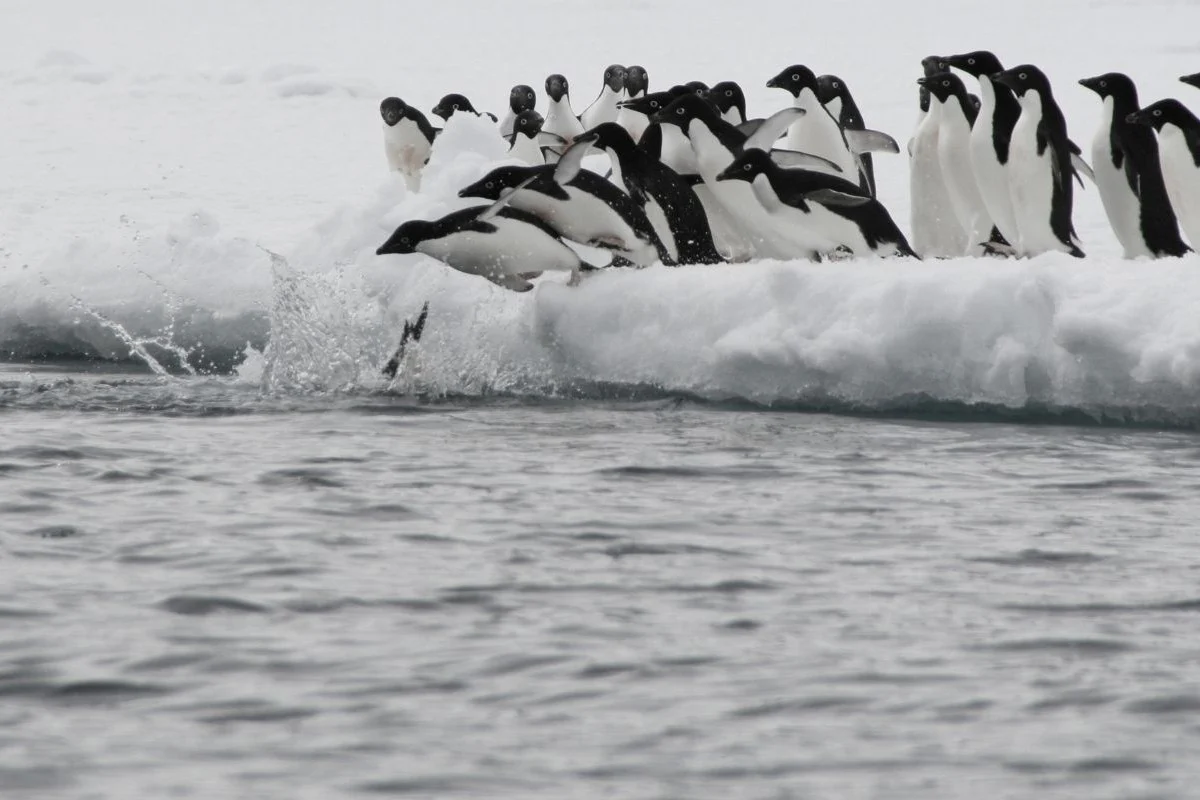
The reluctance was palpable, with one anonymous shipowner famously asking, "Would you be the first penguin off the ice floe to test the water?" This sentiment encapsulates the deep-seated apprehension. Shipowners exhibit varying degrees of risk tolerance; while some highly conservative firms immediately halted all transit, certain Greek companies, known for their more aggressive approach, reportedly continued "sneaking tankers out of the Gulf" even during the peak of the conflict. Ultimately, vessel captains are the final arbiters of safety, and their crews also play a significant role in transit decisions. Even for those willing to take Araghchi’s statement at face value, the practical hurdle of securing affordable and comprehensive insurance remained a major deterrent.
Despite the widespread caution, by late on April 17, vessel tracking data compiled by Bloomberg indicated that at least eight tankers inside the Persian Gulf appeared to be heading towards the strait. Five tankers previously anchored north of Dubai were observed moving into the Strait of Hormuz by afternoon, with a further three sailing east in the direction of the waterway. However, analysts cautioned against drawing premature conclusions, noting that ships had sometimes moved towards the strait during the conflict only to stop short of actual transit, assessing the situation. Moreover, it was unclear if these vessels were attempting to use the Iranian-approved route, which had become more common in recent weeks, or if they were merely repositioning.
Navigational Hazards and Unresolved Issues
Beyond the immediate geopolitical concerns, several practical and legal obstacles complicate a genuine return to freedom of navigation. One of the most significant concerns for the shipping industry is the persistent threat of naval mines. Intelligence reports and expert analyses have long suggested that Iran may have placed sea-mines on the traditional, internationally recognized route closer to Oman. While President Trump, in a follow-up social media post, claimed that these mines were "being removed," this assertion was directly contradicted by Bimco’s Jakob Larsen, who stated that "the status of mine threats in the Traffic Separation Scheme is unclear." The presence of mines, or even the credible threat thereof, fundamentally undermines any claim of "complete openness" and freedom of navigation. Mine clearance operations are complex, time-consuming, and inherently dangerous, requiring specific expertise and verification that was clearly lacking.
Another contentious issue is Iran’s previous demand for shippers to pay a "toll" to pass through its unilaterally approved route – a demand widely rejected by many shipowners and the International Maritime Organization (IMO). Araghchi’s April 17 statement made no explicit mention of this "toll," nor did it clarify whether owners would still need to contact Iranian authorities for transit, which had been another sticking point for the industry. The IMO’s Secretary-General, Arsenio Dominguez, issued a statement confirming that the organization was "currently verifying the recent announcement related to the reopening of the Strait of Hormuz, in terms of its compliance with freedom of navigation for all merchant vessels and secure passage using the IMO established traffic separation scheme." This official verification process underscores the international community’s adherence to established maritime law and its reluctance to accept unilateral conditions that could set dangerous precedents.
The Insurance Conundrum
For commercial shipping, the availability and cost of insurance are paramount. During periods of heightened tension, insurance premiums for transiting the Strait of Hormuz soared, sometimes by as much as 1,000%, adding millions of dollars to voyage costs. War risk premiums, specifically, became prohibitively expensive for many operators. Following Iran’s announcement, multiple owners privately stated that they would immediately begin trying to negotiate prices to cover them for transits. However, many also emphasized that prices would need to come down significantly before they would even consider attempting a crossing. The insurance market, driven by sophisticated risk models and the need to protect underwriters, is inherently conservative. It responds to tangible de-escalation, not just verbal assurances. Until there is sustained evidence of safe passage and a clear, unambiguous commitment from all parties to uphold international maritime law, insurance costs are likely to remain elevated, acting as a de facto barrier to full operational normalization.
Economic and Geopolitical Implications
The effective closure of the Strait of Hormuz had left an immense volume of crude oil and refined products stranded within the Persian Gulf. According to ship tracking data compiled by Bloomberg, at least 135 million barrels of crude and refined products were held on tankers stuck in the Gulf, including cargoes loaded in the final days of February and the first half of March, before all available vessels were filled. A full and verified reopening would immediately free up these millions of barrels, allowing them to finally reach their destinations and alleviate some of the immediate supply pressures on global markets. It would also enable the energy-rich region’s producers to begin ramping up shuttered production. However, even under the most optimistic scenario, it would take weeks for ships leaving the Gulf to reach their destinations, and many months, if not years, for the region’s oil and gas production infrastructure to return to pre-crisis levels of output and efficiency.
The geopolitical implications of Iran’s conditional reopening are equally complex. While President Trump’s follow-up post optimistically declared that Iran had "agreed a permanent reopening" and would "never shut Hormuz again," this went significantly beyond Araghchi’s initial statement and contradicted the caveats from Iranian media. The Iranian foreign minister explicitly linked the opening of the channel to a "ceasefire in Lebanon," which itself is dependent on Israel "not carrying out further attacks." Furthermore, the semi-official Fars news agency reiterated Iran’s threat to close Hormuz if the U.S. does not "end its blockade" – a clear reference to the crippling sanctions. This transactional approach highlights Iran’s intent to use the Strait of Hormuz as a point of leverage in broader regional and international negotiations, rather than a unilateral commitment to freedom of navigation. This creates a fragile equilibrium, susceptible to collapse with any new trigger in the volatile Middle East.
Future Outlook and Challenges
The path to a stable and predictable operating environment in the Strait of Hormuz remains fraught with challenges. As Neil Crosby, head of Research at Sparta Commodities, observed, "Owners need to get confident and then send vessels in en masse. All of this takes time, and risk of a deal collapse halfway to the Strait is also there." This encapsulates the core dilemma: trust, once eroded, is difficult to rebuild, and the consequences of misjudging the situation are too severe for quick action.
For a genuine return to normalcy, several conditions would need to be met:
- Clear, Unambiguous Commitments: Iran would need to issue an unequivocal statement, free of conditions, affirming freedom of navigation for all commercial vessels under international maritime law, without demands for tolls or prior arrangements.
- Verification of Safety: Independent, internationally recognized bodies would need to verify the absence of naval mines and other hazards in the internationally designated shipping lanes.
- De-escalation of Tensions: A broader de-escalation of U.S.-Iran tensions, potentially involving a renegotiation of the nuclear deal or a significant reduction in sanctions, would be crucial to remove the underlying causes of instability.
- Affordable Insurance: The insurance market would need to perceive a sustained reduction in risk, leading to a significant decrease in war risk premiums.
Until these conditions are met, the Strait of Hormuz will likely remain a theatre of cautious navigation, diplomatic maneuvering, and persistent uncertainty. The April 17 announcement, while offering a glimpse of potential de-escalation, ultimately underscored the deep-seated complexities and the fragile nature of stability in this globally vital chokepoint. The world watches, with cautious optimism, to see if genuine freedom of navigation can truly be restored, or if this temporary reprieve is merely a pause in a prolonged geopolitical standoff.




Comments (0)