Canva Reimagines the Future of Work with Agentic AI Integration and Platform Expansion
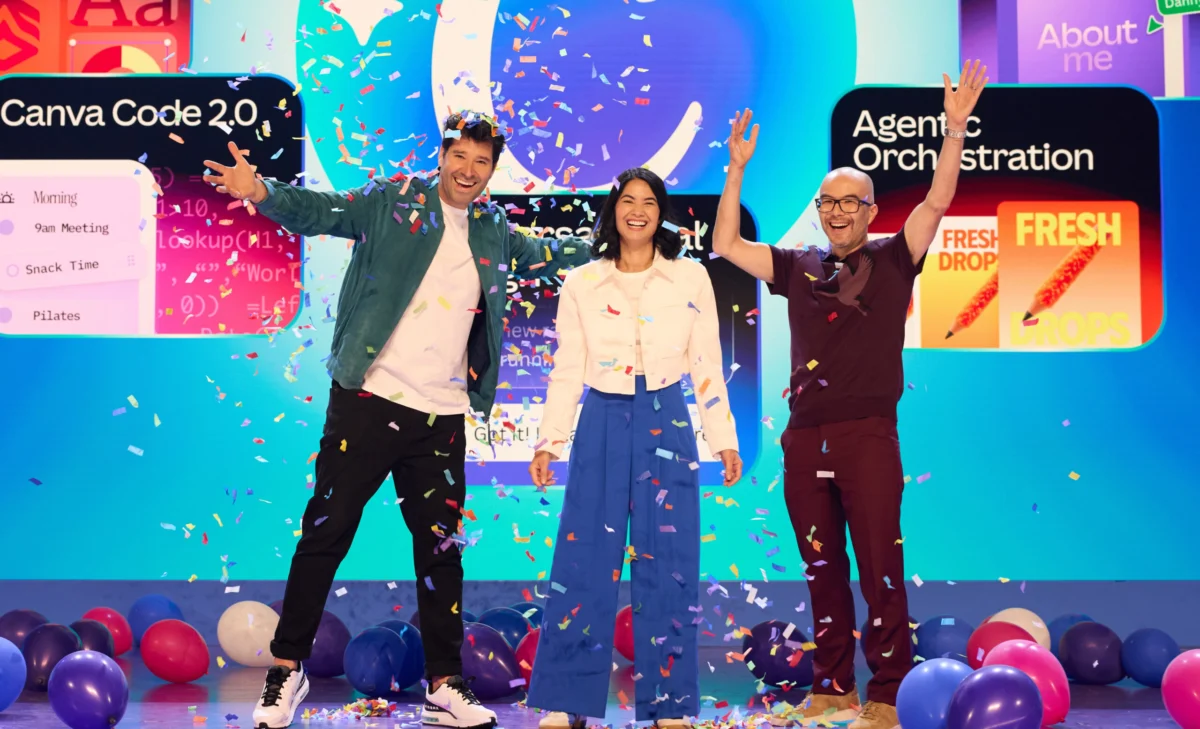
Canva, the ubiquitous visual design platform, has dramatically expanded its ambitions, unveiling a comprehensive strategy to transform into an agentic automation platform for all professional tasks. At its annual Canva Create conference, the company’s leadership articulated a vision that mirrors its past success in democratizing design, now aiming to make the power of artificial intelligence accessible to a broader audience. This strategic pivot, detailed through the launch of Canva AI 2.0, signifies a profound shift, integrating advanced AI capabilities directly into the fabric of users’ daily workflows, aiming to position Canva as the central hub for both creativity and productivity.
The core of this transformation lies in Canva AI 2.0, a revamped platform designed to place "agentic AI" at its forefront. Agentic AI refers to systems capable of autonomously perceiving their environment, making decisions, and taking actions to achieve specific goals, often interacting with multiple tools and data sources. This represents a significant leap beyond Canva’s established design functionalities.
Cliff Obrecht, Co-Founder and COO, emphasized the company’s long-standing mission: "We’re going to do what we’ve always done, which is essentially take what is constrained and not used by many and quite difficult, expensive and hard to figure out, and bring that to the masses – make complex things simple. We did this with design many years ago, and we’re going to do this with agentic AI – really bring the full power of agentic AI to the people who don’t currently access it."
Canva’s journey began in 2013 with the mission to empower individuals and organizations to create professional-quality designs easily and affordably. By simplifying complex design software and offering a vast library of templates and assets, Canva rapidly gained traction, reaching over 100 million monthly active users. This latest initiative builds upon that foundation, leveraging advancements in AI to automate and streamline an even wider array of professional tasks.
Connected Workflows: Bridging Design and Productivity
A cornerstone of Canva AI 2.0 is its ability to seamlessly connect with third-party applications, ushering in an era of "connected workflows." This integration allows Canva AI to access and utilize data from a multitude of platforms commonly used in professional environments. Integrations at launch or soon after include major players like Gmail, Google Drive, Google Calendar, Slack, Atlassian, Figma, HubSpot, Microsoft 365, Outlook, Notion, and Zoom.
Cameron Adams, Co-Founder and Chief Product Officer, explained the significance of these connectors: "Today, most people have stuff spread out across a ton of different places, and Canva AI connectors enables you to go out to different different sources and incorporate those right into your Canva designs… [For example] you can ask Canva AI to actually go out to your calendar and get it to put together a doc based on the next meeting that you have, and it will produce a fully editable Canva design based off what is in your calendar."
This capability allows for the dynamic generation of documents, reports, and presentations directly informed by real-time data. For instance, a user could instruct Canva AI to create a meeting agenda based on upcoming calendar entries, automatically populating it with relevant attendees, topics, and pre-assigned tasks.
Beyond internal data sources, Canva AI’s "web research" workflow extends its reach to the broader internet. Users can prompt the AI to gather and synthesize information on specific topics, structuring it into editable content formats. This is particularly impactful for tasks such as drafting business proposals, conducting competitive market analysis, or compiling research on potential B2B sales prospects. The AI can sift through vast amounts of online information, extract key insights, and present them in a coherent, visually appealing format, significantly reducing the time and effort traditionally required for such research.
Complementing these intelligent workflows is a new "scheduling" feature. This allows users to set up repeatable agentic tasks that run automatically at pre-defined intervals—daily, weekly, or monthly. Examples include generating daily briefing documents for scheduled meetings, creating a weekly batch of social media content formatted for various platforms and languages, or producing a monthly team newsletter by aggregating the latest news from connected email and messaging services. This automation promises to free up significant user time, allowing them to focus on higher-level strategic activities rather than repetitive administrative tasks.
Enhancing User Experience and Collaboration
While the AI announcements took center stage, Canva also addressed a long-standing user request with the introduction of a robust "offline mode." Available across both desktop and mobile applications, this feature allows users to continue working on their existing designs even without an internet connection, a crucial update for professionals who travel or work in environments with intermittent connectivity. Changes made offline are automatically synchronized once the connection is re-established.
Furthermore, Canva announced a deepened collaboration with Anthropic, a leading AI safety and research company. This partnership will embed Anthropic’s advanced language model, Claude, directly into Canva’s ecosystem, providing users with enhanced AI-powered writing and content generation capabilities within the design platform. This integration aims to further bridge the gap between visual creation and written communication.
The Vision: "The Place Where Work Happens"
The strategic integration of third-party application connectors and web research capabilities fundamentally broadens Canva’s scope beyond visual design. Adams articulated this ambition, stating, "I think we’re the only scale platform that brings productivity and creativity together, and Canva AI 2.0 is the further expression of that sweet spot in the middle, because we’re bringing more of your productivity into Canva. It’s already a place that a ton of people do their work in. Docs has been one of our fastest growing design types of all time. We have 100 million people making presentations in Canva every single month."
Canva’s data indicates a significant amount of work is already being conducted on its platform. The introduction of features like connectors and web research is designed to centralize this activity. "Having stuff like connectors and web research enables you to bring more of that work into Canva, where you can creatively express it and make amazing visual content that talks about your strategy, about your itineraries and your agenda, brings your team together and enables you to get your message out further," Adams added. This positioning aims to make Canva not just a design tool but a comprehensive platform for executing entire tasks, potentially saving users hours of work. The ability to automate workflows like weekly newsletters, previously deemed too time-consuming, now becomes feasible in minutes.
Platform Rearchitecture and Proprietary AI Advancements
Underpinning these ambitious new features is a significant rearchitecture of Canva’s platform and internal operations over the past two years. A key enabler has been the development of the Canva Design Model, the company’s proprietary foundation model. This internal AI development has been crucial for accelerating product innovation and achieving the current level of functionality.
Obrecht highlighted the strategic shift: "In order to get the product velocity we now have, we needed to replumb the whole organization and our technical stack. We also needed to set up a really robust research function, so we now have a research team of over 100 researchers – and they’re just the hardcore researchers, not the periphery and applied scientists and the delivery folk. And now, once they’ve got the bedrock of our foundational models built and are focusing on different areas, the velocity of their releases has gone from six months to three months to now every sort of two weeks. And now we’re operating at the real pace and velocity of the true frontier AI labs."
This investment in research and development has dramatically reduced the time required to bring new AI models to fruition. Whereas the first generation of models took over two years to develop, the research team can now train, evaluate, and deploy new models in as little as a month. This enhanced agility is attributed to advancements in training infrastructure, model architectures, and closed-loop reinforcement learning systems.
Adams further elaborated on the evolution of Canva’s AI capabilities: "The last six months have enabled us to do stuff that we didn’t think would be possible for five, maybe 10 years… Back in October, the Canva Design Model enabled you to generate designs in a pretty good fashion, but actually interacting with the designs themselves through AI was still a bit hard. We also launched Ask Canva at the time, so you could ask Canva through a comment to manipulate certain aspects of your design and also give you some advice on your design. But it couldn’t really take action on all the elements in a design."
Canva AI 2.0 is positioned as a "full end-to-end creative partner," deeply integrated into every stage of the creative process. It can initiate designs, modify existing elements within a pitch deck, introduce new slides, and generate multiple social media posts. Crucially, it now possesses a nuanced understanding of not only the current design but also the user’s broader Canva context, including other documents and content previously created. This contextual awareness allows the AI to provide more relevant and impactful assistance.
Analysis and Implications
Canva’s strategic expansion into agentic AI is a bold move that leverages its established strengths in user-friendliness and accessibility. The company’s consistent ability to simplify complex technologies for a mass audience is evident in this latest announcement. The underlying technology, powered by its proprietary Canva Design Model and a significantly expanded research team, appears to be on par with offerings from enterprise application vendors at the forefront of AI integration.
A particularly innovative aspect highlighted is the "memory library," which stores contextual information essential for Canva AI to effectively synthesize knowledge and actions to meet user requests. In the realm of generative AI, establishing the correct context framework is paramount for achieving reliable and predictable outcomes, a departure from traditional deterministic software workflows. Canva’s approach of starting with a simple, user-editable "About Me" document to introduce this concept is a genius move, easing users into a new paradigm of AI interaction through curiosity and practical application. As this library expands, it promises to create a more personalized and powerful AI experience.
This contextual enrichment not only benefits users but also strengthens Canva’s platform stickiness. By providing a more accurate and personalized AI framework for each customer, Canva aims to increase user reliance on its services. The company has already demonstrated its ability to capture significant market share in the enterprise design space by lowering adoption barriers while maintaining governance capabilities. If Canva can replicate this success with agentic AI, it could solidify its position as a dominant force in the evolving workplace.
However, the competitive landscape is intensely crowded. Major enterprise vendors, AI-native companies like Anthropic, and other emerging players are all vying for similar contextual lock-in. While excelling in visual design is a significant achievement, persuading users to center their entire workflow around a platform historically known for design is a different proposition. The challenge lies in convincing users to prioritize a visual design platform over dedicated document creation, content storage, team collaboration, or business operations platforms.
Yet, in an increasingly multimodal digital world, the lines between these categories are blurring. The potential for visual design to become a more central component of broader work processes cannot be underestimated. Canva’s strategy hinges on demonstrating that its integrated approach to creativity and productivity, powered by advanced agentic AI, offers a unique and compelling value proposition that can indeed make it "the place where work happens." The success of this ambitious endeavor will ultimately depend on user adoption, the continued evolution of its AI capabilities, and its ability to navigate the fiercely competitive AI market.

Related Posts

UK Government Launches £500 Million Sovereign AI Fund to Propel Domestic Innovation

NIST Pivots National Vulnerability Database Operations Amidst Unprecedented Surge in CVE Submissions