The Nvidia DGX Spark: A New Dawn for Localized AI Power
The landscape of personal computing is undergoing a seismic shift, with the term "AI PC" increasingly being affixed to conventional notebooks and ultraportables. However, many of these devices find their artificial intelligence capabilities constrained by integrated Neural Processing Units (NPUs) that limit them to built-in Windows 11 features and OEM bloatware. This superficial approach to AI integration stands in stark contrast to the revolutionary potential offered by the Nvidia DGX Spark, a specialized miniature workstation that redefines what’s possible for on-device AI processing.
At its core, the Nvidia DGX Spark is not merely an upgraded desktop; it represents a new class of machine meticulously engineered for power users, AI developers, and software engineers. This Linux-operated powerhouse is equipped with Nvidia’s cutting-edge GB10 Grace Blackwell Superchip, granting users access to supercomputing-level performance. This architecture moves beyond the nascent capabilities of integrated NPUs, offering a robust platform for building and running complex AI models and workloads locally, a significant leap from the current generation of AI-enhanced consumer devices.
The genesis of the DGX Spark can be traced back to Nvidia’s long-standing commitment to advancing AI development. While consumer-grade NPUs are designed for basic AI acceleration within operating system functions, the DGX Spark is built for intensive, high-performance AI tasks. This distinction is crucial, as it signals Nvidia’s strategic move to democratize access to powerful AI hardware beyond the confines of large data centers and cloud infrastructure. The GB10 Grace Blackwell Superchip, a key component, represents the culmination of years of research and development in high-performance computing and AI acceleration, aiming to bring enterprise-grade capabilities to a more accessible form factor.
Nvidia has strategically partnered with a consortium of Original Equipment Manufacturers (OEMs) for the manufacturing and distribution of these specialized workstations. This collaborative approach ensures a diverse range of options for consumers and professionals, each adhering to the core specifications of the DGX Spark platform while offering distinct design choices, build quality, thermal management solutions, and pricing structures. Notable configurations include the Asus Ascent GX10, Lenovo’s ThinkStation PGX, and the Dell Pro Max, all featuring the powerful GB10 Superchip. These variants, while sharing the same foundational architecture, allow for a degree of customization that caters to varying aesthetic preferences and operational needs.
One such variant, the Acer Veriton GN100, has emerged as a potent contender in this new market segment. Priced at £3,999.99 in the UK, it exemplifies the premium nature of these machines and the significant investment required to access this level of local AI processing power. The Veriton GN100, like its DGX Spark counterparts, is designed to be a compact yet incredibly powerful solution, a far cry from its imposing predecessor, the 2016 DGX1, which weighed a staggering 61kg and commanded a price tag of $130,000.
Acer Veriton GN100: Design and Build Prowess
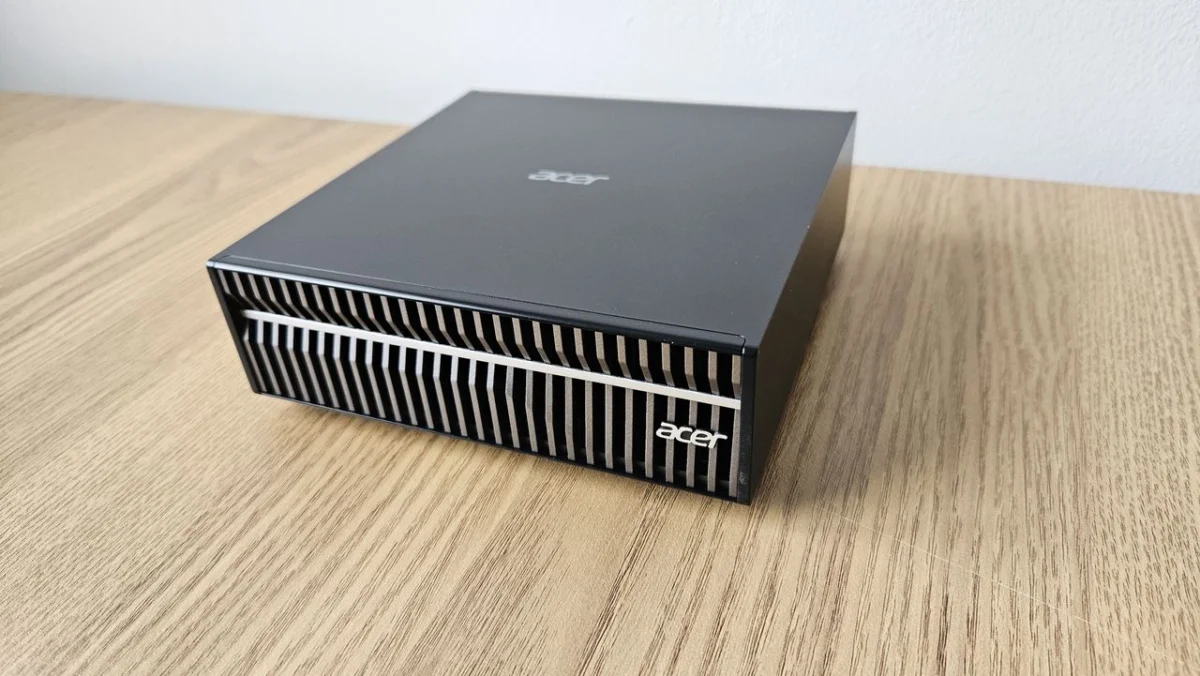
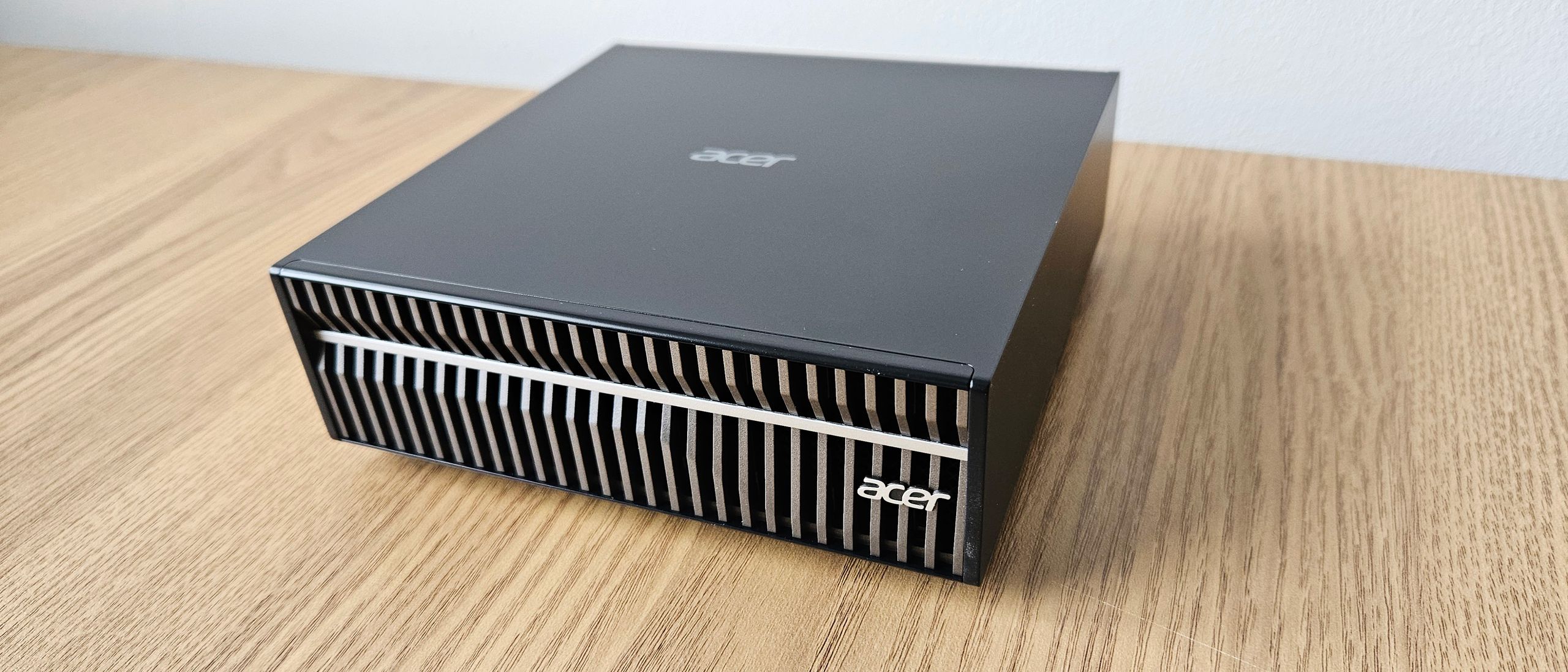
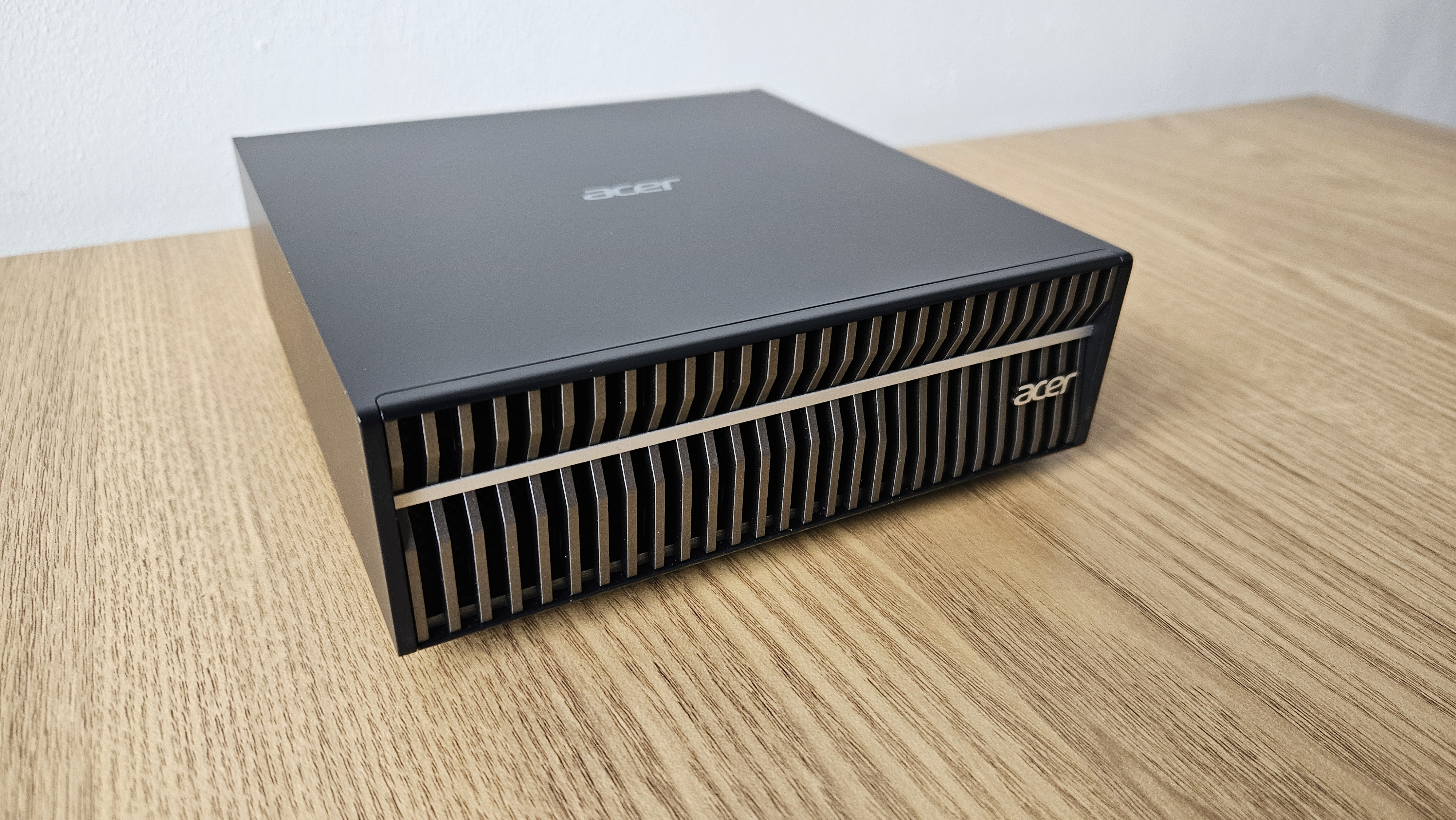
The compact form factor of the DGX Spark machines, with clearly defined dimensions of 150 x 150 x 51mm, presents OEMs with a canvas to imbue their creations with distinct design identities. Acer’s approach with the Veriton GN100 is one of sophisticated minimalism, featuring sharp, vertical metallic grills intersected by a horizontal bar. A subtle, protruding accent line runs across the front, dipping in the center to accommodate the prominent Acer logo, lending the device an air of understated elegance.
This design philosophy extends to its physical attributes. The Veriton GN100 is remarkably lightweight, tipping the scales at just 1.2kg, making it one of the lighter iterations within the DGX Spark family, notably lighter than the Asus Ascent GX10’s 1.4kg. This portability, combined with its sophisticated aesthetic, ensures it can seamlessly integrate into any professional workspace without dominating it. The contrast with the aforementioned DGX1 underscores the remarkable miniaturization and efficiency gains achieved in AI hardware over the past decade.
The rear of the Veriton GN100 houses a comprehensive array of ports, strategically arranged beneath a stack of ventilation grills that blend flush with the device’s metallic surface. Connectivity is robust, featuring three USB-C 3.2 Gen 2×2 (20Gbps) ports with DisplayPort 2.1 compatibility, essential for high-resolution external displays. A fourth USB-C Gen 2×2 port with Power Delivery (PD) input offers convenient charging capabilities. An HDMI 2.1 port provides further display flexibility, while an RJ-45 Ethernet port ensures reliable wired networking.
A standout feature is the inclusion of a specialized Nvidia ConnectX-7 SmartNIC port. This high-bandwidth port is specifically designed to enable the seamless linking of two DGX Spark mini workstations, effectively doubling their combined processing power for even more demanding workloads. For wireless connectivity, the Veriton GN100 is equipped with a MediaTek card, providing support for the latest Wi-Fi 7 standard and Bluetooth 5.4, ensuring high-speed, low-latency wireless communication. While the absence of traditional USB-A ports or an SD card reader might be a minor inconvenience for some users, the inclusion of extensive USB-C capabilities and the availability of docks and monitor passthroughs mitigate this limitation effectively.
Acer Veriton GN100: Unveiling Unprecedented Specs and Performance
The heart of the Acer Veriton GN100, and indeed all DGX Spark machines, is Nvidia’s formidable GB10 Superchip. This architectural marvel integrates a powerful 20-core Arm processor, comprising ten high-performance Cortex-X925 cores and ten energy-efficient Cortex-A725 cores. This is complemented by the Blackwell GB20B GPU, a 5nm graphics card specifically engineered for specialized and low-power AI applications. To facilitate the immense data requirements of modern AI models, the system is equipped with a substantial 128GB of LPDDR5x unified memory. Storage is handled by a lightning-fast 4TB PCIe Gen5 NVMe SSD, ensuring rapid data access and swift loading times for even the largest datasets and models. This unified memory architecture is critical for AI workloads, allowing the CPU and GPU to access the same memory pool efficiently, a significant advantage over traditional discrete memory configurations.
This potent combination allows the Veriton GN100 to achieve an astonishing petaFLOP of AI performance when utilizing FP4 precision, a 4-bit floating-point numerical format optimized for accelerated AI training and inference. Even at FP16 precision, the conventional standard for AI tasks, the machine delivers an impressive 170 teraFLOPS. These figures are crucial, as typical AI workloads demand substantial memory bandwidth – often exceeding 37GB – which can easily overwhelm consumer-grade GPUs and render local AI development impractical on standard machines. The DGX Spark platform, therefore, offers a significantly higher performance ceiling for AI workloads compared to any conventional desktop PC or even many enterprise-grade workstations.
Power consumption is a consideration for any high-performance device, and the Veriton GN100 draws a maximum of 240W. However, real-world usage suggests that typical power draw will be considerably lower, only reaching its peak when pushed to its absolute performance limits. This indicates a degree of power efficiency, especially when considering the immense computational power being delivered.
Traditional PC benchmarks, while not entirely indicative of the machine’s specialized AI capabilities, still reveal its raw power. Geekbench 6 testing yielded a remarkable single-core score of 3,106 and a multi-core score of 19,192. These results align closely with those observed on the Asus Ascent GX10, suggesting a consistent performance baseline across DGX Spark variants.
Anecdotal testing has further showcased the Veriton GN100’s prowess. Generative AI workloads, such as image generation using platforms like ComfyUI, can be completed within mere minutes. Remarkably, throughout these intensive operations, the machine remained exceptionally quiet and operated at a comfortable temperature, a testament to its advanced thermal management and the efficiency of its design. This level of performance and thermal stability in such a compact form factor is truly impressive.
Acer Veriton GN100: Empowering Features for AI Developers
The Acer Veriton GN100 operates on the Nvidia DGX OS platform, a customized Linux-based system built upon Ubuntu 24.04 LTS for ARM. Nvidia has thoughtfully tailored the DGX OS to complement the unique design and architecture of the DGX Spark, incorporating a distinctive color scheme, typography, and a suite of pre-installed applications and services designed to streamline the AI development workflow.
From the desktop interface, users can easily access Nvidia’s extensive library of AI "playbooks." These comprehensive, step-by-step guides provide clear instructions on the purpose, setup, and best practices for running various AI workloads. While a foundational understanding of technology is beneficial, the playbooks are designed to be accessible even to those new to Linux environments, effectively lowering the barrier to entry for AI experimentation and adoption within the workplace. This focus on user education and accessibility is a critical component of Nvidia’s strategy to democratize AI.
Ultimately, the DGX Spark, and by extension the Veriton GN100, is engineered for power users who are eager to explore AI trials, deploy custom solutions within their organizations, and execute local generative AI tasks without reliance on external cloud services. The applications are vast, ranging from sophisticated image generation and media manipulation to software development with tools like VS Code and the creation of complex AI agents and multi-agent chatbots. The AI playbooks are instrumental in fostering this AI literacy, enabling a broader range of workers to leverage the power of custom-built generative AI.
A notable addition is the Nvidia Sync feature, which enhances the remote operation capabilities of the DGX Spark. This feature allows users to connect their local desktop or laptop to the DGX Spark, enabling remote operation within the same subnet or via an IP address. Users can launch applications remotely, share displays, and access monitoring tools, further increasing the flexibility and utility of these powerful mini workstations.
Acer Veriton GN100: A Worthy Investment for the AI-Forward
The emergence of this new class of AI-powered mini workstations signifies a paradigm shift in how AI is deployed and utilized within the enterprise. The Nvidia-powered Acer Veriton GN100 stands as a prime example of this evolution, demonstrating the speed and ease with which users can engage with and experiment with advanced AI workloads locally.
It is crucial to reiterate that the DGX Spark platform is not intended for the average consumer. Nvidia explicitly emphasizes that these machines are designed for users who require enterprise-grade performance, made possible by the GB10 Superchip. For individuals who primarily work within conventional Windows environments or have no immediate need for developing and deploying AI tools, the DGX Spark may indeed feel inaccessible or even frustrating due to its specialized nature and Linux-based operating system.
Priced at approximately £4,000, the Acer Veriton GN100 positions itself as a competitive option, even offering a slightly lower price point than some larger, similarly specced desktop systems like the Dell Pro Max Tower T2. While alternative solutions, such as AMD’s Ryzen AI Max+ 395-based systems (codenamed Strix Halo), which run Windows 11 and are available at a lower cost, may appeal to those prioritizing a familiar operating system for learning AI, the Acer Veriton GN100 remains a compelling choice. It serves as a robust and powerful entry point into the burgeoning world of localized AI deployment, offering a comprehensive solution for professionals and organizations ready to embrace the future of artificial intelligence. The ongoing advancements in AI hardware and software suggest that the capabilities and accessibility of such systems will only continue to grow, further solidifying their importance in the evolving technological landscape.
Acer Veriton GN100 Specifications
| Processor | Nvidia GB10 Superchip (10x Arm Cortex-X925, 10x Arm Cortex-A725) |
|---|---|
| GPU | Blackwell GB20B GPU |
| RAM | 128GB LPDDR5x |
| Ports | USB-C 3.2 Gen 2×2 (20Gbps) ports with DisplayPort 2.1 compatibility (x3), USB-C Gen 2×2 with PD in (x1), HDMI 2.1 (x1), RJ-45 Ethernet, Nvidia ConnectX-7 SmartNIC |
| Storage | 4TB SSD |
| Connectivity | Wi-Fi 7, Bluetooth 5.4 |
| Weight | 1.2kg |
| Dimensions | 150 x 150 x 51mm |
| Operating System | Nvidia DGX OS (Ubuntu 24.04 LTS) |

Related Posts

UK Government Launches £500 Million Sovereign AI Fund to Propel Domestic Innovation

NIST Pivots National Vulnerability Database Operations Amidst Unprecedented Surge in CVE Submissions