Venty: A Teenager’s AI Solution for Rapid Emotional Regulation and Mental Well-being
In a rapidly evolving digital landscape, where mental health challenges are increasingly prevalent among young people, a 17-year-old entrepreneur has developed an innovative artificial intelligence application designed to offer immediate support and empower users to take control of their emotional states. The app, named Venty, promises to provide a sanctuary for users to "vent" their feelings and engage in a brief, five-minute session to manage their emotions effectively. This initiative emerges from a growing recognition of the need for accessible, on-demand mental wellness tools, particularly for a demographic that often faces unique pressures and may find traditional support systems less appealing or readily available.
The genesis of Venty is rooted in the personal journey of its founder, Malachy Doyle, a young innovator who, at 17, has already stepped away from traditional high school education to pursue his entrepreneurial ambitions. Doyle’s discomfort with the rigid structure of schooling, including even the mandated timing of lunch breaks, fueled a desire for autonomy and control over his own path. This inherent drive for self-determination, coupled with a passion for "building cool things," laid the groundwork for his innovative approach to mental health support. His entrepreneurial spirit was evident from a young age, having launched his first business at the age of 12, creating and selling Valentine’s Day cards, demonstrating an early aptitude for identifying needs and developing creative solutions.
The Need for Accessible Mental Health Solutions
The development of Venty arrives at a critical juncture. Global statistics highlight a concerning rise in mental health issues among adolescents. According to the World Health Organization (WHO), one in seven 10–19-year-olds experiences a mental disorder, accounting for 13% of the global burden of disease in this age group. Depression, anxiety, and stress are common, often exacerbated by academic pressures, social media comparison, and the uncertainties of adolescence. The COVID-19 pandemic further amplified these concerns, leading to increased isolation, disruption of routine, and a heightened sense of anxiety for many young people.
Traditional mental health services, while vital, can sometimes face barriers to access, including cost, stigma, and availability. This gap creates a pressing need for supplementary, readily available tools that can offer immediate relief and coping strategies. Venty aims to fill this void by providing a discreet, user-friendly platform that can be accessed anytime, anywhere, offering a quick and effective way to process emotions before they escalate.
Venty: A Five-Minute Path to Emotional Control
The core functionality of Venty revolves around its AI-powered "venting" mechanism. The app is designed to allow users to express their thoughts and feelings in a safe and non-judgmental environment. The underlying artificial intelligence is trained to understand and respond to user input in a way that facilitates emotional release and self-reflection. The emphasis on a five-minute duration is a strategic choice, recognizing the limited attention spans and busy schedules of its target audience. This concise format makes the app an accessible tool for immediate stress relief, allowing users to quickly regain a sense of composure and control.
While the specifics of the AI’s operational algorithms are proprietary, it is understood to employ natural language processing (NLP) techniques to interpret user input. This allows Venty to offer personalized prompts and guided exercises that encourage users to articulate their emotions, identify triggers, and explore potential coping mechanisms. The app’s design prioritizes a seamless user experience, ensuring that the process of "venting" is intuitive and requires minimal cognitive load, especially for individuals who may already be experiencing emotional distress.
Malachy Doyle: A Visionary Entrepreneur
Malachy Doyle’s departure from conventional schooling underscores a growing trend among young entrepreneurs who are prioritizing hands-on learning and real-world problem-solving over traditional academic pathways. His self-driven approach and early success with his Valentine’s Day card business demonstrate a natural inclination towards innovation and market responsiveness. Doyle’s candid remarks about his disinclination for the regimented structure of school highlight a common sentiment among creative and ambitious individuals who thrive in environments that foster autonomy and allow for the exploration of personal interests and passions.
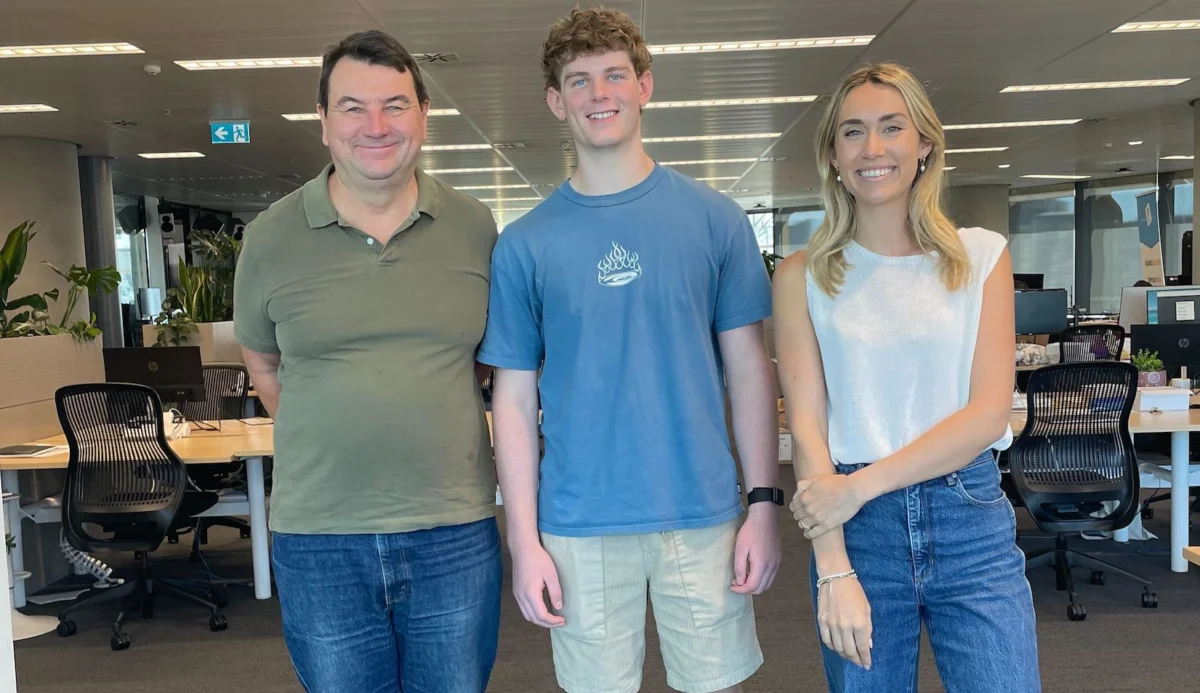
His decision to found Venty at such a young age speaks volumes about his commitment to addressing societal needs through technology. The "Startup 360" podcast, where Doyle was a guest, serves as a platform for entrepreneurs to share their stories and insights, providing valuable exposure for emerging ventures like Venty. The accompanying image, featuring Doyle alongside podcast hosts Simon Thomsen and Majella Campbell, visually represents this intersection of innovation and media engagement.
Chronology of Development and Launch
While a precise timeline for Venty’s development is not publicly detailed, the narrative suggests a progression from Doyle’s early entrepreneurial endeavors to the conceptualization and eventual launch of the AI application.
- Early Childhood (Approx. Age 12): Doyle demonstrates an entrepreneurial spirit by launching his first business, creating and selling Valentine’s Day cards. This period likely fostered skills in product development, marketing, and customer engagement.
- Adolescence (Approx. Age 15-16): Facing dissatisfaction with traditional schooling, Doyle begins to explore alternative paths, focusing on his passion for building and innovation. This period would have involved research into emerging technologies, particularly AI, and identifying potential applications.
- Conceptualization of Venty: Recognizing the growing need for accessible mental health support among his peers and the wider population, Doyle conceives of Venty as an AI-driven solution for rapid emotional regulation.
- Development and Testing Phase: This crucial phase would have involved building the AI models, designing the user interface, and conducting rigorous testing to ensure the app’s effectiveness and user-friendliness. Feedback loops from early testers would have been integral to refining the app’s functionality.
- Launch of Venty: The app is introduced to the public, likely accompanied by promotional efforts and media engagement, such as Doyle’s appearance on the "Startup 360" podcast.
- Ongoing Development and Expansion: Post-launch, Venty would undergo continuous updates and improvements based on user feedback, technological advancements, and evolving understanding of mental health support.
Supporting Data and Market Potential
The market for mental wellness applications is experiencing significant growth. Reports indicate a steady increase in the adoption of digital mental health solutions, driven by factors such as increased awareness, destigmatization, and the convenience offered by these platforms. For instance, the global mental health apps market size was valued at USD 5.2 billion in 2022 and is projected to expand at a compound annual growth rate (CAGR) of 16.4% from 2023 to 2030, according to Grand View Research. This substantial market indicates a strong demand for innovative solutions like Venty.
The specific demographic of young people is a key focus for mental health interventions. A study published in JAMA Pediatrics found that rates of depression and anxiety among adolescents have been increasing in recent years. This underscores the critical need for tools that cater to their specific needs and preferences, which often include digital-first approaches. Venty’s promise of a quick, five-minute intervention directly addresses the potential time constraints and engagement challenges associated with this age group.
Potential Reactions and Implications
The development of Venty is likely to elicit a range of reactions from various stakeholders:
- Users: Young people experiencing stress, anxiety, or emotional difficulties are expected to be the primary beneficiaries. The app’s accessibility and focus on rapid intervention could provide a much-needed lifeline for those seeking immediate support.
- Mental Health Professionals: While Venty is not intended to replace professional therapy, it could be viewed as a valuable complementary tool. Clinicians might recommend it for between-session support, helping patients practice self-regulation skills. However, some may express caution regarding the app’s limitations and the importance of professional diagnosis and treatment for more severe conditions.
- Educators and Parents: Educators and parents may see Venty as a positive development, offering a proactive approach to supporting student well-being. However, concerns about screen time and the potential for over-reliance on technology for emotional management might also arise.
- Tech Industry: The innovation demonstrated by Doyle and Venty could inspire other young entrepreneurs and further fuel investment in the mental health tech sector. The app’s success could highlight the potential of AI in developing accessible and scalable mental wellness solutions.
The broader implications of Venty’s success could include:
- Democratization of Mental Health Support: By offering a free or low-cost, accessible solution, Venty has the potential to make basic emotional regulation tools available to a wider audience, particularly those who may not have access to traditional mental health services.
- Shifting Perceptions of Mental Health: The normalization of using technology for mental well-being, as Venty encourages, can contribute to reducing the stigma associated with seeking help.
- Advancements in AI for Well-being: The development and refinement of Venty’s AI could pave the way for more sophisticated and personalized AI-driven mental health interventions in the future.
Conclusion
Malachy Doyle’s Venty represents a significant stride in leveraging artificial intelligence to address the pressing need for accessible and immediate mental health support. Born from a young innovator’s drive for autonomy and a keen understanding of his generation’s challenges, Venty offers a novel approach to emotional regulation, empowering users to regain control of their feelings within a brief, five-minute timeframe. As the digital mental health landscape continues to expand, Venty stands out as a testament to the power of youth entrepreneurship and the potential of technology to foster greater well-being and resilience in an increasingly complex world. Its success will not only be measured by its user engagement but also by its contribution to a broader conversation about how technology can be harnessed to create a more emotionally healthy society.