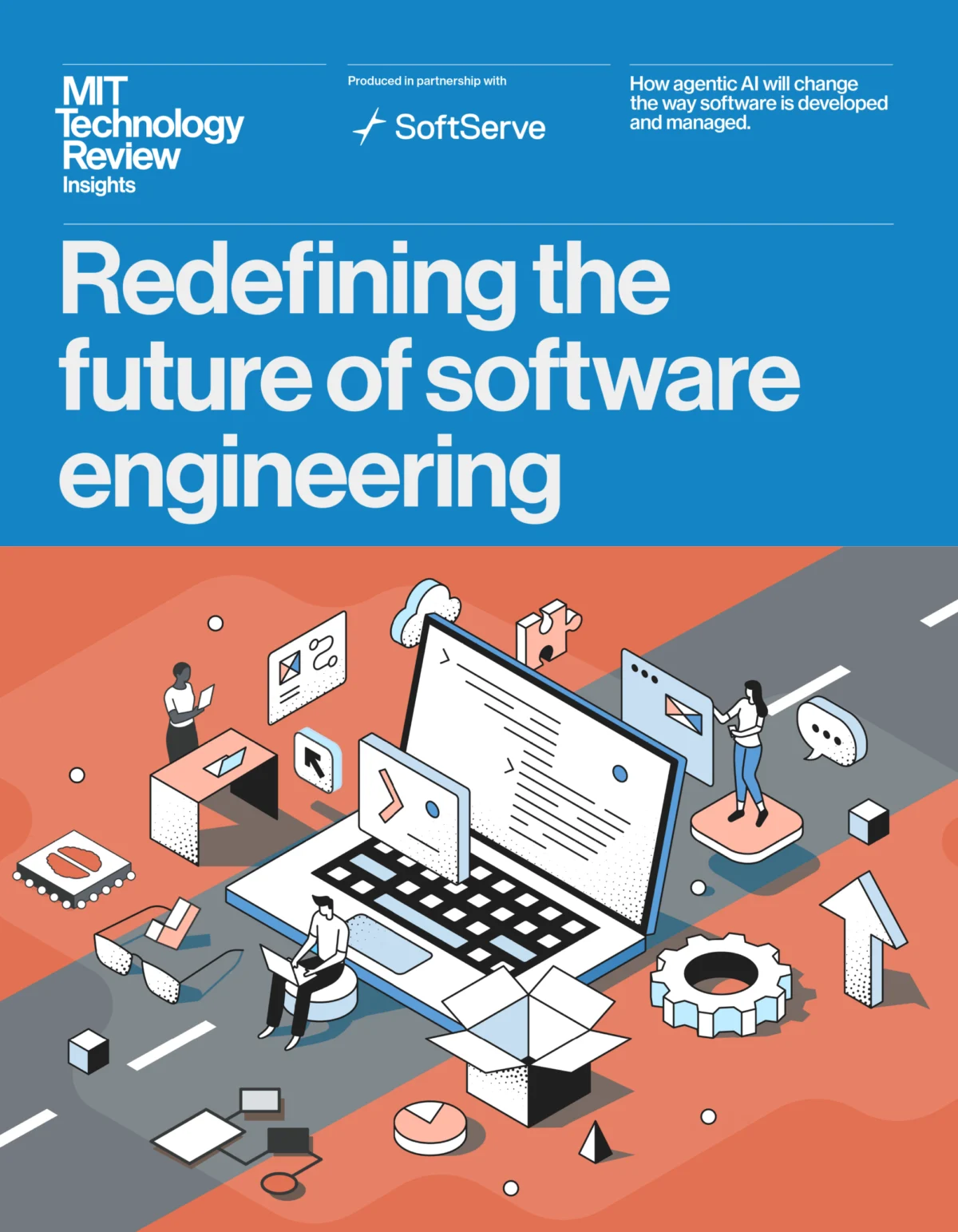
The Dawn of Agentic AI: A Third Seismic Shift in Software Engineering
The landscape of software engineering, a field defined by its relentless evolution, stands on the precipice of another transformative era. Following the democratizing wave of open-source software and the collaborative acceleration brought about by DevOps and agile methodologies, a third monumental shift is rapidly taking shape: the widespread adoption of agentic artificial intelligence. This new paradigm promises to move beyond AI’s current role as a mere assistant for discrete coding tasks and usher in an era of autonomous, end-to-end software project management.
This profound transformation is detailed in a recent report, commissioned by MIT Technology Review’s custom content arm, Insights, and conducted in partnership with Softserve. The study, which surveyed 300 engineering and technology executives, reveals that while organizations are only beginning to harness the full potential of agentic AI, their ambitions are sky-high. The findings suggest that embracing this advanced form of AI will necessitate significant organizational and process adjustments, mirroring the challenges and eventual triumphs experienced with the adoption of DevOps and agile principles. However, the potential gains in speed, efficiency, and quality are poised to make these forthcoming changes a worthwhile endeavor.
The Evolution of Software Development: From Silos to Autonomy
To fully appreciate the significance of agentic AI, it is crucial to contextualize the previous seismic shifts that have reshaped software engineering. The early 21st century was marked by the ascendance of the open-source movement. This movement fundamentally altered how software was created and shared, making code repositories accessible to a global community of developers. This democratization of code fueled innovation, accelerated development cycles, and fostered unprecedented collaboration. Projects that once required vast internal resources could now leverage shared libraries and frameworks, leading to a more efficient and diverse software ecosystem.
The second major upheaval arrived with the widespread adoption of DevOps and agile methodologies. These approaches dismantled the traditional silos between development and operations teams, fostering a culture of collaboration and shared responsibility. Agile methodologies introduced iterative development and rapid feedback loops, enabling teams to respond quickly to changing requirements. DevOps, in turn, streamlined the entire software delivery pipeline, from development to deployment and ongoing operations, emphasizing automation and continuous integration/continuous delivery (CI/CD). This transition from infrequent, large-scale releases to continuous, incremental updates dramatically improved software quality and reduced time-to-market.
Now, agentic AI represents the third wave of this transformative progression. Unlike earlier AI applications in software engineering, which were largely confined to assisting with specific, narrowly defined tasks such as code completion, bug detection, or automated testing, agentic AI introduces a new level of sophistication. These AI agents are not merely tools; they are envisioned as reasoning, self-directing entities capable of managing entire software projects with a significant degree of autonomy. This implies a future where AI agents can understand project goals, break them down into actionable tasks, allocate resources, monitor progress, and adapt to unforeseen challenges, effectively managing the complete software development lifecycle (SDLC) and, ultimately, the product development lifecycle (PDLC).

Building Momentum: Adoption and Investment in Agentic AI
The report’s key findings underscore a clear and accelerating trend towards the adoption of agentic AI within software engineering teams. Currently, half of all surveyed organizations consider agentic AI a top investment priority for their software engineering efforts. This figure is projected to surge dramatically, with over 80% of organizations anticipating it to be a leading investment within the next two years. This growing strategic focus is directly fueling accelerated adoption.
The data reveals that 51% of software teams are already utilizing agentic AI, albeit in a primarily limited capacity. Furthermore, a substantial 45% of organizations have concrete plans to implement agentic AI solutions within the coming 12 months. This widespread interest and nascent adoption signal a broad recognition of the transformative potential of this technology. The enthusiasm is palpable, with many executives expressing high expectations for how agentic AI will reshape their operations.
Gradual Gains and Accelerated Timelines: The Expected Impact
While the momentum for agentic AI is undeniable, the report acknowledges that the initial benefits are likely to be incremental. Over the next two years, the majority of organizations anticipate slight (14%) or moderate (52%) improvements resulting from the use of AI agents. This cautious optimism is balanced by a significant minority: approximately one-third (32%) of respondents hold higher expectations, believing the improvements will be substantial, and a dedicated 9% foresee "game-changing" advancements. This spectrum of expectations highlights both the nascent stage of the technology and the varied strategic visions of different organizations.
The most consistently anticipated benefit, however, is a dramatic acceleration in time-to-market. Nearly all respondents (98%) predict that their teams’ delivery of software projects, from pilot phase to full production, will be expedited. The average anticipated increase in speed across all respondents is a remarkable 37%. This projection suggests that agentic AI will fundamentally alter the speed at which software can be conceived, developed, and deployed, providing a significant competitive advantage to early adopters.
The Ultimate Goal: End-to-End Agentic Lifecycle Management
The long-term ambitions for agentic AI are even more ambitious than immediate gains in speed. The overarching goal for most software engineering teams is to achieve full agentic management of the product and software development lifecycles. At 41% of organizations, teams are aiming to implement this comprehensive lifecycle management for most or all of their products within the next 18 months. This ambitious timeline is expected to grow to 72% within two years, indicating a clear industry-wide push towards highly automated, AI-driven development processes.
This vision of agent-managed development signifies a fundamental redefinition of the software engineer’s role. Instead of focusing on granular coding tasks, engineers may shift towards defining project objectives, overseeing AI agent performance, ensuring ethical AI deployment, and managing the strategic direction of product development. This evolution necessitates a significant investment in upskilling and retraining the workforce to collaborate effectively with these advanced AI systems.

Navigating the Challenges: Integration, Costs, and Change Management
Despite the promising outlook, the path to full agentic AI adoption is not without its hurdles. The report identifies compute costs and integration challenges as the primary immediate obstacles. For all survey respondents, particularly those in early-adopter verticals such as media and entertainment and technology hardware, integrating AI agents seamlessly with existing applications and managing the substantial computing resources required are significant concerns.
Beyond the technological challenges, interviews with industry experts highlighted the more profound difficulty of change management. Shifting established workflows, fostering trust in AI decision-making, and adapting organizational structures to accommodate autonomous agents will require considerable effort and strategic leadership. This echoes the experiences of organizations that navigated the implementation of DevOps and agile, where cultural shifts and process re-engineering were as critical as the technological adoption itself.
Broader Implications and the Future of Software Engineering
The advent of agentic AI in software engineering carries profound implications that extend beyond individual development teams and organizations. The potential for end-to-end process automation could lead to a significant increase in software output, driving innovation across all sectors. Industries that rely heavily on rapid software development, such as fintech, e-commerce, and the burgeoning AI-powered services sector, stand to benefit immensely.
Furthermore, the ability of AI agents to manage complex projects autonomously could democratize access to sophisticated software development capabilities. Smaller businesses or startups with limited engineering resources might be able to leverage agentic AI to develop and deploy complex applications, leveling the playing field and fostering greater entrepreneurial activity.
However, this transformative potential also raises important questions about the future of the software engineering workforce. While the report suggests a shift in roles rather than widespread job displacement, the transition will require proactive measures. Educational institutions and corporate training programs will need to adapt to equip individuals with the skills necessary to work alongside and manage AI agents. Ethical considerations surrounding AI-driven development, such as bias in algorithms and accountability for AI-generated code, will also become increasingly paramount.
The journey towards fully agent-managed software development is likely to be a phased one, mirroring the gradual adoption curves of previous technological revolutions. The initial stages will focus on augmenting human capabilities and automating specific parts of the development process. As AI agents mature and trust in their autonomy grows, we will likely see a more comprehensive integration into the entire software lifecycle. The report’s findings provide a compelling snapshot of this evolving landscape, indicating that the era of agentic AI in software engineering is not a distant possibility but a present reality, poised to redefine how software is created, delivered, and managed for decades to come. The path forward will undoubtedly involve challenges, but the potential rewards in terms of speed, efficiency, and innovation suggest that this third seismic shift will be as impactful as its predecessors.

Related Posts

Unlocking Engineering Efficiency: A Deep Dive into Anthropic’s Claude Cowork for Enhanced Productivity
Uncertainty Quantification in Machine Learning: A Deep Dive into Evidential Deep Learning and Deep Evidential Regression