


The landscape of American retail is undergoing a fundamental transformation as major corporations pivot toward decentralized, gig-powered logistics to satisfy the modern consumer’s appetite for near-instant gratification. This month, Target Corporation signaled a significant escalation in this trend, announcing plans to expand its Shipt-powered same-day delivery model to more than 100 additional U.S. stores by 2026. This move highlights a broader industry shift where the "last mile"—the final and most expensive leg of the supply chain—is increasingly being handed over to independent contractors driving personal vehicles rather than professional couriers in branded trucks. While this strategy promises unprecedented speed and significant cost reductions for merchants, it introduces a volatile set of variables regarding delivery consistency, security, and the long-term integrity of brand reputation.
The last mile has long been the "holy grail" of e-commerce logistics. Historically, this stage accounts for approximately 53% of total shipping costs, making it the primary target for corporate belt-tightening. By leveraging local store footprints as makeshift fulfillment centers and utilizing gig-economy platforms like Shipt, Amazon Flex, and Uber Direct, retailers are attempting to bypass the traditional, centralized hubs operated by national carriers. However, as the delivery person becomes the only physical touchpoint between a brand and its customer, the risks associated with an unstandardized workforce are becoming increasingly apparent.
The Strategic Shift to Hyper-Local Fulfillment
Target’s recent announcement is the culmination of a strategy that began in earnest in 2017 with its $550 million acquisition of Shipt. At the time, Shipt was primarily a grocery delivery service competing with Instacart. Today, it has been integrated into Target’s core operational DNA, serving as the backbone of a "stores-as-hubs" model. This approach effectively turns every brick-and-mortar location into a local distribution center, placing inventory within miles—rather than states—of the end consumer.
The financial incentives for this model are stark. Industry data suggests that Target can reduce its delivery costs by roughly $2.50 per package when utilizing Shipt instead of national carriers like UPS or FedEx. When multiplied by millions of annual orders, these savings represent a significant boost to profit margins that are otherwise squeezed by inflation and rising labor costs. These savings originate from the elimination of "zone-based" pricing and the reduction of handoffs. In a traditional model, a package might move from a regional warehouse to a sorting facility, then to a local hub, and finally to a delivery truck. In the Shipt model, the package moves directly from the store shelf to a driver’s trunk and then to the customer’s doorstep.
Beyond cost, the primary driver is speed. The modern consumer, conditioned by the "Amazon Effect," now views two-day shipping as a baseline and same-day delivery as the new standard. By fulfilling orders from local store inventory, retailers can narrow delivery windows to as little as two hours. This proximity allows for a level of responsiveness that traditional long-haul logistics networks simply cannot match without exorbitant expedited shipping fees.
The Gig Economy Engine and Operational Variability
The rapid expansion of last-mile delivery is fueled by a massive influx of gig-economy workers. Unlike the uniformed employees of the United Parcel Service (UPS) or the United States Postal Service (USPS), who undergo rigorous training and operate within highly structured routes, gig drivers are independent contractors. They use their own vehicles, manage their own schedules via smartphone apps, and often work for multiple platforms simultaneously.
This flexibility is a double-edged sword. For the retailer, it provides a scalable workforce that can expand or contract based on daily demand. During peak holiday seasons, a retailer can flood the streets with thousands of contract drivers without the long-term overhead of a permanent fleet. However, for the consumer, this model often results in a lack of standardization.
Traditional carriers operate with a high degree of "institutional knowledge." A UPS driver often manages the same route for years, becoming familiar with specific building codes, preferred drop-off spots, and the nuances of neighborhood security. In contrast, a gig worker may be visiting a specific apartment complex or suburban cul-de-sac for the first time. This lack of familiarity is where the delivery process often breaks down, particularly in complex urban environments.
The High Cost of Delivery Failures and Porch Piracy
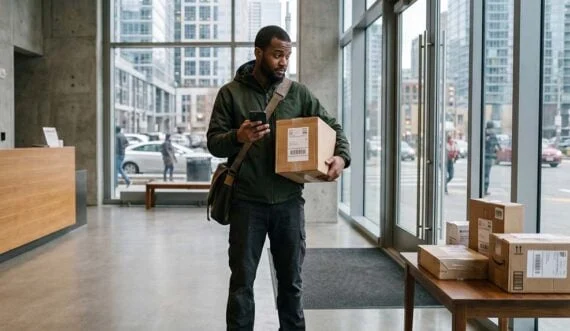
As delivery volumes surge, so do "delivery fails"—a term encompassing everything from packages left in insecure locations to outright theft. In high-density urban areas, the challenges are particularly acute. Many modern apartment buildings utilize sophisticated secure-entry systems and designated package rooms equipped with one-time passcodes (OTPs). While these systems are designed to thwart "porch pirates," they require the delivery person to follow a specific, multi-step protocol.
Data from consumer advocacy groups indicates that gig workers, often under pressure to meet high-volume delivery quotas, are more likely to bypass these secure protocols. Instead of entering a building and navigating to a secure room on the sixth floor, a driver may leave a package in a public lobby or an unsecured vestibule. This exposure significantly increases the risk of theft.
According to a 2023 report on retail security, an estimated 79 million Americans have fallen victim to package theft at least once in their lives, with "porch piracy" incidents rising in tandem with the growth of e-commerce. When a package is stolen because it was left in an inappropriate location, the merchant often bears the financial burden of replacing the item, while the brand suffers a loss of consumer trust. For a giant like Target or Walmart, a refunded order is a manageable line item. For small to midsize merchants who are beginning to experiment with local gig delivery, these failures can be catastrophic to their bottom line and online ratings.
Comparative Analysis: Traditional Carriers vs. Gig Platforms
To understand the implications of this shift, it is necessary to compare the operational standards of legacy carriers with those of gig platforms. National carriers like FedEx and UPS have spent decades refining their "Proof of Delivery" (POD) systems. Their drivers are trained in specific safety protocols and are often held to strict performance metrics regarding where and how packages are placed. Furthermore, these organizations have established chains of command and clear liability frameworks.
Gig platforms are attempting to bridge this gap through technology. Apps now require drivers to take photos of the delivered package as proof of placement, and GPS tracking allows customers to follow their delivery in real-time. However, technology cannot always compensate for a lack of professional training. The "human element" of the delivery—the decision to tuck a package behind a pillar rather than leaving it on a sidewalk—remains the most difficult variable to control.
Industry analysts point out that the gig model also creates a "fragmented brand experience." When a customer buys a premium product from a high-end retailer, the arrival of that product in a dented personal sedan, delivered by a driver in casual attire, can create a disconnect between the brand’s marketing and the actual customer experience. As e-commerce becomes the primary way people shop, the delivery driver is no longer just a utility provider; they are a brand ambassador.
Broader Impact and the Future of the Last Mile
The trend toward local, gig-powered delivery is unlikely to reverse. Walmart has already seen massive success with its "Spark" delivery platform, which utilizes a similar model to Target’s Shipt. Amazon continues to expand its "Flex" program, encouraging everyday drivers to deliver packages in their spare time. The competitive pressure to offer faster, cheaper shipping is simply too great for most retailers to ignore.
However, the next phase of this evolution will likely focus on "quality control" in the last mile. We are seeing the emergence of white-label delivery services that attempt to combine the flexibility of the gig economy with the professionalism of traditional couriers. These services provide drivers with branded vests and basic training in exchange for slightly higher rates.
Additionally, the rise of "micro-fulfillment centers" (MFCs)—highly automated, small-scale warehouses located in urban areas—will further refine the process. These centers can pick and pack orders with incredible speed, leaving only the final delivery to the human driver.
As we look toward 2026 and the full implementation of Target’s expanded Shipt network, the retail industry will be watching closely. The success of this model will depend on whether technology can solve the consistency issues inherent in contract labor. For merchants, the mandate is clear: delivery is no longer just a back-end logistics concern. It is a front-facing component of customer service that can either solidify brand loyalty or drive customers into the arms of a competitor who can guarantee that their package actually makes it through the front door.
In the final analysis, the shift to local, gig-based delivery represents a gamble. Retailers are betting that consumers value speed and low cost over the reliability and professionalism of traditional carriers. As "porch piracy" and delivery inconsistencies continue to frustrate shoppers, the winners in the e-commerce space will be those who find a way to offer the best of both worlds: the lightning speed of a local gig driver and the ironclad reliability of a professional logistics network.






Comments (0)