Tesco and Adobe Forge Strategic Partnership to Transform Grocery Personalization Through Agentic Artificial Intelligence and Real-Time Data Analytics
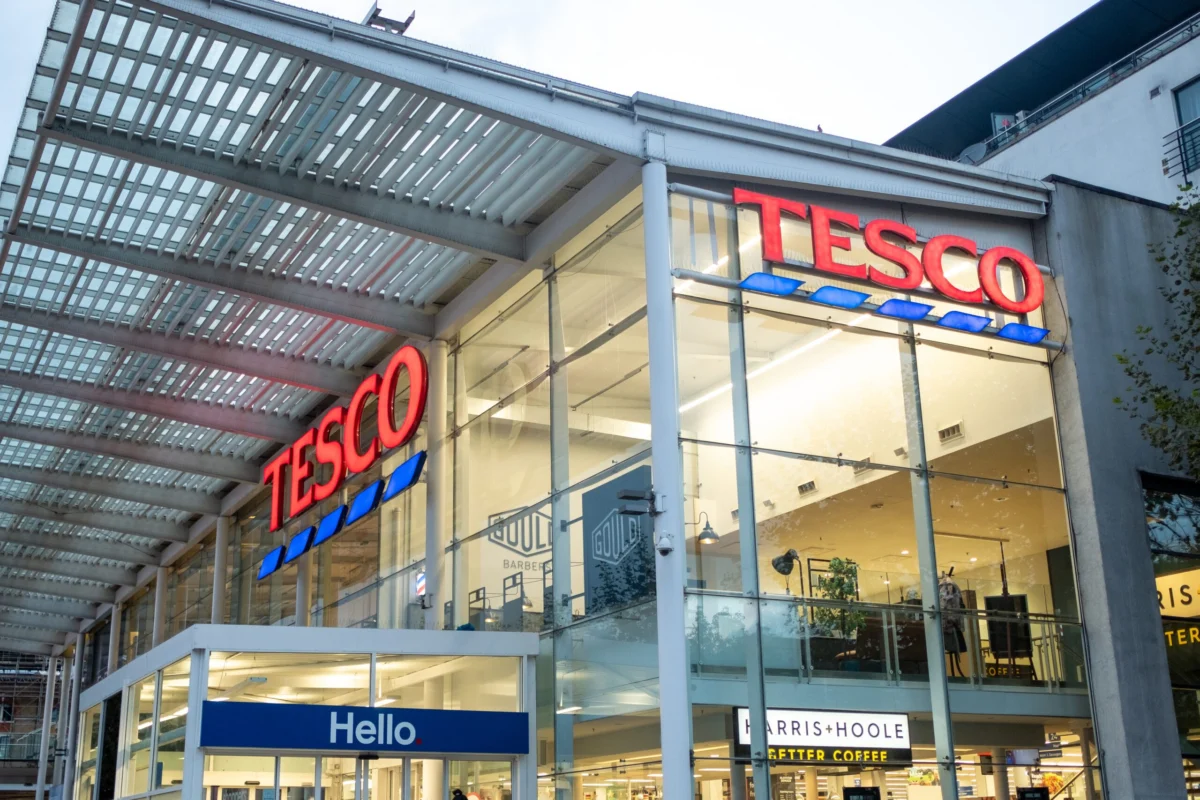
The United Kingdom’s largest grocery retailer, Tesco, has entered into a landmark strategic partnership with the American software powerhouse Adobe to integrate advanced generative and agentic artificial intelligence into its digital infrastructure. This collaboration aims to redefine the grocery shopping experience for millions of consumers by shifting from traditional, reactive marketing to a predictive, hyper-personalized model. By leveraging Adobe’s cutting-edge AI capabilities, Tesco intends to refine its engagement with its massive customer base, specifically focusing on its Clubcard loyalty program, which currently serves more than 24 million households across the UK and Ireland.
Under the terms of the agreement, Tesco will deploy Adobe’s agentic AI capabilities alongside Adobe Firefly Foundry. These tools are designed to empower Tesco’s internal personalization and AI teams to anticipate customer needs with unprecedented accuracy. The primary objective is to deliver tailored content, bespoke offers, and synchronized experiences across Tesco’s diverse digital channels, including its mobile application, website, and direct email communications.
The Architecture of the Tesco x Adobe Innovation Lab
Central to this partnership is the establishment of the Tesco x Adobe Innovation Lab. This initiative represents a departure from standard vendor-client relationships, opting instead for a "co-innovation" model. This structure involves embedding Adobe’s software engineers and AI specialists directly within Tesco’s in-house technology teams. By working side-by-side, the two organizations aim to accelerate the cycle of experimentation and deployment.
The lab will focus on two primary pillars: AI-driven personalization and on-brand content production at scale. The use of Adobe Firefly Foundry—a platform designed to scale generative AI for enterprise creative needs—will allow Tesco to generate thousands of variations of visual content and marketing assets that remain strictly "on-brand" while being uniquely catered to individual shopper preferences. This capability is essential for a retailer of Tesco’s scale, where manual content creation for millions of unique customer profiles would be logistically impossible.
Strategic Context and Market Leadership
Tesco’s move into agentic AI comes at a time when the retailer is already positioned as a dominant force in the European e-commerce landscape. Currently ranked ninth in the Europe Database, which tracks the region’s largest 500 online retailers by annual sales, Tesco has a long-standing reputation for digital innovation. The company was an early pioneer in the UK online grocery space, establishing a lead in the early 2000s that it has largely maintained through consistent investment in logistics and data analytics.
The Clubcard program, launched in 1995, has been the cornerstone of Tesco’s data strategy for nearly three decades. Originally developed in partnership with the data science firm Dunnhumby, the Clubcard allowed Tesco to understand consumer behavior at a granular level. The new partnership with Adobe represents the next evolution of this data-driven legacy, moving from the analysis of historical purchase data to the real-time execution of AI-driven interventions.
Enhancing the Clubcard Ecosystem
For Tesco, the ultimate goal of the Adobe partnership is to increase the perceived value of the Clubcard for the end consumer. Becky Brock, Tesco Group Customer Digital Transformation Director, emphasized that the retailer wants customers to feel that the more they engage with the brand, the more the brand works for them.
"Working with Adobe, we can be even more responsive to the needs of shoppers," Brock stated. "We can act in the moment, getting the right messages, savings, or ideas to the right customers, just when they need them."
This "in-the-moment" responsiveness is a key differentiator. Traditional retail marketing often relies on weekly or monthly cycles of promotions. Agentic AI, however, allows for "contextual shopping." For instance, if a customer typically purchases ingredients for a specific recipe on a Tuesday, the AI can trigger a personalized discount or a reminder for those specific items on Monday evening or Tuesday morning, significantly increasing the likelihood of a conversion.
Technical Deep Dive: Agentic AI vs. Traditional Personalization
The inclusion of "agentic AI" in this partnership is a significant technical milestone. Unlike standard AI models that simply respond to prompts or categorize data, agentic AI systems are designed to act as autonomous agents. They can plan multi-step tasks, reason through complex scenarios, and execute actions across different software environments to achieve a specific goal.
In the context of Tesco, agentic AI could potentially manage a customer’s entire shopping journey. This includes monitoring inventory levels, predicting when a household is likely to run out of staples, and automatically generating a suggested shopping basket that prioritizes both the customer’s budget and their dietary preferences. By integrating this with Adobe’s Experience Cloud, Tesco can ensure that the delivery of these suggestions is seamless, appearing as a natural part of the user interface rather than an intrusive advertisement.
Economic Implications and Industry Analysis
Industry analysts view the Tesco-Adobe deal as a harbinger of a broader transformation within the global retail sector. Amber Brooner, Chief Revenue Officer of XTel—a Luxembourg-based AI revenue management platform—noted that AI-driven personalization has transitioned from a competitive advantage to a fundamental requirement for survival in the high-volume, low-margin world of grocery retail.
"The partnership reflects a shift where AI is no longer a differentiator, but a core capability for growth," Brooner observed. She highlighted that for a retailer like Tesco, the transition from reactive to predictive engagement is essential for driving "meaningful revenue impact at scale."
In the grocery industry, profit margins are notoriously thin, often hovering between 2% and 4%. Therefore, even marginal gains in operational efficiency or customer spending can lead to significant bottom-line improvements. Brooner suggested that if AI can drive a 1% to 2% improvement in conversion rates or average basket size, the financial returns for a company with Tesco’s multi-billion-pound turnover would be substantial.
The Invisible Benefit: Reducing Consumer Friction
One of the most profound impacts of this partnership may be the reduction of "choice fatigue" for consumers. In a typical supermarket, a shopper is confronted with tens of thousands of individual products. Digital platforms can exacerbate this by offering endless scrolling.
According to Brooner, the most effective AI is often "invisible." When the technology works correctly, the customer does not feel like they are interacting with a complex algorithm; instead, they simply feel that the brand understands their needs. By using Adobe’s tools to filter the noise and present only the most relevant products and offers, Tesco can reduce the time and cognitive effort required to complete a weekly shop. This reduction in friction is a powerful driver of long-term brand loyalty.
Adobe’s Strategic Positioning as the "AI Layer"
For Adobe, the partnership with Tesco serves as a high-profile validation of its enterprise AI strategy. By embedding its technology into the core operations of one of the world’s largest retailers, Adobe is positioning itself as the essential "AI layer" for global commerce.
The strategy involves moving beyond being a provider of creative tools (like Photoshop or Illustrator) to becoming a critical infrastructure partner that handles data unification, decisioning, and execution. Brooner expects Adobe to attempt to replicate this co-innovation model with other major retailers worldwide, creating a network of AI-powered ecosystems that dominate the customer journey.
Challenges and Ethical Considerations
While the partnership promises significant benefits, it is not without challenges. The integration of AI into such a large-scale operation requires meticulous attention to data privacy and security, especially within the regulatory framework of the UK’s General Data Protection Regulation (GDPR). Tesco and Adobe will need to ensure that the "hyper-personalization" does not cross the line into intrusive surveillance, maintaining customer trust while collecting the data necessary to power the AI agents.
Furthermore, the "co-innovation" model requires a high degree of cultural alignment between a traditional British retailer and a Silicon Valley software firm. The success of the Innovation Lab will depend on how effectively these two distinct corporate cultures can merge their expertise to solve practical retail problems.
Future Outlook: The Next Phase of Retail
The Tesco-Adobe collaboration signals a clear shift in the market toward unified, integrated platforms. As the retail industry moves forward, the ability to operationalize AI across the entire value chain—from supply chain management to the final customer interaction—will likely determine the winners and losers of the digital era.
As Brooner concluded, "The retailers who can connect customer experience directly to commercial outcomes in real time will be the ones who come out ahead." With this partnership, Tesco has positioned itself at the forefront of this race, setting a new benchmark for how technology and retail can intersect to create a more efficient, personalized, and responsive shopping environment.
The industry will be watching the outputs of the Tesco x Adobe Innovation Lab closely, as the breakthroughs achieved there could soon become the standard for grocery shopping globally. For now, the 24 million households carrying a Clubcard can expect their shopping experience to become increasingly intuitive, as Tesco’s new "agentic" partners begin to work behind the scenes.

Related Posts
The Strategic Integration of Conversion Rate Optimization Across Multi-Channel E-commerce Ecosystems
Global Ecommerce Evolution 2026: The Rise of Agentic Commerce, Circular Logistics, and Embedded Financial Systems