


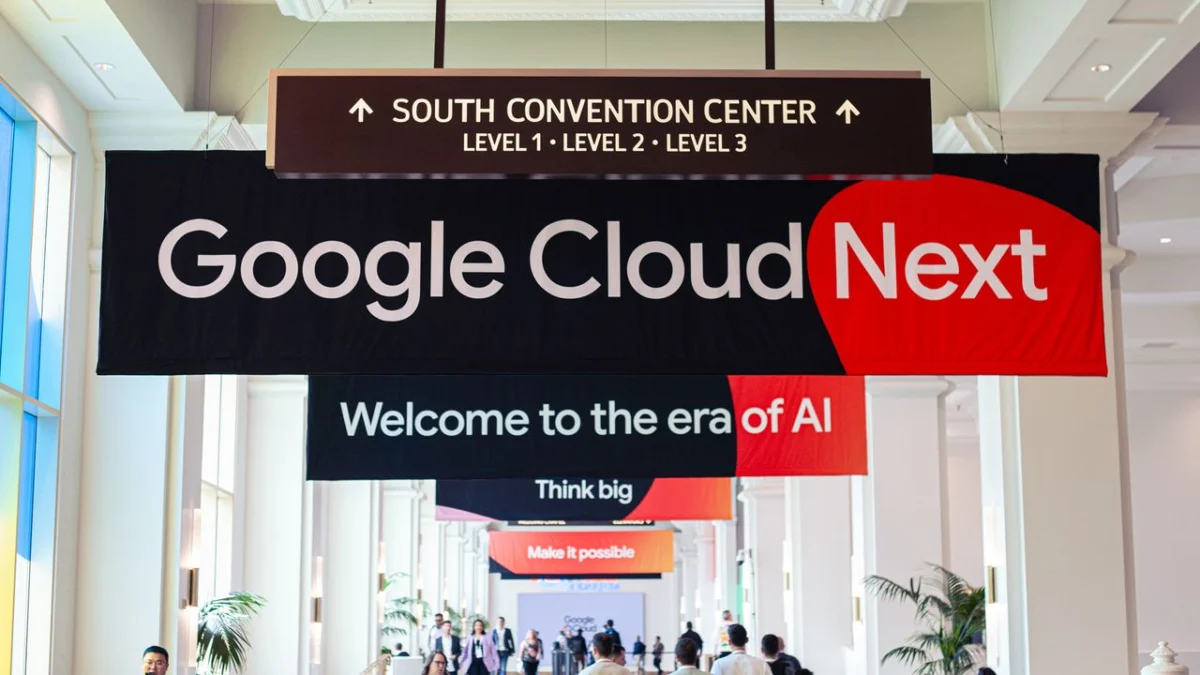
Google Cloud Next 2026 is poised to be a pivotal event for IT leaders and enterprises, as the hyperscaler prepares to unveil a wave of new products and offerings across its cloud, AI, and security portfolios. Scheduled to commence in the coming days, the conference will provide critical insights into Google Cloud’s strategic direction, particularly in the rapidly evolving landscape of artificial intelligence and its integration into business operations. The event arrives at a moment of significant momentum for Google Cloud, bolstered by robust financial performance and a clear focus on AI-driven innovation.
A Strong Financial Footing for Innovation
Google Cloud’s presence at Next 2026 is amplified by its impressive financial trajectory. In the fourth quarter earnings report of Alphabet, Google Cloud demonstrated a remarkable 48% year-over-year increase in revenue. This substantial growth was primarily fueled by escalating demand for its advanced AI platforms and core cloud infrastructure services. This financial strength positions Google Cloud to make significant investments and showcase cutting-edge advancements at the upcoming conference.
The current surge in enterprise spending on AI is largely attributed to businesses embarking on their AI adoption journeys. Many organizations are leveraging embedded Gemini features within their existing workplace tools to enhance productivity and streamline workflows. However, the prevailing narrative for the future points towards more transformative changes. The anticipated widespread adoption of AI agents promises to automate a broader spectrum of roles, delivering tangible returns on investment for IT decision-makers. With businesses having spent the past year understanding the potential of AI agents, this year’s Google Cloud Next is exceptionally crucial for the company to articulate its value proposition and demonstrate why its platform warrants significant investment.
The Dawn of the "Agentic Cloud"
The theme for this year’s opening keynote, "The agentic cloud," underscores the central role of AI agents in Google Cloud’s vision. While AI agents are a prevalent topic across the tech industry, Google Cloud has a unique opportunity to articulate its distinct advantages as a provider of a truly AI-native cloud. The company aims to demonstrate how its AI agents can deliver superior performance at a more competitive cost compared to rivals.
A key differentiator for Google Cloud lies in its development of frontier, trillion-parameter AI models, such as Gemini. Unlike competitors like Microsoft and Amazon, Google Cloud benefits from this first-party AI model development, which can be a powerful draw for enterprise customers looking to deepen their integration with its cloud ecosystem. Google Cloud Next 2026 is thus expected to address two fundamental questions for attendees: "Why Gemini?" and "Why Google Cloud?" The answers are anticipated to revolve around the integrated nature of Google’s AI capabilities and its underlying infrastructure.
Infrastructure as a Unique Selling Proposition
The exponential growth of AI workloads, both for training and inference, continues to strain global compute resources. The demand for specialized hardware is immense, with industry leaders like Nvidia and AMD actively competing to meet this need. Even established players like Arm are entering the fray with CPUs specifically designed for large-scale AI agent deployment.
Google Cloud’s distinct advantage in this domain stems from its vast, global cloud infrastructure, meticulously built to handle immense volumes of data generated by services like Search, YouTube, and Gmail. This scale is complemented by years of dedicated investment in custom silicon optimized for AI workloads. The development of its Tensor Processing Units (TPUs) represents a significant technological leap.
Last year’s event highlighted Ironwood, Google’s TPU v7, engineered to provide the raw computational power required for training and operating frontier AI models at an enterprise level. Anticipations are high for this year’s TPU advancements, with speculation suggesting a potential release of TPU v8. This iteration might introduce two distinct offerings: one designed to push the boundaries of AI training compute, directly challenging innovations like Nvidia’s Rubin GPU, and another optimized specifically for AI inference. This inference-focused chip would be crucial for efficiently handling the massive demands of AI agents, a critical area where rivals like Microsoft have already introduced their own solutions, such as the Maia 200 accelerator, which claims superior performance per dollar compared to Google TPUs and AWS Inferentia.
While competitors can develop powerful AI models like GPT and Claude Opus, Google’s unique strength lies in its ability to design and operate these models on in-house hardware co-developed with its AI researchers. This integrated approach has a direct impact on the cost-effectiveness of running AI agents. If Google Cloud can convincingly demonstrate that its TPUs offer the most cost-efficient deployment for AI agents, potentially streamlined through platforms like Vertex AI Agent Builder, it could secure substantial enterprise investment.
The growing reliance on Google’s TPU infrastructure is evident in major deals. Anthropic, a leading AI research company, recently secured an additional 3.5 GW of TPU capacity, building upon a significant October 2025 agreement to utilize up to one million TPUs in 2026. While this signifies strong market confidence, it also raises pertinent questions about the specific TPU models Anthropic will employ and the comparative advantages of running its Claude models on Google hardware versus Gemini.
Adding another layer of complexity, OpenAI has encountered recent infrastructure development setbacks, including the cancellation of its "Stargate" projects in the UK and Norway. These disruptions not only create an opening for Google Cloud to highlight its infrastructure successes but also present an opportunity for Google itself to potentially lease the newly available capacity at Nscale’s Stargate UK cluster, which utilizes Nvidia chips. Such a move could facilitate regional expansion in the UK and further diversify Google’s hardware footprint in the area. The integration of these various elements – robust infrastructure, specialized hardware, and strategic partnerships – could solidify Google Cloud’s argument for resilience, reach, and power in the AI infrastructure landscape.
The Strategic Integration of Wiz: Enhancing Cloud Security
A significant development that will undoubtedly be a focal point at this year’s Google Cloud Next is the integration of Wiz, the cloud security posture management (CSPM) leader acquired by Google for a staggering $32 billion. The acquisition, finalized just prior to last year’s event, saw Wiz retain its brand while being rolled into the Google Cloud portfolio. Nearly a year later, expectations are high for detailed discussions on how Wiz has been seamlessly integrated into the Google Cloud Platform (GCP) and the tangible results it is already delivering.
The addition of Wiz significantly amplifies Google Cloud’s capabilities in detecting and safeguarding cloud assets. The synergy between their proprietary AI approaches is expected to yield a unified and powerful security platform. Crucially, Wiz brings substantial value in the multi-cloud arena. Google’s acquisition announcement emphasized that Wiz will continue its operations across "all major clouds," a commitment that promises to enhance the protection of Google Cloud customers across their entire cloud estate.
In an era where threat actors are increasingly leveraging AI as a standard tool for attacks, the prospect of automated cloud security solutions that span all cloud environments is highly compelling for both enterprises and small businesses. This integrated security offering could incentivize leaders to increase their Google Cloud spend, knowing that their assets remain protected even in other cloud environments. This strategy could effectively challenge the unique selling propositions of competitors such as AWS and Microsoft Azure. Attendees will be keenly interested in hearing from Wiz representatives about their perspective on the acquisition and Google Cloud’s strategic vision for the firm’s role within its operations.
The Gemini 4 Question: A Glimpse into the Future of AI Models
A question undoubtedly resonating among many attendees of Google Cloud Next 2026 is the potential announcement of Gemini 4. While the pace of AI model development is accelerating – with companies like Anthropic releasing multiple frontier models in rapid succession, including specialized offerings like the cybersecurity-focused Claude Mythos – a fully-fledged Gemini 4 release at this event appears unlikely.
Google has historically followed a predictable release cycle for its major Gemini models, typically launching them in late winter or early spring. Google Cloud Next events have historically focused on showcasing the enterprise applications and capabilities of the latest model rather than serving as a platform for brand-new model announcements. For instance, Gemini 1.5 Pro was the focus at Google Cloud Next 2024, and Gemini 2.5 Pro at Google Cloud Next 2025. Given the recent launch of Gemini 3.1 Pro, unless Google DeepMind significantly alters its release cadence, technical demonstrations are expected to center on the practical implementation of this current iteration.
While the prospect of Gemini 4 may be exciting for AI enthusiasts, it is more probable that the conference will highlight advancements in less enterprise-centric Google DeepMind models. These could include generative AI tools such as the image generator Nano Banana 2, music generator Lyria 3, and video generator Veo 3.1. While the direct link between these creative AI tools and enterprise bottom lines might seem tenuous, their showcase in the opening keynote is anticipated.
Regardless of a Gemini 4 announcement, Gemini will undoubtedly remain the central theme at Google Cloud Next 2026. Attendees can expect to learn how Gemini powers numerous features unveiled during the conference and how businesses can leverage it to integrate more automation into their daily operations.
Rory Bathgate will be providing live coverage of Google Cloud Next from Mandalay Bay, Las Vegas, from April 22-24. For the latest news and announcements from the conference, follow the live blog and subscribe to the ITPro newsletter.









Comments (0)