






How more social you are introverted is a journey, not a destination. Introverts often feel pressure to be more outgoing, but that’s not about changing who you are. This exploration dives deep into understanding introversion, providing strategies for navigating social situations, building connections, and even using social media effectively. It’s about embracing your introverted strengths while learning to connect with the world in ways that feel authentic and comfortable.
This guide explores the nuances of introversion and socialization, offering practical tips for introverts to feel more confident and comfortable in social settings, without sacrificing their essential introverted nature. We’ll cover everything from understanding your own introverted energy levels to building meaningful connections with others.
Understanding Introversion and Socialization
Introversion is a fundamental aspect of personality, often misunderstood in the context of social interaction. It’s not about shyness or a lack of sociability, but rather a different way of experiencing and interacting with the world. Understanding this difference is crucial for fostering healthy relationships and personal fulfillment. Introverts process information and energy differently than extroverts, influencing their social engagement.Introversion is characterized by a preference for solitude and a need for time alone to recharge, contrasting with extroversion, which is characterized by a preference for social interaction and stimulation.
This difference in energy expenditure leads to varied social behaviors and preferences.
Defining Introversion
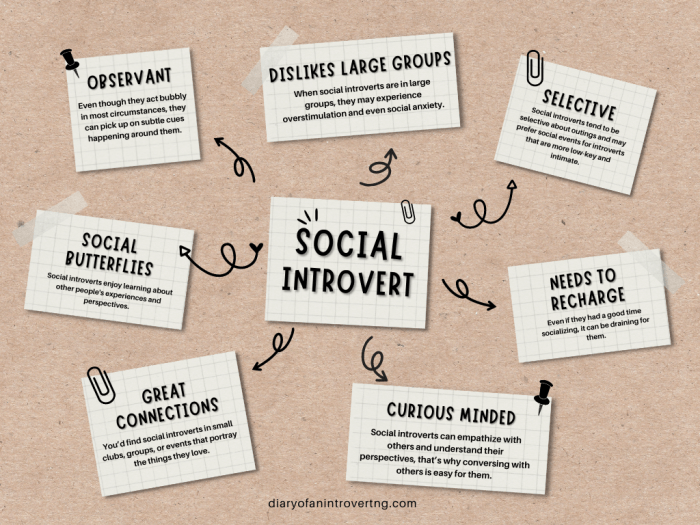
Introversion is a personality trait characterized by a preference for solitary activities and a tendency to gain energy from internal stimulation. Introverts often find large social gatherings draining, preferring smaller, more intimate settings. They tend to be more thoughtful and reflective, valuing in-depth conversations over superficial interactions. Extroverts, conversely, gain energy from external stimulation and social interaction, finding their batteries recharged by being around people.
Introverted Social Interaction Styles
Introverts approach social situations with careful consideration. They often observe and listen before speaking, preferring to understand others’ perspectives before sharing their own. They may find it challenging to participate in large group discussions or activities that require immediate responses. Their introspective nature allows them to build deep, meaningful connections, though these connections may take more time and effort to cultivate than those formed by extroverts.
Figuring out how to be more social as an introvert can feel tricky, right? One key part of improving your social interactions is understanding the language patterns that can hinder success in any environment. For example, avoiding phrases commonly used by those who struggle in their personal and professional lives is crucial. Check out this list of the top 10 phrases unsuccessful people always use that you need to avoid here.
By being mindful of these verbal traps, you can project confidence and competence, even if you’re an introvert. This, in turn, can make navigating social situations a little easier, and boost your overall social interaction experience.
They often prefer one-on-one conversations or small group settings, where they can engage more deeply.
Introvert Recharge Methods
Introverts require specific activities to replenish their energy reserves after social interaction. These can include activities like reading, spending time in nature, listening to music, or engaging in creative pursuits. Quiet time and solitude are essential for introverts to recharge and feel restored. These methods are unique to their needs and provide an essential balance for maintaining well-being.
For instance, a quiet walk in the park, journaling, or engaging in a hobby can be highly effective in recharging an introvert’s energy reserves.
Common Misconceptions about Introversion
A common misconception is that introverts are shy or antisocial. Introversion is not about shyness, but rather a preference for solitude and internal stimulation. Introverts can be highly social and capable of forming strong bonds with others. They simply recharge differently and may prefer more intimate social interactions. Another common misconception is that introverts lack social skills.
Introverts are capable of building and maintaining meaningful relationships. They often excel in roles that require deep thinking and reflection, and their ability to listen and observe deeply makes them valuable contributors in various social contexts. The key is understanding and appreciating their unique needs and preferences.
Strategies for Introverts to Enhance Social Interactions
Introverts often find social situations challenging, but with the right strategies, they can build confidence and navigate these interactions more comfortably. This journey involves understanding the nuances of social dynamics and developing techniques to feel more at ease. It’s not about becoming someone you’re not, but rather about learning to interact in ways that feel authentic and empowering.Introverts often prioritize deep connections over large gatherings, focusing on quality over quantity.
This doesn’t mean introverts are incapable of enjoying social interactions; rather, they often require different approaches and strategies to feel comfortable and engaged.
Initiating Conversations with Confidence
Starting conversations can be daunting for anyone, but introverts may feel the pressure more acutely. Effective conversation starters should be genuine and open-ended, allowing for a natural flow of dialogue. Instead of asking direct questions, consider posing open-ended inquiries that invite a response and a deeper discussion.
- Focus on shared interests: Observe your surroundings and look for commonalities. A shared love for a specific movie, band, or hobby can be a great starting point.
- Ask open-ended questions: Instead of “What do you do?”, try “What are you working on these days?”. This encourages a more detailed and thoughtful response.
- Listen actively and engage genuinely: Pay attention to what others are saying, ask clarifying questions, and show genuine interest in their responses. This builds rapport and demonstrates respect.
Navigating Social Gatherings and Events
Social gatherings can be overwhelming for introverts, but strategic participation can make them more enjoyable. Knowing how to navigate these events and interact with people can significantly reduce anxiety and improve the experience.
- Identify your comfort zone: Determine the level of interaction you feel comfortable with. If a large party feels overwhelming, choose a smaller group or a quieter corner to start.
- Set realistic expectations: Don’t aim to engage with everyone. Focus on meaningful connections instead of trying to be the life of the party.
- Use physical cues: Body language can convey interest or disinterest. Maintain appropriate eye contact, use open and welcoming gestures, and smile.
Comparing Introvert and Extrovert Approaches
Understanding how introverts and extroverts differ in social situations can be beneficial for navigating social interactions more effectively.
| Characteristic | Introvert | Extrovert |
|---|---|---|
| Energy Source | Internal (recharge by being alone) | External (recharge by being around people) |
| Social Interaction Style | Prefer smaller, intimate gatherings | Prefer larger, more active gatherings |
| Conversation Style | Tend to be more thoughtful and reflective in conversations | Tend to be more outgoing and spontaneous in conversations |
Managing Social Anxiety in Introverts
Social anxiety is a common experience for introverts. Techniques for managing it can help improve social interactions and reduce discomfort.
- Practice self-compassion: Recognize that social anxiety is a normal human experience and be kind to yourself during social interactions.
- Prepare and rehearse: Thinking through potential conversations and scenarios beforehand can reduce the sense of unpredictability and increase comfort.
- Focus on your strengths: Highlight your unique qualities and experiences to build confidence and contribute to the conversation in a meaningful way.
Building Social Connections as an Introvert
Connecting with others can feel daunting for introverts, but meaningful relationships are achievable. Understanding your own social needs and employing strategies tailored to your introverted nature are key. This involves recognizing that building connections takes time and effort, and that genuine connections often develop through shared experiences and mutual respect.Introverts often thrive in deeper, more meaningful interactions rather than superficial, large-scale socializing.
Figuring out how to be more social as an introvert can be tricky, but sometimes unexpected connections help. For example, I’ve found that delving into the shared experiences of football fans, like the 11 things about life every football fan knows true here , can actually reveal surprising common ground. Understanding those shared truths can then help me connect with people on a deeper level, making social situations feel less daunting.
It’s all about finding those shared interests, and then making the most of them, even if it’s just a shared love for the beautiful game.
Building connections as an introvert is about finding opportunities for these deeper connections, understanding the importance of boundaries, and managing expectations for yourself and others. It’s about choosing interactions that resonate with you, and not feeling pressured to conform to extroverted social norms.
Techniques for Making Meaningful Connections
Introverts can build meaningful connections by focusing on quality over quantity. Active listening, showing genuine interest in others, and demonstrating empathy are crucial elements. Finding common ground and shared interests facilitates deeper bonds. A shared passion for a particular hobby or topic can lead to engaging conversations and a sense of belonging.
Strategies for Maintaining Social Relationships, How more social you are introverted
Maintaining social relationships requires consistent effort from both parties. Regular communication, whether through phone calls, texts, or planned get-togethers, is important. Checking in with friends and expressing appreciation for their presence in your life fosters a sense of connection. Recognizing that maintaining relationships requires effort, even for introverts, helps manage expectations. Being clear about your needs and boundaries within the relationship is crucial for both parties.
Understanding that introverts might need more time to recharge after social interactions is a key part of maintaining healthy relationships.
Activities for Meeting New People
Joining groups or clubs centered around shared interests can be a great way to meet like-minded individuals. Volunteering for a cause you care about exposes you to people with similar values. Taking a class or workshop in a subject that intrigues you is another way to connect with others who have a shared interest. Attending smaller events or workshops, rather than large parties, can feel less overwhelming and more manageable for introverts.
Participating in online forums or groups can also be an effective way to connect with people who share your interests.
Finding Shared Interests and Building Bonds
Identifying shared interests is crucial for building meaningful connections. This involves being open to discovering new things and engaging in activities that spark your curiosity. Asking questions, listening attentively, and expressing your own thoughts and opinions in a respectful manner are key elements in finding common ground. Focus on understanding the other person’s perspective and finding ways to connect on a deeper level.
A shared love for books, music, or even a particular type of food can create a strong bond between individuals. Sharing your interests in a genuine and authentic manner helps foster deeper connections.
Setting Boundaries and Managing Expectations
Setting boundaries is essential for introverts to manage their social interactions effectively. Communicating your needs and limitations to others in a clear and respectful manner avoids misunderstandings. Understanding that social interactions require different levels of energy for introverts, and managing expectations accordingly is crucial. Knowing your limits helps you avoid overexertion and maintain a healthy balance between social life and personal needs.
Learning to say “no” to invitations or activities that drain your energy is crucial for self-preservation and maintaining your well-being.
Introversion and Communication Styles
Introverts often approach communication differently than extroverts. This difference isn’t about being better or worse communicators, but rather about a distinct way of processing information and interacting with the world. Understanding these differences allows introverts to communicate effectively and confidently in various social settings. Introverted communication styles are often characterized by thoughtful consideration and a preference for focused interactions.Introverted communication is often marked by a preference for depth over breadth.
Introverts tend to listen attentively, process information carefully, and respond thoughtfully. This approach, while sometimes perceived as reserved, can be highly valuable in fostering meaningful connections and contributing insightful perspectives to discussions.
Examples of Introverted Communication Styles
Introverted communication styles often manifest in several ways. For example, introverts might prefer one-on-one conversations to large group settings. They may take time to formulate their thoughts before speaking, opting for concise and well-considered responses. They may also gravitate toward quiet observation before participating in discussions. Another characteristic is a preference for reflective listening and asking thoughtful follow-up questions.
These styles aren’t necessarily negative, but rather a reflection of how introverts process information.
Ever wondered how to be more social, even if you’re an introvert? It’s not about forcing yourself to be someone you’re not, but rather about strategic engagement. Using tools like 5 easy resume tools breathe life into your resume and boost your chances getting hired to highlight your skills and experience can actually help you feel more confident in social situations.
A polished resume, showcasing your achievements, can translate into a more outgoing you, ready to connect with others professionally and personally. Ultimately, embracing your introverted nature while strategically building confidence through presentation is key to becoming more social.
Advantages of Introverted Communication
Introverted communication often leads to thoughtful and well-reasoned contributions. Introverts often listen actively, allowing them to understand nuanced perspectives and respond thoughtfully. This careful consideration can lead to more impactful and insightful communication. They also tend to avoid impulsive or thoughtless remarks, promoting a more measured and considerate approach to discussions.
Disadvantages of Introverted Communication
Sometimes, introverted communication can be perceived as hesitant or reserved. In fast-paced or highly interactive environments, introverts might find it challenging to keep up with the pace of the conversation. They might also be less likely to initiate conversations or take the lead in group discussions, which could sometimes limit their opportunities to share their ideas.
Comparison with Extroverted Communication
Extroverted communication styles often involve a more direct and expressive approach. They frequently engage in lively discussions and are more comfortable with spontaneous interactions. Introverts, conversely, value careful consideration and thoughtful responses. This difference in approach highlights the diverse communication styles present in various personalities.
Adapting Introverted Communication to Different Social Situations
Introverts can adapt their communication style to different social situations by understanding the context and expectations. In small, intimate settings, introverts can embrace their natural communication style. In larger gatherings, they can focus on thoughtful contributions and active listening. They can also use pre-planning to prepare responses to questions they might face, which can reduce anxiety and increase their confidence in these situations.
Strategies for Effective Listening and Active Participation
Effective listening is crucial for any communication style, but especially for introverts. Strategies for effective listening include maintaining eye contact, focusing on the speaker’s words, and asking clarifying questions. Active participation involves contributing insightful comments, responding thoughtfully, and showing genuine interest in others’ perspectives. Introverts can also leverage preparation for discussions. By doing research and thinking about the topic beforehand, they can confidently contribute relevant ideas and participate effectively.
Introverts and Social Media: How More Social You Are Introverted
Introverts often find themselves navigating the digital world of social media with a unique blend of fascination and trepidation. The constant stream of updates, interactions, and curated personas can be both stimulating and overwhelming. While social media can feel like a necessary evil for some, introverts may find it a particularly delicate dance. This exploration delves into how introverts engage with social media, the advantages and drawbacks, and strategies for a more comfortable experience.Introverts utilize social media platforms differently than extroverts.
While extroverts might relish the immediate feedback and constant interaction, introverts may engage in more thoughtful and deliberate ways. This often translates to more focused interactions, using platforms to connect with specific interests, share thoughtful insights, and build relationships at a slower pace.
Introverted Social Media Usage Patterns
Introverts frequently use social media to stay connected with friends and family, particularly those geographically distant. They often utilize platforms for information gathering and research. Their engagement is often characterized by thoughtful posts, insightful comments, and careful consideration before responding. They appreciate the ability to connect with like-minded individuals without the pressure of immediate, face-to-face interaction. This nuanced approach allows them to maintain their emotional energy and avoid feeling overwhelmed.
Pros of Social Media for Introverts
Social media platforms provide a space for introverts to connect with people who share similar interests, hobbies, or values. They can build communities and foster meaningful relationships without the demands of constant physical presence. This is particularly beneficial for introverts who might find traditional social gatherings challenging. Furthermore, social media can provide a safe and comfortable environment for self-expression and sharing thoughts, feelings, and ideas without the fear of judgment.
The asynchronous nature of many interactions can be a significant advantage for introverts.
Cons of Social Media for Introverts
The constant stream of notifications and updates can be overwhelming for introverts. The pressure to maintain an online persona can be emotionally draining. The curated nature of online profiles can also create unrealistic expectations and comparisons, potentially impacting self-esteem. Furthermore, the potential for cyberbullying and online harassment can be particularly concerning for introverts who may be more vulnerable to negative interactions.
Strategies for Navigating Social Media Interactions
Introverts can cultivate a mindful approach to social media use by setting clear boundaries. Regular breaks from social media can be incredibly helpful. Prioritizing meaningful interactions over superficial ones is another effective strategy. Introverts can also tailor their engagement with specific platforms to align with their personality. For example, using platforms for information gathering rather than constant interaction can reduce feelings of overwhelm.
Social Media Interaction Strategies for Introverts
- Targeted engagement: Focus on specific groups or interests rather than broad interactions. For example, join niche forums or groups related to a particular hobby.
- Scheduled posts: Plan social media posts in advance, allowing for more thoughtful and less impulsive communication. This prevents the feeling of being rushed or pressured.
- Thoughtful responses: Take time to craft thoughtful responses rather than rushing to reply immediately. This allows for a more considered and meaningful interaction.
- Limited notifications: Adjust notification settings to reduce distractions and focus on the interactions that matter most.
- One-on-one communication: Utilize direct messaging or private groups for deeper, more personal connections.
Potential Pitfalls to Avoid
Introverts should be mindful of the pressure to maintain a constant online presence. Avoiding excessive self-comparison and unrealistic expectations is crucial. It’s essential to recognize the potential for online negativity and harassment and to set boundaries to protect their emotional well-being.
Introversion and Work Environments
Introversion, often misunderstood as shyness or lack of sociability, is a natural preference for solitude and deep thinking. In the workplace, this preference can manifest in various ways, influencing how introverts interact with colleagues, approach tasks, and build professional networks. Understanding these nuances is crucial for creating supportive work environments that allow introverts to thrive. Introverts often prefer focused work over constant interaction, and they may find certain team dynamics challenging.
However, when nurtured and understood, introversion can be a powerful asset in the workplace.
Introverted Manifestations in Work Settings
Introverts may exhibit specific behaviors in the workplace that differ from extroverts. These behaviors are often misinterpreted. For example, an introvert might appear reserved during team meetings, preferring to observe and process information before contributing. They might also gravitate towards independent work, finding that less stimulating interactions are more productive. A quiet approach to tasks, preferring solitary work over constant team interaction, is not a sign of lack of engagement or motivation.
In fact, this focus can lead to deep insights and high-quality work.
Strategies for Introverts to Thrive in Team Environments
Introverts can thrive in team environments with thoughtful strategies. For example, preparing thoroughly for meetings by researching the topic beforehand allows them to contribute meaningfully without feeling overwhelmed by the interaction. Active listening and thoughtful responses, rather than spontaneous outbursts, are preferred approaches. Taking the time to process information allows for better responses. Communicating needs clearly and politely, requesting time for independent work, and actively participating in smaller group discussions are beneficial.
Methods for Introverts to Build Professional Relationships
Building professional relationships requires proactive steps. Initiating one-on-one conversations with colleagues, demonstrating genuine interest in their work, and finding common interests can lead to strong professional bonds. Seeking out opportunities to collaborate on projects, or offering help where appropriate, also fosters rapport. Understanding that professional relationships often take time to develop is important, and patience is key.
Setting Boundaries and Maintaining Work-Life Balance
Setting clear boundaries is vital for introverts to maintain a healthy work-life balance. Communicating needs regarding workload, deadlines, and responsibilities directly and respectfully is important. Learning to say no to extra tasks when necessary is a crucial boundary. Introverts should also prioritize their personal time and engage in activities that rejuvenate them outside of work. Scheduling time for relaxation, hobbies, and social activities that recharge is critical.
Leveraging Introverted Strengths in the Workplace
Introverts possess unique strengths that can be leveraged in the workplace. Their ability to concentrate deeply on tasks leads to high-quality work. They are often excellent listeners, making them valuable team members. Their thoughtful approach to problem-solving can lead to creative and innovative solutions. Introverts’ focus on details and accuracy can be a significant asset to the team.
Visual Representation of Introversion and Socialization

Understanding introversion and extroversion often involves more than just labels. Visual representations can help us grasp the nuances of how each personality type interacts with social situations and experiences energy differently. These visual aids can be particularly helpful for introverts who may find navigating social situations challenging. They offer practical strategies and insights into managing energy levels and maximizing social interactions.Visual representations of introversion and extroversion can help us better understand the differences in how each personality type interacts with social situations.
They can also be particularly helpful for introverts who may find navigating social situations challenging. By visualizing the process, introverts can develop practical strategies and insights into managing energy levels and maximizing social interactions.
Comparing Introversion and Extroversion in Social Situations
| Trait | Introversion | Extroversion | |
|---|---|---|---|
| Energy Source | Internal (recharging alone) | External (recharging with others) | |
| Social Interactions | Often prefer smaller, intimate gatherings | Often enjoy large, bustling gatherings | |
| Behavior | Tend to be reserved, thoughtful, and observant | Tend to be outgoing, expressive, and energetic | |
| Communication | Tend to listen more than talk, prefer thoughtful responses | Tend to talk more than listen, often enjoy lively discussions | |
| Outcomes | Feel refreshed after alone time, may experience social fatigue | Feel energized by social interactions, may need alone time for recharge |
Ways Introverts Can Engage in Social Situations
- Start with smaller gatherings: Initiating social interactions in smaller settings allows for a more comfortable and manageable level of engagement.
- Focus on quality over quantity: Connecting with a few individuals deeply can be more fulfilling than superficial interactions with many.
- Set clear boundaries: Communicating your needs and limits regarding social interaction can prevent burnout and maintain well-being.
- Prepare in advance: Knowing what to expect can ease anxiety and make the social situation less overwhelming.
- Engage in activities that are meaningful: Participating in activities that genuinely interest you can make social interaction feel less like a chore.
Introverted Energy Levels and Social Interactions
A visual representation of introverted energy levels could be depicted as a graph with an upward curve starting from a relatively low baseline. This baseline represents the introverted individual’s typical energy level. As the individual engages in social interactions, the curve increases, reaching a peak before gradually declining. The decline represents the need for solitude to replenish energy.
The graph highlights the need for introverts to recognize their energy patterns and plan social interactions accordingly.
Introverted Strategies for Managing Social Situations
A graphic representation could use icons to visually illustrate strategies. For example:
- “Thinking Cap” icon: Represents the importance of planning and preparation.
- “Coffee Cup” icon: Symbolizes the need for breaks and solitude to recharge.
- “Exit Door” icon: Represents the option to leave a social gathering when needed.
- “Smiling Face” icon: Represents the importance of finding joy in social interactions.
- “Handshake” icon: Represents initiating meaningful connections rather than superficial interactions.
Approaching Social Situations Comfortably
- Identify your triggers: What specific aspects of social situations tend to drain your energy?
- Prepare beforehand: Have a plan for what you want to discuss or contribute, or what activities you want to participate in. Anticipate possible conversations.
- Set boundaries: Decide how long you’ll stay, and how much interaction you’re comfortable with. Communicate these limits to yourself and others.
- Engage in activities that are meaningful: Focus on activities that genuinely interest you and that align with your values. This will likely lead to more fulfilling connections.
- Practice self-care: Schedule regular time for solitude, relaxation, and activities that replenish your energy. This will ensure that you’re well-prepared and can fully enjoy the interactions you choose to participate in.
Closing Summary
Ultimately, becoming more social as an introvert isn’t about becoming someone you’re not. It’s about understanding your needs, setting healthy boundaries, and finding ways to connect with others that align with your introverted nature. By implementing the strategies Artikeld here, introverts can build fulfilling relationships and thrive in social situations, without losing their unique identity.